A wobbling wheel is one of those problems that starts as a small annoyance and can quickly become a genuine safety issue if you ignore it. Whether you hit a pothole on a suburban bike path or clipped a rock on a gravel shoulder, understanding what that wobble is telling you could save you from a nasty fall.
By the end of this article you will know how to quickly assess your wheel at home, understand which minor issues are safe to have a go at yourself, and know exactly when to hand the job over to a professional cycling mechanic. No guesswork, no wasted money, just a straight answer.
Note for Australian riders:
- Australian roads vary enormously. Rough suburban streets, gravel road shoulders, and bush trails are common causes of wheels getting knocked out of true.
- Most good local bike shops (LBS) across Australia will do a quick wobble check for free or a small fee. It is worth asking before you commit to a full service.
- Some Australian bike shops offer free safety checks. If you are unsure about anything, that is a great low-pressure starting point.
At a glance:
- Small lateral wobble on an alloy rim may be manageable with a minor spoke adjustment, if you have the right tool and confidence.
- Any broken spoke, cracked rim, or vertical hop (radial wobble) is a job for a cycling mechanic.
- Carbon rims should never be home-trued. Always take them to a professional.
- If the wobble came back after a previous fix, something deeper is going on and a mechanic needs to look at it.
Key takeaways:
- Knowing what type of wobble you have is the first step to fixing it correctly.
- DIY attempts without a spoke key and basic knowledge can make the problem worse.
- A professional wheel truing service at an Australian bike shop is affordable and often worth every cent.
What Is Wheel Wobble and Why Does It Matter?
Wheel wobble is any movement in your wheel that is not a clean, straight rotation. It is caused by the rim being out of alignment, which can result from loose or broken spokes, rim damage, hub issues, or impact from a pothole or crash. A wheel that is out of true puts uneven stress on spokes, affects your braking (especially on rim brake bikes), and in more serious cases can make the bike feel unstable at speed.
The good news is that not every wobble is an emergency. The important thing is knowing which type you have and how bad it is.
Lateral Wobble vs Vertical Hop - What You Are Actually Seeing
There are two main types of wheel wobble and they mean different things.
- Lateral wobble is a side-to-side movement as the wheel spins. This is the most common type and is usually caused by uneven spoke tension. Minor lateral wobble is often fixable with a spoke key, though beginners should be careful.
- Vertical hop (radial wobble) is an up-and-down movement, like the wheel is slightly oval rather than round. This is more serious. It usually means the rim has taken a significant impact or the wheel has a structural problem. Radial wobble is generally a job for a professional cycling mechanic or may indicate the rim needs replacing.
- Both at once means you likely have a more complex issue. Do not ride on it. Get it checked.
As Park Tool's wheel truing guide explains clearly, lateral and radial wobble require different approaches and different tools. Treating one like the other is where home repairs go wrong.
The Quick At-Home Check Every Rider Should Do First
Before assuming the worst, run through this quick check. You can do it in your garage or on the side of the road in a few minutes. This often reveals a simple fix before you even think about spokes.
How to Spin Your Wheel and Read What It Is Telling You
- Check the tyre first. Is the tyre seated evenly around the rim? An unevenly seated tyre can look exactly like rim wobble. Deflate, reseat the tyre, and reinflate before anything else.
- Check your quick release or thru-axle. A wheel that is not fully locked into the dropouts will wobble. Make sure it is tight and seated correctly.
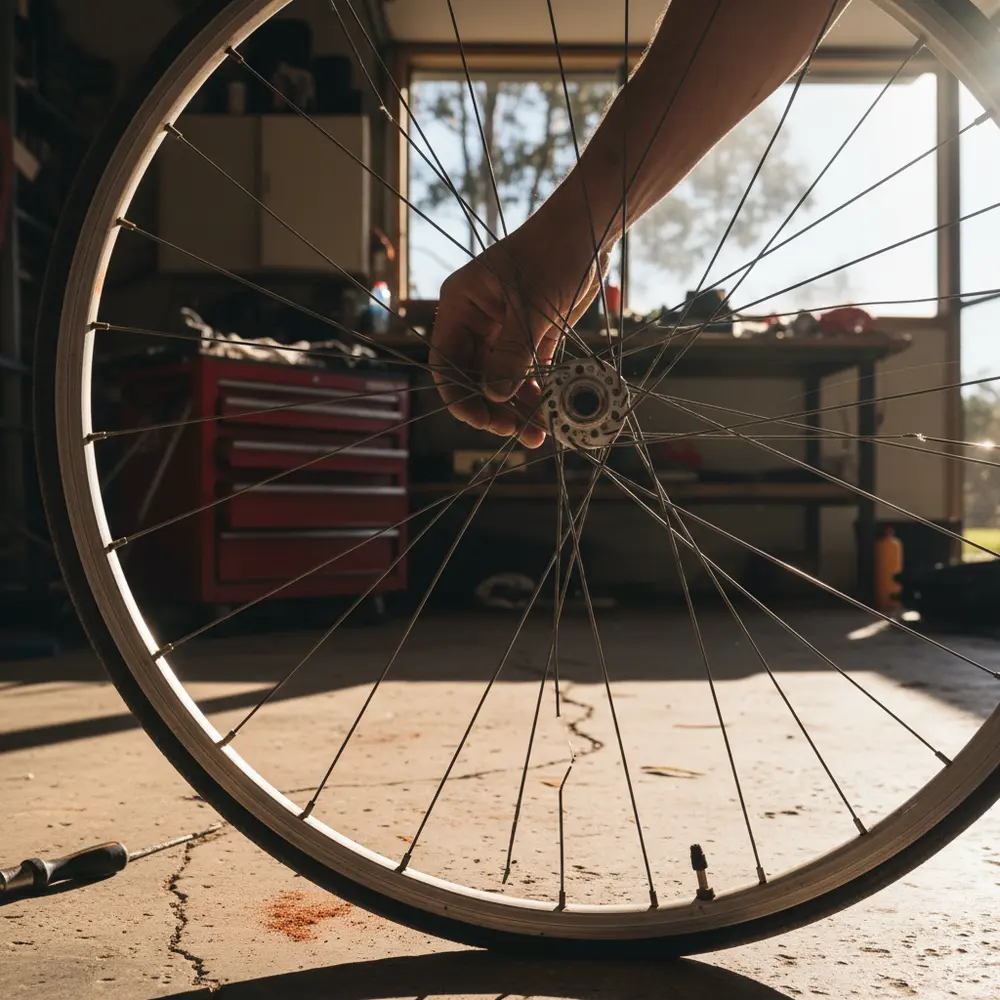
- Lift the wheel off the ground and spin it slowly. Watch the rim against a fixed reference point, like your brake pad or a zip tie attached to the frame. Note whether the movement is side-to-side (lateral) or up-and-down (radial).
- Check for broken or visibly loose spokes. Run your fingers around the spokes. A broken spoke is obvious. Loose spokes will feel noticeably slack compared to their neighbours.
- Look at the rim closely. Any visible cracks, dents, or flat spots are a serious sign. If you can see damage to the rim itself, stop riding immediately.
DIY Fixes That Are Actually Safe to Try
Being honest here: the list of safe DIY fixes for wheel wobble is short. That is not a criticism of your skills. Wheel truing is a job that professional mechanics train for, and the tools matter. Attempting it without the right equipment is how a minor wobble becomes a much bigger problem.
Minor Spoke Adjustments - When It Is Worth Having a Go
If you have a small lateral wobble, a spoke key (also called a spoke wrench), and some patience, you may be able to reduce or eliminate minor wobble. The basic principle is that tightening a spoke pulls the rim toward that spoke's side, and loosening it lets the rim move away. A good starting reference is the beginner wheel truing tips at BikeRoar, which walks through the process in plain language.
A few important rules for anyone attempting this at home:
- Only attempt this on alloy (aluminium) rims. Never on carbon fibre rims.
- Make very small adjustments, quarter-turn at a time, and check frequently.
- If you do not have a spoke key, do not use pliers or an adjustable wrench. You will round off the nipple and make the job much harder for a mechanic later.
- If the wobble is more than a few millimetres, or if you are not confident, stop and take it to a mechanic. You will not be judged. This is genuinely a skilled job.
Mountain bike riders tend to have a slightly higher tolerance for minor lateral wobble than road riders, because MTB wheels are built with more compliance in mind and brake clearances are wider. But that does not mean you should ignore it. Even a small wobble on a trail can worsen quickly if another spoke goes.
Signs the Wobble Is Beyond a Home Fix
This is where you need to be honest with yourself. Some of these signs mean stop riding now. Others mean get to a bike shop within the next day or two. Either way, these are not jobs for a first-time DIY attempt.
Cracked Rims, Broken Spokes and Damaged Hubs - What to Look For
- Cracked rim: Any visible crack near a spoke hole or along the braking surface is a stop-riding-immediately situation. A cracked rim can fail suddenly under load.
- Two or more broken spokes: One broken spoke is serious. Two or more means the wheel's structural integrity is significantly compromised. Do not ride it. As noted in resources like Cycling Weekly's guide on when not to true a wheel yourself, multiple broken spokes are a clear signal that professional help is needed.
- Radial wobble (vertical hop): As covered above, this usually means rim damage beyond what spoke tension can fix.
- Worn or loose hub bearings: If the wobble seems to come from the axle rather than the rim, the hub bearings may be worn or the axle may be bent. This is a different problem entirely and needs a mechanic. Spin the wheel and feel for grinding or play in the axle.
- Wobble after a crash: A wheel involved in a crash should always be professionally inspected, even if it looks straight. Internal rim stress and micro-cracks are not visible to the naked eye.
When the Wobble Comes Back After You Have Trued It
If you had a wheel trued and the wobble returned within a few rides, something else is going on. It could be a faulty spoke, a rim that has hit its structural limit, or a hub problem. A wheel that will not hold true is telling you that truing alone is not the solution. Take it back to your cycling mechanic and explain the history. They may need to replace spokes, rebuild the wheel, or advise on a replacement rim.
What a Cycling Mechanic Will Do That You Probably Cannot
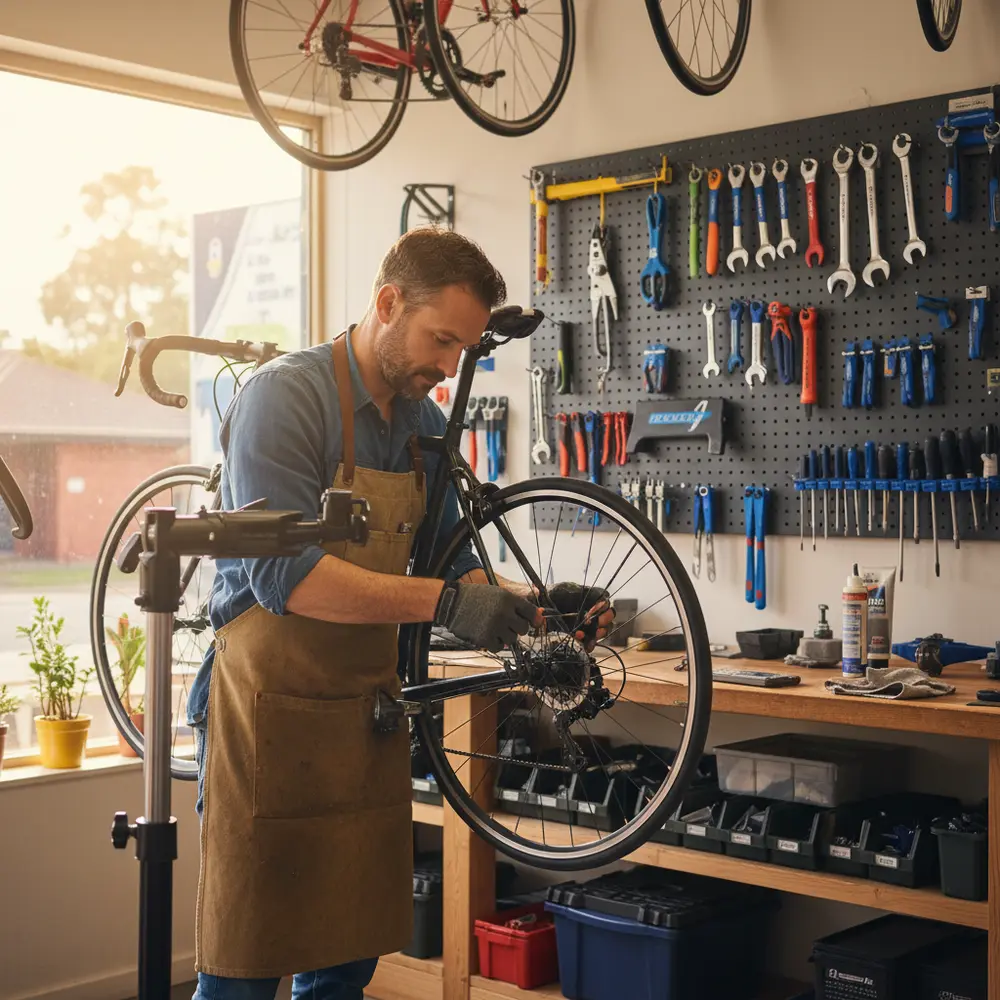
A professional cycling mechanic has a truing stand, which holds the wheel perfectly level and gives an accurate reference point for detecting wobble that your eye simply cannot match. They also have a tension meter to check that all spokes are evenly tensioned across the wheel, which is the real key to a lasting result. Uneven tension is the root cause of most wheel wobble, as Sheldon Brown's wheel building and truing reference explains in detail.
A mechanic will also check wheel dish (whether the rim sits centred between the flanges) and assess whether the rim is genuinely salvageable or needs replacing. On rear wheels especially, dish is critical and easy to get wrong without the right tools.
If you are unsure about the condition of your wheels, the pre-ride safety checks from Bicycle Network Australia are a practical starting point for your overall bike health routine.
How Much Does Wheel Truing Cost at an Australian Bike Shop?
Pricing varies between shops and states, but wheel truing is generally one of the more affordable services a bike shop offers. Here is a rough guide based on community-reported pricing from Australian cyclists. Always confirm with your local shop, as prices change.
| Service | Estimated Cost (AUD) | Notes |
|---|---|---|
| Basic wheel true (minor wobble) | $20 to $50 | Most common service for minor lateral wobble on alloy wheels |
| Major wheel true (significant wobble) | $40 to $80 | More time-intensive work, may include spoke replacement |
| Spoke replacement (per spoke) | $10 to $25 | Includes labour and the spoke itself |
| Full wheel rebuild | $80 to $200+ | New spokes, full tension and dish correction. Cost varies by wheel type |
| Carbon rim truing | $60 to $120+ | Specialist work. Not all shops offer this. Always professional-only |
For real-world pricing from other Australian riders, the community discussions at Bicycles.net.au on wheel truing costs in Australia are a useful reference point. Prices vary by city and shop type, but the figures above are a reasonable working range.
One more thing worth knowing: under Australian Consumer Law, if a professional repair fails shortly after the service through no fault of your own, you have rights. The ACCC's consumer guarantees page outlines what you are entitled to when a service is not performed with acceptable care and skill. If a truing job falls apart after one ride, go back and talk to the shop.
Riding on a Wobbly Wheel - Is It Actually Dangerous?
It depends on the type and severity. A very minor lateral wobble on an alloy rim with all spokes intact is unlikely to cause an immediate problem during casual riding, but it will get worse over time if not addressed. The bigger risks come from:
- Wobble that is getting worse ride by ride (a progressive problem)
- Any radial (vertical) wobble, which indicates rim damage
- Broken or missing spokes, which put extra load on surrounding spokes
- A wheel that was in a crash, even if it appears straight
- Rim brake bikes with wobble that causes the brake pad to catch the tyre
The honest answer is: if you are not sure, do not ride it. A wheel truing service is cheap compared to a hospital visit. Get it checked and ride with confidence.
Troubleshooting Flow - What Should You Do Right Now?
Work through this in order. Stop at the first step that applies to your situation.
- Is the tyre seated evenly? If not, deflate, reseat, reinflate. Recheck the wobble.
- Is the quick release or thru-axle fully tightened? If not, tighten it and recheck.
- Spin the wheel. Is the wobble lateral, radial (vertical), or both? If radial or both, stop riding. Take it to a mechanic.
- Are any spokes broken? If yes, even one, stop riding. Take it to a mechanic today.
- Is the rim visibly cracked, dented, or flat-spotted? If yes, stop riding immediately. This wheel may need replacing.
- Is the wobble small and purely lateral, with all spokes intact and no visible rim damage? If yes, you may attempt a minor adjustment with a spoke key. If you are not confident, take it to a mechanic anyway. There is no shame in it.
- Did the wobble come back after a previous fix? If yes, take it to a mechanic. Something deeper needs attention.
Common Mistakes to Avoid
- Attempting to true a carbon rim at home. Carbon requires specialist knowledge and tools. Even small errors can compromise the rim's integrity.
- Using the wrong tool on spoke nipples. Pliers or adjustable spanners will strip the nipple. A spoke key is the only correct tool.
- Making large adjustments all at once. Quarter-turns only. Large adjustments can throw the wheel further out of true.
- Ignoring a wobble because the bike still rides. Wobble rarely fixes itself and usually gets worse, especially once a spoke starts fatiguing.
- Not checking hub play when diagnosing wobble. Sometimes the problem is the hub, not the rim. Grab the rim and try to wiggle it side-to-side while the axle is held steady. Any play means hub work is needed.
- Assuming a post-crash wheel is fine because it looks straight. Internal stress is invisible. Always get a post-crash wheel professionally assessed.
If You Are New to Bike Maintenance
- Start with the simple checks first: tyre seating, quick release tightness, and a visual spoke check. These are free and take two minutes.
- Do not buy a spoke key and attempt truing on your first go without reading a solid guide first. The Bicycling Australia wheel truing guide is a good place to start.
- Ask your local bike shop for a free safety check if you are unsure. Most good Australian bike shops are happy to take a quick look.
- Learn to recognise the difference between lateral and radial wobble. It is the single most useful thing a beginner can know about wheel problems.
- Do not feel embarrassed about taking a wheel to a mechanic. Even experienced riders do it regularly.
If You Have Trued a Wheel Before
- Check spoke tension with a tension meter if you have one. Evenly tensioned spokes hold true far longer than a quick cosmetic fix.
- Assess wheel dish on rear wheels, especially after spoke replacements. A dished wheel that looks true can still handle poorly.
- If the rim has a persistent flat spot or radial wobble, be honest about whether truing will fix it or just delay an inevitable rim replacement.
- Carbon rims are still a professional-only job regardless of your skill level with alloy wheels. The consequences of getting it wrong are too serious.
- Consider keeping a log of which wheels you have trued and when. Wheels that need frequent truing are telling you something about spoke tension, rim condition, or riding conditions.
Frequently asked questions
Can I ride my bike with a small wobble?
A very minor lateral wobble on an alloy wheel with all spokes intact is generally low risk for casual riding, but it should still be fixed soon. Any radial wobble, broken spokes, or rim damage means you should stop riding immediately and see a cycling mechanic.
How much does wheel truing cost in Australia?
A basic wheel true at an Australian bike shop generally costs between $20 and $50, depending on the severity of the wobble and your location. More complex work, including spoke replacement or a full rebuild, will cost more. Always confirm pricing with your local shop before the work starts.
Should I true my own wheel if I am a beginner?
Only if the wobble is very minor, purely lateral, all spokes are intact, and you have a proper spoke key. If any of those conditions are not met, take it to a mechanic. Attempting to true a wheel without the right tools or knowledge is one of the most common ways to turn a small problem into a big one.
Can a loose cassette or derailleur cause what looks like rear wheel wobble?
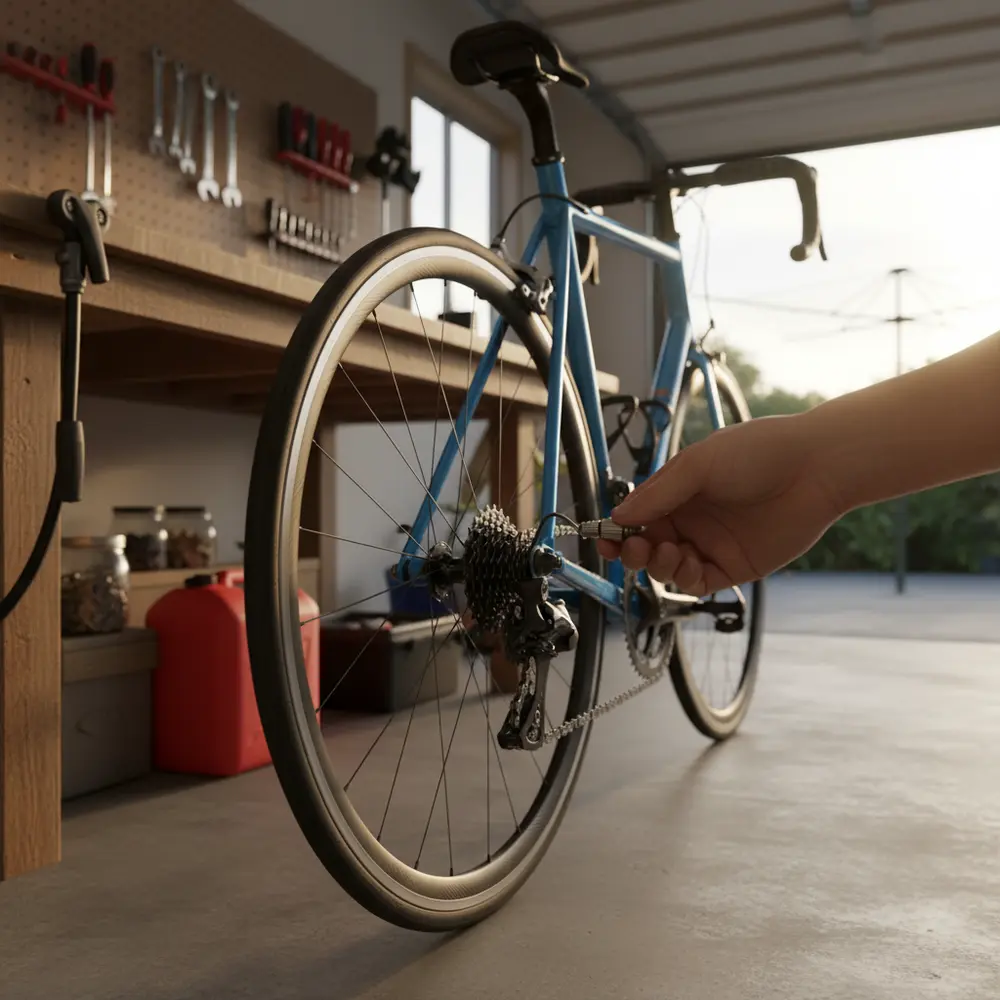
Yes, it can. A loose cassette or misaligned derailleur can create a wobbling sensation or noise that mimics rear wheel wobble. Before assuming the wheel is the problem, check that the cassette is tight and that the derailleur hanger is not bent. If you are not sure, a mechanic can quickly identify the source.
What are my rights if a bike shop truing service does not hold up?
Under Australian Consumer Law, services must be performed with acceptable care and skill. If a wheel truing service fails shortly after the repair through no fault of your own, you are entitled to a remedy from the business. Check the ACCC consumer guarantees page for full details on your rights, and go back to the shop and explain the situation calmly and clearly.
Quick Summary
- Lateral wobble is usually a spoke tension issue. Minor cases may be a safe DIY job with the right tool.
- Radial (vertical) wobble, cracked rims, and broken spokes are all stop-riding situations that need a professional cycling mechanic.
- Carbon rims are always a professional-only job, no exceptions.
- Wheel truing at an Australian bike shop is affordable and often the smarter choice over risking a DIY fix gone wrong.
- If you are ever unsure, most Australian bike shops will do a quick check for free or low cost. Use that service and ride with confidence.
Have a question about your wheels or not sure if what you are seeing is serious? Get in touch with us at Segment Club and we will point you in the right direction.
This is educational content, not financial advice.