E-bikes have taken off across Australia in recent years, and with more riders on electric bikes comes more riders running into battery and motor problems for the first time. The good news is that most issues follow a predictable pattern, and knowing what to look for can save you time, money, and a lot of unnecessary stress.
By the end of this article you will be able to identify the most common e-bike battery and motor problems, run through a simple troubleshooting flow at home, and know with confidence when it is time to book your bike in with a qualified cycling mechanic. We will also cover your rights as an Australian consumer if something fails under warranty.
Note for Australian riders:
- Pedal-assist e-bikes up to 250W and 25km/h are treated the same as regular bicycles under most Australian state road rules, meaning no registration is required.
- Australian Consumer Law (ACL) protects you if a battery or motor fails before you would reasonably expect it to. Your rights apply regardless of what a manufacturer's warranty document says.
- Not every bike shop is set up to work on e-bike electrical systems. Bosch, Shimano STEPS, and Yamaha systems each require brand-authorised service tools and trained technicians.
At a glance:
- Most e-bike battery and motor problems are not DIY fixes. Electrical faults need a qualified mechanic or authorised service centre.
- You can safely check a handful of things at home before booking a service, including charger connections, display function, and visible damage.
- Error codes on your display are your first clue. Write them down before you do anything else.
- Australian Consumer Law gives you real protection if a component fails within a reasonable timeframe.
Key takeaways:
- Do not attempt to open or repair an e-bike battery pack at home. The safety risks are serious.
- Bosch, Shimano STEPS, and Yamaha motors cannot be repaired at a general bike shop level. They need authorised dealer tools.
- A good cycling mechanic will help you work out whether a fault is a warranty claim or a wear issue.
Why E-Bike Electrical Problems Are Different From a Standard Bike
A standard bike is mostly mechanical. When something breaks, you can usually see it, touch it, and in many cases fix it yourself with basic tools. An e-bike adds a battery, a motor, a controller, a display, and a network of sensors and wiring that all need to work together. When something goes wrong in that system, it is rarely obvious from the outside.
The two most common motor types you will encounter in Australia are mid-drive motors (mounted at the pedal area, common on brands using Bosch, Shimano STEPS, or Yamaha systems) and hub motors (built into the front or rear wheel). Both are sealed units. Neither is designed to be opened or repaired by a general mechanic or a home tinkerer. Understanding how e-bike motors work before something goes wrong is genuinely useful.
The battery management system, often called the BMS, is the electronics inside the battery pack that monitors cell health, temperature, and charge state. When the BMS detects a problem, it will often shut the system down or throw an error code. That is a safety feature, not a fault in itself.
Common E-Bike Battery Problems and What They Mean
Battery Not Charging or Holding Charge
This is the most commonly reported issue among Australian e-bike owners. Before assuming the battery is dead, check the obvious things first. Is the charger plugged in properly at both ends? Is the charge indicator light on the charger doing what it should? Is the charging port on the battery clean and free of debris or corrosion?
If the charger light is not coming on at all, try a different power outlet. If the battery charges but drains unusually fast, that points to degradation inside the battery cells themselves. As noted by CHOICE Australia, real-world e-bike range is often less than the manufacturer claims, but a sudden or significant drop in range is worth investigating.
Battery Draining Faster Than Usual
Some range loss over time is completely normal. Lithium-ion batteries degrade gradually with each charge cycle, and factors like riding in hilly terrain, using high assist levels, cold weather, and rider weight all affect how far a charge will take you. However, if your range has dropped sharply over a short period, that is a sign the battery may have a fault.
Storing a lithium-ion battery either fully charged or fully flat for extended periods can accelerate this degradation. A partial charge of around 50 to 80 percent is generally recommended for longer-term storage, though you should follow the specific guidance in your e-bike owner's manual for the best results.
Error Codes on Your Display
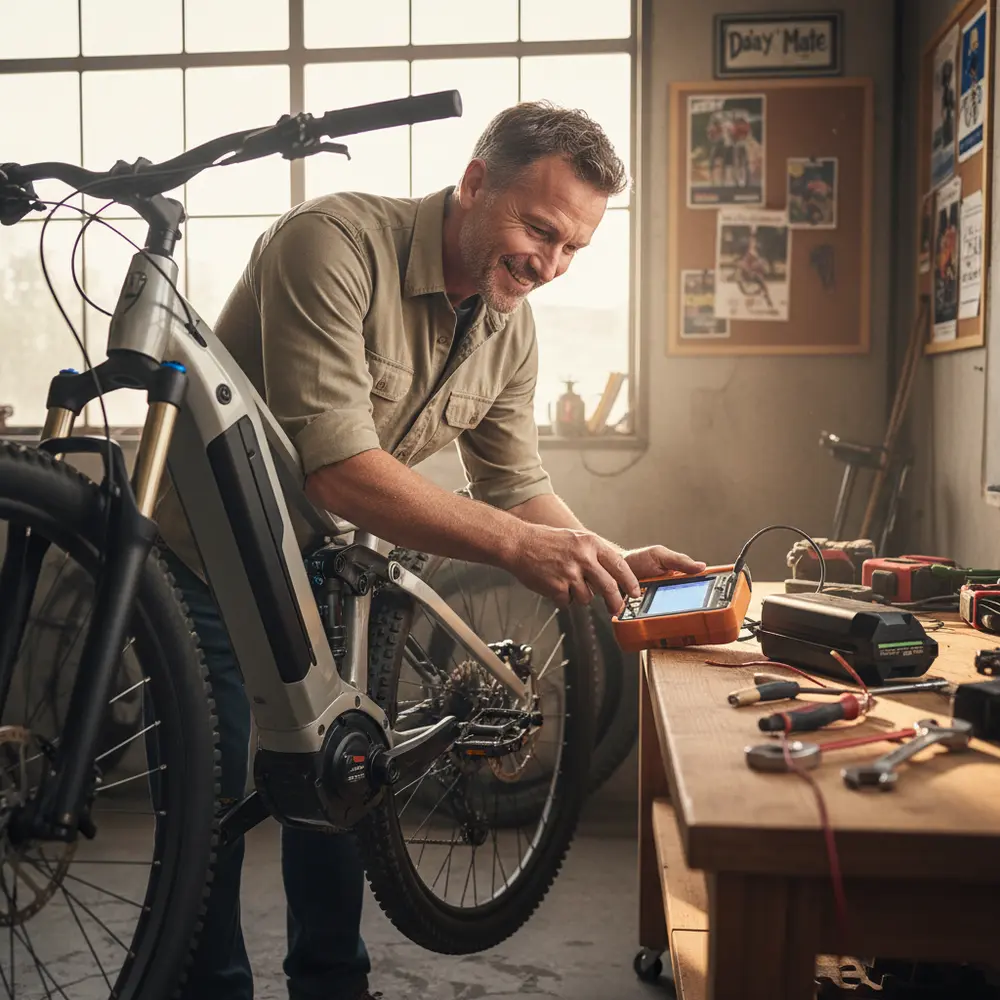
Error codes are the system's way of telling you something is not right. When one appears on your display, write it down immediately. Do not clear it and carry on without noting it first. The code will tell a qualified mechanic a great deal about where the fault lies.
Systems like Bosch use codes that can be read through the display or via the Bosch eBike Flow app. Shimano STEPS codes show on the display and require E-TUBE PROJECT software at a dealer level for full diagnosis. Yamaha systems work similarly. None of these are something you can fully interpret and act on at home without the right tools.
Common E-Bike Motor Problems and What to Watch For
Motor Cutting Out or Losing Power
A motor that cuts in and out, or that delivers inconsistent assist, is one of the more frustrating faults to deal with. Common causes include a loose connection between the battery and the motor, a faulty torque sensor (the sensor that detects how hard you are pedalling), or an issue with the speed sensor (usually a magnet and sensor near the rear wheel or crank).
Some of these connection issues can be triggered by riding in very wet conditions or after a high-pressure wash. Check that all visible connectors and cable mounts are seated properly and that nothing has worked loose. Beyond that visual check, this one needs a mechanic.
Unusual Noises Coming From the Motor
A healthy mid-drive motor is relatively quiet. Grinding, clicking, or whirring noises that were not there before are worth paying attention to. Sometimes the noise is actually coming from the drivetrain (chain, cassette, or bottom bracket) rather than the motor itself, so it is worth checking those mechanical components first.
If the noise is definitely coming from the motor unit itself, do not ignore it. Running a failing motor can cause further damage and turn a warranty repair into a much more expensive replacement. Book it in with a qualified e-bike mechanic sooner rather than later.
What You Can Check Yourself Before Calling a Mechanic
There are a handful of checks any e-bike owner can do safely at home. These will not fix an electrical fault, but they will help you rule out simple causes and give a mechanic useful information when you bring the bike in.
- Check the charger is fully connected at both ends and the indicator light is on.
- Inspect the charging port for dirt, moisture, or visible damage.
- Check all battery connection points are seated securely and not corroded.
- Look for any visible damage to cables or connectors along the frame.
- Confirm the battery is seated and locked into the frame correctly.
- Note any error codes on the display and write them down before resetting.
- Try a soft system reset by powering the bike off, removing the battery, waiting 30 seconds, and reinserting it.
That is genuinely the limit of what a beginner should do at home. Anything beyond this risks voiding your warranty or, in the case of the battery, creating a real safety hazard.
DIY or Book a Mechanic? A Simple Troubleshooting Flow
| What you are seeing | Quick home check | What it likely means | Next step |
|---|---|---|---|
| Battery not charging at all | Check charger connection and indicator light. Try a different power outlet. | Charger fault or battery fault | If charger is fine, book a mechanic. |
| Display not powering on | Confirm battery is seated. Try a reset. | Battery not connecting or display fault | If reset fails, book a mechanic. |
| Motor cutting in and out | Check connectors are seated. Inspect speed sensor magnet. | Connection issue or sensor fault | Book a mechanic. Do not ride further. |
| Error code showing | Write down the code. Do not clear it yet. | System fault detected by BMS or motor controller | Book authorised service with the code noted. |
| Range dropped significantly | Check riding conditions and assist level used. | Normal degradation or battery cell fault | If sudden drop, book a mechanic. |
| Grinding noise from motor area | Check drivetrain (chain, cassette) first. | Drivetrain wear or motor bearing fault | If noise is from motor, book a mechanic immediately. |
When You Must Take Your E-Bike to a Cycling Mechanic
Some situations leave no room for second-guessing. Take your e-bike straight to a qualified cycling mechanic or authorised service centre if you notice any of the following.
- The battery is physically swollen, cracked, or has a chemical smell.
- An error code has appeared that you cannot find in your owner's manual.
- The motor is making grinding, clicking, or loud whirring noises.
- The assist cuts out completely while riding and will not reset.
- Any wiring looks burnt, melted, or has exposed bare wire.
- The battery has been submerged or sustained a hard impact.
On the battery safety point specifically: Energy Safe Victoria advises that lithium-ion e-bike batteries can cause fires if damaged, incorrectly charged, or tampered with. A swollen battery is particularly serious and should not be charged or used under any circumstances.
Common Mistakes E-Bike Owners Make
- Using a third-party charger that is not approved for the specific battery. Always use the charger supplied with your bike or an authorised replacement from the manufacturer.
- Ignoring early warning signs like minor power cuts or intermittent error codes, then being surprised when the fault becomes a major repair.
- Attempting to open the battery pack to "have a look". This voids your warranty and creates a genuine fire risk.
- Taking an e-bike with a Bosch, Shimano STEPS, or Yamaha system to a general bike mechanic who does not have the brand-specific diagnostic tools. They will not be able to properly diagnose the fault.
- Assuming range loss is always a battery fault. Terrain, temperature, tyre pressure, and assist level all affect range significantly.
- Not writing down error codes before resetting the system. Those codes are valuable diagnostic information.
If You Are New to E-Bikes
- Read your owner's manual before you have a problem. It will cover error codes, charging instructions, and basic care specific to your system.
- Register your e-bike with the manufacturer after purchase. This makes warranty claims much simpler.
- Buy from a retailer with a physical service presence in Australia. Online-only purchases can make warranty service very difficult.
- Stick to the supplied charger. Never use a generic charger on a lithium-ion e-bike battery.
- Book a first service at the recommended interval, usually around 200 to 500km, to catch any early issues before they become expensive ones.
If You Have Owned an E-Bike Before
- Be aware that different motor systems (Bosch, Shimano STEPS, Yamaha, Bafang) each have their own service requirements and error code libraries. Do not assume what applied to your last bike applies to your current one.
- Check whether your authorised service centre is still active. Dealer networks can change, and it is worth confirming before you have an urgent issue.
- If your battery is getting older, ask your mechanic about a battery health check at your next service. Degradation is gradual and a check can give you advance warning.
- Firmware updates from Bosch and Shimano can sometimes resolve error codes or improve system behaviour. Ask your authorised dealer if your system is on the latest firmware.
- Keep a record of services and any faults you have experienced. This history is useful for warranty claims and for a mechanic diagnosing an intermittent problem.
Finding a Qualified E-Bike Mechanic in Australia
Not every bike shop is equipped to work on e-bike electrical systems, and this is a point that catches plenty of riders off guard. Bosch, Shimano, and Yamaha all require their dealers to use brand-specific diagnostic software and tools. A general bike mechanic, no matter how skilled, cannot fully diagnose a Bosch system fault without Bosch dealer access.
When looking for a service provider, ask directly whether they are an authorised dealer for your specific motor brand. Bosch maintains a dealer locator on their website, and Shimano STEPS service is available through their authorised Australian dealer network. Your original retailer should also be able to point you to the right service centre.
If you are unsure where to start or want to talk through your options, feel free to get in touch with us and we can help point you in the right direction.
Your Rights Under Australian Consumer Law
This is worth knowing before you walk into a shop. Under Australian Consumer Law guarantees, every product sold in Australia must be of acceptable quality and fit for purpose. These guarantees apply automatically and cannot be removed by a retailer or manufacturer, regardless of what their warranty document says.
If your battery or motor fails before you would reasonably expect it to, given the price and type of product, you have the right to a remedy. For a major failure, that means you can choose a refund or replacement rather than simply accepting a repair. The ACCC is the body that administers these protections, and it is worth reading their guidance if you find yourself in a dispute with a retailer.
How to Avoid Costly Battery and Motor Problems Down the Track
Prevention is genuinely cheaper than repair when it comes to e-bike electrical systems. A few simple habits will go a long way toward keeping your system healthy.
- Charge the battery after each ride rather than letting it sit flat for extended periods.
- Store the battery in a cool, dry place. Avoid leaving it in a hot car boot or direct sunlight.
- Keep charging ports and connectors clean and dry. A soft, dry cloth is all you need.
- Avoid high-pressure washing directly at motor seals, connectors, or the battery port.
- Book a regular service with a qualified mechanic familiar with your motor system. Annual servicing is a reasonable starting point for most riders.
- Check the bike servicing guide on our site for general maintenance schedules that apply to both the mechanical and electrical sides of your e-bike.
Frequently asked questions
Can I fix my e-bike battery or motor at home?
In most cases, no. Basic checks like inspecting the charger connection, checking for visible damage, and noting error codes are fine to do at home. However, opening a battery pack or attempting to repair a motor unit is not safe or practical for an untrained person, and it will void your warranty. Electrical faults on e-bikes genuinely need a qualified mechanic or authorised service centre.
How long should an e-bike battery last in Australia?
Battery lifespan varies depending on the brand, how it is used, and how well it is maintained. Lithium-ion e-bike batteries degrade gradually over charge cycles and with time. Significant range loss that appears suddenly, rather than gradually, is more likely to indicate a fault than normal wear. If you are concerned about your battery health, ask your authorised dealer for a battery capacity check.
Does Australian Consumer Law cover e-bike battery and motor failures?
Yes. Consumer guarantees under the ACL apply to all products sold in Australia, including e-bikes and their components. If your battery or motor fails before you would reasonably expect it to, you have the right to a remedy from the retailer. This applies regardless of what the manufacturer's warranty document says. The ACCC website has clear guidance on how to pursue a claim.
Why does my e-bike need to go to an authorised dealer rather than any bike mechanic?
Bosch, Shimano STEPS, and Yamaha motor systems require proprietary diagnostic software and tools to read error codes, perform firmware updates, and properly assess faults. A general bike mechanic, even a very experienced one, simply does not have access to these tools unless they are an authorised dealer for that specific brand. Taking a Bosch-equipped bike to a non-authorised shop may result in an incomplete diagnosis or a voided warranty.
Is it safe to charge my e-bike overnight or leave it on charge?
Using the correct charger supplied with your bike is essential. Energy Safe Victoria advises against leaving lithium-ion batteries on charge unattended for extended periods, and you should never charge a battery that is physically damaged or swollen. Charging on a hard, non-flammable surface and not leaving it plugged in overnight indefinitely are sensible precautions. Follow the charging guidance in your owner's manual for your specific system.
Wrapping up
- Most e-bike battery and motor faults are not DIY fixes. Electrical issues need a qualified cycling mechanic or authorised service centre for your specific motor brand.
- A handful of basic checks at home, like inspecting the charger, checking connections, and noting error codes, are worthwhile before booking a service.
- Australian Consumer Law protects you if a component fails before it reasonably should. Know your rights before you walk into a shop.
- Safety first: never attempt to open or repair a lithium-ion battery pack at home. The risks are real.
- Good habits around charging and storage will extend the life of your battery and reduce the chance of an expensive fault down the track.
This is educational content, not financial advice.