Getting the right person to work on your bike is one of the most important decisions you will make as a cyclist. A good cycling mechanic keeps you safe, extends the life of your components, and saves you money in the long run. A bad one can do the opposite.
By the end of this guide, you will know exactly where to look for a trusted bike mechanic near you, what questions to ask before you hand over your bike, and what your rights are if something goes wrong. Whether you are brand new to cycling or have been riding for a few years, this is practical information worth having.
Note for Australia:
- There is no single national licensing requirement for bike mechanics in Australia, but industry training pathways do exist through bodies like Bicycle Industries Australia.
- Under Australian Consumer Law, all repair services must be carried out with due care and skill. You have legal rights if a repair is done poorly.
- E-bike servicing in Australia often requires a brand-authorised technician for motor and battery work. Not every standard bike shop is set up for this.
At a glance:
- Start your search with Google Maps, True Local, and word of mouth from local riders.
- Understand the difference between local bike shops, independent mechanics, and mobile mechanics.
- Ask the right questions before you drop off your bike, including turnaround time, a written quote, and parts availability.
- Know the red flags that signal an untrustworthy shop or mechanic.
Key takeaways:
- A trusted mechanic communicates clearly, quotes before starting work, and stands behind their repairs.
- Brand-authorised service centres are worth seeking out for specialist components or e-bikes.
- Australian Consumer Law protects you if a repair is substandard. You do not have to just wear it.
Why It Matters Who Works on Your Bike
Your bike is a precision machine. Even on a basic road or mountain bike, components like the drivetrain, brakes, and wheels rely on correct setup and adjustment to function safely. A poorly adjusted brake or an incorrectly torqued bolt is not just annoying, it is a genuine safety risk.
Beyond safety, the quality of a service affects how long your components last. An experienced cycling mechanic will spot worn parts before they cause a failure, use the correct lubricants, and set up your bike so it shifts and brakes the way it should. That kind of attention is worth paying for.
The Cost of a Bad Service
A substandard service can cost you more than the original job. Common outcomes include accelerated wear on chains and cassettes, brake pads that are misaligned, and cables that stretch or snap sooner than they should. In worse cases, a poorly fitted component can fail mid-ride.
Beyond the mechanical cost, a bad experience can shake your confidence in getting your bike serviced at all, which leads to riding a bike that is gradually falling out of spec. The fix is knowing what to look for before you commit to a shop or mechanic.
Where to Start Your Search for a Cycling Mechanic
Most riders find their mechanic through one of three channels: an online search, a recommendation from a riding mate, or by walking into a shop near them. All three are valid starting points. The best outcome usually comes from combining them.
If you are part of a local cycling club or group ride, ask around. Word of mouth from riders who have used a mechanic repeatedly is one of the most reliable signals you can get. Organisations like Bicycle Network also connect riders with local cycling communities where these conversations happen naturally.
Local Bike Shops vs Independent Mechanics vs Mobile Mechanics
Each option has its place. The table below gives you a quick comparison to help you decide which suits your situation.
| Type | Best for | Considerations |
|---|---|---|
| Local Bike Shop (LBS) | Full services, parts availability, warranty work | May have longer wait times during busy periods |
| Independent Mechanic | Personalised service, often faster turnaround | Parts sourcing can vary. Check what brands they stock. |
| Mobile Mechanic | Convenience, home or office visits | Common in suburban Sydney and Melbourne. Better for basic to mid-level work. |
For a beginner, a local bike shop is usually the safest starting point. They typically stock the most common parts, have multiple mechanics on hand, and are easier to follow up with if there is an issue. Mobile mechanics are a great option for minor work and tune-ups if getting to a shop is difficult.
Using Online Directories and Review Platforms
For most Australians, the first stop is a quick search on Google Maps. Type in "bike shop near me" or "cycling mechanic" and you will get a list of local options with ratings, reviews, photos, and opening hours. Do not rely on the star rating alone. Read the actual reviews, especially recent ones, and look for comments specifically about service quality, communication, and turnaround time.
True Local is an Australian-specific business directory that lists bicycle shops by state and suburb. It is a useful secondary check, particularly in suburban or regional areas where Google results can be thin. Use both platforms together to build a picture of your options before you call or visit.
What to Look for in a Trusted Bike Mechanic
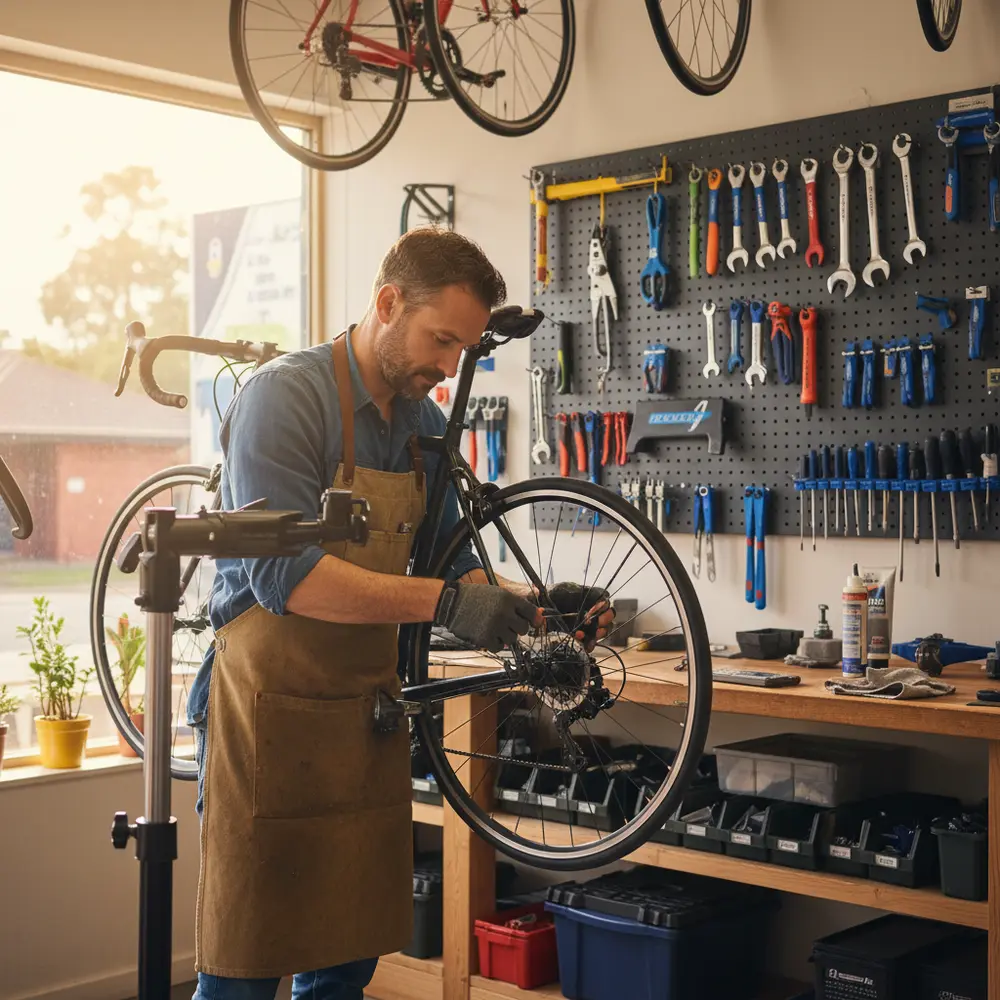
Once you have a shortlist of options, you need to assess them before committing. The best mechanics are not always the most visible or the most expensive. Look for clear communication, honest pricing, and a workspace that is organised and well-equipped.
Qualifications, Certifications, and Brand Training in Australia
Unlike some trades, there is no single mandatory certification for bike mechanics in Australia. That said, training pathways do exist. Bicycle Industries Australia is the peak body for the Australian bicycle trade, and any formal industry training standards are likely to involve or reference them. Some mechanics also complete TAFE courses in engineering or light vehicle maintenance that are relevant to bike work.
Major component brands run their own dealer and mechanic training programs. If your bike has Shimano components, look for a shop listed on the Shimano dealer locator Australia. For SRAM drivetrains, the SRAM retailer locator lists authorised service points. These are not guarantees of quality, but they are a useful filter, particularly for specialist components like electronic groupsets or hydraulic brakes.
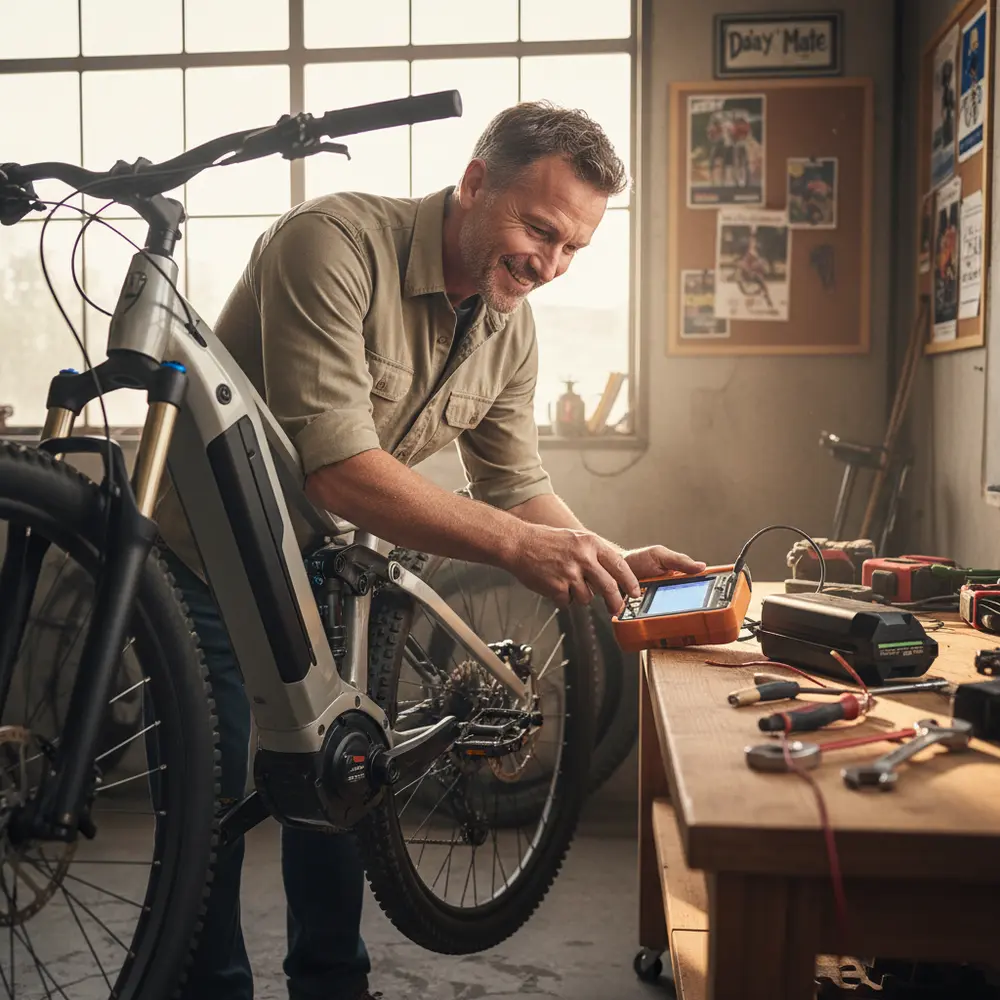
A note on e-bikes: if you ride an electric bike, not all standard mechanics are set up to service the motor or battery management system. The Electric Bicycle Association of Australia recommends using brand-authorised technicians for motor and battery work. For the mechanical side of an e-bike, such as brakes, tyres, and drivetrain, a competent standard mechanic is usually fine.
Questions to Ask Before You Hand Over Your Bike
Do not be shy about asking questions before a service. A good mechanic will welcome them. Here are the key ones to cover:
- Can you give me a written quote before you start?
- What is the expected turnaround time?
- Do you stock parts for my bike type (road, mountain bike, e-bike, gravel)?
- Do you have experience with my specific components or groupset?
- Is the labour and parts work covered by any warranty?
- Will you call me if you find additional issues before doing any extra work?
A mechanic who answers these questions clearly and without any frustration is a good sign. One who is vague about pricing or turnaround time is worth approaching with caution.
Red Flags to Watch Out For
Most shops and mechanics are straight up. But there are warning signs worth knowing, especially if you are new to the process.
Common red flags:
- No written quote offered, and vague answers when you ask for one.
- Work started without your approval, or a bill that is significantly higher than the original estimate.
- The mechanic cannot explain what was done or why a part needed replacing.
- Your bike comes back with the same problem it went in with, or a new issue that was not there before.
- The shop is reluctant to let you ask questions or inspect the work.
- No warranty or guarantee offered on the labour or parts used.
Under Australian Consumer Law, services must be carried out with due care and skill. If a repair is substandard, you are entitled to a remedy. That might mean the work being redone or a refund. If a shop refuses to address a legitimate issue, your state Fair Trading office is the next step. In New South Wales, for example, NSW Fair Trading handles disputes relating to repair services and can assist if a shop does not cooperate.
Common Mistakes When Choosing a Mechanic
- Choosing based on price alone without checking reviews or asking questions first.
- Not asking for a written quote, then being surprised by the final bill.
- Assuming the closest shop is the best option without doing any background research.
- Not describing the symptoms clearly, which leads to the wrong problem being diagnosed.
- Taking an e-bike to a shop that is not set up to service the electrical components.
- Ignoring a bad experience and not following up, which leaves you out of pocket and your bike still in poor condition.
If You Are New to Getting Your Bike Serviced
- Start with a basic tune-up or safety check rather than a full service. It is a lower-cost way to assess a new mechanic.
- Know your bike's make, model, and what type of components it has before you call or visit.
- Write down any symptoms or issues you have noticed, even minor ones. "The front brake feels a bit soft" is useful information.
- Do not be embarrassed to say you are a beginner. A good mechanic will communicate accordingly.
- Ask for the work to be explained to you when you pick up the bike. Understanding what was done helps you maintain it better going forward.
If You Have Used a Bike Shop Before
- Ask about mechanic specialisation. If your drivetrain is SRAM AXS or Shimano Di2, ask which mechanic in the shop has the most experience with electronic shifting.
- Request the same mechanic for repeat visits once you find one you trust.
- Ask whether the shop has completed any recent brand training, particularly if you ride newer or more complex components.
- Consider asking about a scheduled service plan if you ride regularly. Some shops offer packages that can save you money over time.
- If you have had a bad experience elsewhere, explain what went wrong so the new mechanic can check that area specifically.
How to Build an Ongoing Relationship with Your Mechanic
The best mechanic you will ever have is one who knows your bike almost as well as you do. That relationship takes a bit of time to build, but it is worth the effort. Stick with a shop or mechanic who communicates well, delivers on their commitments, and treats your bike with care.
Let them know how you use your bike. A commuter who rides every day in all weather has different servicing needs to a weekend road rider. The more context they have, the better the advice they can give you. And if you ever ride with a club or group, sharing a good mechanic recommendation is one of the better things you can do for your fellow riders. Check out our article on when to seek bike mechanic help to get a better sense of what issues are worth a workshop visit versus what you might handle yourself.
It is also worth reading up on basic bike maintenance so you can do the simple stuff between services. A mechanic will respect a rider who looks after their bike between visits, and it keeps your costs down too. If you ever need advice or want to talk through your options, feel free to get in touch with us and we are happy to point you in the right direction.
Before You Drop Off Your Bike - Pre-Visit Checklist
Use this checklist before every workshop visit. Screenshot it or print it out and take it with you.
- Know your bike brand, model, and approximate year of purchase.
- List the specific symptoms or issues you have noticed, even minor ones.
- Ask for a written quote before any work begins.
- Confirm the expected turnaround time before you leave the bike.
- Check whether the shop stocks parts suited to your bike type (road, mountain bike, gravel, e-bike).
- Ask whether labour and parts are covered by any warranty.
- Confirm that the shop will contact you before doing any work beyond the agreed scope.
- Take note of the mechanic's name and direct contact if possible.
Frequently Asked Questions
Is there a way to check if a bike mechanic is officially certified in Australia?
There is no single national certification that all mechanics must hold. However, you can check whether a shop is listed as an authorised dealer by major brands like Shimano or SRAM, which indicates some level of product training. Bicycle Industries Australia is the relevant peak body for industry standards in the Australian trade.
How much should I expect to pay for a bike service in Australia?
Service pricing varies between shops and regions. A minor tune-up covering brakes, gears, and tyres will typically cost less than a full major service that includes bearing overhauls, cable replacements, and a deep clean. Always ask for a quote upfront rather than assuming a flat rate applies.
What should I do if a bike shop does a bad repair?
Start by raising the issue directly with the shop and giving them the opportunity to fix it. Under Australian Consumer Law, services must be delivered with due care and skill, and you are entitled to a remedy if they fall short. If the shop does not cooperate, contact your state Fair Trading office for assistance.
Are mobile bike mechanics as reliable as local bike shops?
Mobile mechanics can be excellent, particularly for tune-ups, minor repairs, and convenience. They are especially common in suburban Sydney and Melbourne. For complex work, major overhauls, or warranty repairs, a local bike shop with a full workshop is usually the better option due to parts availability and specialist tools.
Do I need a specialist mechanic for my e-bike?
For the mechanical components of your e-bike such as brakes, drivetrain, and tyres, a competent standard mechanic can usually help. For motor, battery, or electrical system issues, the Electric Bicycle Association of Australia recommends using a brand-authorised service centre. Check with your e-bike brand for their recommended service network in Australia.
Quick Summary
- Search using Google Maps and True Local, then cross-check with word of mouth from local riders.
- Ask for a written quote, confirm turnaround time, and check parts availability before you drop off your bike.
- Look for shops that are authorised by the brands that match your components, particularly for specialist or electronic drivetrains.
- Know your rights under Australian Consumer Law. You do not have to accept a substandard repair.
- Build a relationship with a mechanic who knows your bike. It pays off over the long term.
This is educational content, not financial advice.