If you have been wrenching on your own bike for a season or two and feeling fairly confident about it, that is genuinely a good thing. But there is one tool that separates riders who are confident from riders who are both confident and protected, and that tool is a torque wrench.
By the end of this article you will know exactly why torque matters on a modern bike, which type of wrench to buy, what Nm settings to use on your most important contact points, and how to work through a simple torque check at home without overcomplicating it.
Note for Australia:
- Many mid-range bikes sold in Australia now come with carbon seatposts, carbon bars, or carbon forks as standard, making accurate torque more relevant than ever at the $2,500 to $5,000 price point.
- Torque wrenches are available at Bunnings, local bike shops, and major Australian online retailers like Pushys, so the barrier to getting one is lower than you might think.
- Australian consumer warranty terms can be affected by incorrect home servicing, so following manufacturer torque specs is a sensible habit to build.
At a glance:
- A torque wrench measures and applies a precise rotational force (in Newton-metres, or Nm) so you neither under-tighten nor over-tighten a bolt.
- Over-tightening is the more common mistake for home mechanics, and on carbon components it can cause damage that is invisible until something fails.
- A click-type torque wrench in the 2-20 Nm range covers the vast majority of bolts on a road or gravel bike.
- Decent options start around $40 to $80 AUD, and you can find them at bike shops, Bunnings, or online.
Key takeaways:
- Always cross-check the Nm spec printed on your component with the manufacturer documentation before tightening.
- Carbon paste or grease on threads changes the effective clamping force, so use whatever the manufacturer specifies.
- Store your click-type wrench at its lowest setting to preserve the internal spring calibration.
Why a Torque Wrench Belongs in Every Intermediate Rider's Kit
When you are new to home bike maintenance, the temptation is to tighten bolts until they feel firm and move on. That approach works right up until it does not. The problem is that "firm" is a feeling that varies from person to person, and on a modern bike with carbon components and aluminium threads, the margin between tight enough and too tight is surprisingly small.
A torque wrench removes that guesswork entirely. It applies a measured amount of rotational force, expressed in Newton-metres (Nm), and tells you when you have hit the target. No more relying on your wrist for a spec that the component manufacturer spent engineering time calculating.
This matters more now than it did a decade ago. Carbon bars, carbon seatposts, and alloy stems with small-diameter bolts are standard on bikes across a wide price range in Australia. Each of those components has a specific torque requirement, and it is often lower than most riders would guess by feel alone.
What Goes Wrong Without One (And It's More Common Than You Think)
The two failure modes are over-tightening and under-tightening, and both cause problems. Under-tightening leads to creaking, slipping, and components moving under load, which is annoying and potentially unsafe. Over-tightening is the more dangerous one for most home mechanics because the consequences are less obvious.
Carbon fibre can crack internally without any visible sign on the surface. You might ride on a cracked carbon seatpost or handlebar for weeks before it fails, often in the worst possible place and moment. As the team at Bike Tinker Australia explain, the cost of a torque wrench is negligible compared to replacing a cracked carbon component, and that is before you factor in the safety risk.
Stripped threads are the other common outcome. Aluminium threads in a stem or derailleur hanger do not forgive much over-torquing, and once a thread is stripped you are looking at a HeliCoil repair or a component replacement. A torque wrench prevents both of these outcomes with very little effort on your part.
Common mistakes home mechanics make without a torque wrench:
- Over-tightening stem faceplate bolts on carbon bars, crushing the bar over time.
- Under-tightening seatpost clamp bolts, causing the post to slip mid-ride.
- Applying the same feel to every bolt regardless of bolt size or material.
- Skipping torque checks after a bike fit or component swap.
- Using a full-size hex key with a long arm, generating far more torque than a small bolt needs.
How a Torque Wrench Actually Works
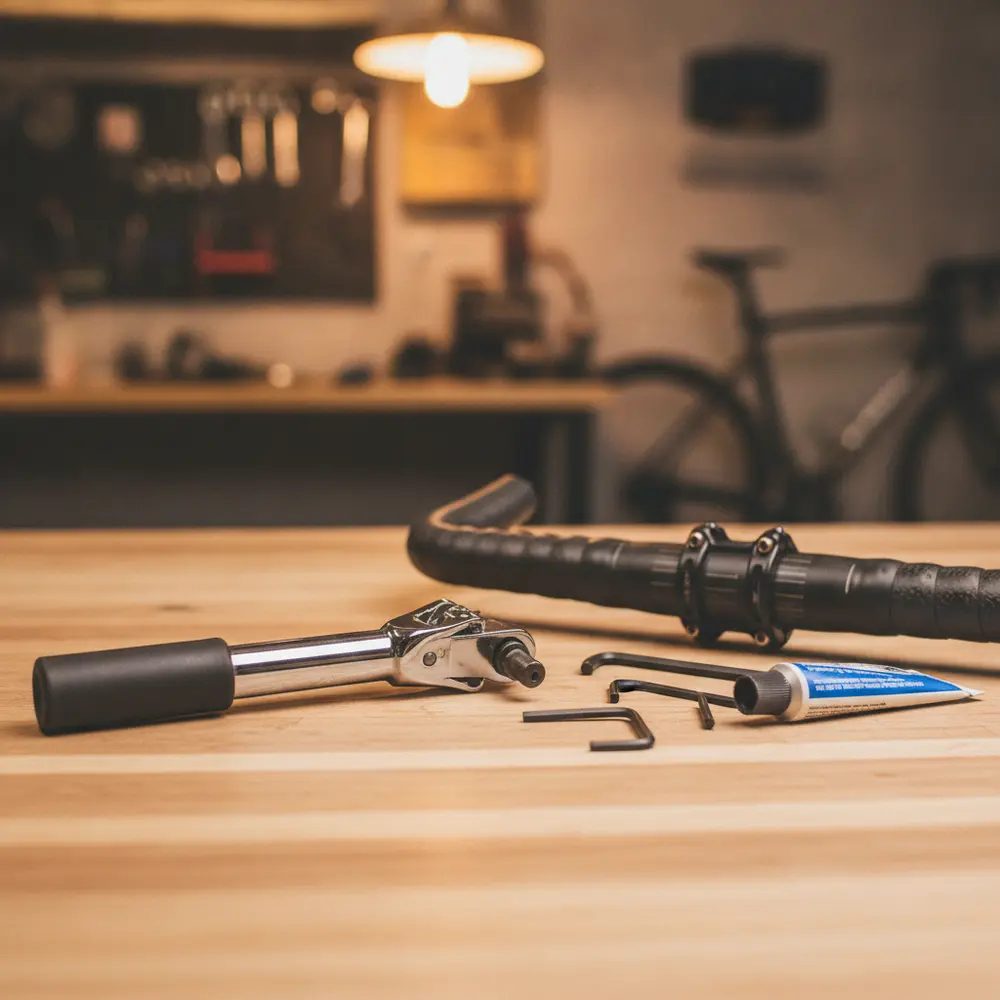
A torque wrench is a calibrated tool that measures the rotational force you apply to a bolt. You set the target Nm value, tighten the bolt, and the wrench signals you when you have reached it. That is the simple version, and for most cycling purposes it is all you need to know.
The physics behind it is straightforward. Torque is force multiplied by the length of the lever arm. A longer wrench or a harder pull means more torque. The wrench translates that into a precise Nm reading so you are not guessing.
According to Park Tool's guide to torque and wrenches, over-tightening is just as damaging as under-tightening on carbon, and the wrench is the only reliable way to stay within the safe range for both outcomes.
Click-Type vs Beam vs Digital: Which One Should You Buy
There are three main types of torque wrenches you will come across, and each has a different place in the home workshop. The table below gives you a quick comparison to help you decide.
| Type | How it signals | Accuracy | Best for | Price range (AUD) |
|---|---|---|---|---|
| Click-type | Audible click when target Nm is reached | Good for home use | Most cyclists, all contact points | $40 to $120 |
| Beam | Needle deflects on a scale as you tighten | Reliable but harder to read in tight spaces | Budget builds, open areas | $20 to $50 |
| Digital | Buzzes or beeps at target torque | Very precise | Workshop enthusiasts, carbon builds | $80 to $200+ |
For most intermediate riders, a click-type wrench is the right call. It is straightforward to use, accurate enough for home maintenance, and the audible click means you stop tightening at exactly the right moment. As covered in this torque wrench buying guide for cyclists, a 1/4 inch drive click-type covering 2 to 20 Nm suits the vast majority of bike bolt applications.
One important maintenance note: click-type wrenches rely on an internal spring to signal the click. Store yours wound back to its lowest setting after every use. Leaving it set at a high Nm value compresses the spring continuously and degrades calibration over time. Most quality wrenches benefit from recalibration annually or after heavy use.
Torque Settings You Need to Know for Your Bike
The single most important rule here is to always check the spec printed on your actual component first. The Nm value stamped on a stem, seat collar, or brake lever clamp is the manufacturer's specification for that part, and it takes priority over any general guide, including this one.
That said, the reference values below are widely cross-referenced across sources including Sheldon Brown's bicycle torque specifications and Park Tool, and give you a solid starting point when you cannot find the original documentation.
Carbon vs Aluminium: Why the Material Changes Everything
The material your component is made from changes the torque spec significantly. Carbon fibre requires lower clamping force than aluminium for two reasons: it is less tolerant of point pressure, and it can be crushed or cracked by over-tightening before any visual warning appears.
Thread preparation also plays a role. When you use carbon assembly paste on a carbon seatpost or bar, the paste increases friction between the surfaces. This means you need less clamping force to achieve the same grip, which is why manufacturers often specify a lower Nm value when carbon paste is used. Always follow the component manufacturer's note on whether to use grease, carbon paste, or nothing at all on threads and contact surfaces, as BikeRadar's workshop guide on carbon component torque settings makes clear.
When and How to Use a Torque Wrench on Your Bike
You do not need to torque every bolt every ride. A torque check makes sense in three situations: after any component replacement or adjustment, after a professional bike fit where contact points have moved, and as part of a periodic service check every few months if you ride regularly.
If you want broader guidance on building a consistent maintenance habit, our bike maintenance hub at Segment Club is a good place to start. And if you are putting together a home workshop, check out our guide to essential cycling tools for home mechanics.
Step-by-Step: Checking and Setting Torque on Common Contact Points
Work through this sequence on your road or gravel bike. Take your time, move steadily, and do not rush the click.
- Find the spec first. Check the Nm value on the component itself or in the manufacturer's documentation. Do this before you pick up the wrench.
- Prepare the threads. Apply the correct prep, whether that is grease, carbon paste, or nothing, as specified by the manufacturer. Thread prep affects clamping force.
- Set the wrench. Dial your click-type wrench to the target Nm. If the spec is a range (for example, 4-6 Nm), set it to the middle value and adjust from there.
- Apply smooth, steady force. Turn the wrench in one direction without jerking. The moment you hear or feel the click, stop. That bolt is done. Do not add another half-turn "just to be sure."
- Work in a star pattern on multi-bolt clamps. For a four-bolt stem faceplate, tighten bolts in a diagonal sequence, building torque evenly rather than fully tightening one bolt at a time.
- Record and move on. If you are adjusting multiple contact points, work through them systematically and check each one off the list below.
If you're new to using a torque wrench:
- Start with a non-critical bolt like a bottle cage to get a feel for the click.
- Use the lowest end of any Nm range the first time, then check for movement before going higher.
- Do not apply torque to a dirty or dry thread. Clean first, then prep, then torque.
- Keep a printed or saved copy of your component specs in your workshop so you always have a reference.
If you have used a torque wrench before:
- Check your wrench calibration annually, especially if it is a click-type you have owned for several years.
- Revisit torque settings after your first few rides following any contact point change, as materials can settle slightly.
- If you have moved to a carbon bar or seatpost recently, re-read the manufacturer spec, as the Nm value is likely lower than your previous alloy setup.
- Consider a dedicated 1/4 inch drive wrench for bike-specific use rather than sharing a larger 3/8 inch drive wrench from a general toolkit.
Choosing the Right Torque Wrench for Australian Riders
You do not need to spend a lot of money to get a torque wrench that does the job well on a bike. The key is getting one that covers the right Nm range and comes from a brand with reasonable quality control.
For bike use, you need a wrench that covers at least 2 Nm at the low end and 20 Nm at the high end. Below 2 Nm you will not generate enough force to tighten most bolts properly. Above 20 Nm you are into crank bolts and pedals, which is territory where you might also use a pedal spanner or a dedicated crank tool.
What to Look for, What to Spend, and Where to Buy in Australia
A quality click-type torque wrench for cycling starts around $40 to $80 AUD in Australia. Purpose-built bike torque wrenches, like those from Park Tool or similar cycling-specific brands, often come with a set of hex and Torx bits and a convenient range for bike use. General automotive torque wrenches in the same price bracket can also work, but double-check the minimum Nm range before buying because many automotive options start at 5 Nm or higher, which is too coarse for fine carbon contact points.
For a broader look at where to invest in your home workshop, our article on setting up a home workshop for cyclists covers the full kit. If you have questions about which tool suits your specific setup, get in touch with the Segment Club team and we will point you in the right direction.
Where to buy in Australia:
- Local bike shops: Best for getting advice alongside the purchase. Staff can confirm the right Nm range for your specific bike.
- Pushys and other online cycling retailers: Good range, competitive pricing, and cycling-specific options.
- Bunnings: Stocks general torque wrenches that can work for bike use, but check the Nm range carefully before buying.
- Direct from brand websites: Park Tool and other cycling brands ship to Australia and offer purpose-built options.
Quick-Reference Torque Checklist for Road and Gravel Bikes
Print this out or save it to your phone for workshop use. These are commonly referenced values, but always confirm against the spec printed on your component or in your manufacturer documentation. Values marked with an asterisk (*) may vary when carbon paste or grease is used.
| Contact Point | Typical Nm Range | Notes |
|---|---|---|
| Stem faceplate bolts (carbon bars) | 4-6 Nm * | Check stem for stamped spec. Use carbon paste if specified. Work in a star pattern. |
| Stem faceplate bolts (alloy bars) | 5-8 Nm | Confirm with stem manufacturer. Alloy bars tolerate slightly more clamping force. |
| Stem clamp bolt (on steerer) | 5-8 Nm | Carbon steerer: check fork and stem specs carefully. Do not exceed the lower of the two. |
| Seatpost clamp bolt | 4-8 Nm * | Carbon post: use carbon paste. Alloy post in carbon frame: check frame spec. |
| Bottle cage bolts | 2-4 Nm | Easy to over-tighten. These bolts are small and the thread is often aluminium. |
| Derailleur hanger bolt | 4-8 Nm | Check frame or hanger documentation. Aluminium threads are easy to strip here. |
| Crank bolt (varies by system) | 35-50 Nm | Square taper, splined, and self-extracting systems all differ. Check Shimano or SRAM docs. |
| Pedals | 35 Nm | Use a pedal spanner or 8 mm hex. Left pedal is reverse thread (tighten anticlockwise). |
| Brake lever clamp | 6-8 Nm | Check lever body for stamped spec. Carbon bars: use carbon paste if specified. |
| Rear derailleur mounting bolt | 8-10 Nm | Confirm with derailleur manufacturer. Thread prep per spec. |
For a deeper reference, Cyclist Australia's guide on how to torque bike bolts correctly is worth bookmarking alongside this checklist.
Common Mistakes to Avoid
- Using a long hex key arm and muscle. A standard L-shaped hex key gives you more leverage than most small bolts need. A torque wrench with the correct bit removes this risk entirely.
- Ignoring thread prep. Torquing a dry thread or using the wrong lubricant changes the effective clamping force. Follow the manufacturer spec for thread preparation every time.
- Leaving the wrench set at high Nm. This compresses the internal spring on a click-type wrench and degrades accuracy. Always wind it back to the lowest setting after use.
- Applying a single torque spec to all bolts. Different bolts on the same bike can have wildly different Nm requirements. Always check each one individually.
- Not using a star pattern on multi-bolt clamps. Tightening one bolt fully before the others creates uneven clamping pressure on carbon components.
- Skipping a torque check after a fit change. Any adjustment to bars, stem, or seatpost height means you need to re-torque those contact points.
Frequently asked questions
Can I use a regular automotive torque wrench on my bike?
Yes, but check the minimum Nm range first. Many automotive torque wrenches start at 5 Nm or higher, which means they cannot accurately set values below that. For fine carbon contact points that require 2-4 Nm, you need a wrench that covers the lower end of the range. A cycling-specific or general-purpose 1/4 inch drive click-type in the 2-20 Nm range is the better choice for most bike bolts.
How often should I have my torque wrench recalibrated?
Annually is a reasonable interval for a click-type wrench used in a home workshop. If you use it frequently or have dropped it, recalibration sooner makes sense. Storing the wrench at its lowest Nm setting extends the time between calibration services by protecting the internal spring. Some riders send wrenches back to the manufacturer, others use a local tool calibration service.
Does it matter if I use grease or carbon paste on my bolts?
Yes, it matters a lot. Thread lubricant reduces friction, which means the same Nm reading delivers more actual clamping force compared to a dry thread. Carbon assembly paste, on the other hand, increases friction at the contact surface to help grip at a lower Nm. Always follow the component manufacturer's specification for thread and interface preparation before applying torque, because using the wrong product can lead to either slipping or over-clamping.
Is the torque value stamped on my stem just a suggestion?
No, it is the manufacturer's calculated safe range for that component. It accounts for the material, thread size, and intended use. Exceeding it risks stripping the thread or damaging the component. Treating it as a guideline you can exceed by feel is the thinking that leads to cracked carbon and stripped alloy threads. Treat the stamped spec as the ceiling, not a starting point to exceed.
What is the minimum I should spend on a torque wrench for bike use in Australia?
Around $40 to $60 AUD will get you a functional click-type torque wrench from a reputable brand that is accurate enough for home bike maintenance. Below that, accuracy becomes less reliable and that undermines the whole point. Spending $80 to $120 on a purpose-built cycling torque wrench with the right bit set and Nm range is a worthwhile upgrade if you are doing regular work on carbon components. As noted in Pushys' guide to essential bike maintenance tools, this is a tool investment that pays for itself quickly against the cost of component damage.
Wrapping up
A torque wrench is not complicated and it is not expensive relative to the components it protects. Here is a quick summary before you head to the workshop:
- A click-type torque wrench in the 2-20 Nm range covers the vast majority of bolts on a road or gravel bike.
- Always check the spec on the component first. General guides are a reference, not a substitute.
- Thread prep (grease, carbon paste, or nothing) affects the effective torque, so follow the manufacturer's instruction.
- Store your wrench at its lowest setting to protect calibration, and recalibrate annually.
- The cost of a decent wrench is minor compared to replacing a cracked carbon component or a stripped derailleur hanger.
This is educational content, not professional mechanical advice. Always consult a qualified bicycle mechanic for safety-critical work or if you are unsure about any procedure on your bike.