Pulling a bottom bracket for the first time sounds straightforward until you realise the tool you ordered does not fit your shell, and now your crankset is sitting on the workbench with nowhere to go. Getting the right bottom bracket tools before you start is the difference between a clean Saturday morning job and an expensive trip to the bike shop to undo your own mistake.
By the end of this guide you will know exactly which BB standard your frame uses, which tools you need to remove and install it, and where to buy them in Australia without waiting three weeks for international shipping.
Note for Australian riders:
- Australian bikes span a wide mix of generations, from older BSA-threaded steel and alloy frames to modern press fit carbon road and MTB bikes. Your tool kit needs to reflect that reality.
- Coastal conditions, including salt air and road grit, shorten BB life faster than in drier climates. Regular service is worth building the tools for.
- Local retailers like 99 Bikes and Pushys stock most of what you need with domestic shipping, so plan your tool purchase before you pull the bike apart.
At a glance:
- Identify your BB standard first. Buying a tool before confirming your standard is the most common mistake.
- Threaded BBs (BSA, Italian, T47) need a cup socket or spanner. Press fit BBs need a dedicated press and drift tool.
- A torque wrench is non-negotiable for threaded installation. Hand-tight is not good enough.
- Quality matters most for press fit tools. Budget press tools can damage bearing shells and cause the creaking you were trying to fix.
Key takeaways:
- BSA/English thread is still the most common standard on Australian road and MTB bikes, but press fit and T47 are increasingly common on newer frames.
- Most press fit tools require adapters for different shell diameters. A truly universal tool is rare, so check compatibility before buying.
- Manufacturer documentation from Shimano and SRAM is the authoritative source for torque specifications. Always confirm values there before tightening.
Why the right bottom bracket tool matters
A bottom bracket sits inside the frame shell and takes constant rotational load, pedalling torque, and road vibration. When it is installed or removed correctly, it is invisible. When it goes wrong, you get creaking, bearing play, or in the worst case, damaged threads or a cracked press fit shell that turns a cheap service into a frame repair.
The right tool does two things. It applies force evenly across the cup or bearing race, and it gives you control over how much torque you are putting in. Neither of those outcomes is possible with a substitute tool.
Getting it wrong is expensive: stripped threads and cracked shells
Stripped threads on an aluminium BB shell are a serious problem. A re-tap or helicoil repair is possible but adds cost and means the bike is out of action. Press fit shells are even less forgiving. A bearing driven in at an angle without a proper press tool will creak from day one, and you may crack the shell or spin a bearing race if you try to remove it without the correct drift.
As the folks at BikeRadar note in their BB replacement guide, press fit BBs should never be driven in without a proper press tool, and cross-threading on threaded BBs is most common when cups are not started squarely by hand before applying the socket. The tool is not optional. It is the job.
Bottom bracket standards you need to know before buying tools
The reason there are so many BB tools on the market is that there are genuinely many different BB standards in production and in the field. As CyclingTips explains in their overview of bottom bracket standards, the proliferation of formats creates real tool complexity for home mechanics. Understanding which category your bike falls into narrows the tool list down fast.
Threaded standards: BSA/English, Italian, and T47
BSA (also called English thread) uses 1.37-inch x 24 tpi threading and is the dominant standard on road and mountain bikes in Australia. The right-side cup is right-hand thread and the left-side cup is also right-hand thread on modern cartridge BBs. Italian thread uses 36mm x 24 tpi with a left-hand thread on the drive side, which catches plenty of mechanics out. It is less common today but still found on older steel road bikes, particularly Italian-made frames.
T47 is a growing standard that uses a threaded shell with a 46mm internal diameter, allowing larger-diameter spindles while keeping the reliability of threads. It looks like an oversized BSA shell and requires its own dedicated socket, though the general approach is the same as threaded work. For a thorough breakdown of all three, the Sheldon Brown bottom bracket standards reference remains the most complete plain-language resource available.
Press fit standards: PF30, BB86, BB92, and BB386EVO
Press fit standards replaced threads with a direct interference fit between the bearing cup and the frame shell. Each format has a different shell diameter and width, which means tools are not always interchangeable. PF30 uses a 46mm shell diameter. BB86 and BB92 use an 86.5mm shell diameter but differ in width. BB386EVO uses a wider 86.5mm shell with a 30mm spindle bore.
Wheels Manufacturing's bottom bracket education page is the clearest resource for understanding these dimensional differences and which press tools or adapters each standard requires. The key point: incorrect press fit installation without the right tool is one of the leading causes of BB creaking.
Quick reference: BB standards and the tools they need
| Standard | Shell diameter | Thread type | Tool needed |
|---|---|---|---|
| BSA / English | 34.8mm | 1.37" x 24 tpi | BB cup socket (e.g. Park Tool BBT-32) |
| Italian | 36mm | 36mm x 24 tpi | Italian BB cup socket |
| T47 | 46mm | 47mm x 1mm | T47-specific socket |
| PF30 | 46mm | Press fit | 46mm press tool and drift |
| BB86 / BB92 | 86.5mm | Press fit | 86.5mm press tool and drift |
| BB386EVO | 86.5mm | Press fit | 86.5mm press tool, wide version |
The core tools every intermediate mechanic should own
You do not need a full workshop to do BB work at home. For most threaded setups, three tools will cover you. Press fit work adds a couple more items, but the principle is the same. Start with what your current bike needs and build from there.
Bottom bracket socket and spanner options
For BSA and Italian threaded BBs, a dedicated BB cup socket that slots onto a 3/8-inch or 1/2-inch drive ratchet or torque wrench is the standard approach. Park Tool's BBT-32 is a widely stocked example in Australia and works with Shimano Hollowtech II cups. Shimano's own TL-FC32 cup tool is another common option referenced in their official service instructions.
A word of caution on multi-tool sockets that claim compatibility with every BB standard. Some of these do not seat squarely on certain cup designs, which can round off the splines or slip under load. If you are buying a multi-fit socket, check reviews from other mechanics who have used it on your specific BB type before committing.
Press fit removal and installation tools
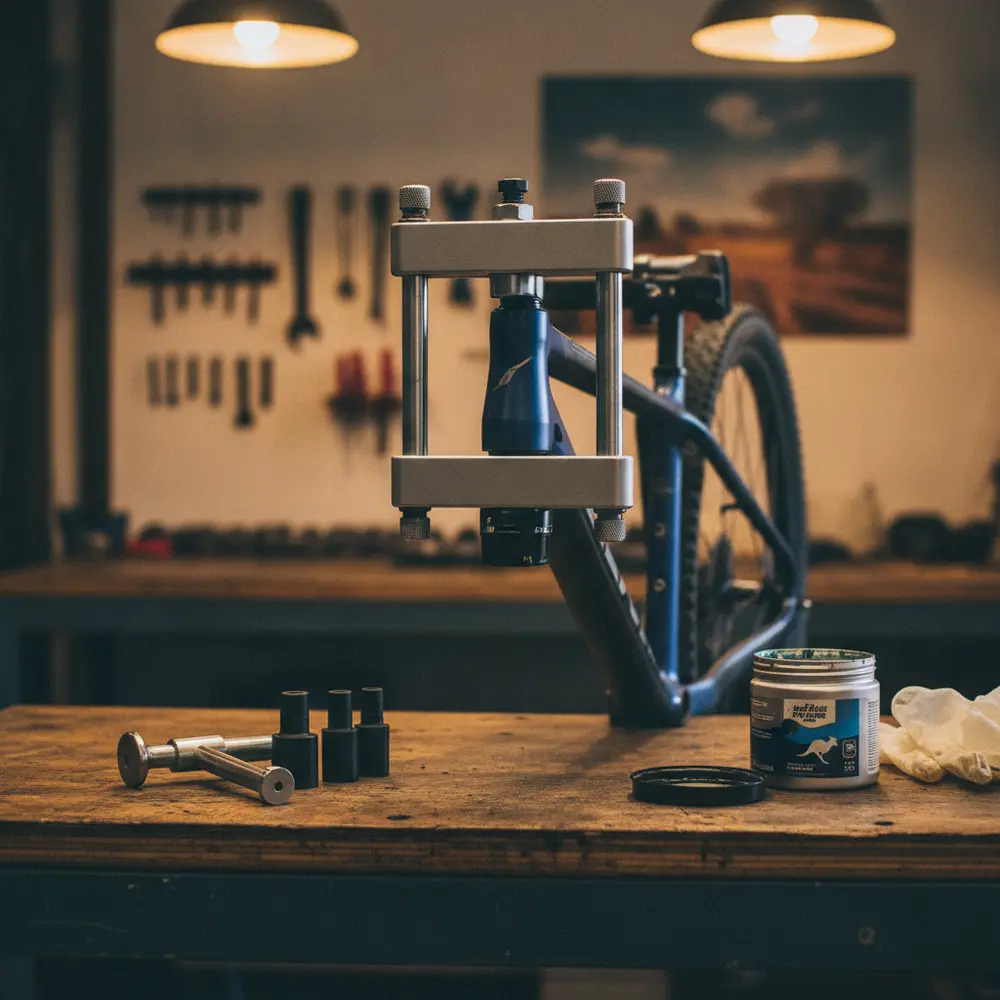
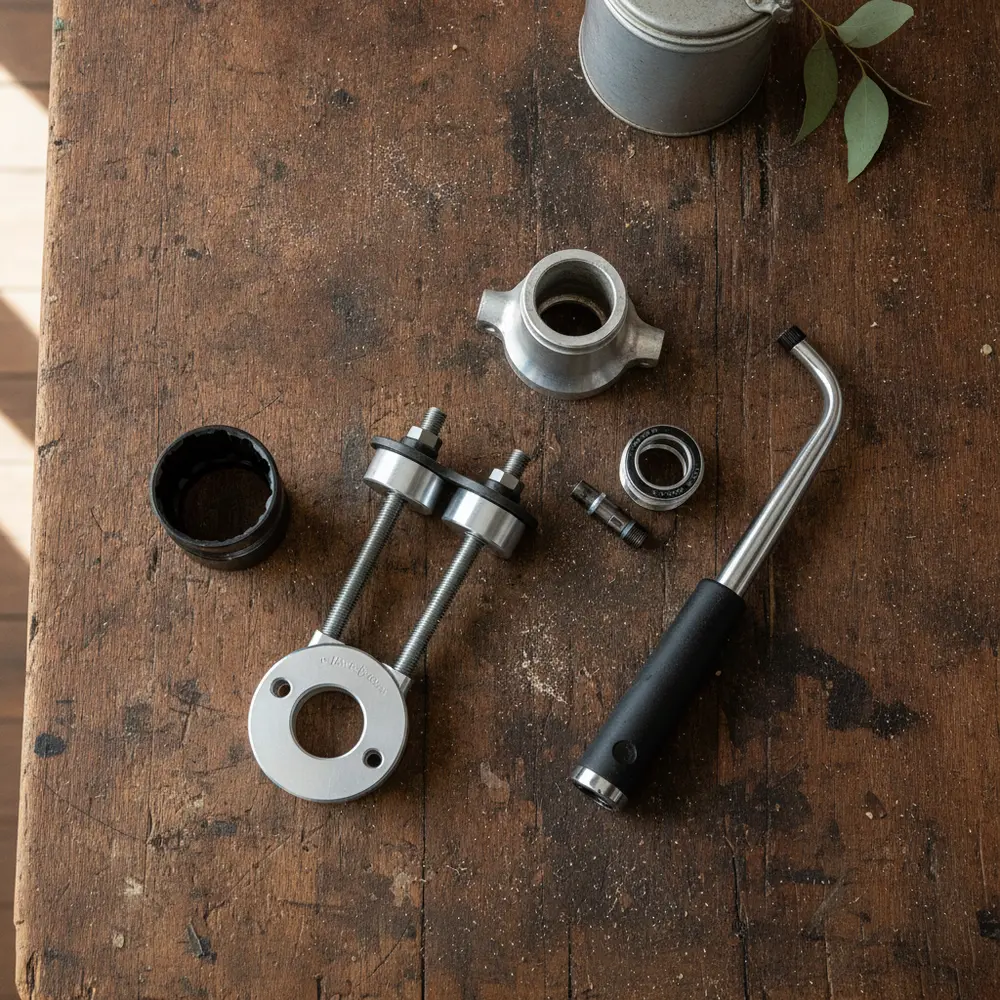
Press fit installation requires a threaded press that spans the shell and draws the bearing cups in evenly from both sides. Press fit removal requires a drift tool sized to the bearing race. These are two separate operations requiring two separate tools or a combined tool set. Do not try to remove a press fit bearing with a hammer and a random punch. You will crack the shell or damage the bearing seat.
Budget press tools are a genuine buyer-beware area. A poorly made press that flexes under load will drive bearings in at a slight angle, which causes immediate creaking and shortens bearing life. This is one area where spending more on a reputable brand pays for itself quickly.
Torque wrench: non-negotiable for BB work
A torque wrench is not optional for threaded bottom bracket installation. Shimano and SRAM both publish specific Nm values for their BB installations in their technical documentation, and those values exist for a reason. Under-torqued cups work loose and creak. Over-torqued cups strip threads, particularly in aluminium shells.
A click-style torque wrench in the 10 to 60 Nm range covers BB work and most other drivetrain tasks. You do not need a workshop-grade unit, but buy from a known brand rather than a no-name option. A torque wrench that reads inaccurately is worse than no torque wrench at all. Always confirm torque specifications in the manufacturer's documentation for your specific BB and crankset combination. For SRAM DUB systems, refer to the SRAM bottom bracket service documentation for current values.
Choosing the right tool for your specific bottom bracket
Use this decision tree to map your BB to the tool you need.
- Is your BB threaded or press fit? Check the inside of the shell. Threads visible means threaded. A smooth bore means press fit.
- If threaded: what is the shell diameter? BSA is 34.8mm (the most common). Italian is 36mm. T47 is 46mm. Each needs its own socket.
- If threaded: what is the shell width? Road frames are typically 68mm. MTB frames are typically 73mm. Downhill frames can be 83mm. This affects which BB you install, not the cup tool itself, but it matters when ordering a replacement BB.
- If press fit: what is the shell diameter? 46mm means PF30. 86.5mm means BB86, BB92, or BB386EVO. Measure with a calliper or check your frame spec sheet.
- If press fit: do you have a combined press and drift set, or separate tools? Combined sets from brands like Park Tool cover most press fit diameters with adapter cups. Confirm your shell diameter is covered before purchasing.
- What crankset are you running? SRAM DUB and Shimano Hollowtech II use different spindle diameters and may require specific cup tools even within the same shell standard. Check manufacturer documentation.
If you are new to bottom bracket work
- Start by confirming your BB standard before ordering any tools. A set of digital callipers and your frame's spec sheet will tell you what you need.
- For BSA threaded BBs, grease the threads before installation. This prevents galling on aluminium shells and makes future removal much easier.
- Always start cups by hand to avoid cross-threading. The socket goes on after the cup is started squarely.
- A basic BB cup socket and a quality torque wrench will handle most threaded jobs. You do not need a press tool until you work on a press fit frame.
- If your frame is carbon and press fit, strongly consider having the first installation done by a professional mechanic while you watch. Carbon shells have zero tolerance for misaligned press work.
If you have done basic drivetrain work before
- Add a press fit tool set to your kit if you are working on any modern mid-range or high-end road or MTB bikes. The standard is widespread enough that you will need it.
- T47 is appearing on more new frames. A T47 socket is inexpensive and worth adding alongside your BSA tool.
- A proper torque wrench with a range that covers BB installation values will also serve you for stem bolts, seatpost clamps, and disc brake caliper mounts. It earns its keep.
- When removing a stubborn threaded BB, a breaker bar on the socket is acceptable for loosening, but switch to the torque wrench for final installation tightening. Never use a breaker bar to tighten.
- If you are doing regular BB work across multiple bikes, consider a threadless BB press that uses interchangeable adapter cups rather than buying dedicated tools for each standard.
Common mistakes to avoid
- Buying the tool before confirming the standard. BSA and Italian sockets look similar but are not interchangeable. Measure or check the spec sheet first.
- Skipping the torque wrench on installation. Hand-tight feels solid but is rarely at the correct torque value. Thread damage follows.
- Using a hammer on press fit bearings. Without a press tool, bearing cups go in crooked. Creaking and premature bearing failure are guaranteed outcomes.
- Assuming a multi-fit socket seats correctly on all cups. Some universal sockets do not engage all spline patterns cleanly. Verify fit before applying force.
- Forgetting thread direction on Italian BBs. The drive-side cup on an Italian threaded BB is left-hand thread. Turning it the wrong way tightens it further when you think you are loosening it.
- Not greasing BSA threads before installation. Dry threads on aluminium shells can gall and seize, making future removal very difficult.
Step-by-step: how to identify your BB standard before buying tools
- Remove the crankset to expose the BB shell. A crank puller tool is needed for square taper cranks. Hollowtech II and DUB cranks use a pinch bolt system.
- Look inside the shell. If you can see threads, it is a threaded BB. If the bore is smooth, it is press fit.
- Measure the shell internal diameter with digital callipers. 34.8mm is BSA. 36mm is Italian. 46mm is T47 or PF30. 86.5mm is BB86, BB92, or BB386EVO.
- Measure the shell width. This confirms your BB length spec for ordering a replacement.
- Cross-reference with your frame manufacturer's geometry or spec document if available. When in doubt, take the frame to a local shop for confirmation before ordering tools.
For a comprehensive reference on identifying and servicing your specific BB, the Park Tool bottom bracket service guide is the most practical starting point, with tool numbers and step-by-step procedures for every major standard.
Where to buy bottom bracket tools in Australia
Australian riders have solid local options for BB tools, which matters when you have a bike in pieces on the workbench and need parts quickly. Buying locally also means easier returns if you order the wrong adapter.
- 99 Bikes - Physical stores in major cities and online ordering. Stocks Park Tool BB socket sets, torque wrenches, and workshop tools. Good for hands-on advice in-store. Visit their tools and maintenance section to check current stock.
- Pushys - Online-only but Australian-stocked. Competitive pricing on Park Tool and Birzman products. Shorter delivery times than ordering internationally. Check Pushys bike tools for current availability.
- Local bike shops - Still the best option for press fit tools if you want to check the adapter fit before buying. Many shops will also lend or hire workshop tools if you only need them once.
If you are building a home workshop and want advice on what else belongs in it, take a look at our cycling tools and workshop guides for more practical buying advice.
Frequently asked questions
Can I use the same socket for BSA and Italian threaded bottom brackets?
No. BSA cups use a different spline or notch pattern to Italian cups, and the thread diameters differ. Using the wrong socket risks rounding the cup interface or applying force at an angle. Confirm your standard before buying a socket.
Do I really need a torque wrench, or can I go by feel?
A torque wrench is genuinely necessary for BB installation. Shimano and SRAM publish specific Nm values for their systems, and both under-torqued and over-torqued installations cause problems. A click-style torque wrench in the 10 to 60 Nm range is sufficient and is a good investment across all threaded drivetrain work.
Are cheap press fit tools safe to use?
Budget press tools are the riskiest area in BB tooling. A tool that flexes or does not hold bearings square under load will drive cups in crooked. The result is bearing noise, early failure, and potential shell damage, particularly on carbon frames. For press fit work, spend more on a reputable tool or borrow one from a shop rather than risk the frame.
Does T47 need a different tool than a standard BSA socket?
Yes. T47 uses a 47mm x 1mm thread standard with a larger 46mm internal diameter, so a BSA socket will not fit. T47-specific sockets are available from Park Tool and other brands and are not expensive. If your new frame is T47, add this to your tool list before starting.
Is press fit creaking caused by the standard itself, or by poor installation?
Both can contribute, but proper tooling and technique eliminate a large proportion of press fit creaking. Bearings pressed in squarely with the correct tool, into a properly faced shell, at the right interference fit, are significantly less likely to creak than those installed without proper tools. The standard has trade-offs, but good installation practice and quality tools address most of the common noise issues.
Wrapping up
Here is a quick summary before you head to the workbench.
- Confirm your BB standard before buying any tools. Measuring the shell diameter is the fastest way to be certain.
- Threaded BBs need a cup socket matched to the standard, plus a torque wrench for installation.
- Press fit BBs need a dedicated press tool and drift. Budget tools are a false economy here.
- T47 is growing in popularity on new frames and needs its own socket, distinct from BSA.
- Buy from Australian retailers where possible so you are not waiting on tools while the bike sits apart.
If you are unsure about anything or want a second opinion before you start, get in touch with us and we will point you in the right direction. We also have guides on other essential cycling tools and bike maintenance tips worth reading before your next workshop session.
This is educational content, not financial advice.