One rainy ride through Sydney can do more damage to your bike than a dozen dry ones. The mix of road grime, leaf matter, salt air on coastal routes, and wet bitumen picks apart your drivetrain and bearings faster than most riders realise.
By the end of this guide, you will know exactly how to clean your bike after a wet ride, which products to use, and how to protect your components so your bike is ready to go next time you check your Segment Club ride schedule.
Note for Australia:
- Sydney riders face a uniquely rough combination of coastal salt air, urban grime, and variable humidity that accelerates corrosion faster than drier cities like Perth or Adelaide.
- Many Sydney cyclists live in apartments without a hose or driveway. A bucket and sponge method works just as well and is covered in this guide.
- All product recommendations in this guide are available through Australian retailers such as 99 Bikes, Pushys, and Aboc so you are not chasing overseas stock.
At a glance:
- Rinse or wipe the bike down before grime dries and hardens.
- Always clean the drivetrain first, then the frame, then dry everything before re-lubing.
- Use wet lube for Sydney winters and coastal routes. Use dry lube for summer dry spells.
- Never spray water directly at bearing surfaces, headset, bottom bracket, or hubs.
Key takeaways:
- A 20-minute post-ride clean after a wet ride will save you from expensive drivetrain replacements down the track.
- Leaving a wet, dirty chain overnight significantly accelerates wear and corrosion.
- Disc brake rotors must be kept completely free of degreaser and lubricant.
Why Wet Rides Are Harder on Your Bike Than You Think
Water on its own is not the main problem. It is what the water carries with it. After rain, Sydney roads coat your bike in a slurry of grit, road oils, leaf tannins, and in coastal areas, fine salt particles. That combination acts like a grinding paste inside your chain and cassette.
Chain wear accelerates significantly when grit gets inside the chain links and there is no fresh lubricant to displace it. As the widely referenced Sheldon Brown chain maintenance guide explains, contaminants trapped inside a chain work against the metal surfaces every time you pedal, chewing through the chain and cassette faster than normal use alone.
What Sydney Roads Throw at Your Drivetrain
Different Sydney routes bring different contaminants. Coastal rides along the Northern Beaches or Coogee pick up salt spray and fine sand. Centennial Park and inner-west commutes collect leaf matter, road oils, and urban grit. Construction zones around the CBD and western suburbs can leave a thick layer of concrete dust and bitumen residue on your lower frame and drivetrain.
That variety is why a quick wipe is not enough after a wet ride in Sydney. You need a proper clean to get into the chain and cassette where that grit hides.
What You Need Before You Start
You do not need a lot of gear, but the right tools make the job faster and more thorough. Here is a basic kit that covers most situations.
| Item | What it does | Where to get it |
|---|---|---|
| Bike-specific degreaser | Breaks down chain and drivetrain grease and grime | 99 Bikes, Pushys, Aboc |
| Bike wash or mild detergent | Cleans frame, wheels, and brakes without stripping paint or seals | Any Australian bike shop |
| Chain cleaning device (optional) | Speeds up chain cleaning and gets inside link plates | 99 Bikes, Pushys |
| Stiff drivetrain brush | Scrubs cassette, chainring, and derailleur cage | Most bike shops |
| Soft frame brush or sponge | Gentle on frame, fork, and brake surfaces | Any bike shop or hardware store |
| Microfibre cloths (2-3) | Drying and wiping after washing | Supercheap Auto, bike shops |
| Chain lubricant (wet or dry) | Protects the chain after cleaning | 99 Bikes, Pushys, Aboc |
| Bucket (if no hose access) | Holds soapy water for apartment or courtyard cleaning | Hardware store |
If you are riding regularly with the Segment Club group rides, keeping a small cleaning kit near your bike means you are more likely to actually use it after wet days.
Step-by-Step: How to Clean Your Bike After a Rainy Ride
Follow this sequence every time. The order matters because you avoid re-contaminating clean parts as you work through the bike.
Step 1 - Rinse the Bike Down First
If you have hose access, give the whole bike a light rinse with low pressure to knock off the loose mud and grit. Keep the water away from the headset, bottom bracket, and wheel hubs. High-pressure water directed at bearing seals can push water past them and cause corrosion inside.
If you are in an apartment or unit without a hose, a bucket of clean water and a sponge does the same job. Wipe down the frame and wheels to remove the surface layer before you get into the drivetrain work.
Time: 2 to 3 minutes.
Step 2 - Clean the Drivetrain (Chain, Cassette, Derailleurs)
This is the most important step. Apply degreaser to the chain, cassette, and derailleur cages before any water hits them. Let it sit for a minute or two to break down the grease. As Cycling Weekly's drivetrain cleaning guide explains, applying degreaser before water is key, because water dilutes the degreaser and reduces how well it works.
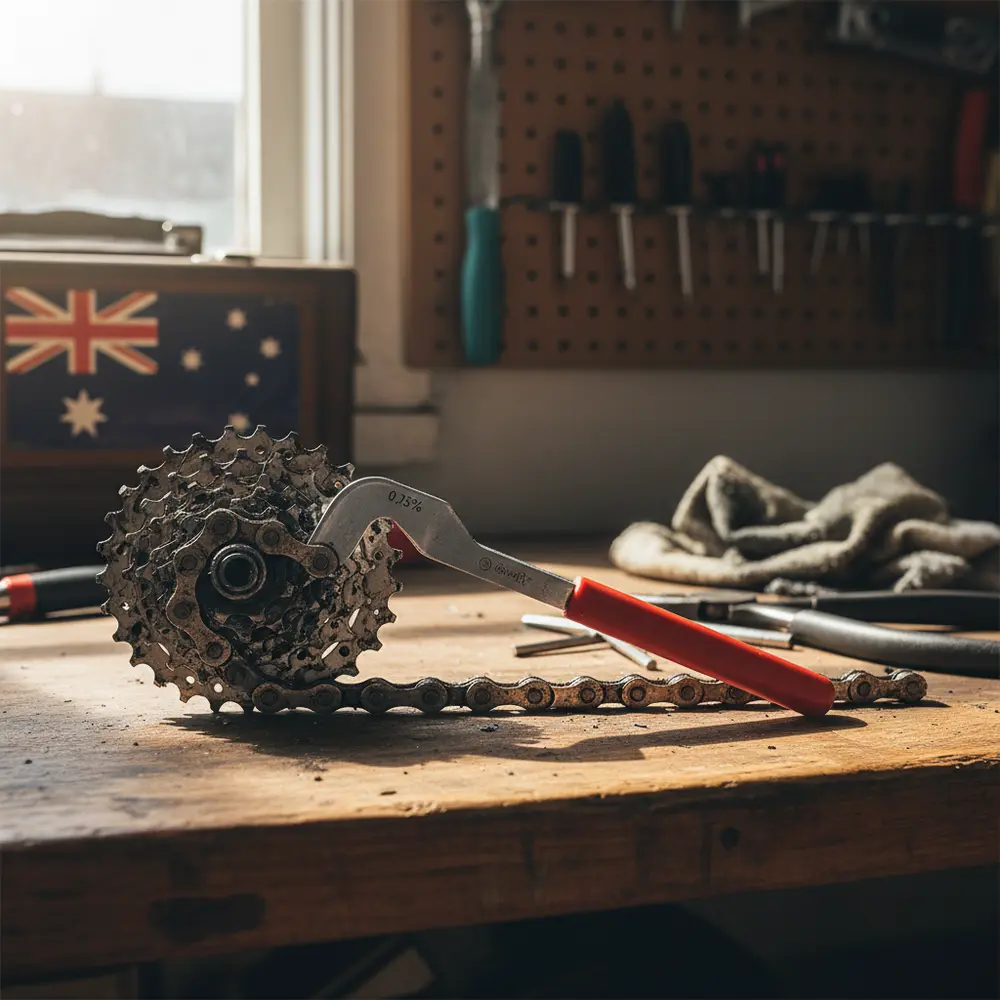
Scrub the cassette with a stiff brush, working between each sprocket. Use a chain cleaning device if you have one, or run the chain through a rag with degreaser applied. Rinse the drivetrain thoroughly with clean water, being careful again around the rear hub and bottom bracket.
Time: 5 to 8 minutes.
Important for disc brake riders: Keep degreaser completely away from your rotors and brake pads. Contamination is very difficult to fully reverse and will cause brake noise and reduced stopping power. Use a separate rag for the drivetrain and never let degreaser drip onto your rotor.
Step 3 - Scrub the Frame, Brakes and Wheels
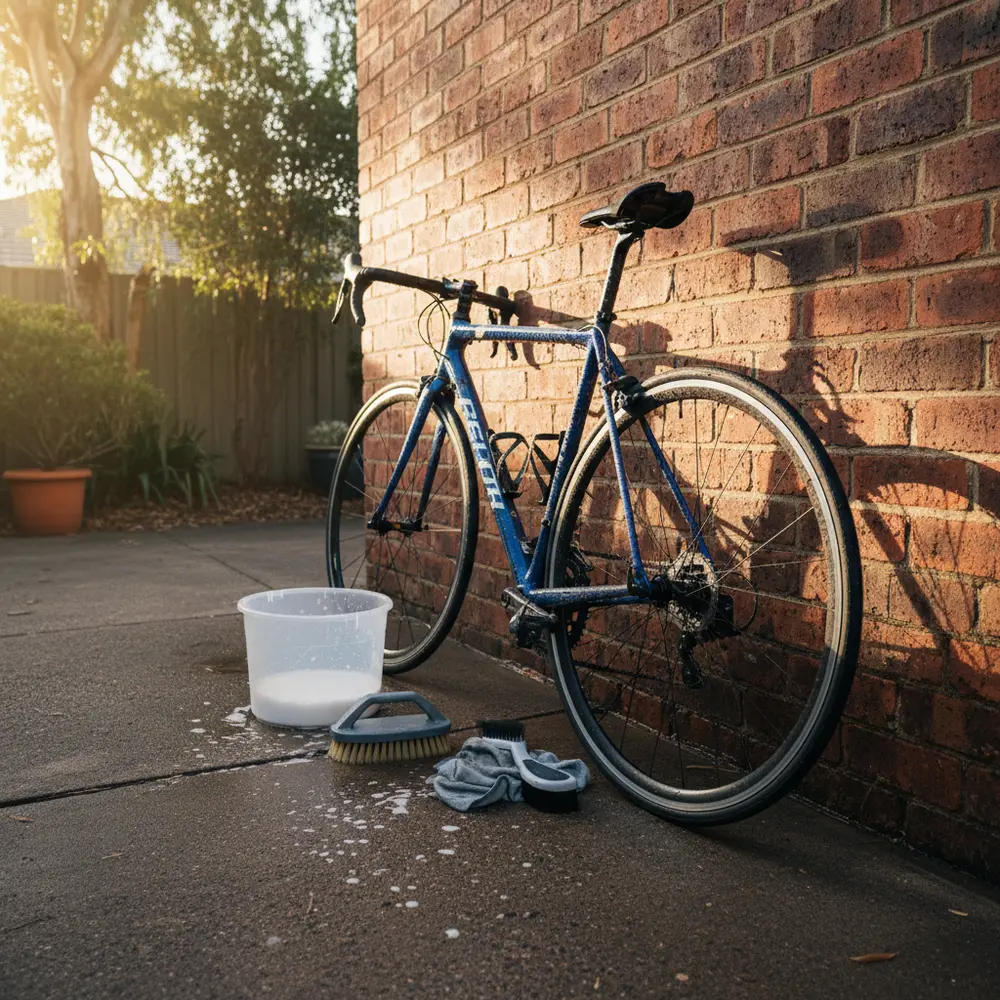
Mix a small amount of bike wash or mild dish soap into a bucket of water. Use a soft brush or sponge on the frame, fork, and seatpost. Pay attention to the underside of the downtube and around the chainstays where road spray collects. Scrub the wheel rims and spokes, and wipe down the brake callipers.
For rim brake bikes, keep cleaning products off the actual braking surface as contamination there affects stopping performance. Rinse the full bike down with clean water when done.
Time: 5 to 7 minutes.
Step 4 - Dry Everything Thoroughly
Use a clean microfibre cloth to dry the frame, components, and wheels. Do not skip this step. Water sitting in frame junctions, around bolts, and inside cable end caps is where rust and corrosion starts. Pay special attention to areas around the headset, bottom bracket shell, and the axle interfaces on your wheels.
If you have one, a light pass with a soft cloth around bearing areas is fine. Avoid compressed air directed into seals, as it can force moisture further inside rather than removing it. Leave the bike in a well-ventilated spot for 10 to 15 minutes before re-lubing if time allows.
Time: 3 to 5 minutes.
Step 5 - Re-lube the Chain and Moving Parts
This step is non-negotiable. A clean, dry chain with no lube will rust and wear faster than a dirty lubed one. Apply lubricant drop by drop along the chain, spinning the pedals backwards slowly so each link gets coated. Let it sit for a few minutes, then wipe off any excess with a clean rag.
Excess lube on the outside of the chain attracts new dirt and defeats the purpose of cleaning. Also apply a small drop to the derailleur pivot points. For a deeper look at how to clean and lube your bike chain properly, Pushys has a solid walkthrough using products available in Australia.
Time: 3 to 5 minutes.
Common Mistakes Cyclists Make After Wet Rides
Even experienced riders fall into these habits. Avoiding them keeps your bike in better shape for longer.
- Leaving the bike wet overnight. Water sitting on metal components and inside the chain overnight accelerates rust and corrosion, especially in Sydney's humid summers.
- Using high-pressure water near bearings. Spraying directly at the headset, bottom bracket, or hubs pushes water past the seals. Use low pressure and direct it away from these areas.
- Lubing over a dirty chain. Adding fresh lube without cleaning first just traps old grit inside. Always clean before you lube.
- Getting degreaser on disc brake rotors. Even a small amount can contaminate brake pads. Work carefully around rotors and use separate rags for the drivetrain.
- Skipping the drivetrain entirely. Wiping the frame and leaving the chain and cassette dirty is the quickest way to wear out expensive components.
- Using too much lube. More is not better. Excess lube collects grit and creates a grinding paste. A thin, even coat is what you are after.
Wet Lube vs Dry Lube - Which Should You Use in Sydney?
This one comes up a lot in the Sydney cyclist community and the answer depends on the time of year and where you are riding. Here is a simple breakdown.
| Condition | Recommended lube | Why |
|---|---|---|
| Winter rides, regular rain | Wet lube | Stays on the chain in wet conditions, resists wash-off |
| Coastal routes (salt air) | Wet lube | Better protection against moisture and salt corrosion |
| Dry Sydney summers | Dry lube | Less sticky, attracts less dust and grit in dry conditions |
| Mixed or unpredictable weather | Wet lube | Better safe than sorry, easy to clean off when conditions improve |
Wet lube is the safer default for most Sydney riders because the weather here is genuinely variable. You might leave home in sunshine and roll back in through a proper downpour, especially in summer storm season.
How Often Should You Deep Clean vs Quick Clean?
Not every ride needs a full strip-down. Here is a practical frequency guide based on how and where you ride in Sydney.
If you are new to this:
- After every wet ride, do a full clean as described above. Do not skip it.
- After dry rides, a quick wipe of the frame and a chain lube check every two to three rides is enough.
- Do a full drivetrain deep-clean (removing the cassette and chainring) every month or two, or when you notice shifting is getting sluggish.
- Check your chain for wear regularly with a chain wear indicator tool, available from any bike shop for a few dollars.
If you have cleaned your bike before:
- Vary your cleaning depth based on conditions. A light spin in light drizzle needs less work than a two-hour slog through a Sydney storm.
- If you are riding coastal routes regularly, increase your cleaning frequency due to salt exposure, even on dry days.
- Consider a frame protection spray or wax after cleaning to slow down surface grime buildup between washes.
- Keep a chain wear log or use a chain checker every few hundred kilometres to catch wear before it damages the cassette.
The Bicycles Network Australia cleaning guide has a good overview of how to set cleaning intervals based on riding habits if you want more detail on this.
Storing Your Bike After a Wet Ride
Where and how you store your bike matters almost as much as the clean itself. A bike stored in a warm, dry spot after a proper clean will stay in much better condition than one propped in a damp stairwell.
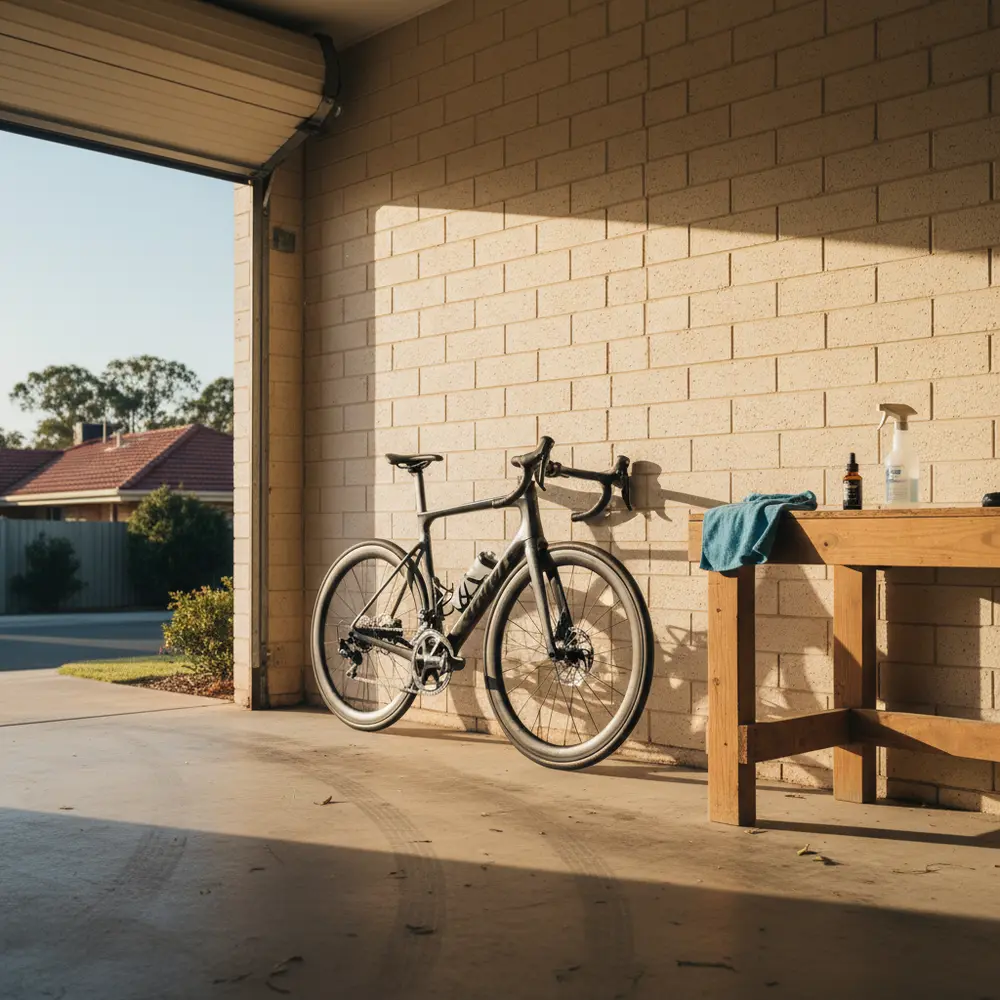
For apartment dwellers, a well-ventilated indoor space is ideal. If you have to store it in a stairwell or on a balcony, make sure it is fully dry and re-lubed before you put it away. A bike cover can help with dust but does not substitute for drying.
- Store the bike upright or on a wall mount to prevent water pooling in cable ends or the seatpost.
- Avoid storing a wet bike in an enclosed space with no airflow. Moisture trapped around metal parts leads to surface rust.
- If you are not riding for a week or more after a wet ride, wipe the frame with a light protective spray and check the chain lube before your next ride.
- Keep a spare chain lube in your cleaning kit. Running out and skipping a re-lube is one of the most common causes of accelerated chain wear.
For more on keeping your bike dialled in between rides, check out our bike maintenance articles on Segment Club.
Frequently asked questions
Can I use a regular garden hose to clean my road bike?
Yes, a regular garden hose on a gentle flow setting is fine. The key is to avoid directing the stream at bearing surfaces like the headset, bottom bracket, and hubs. A gentle spray to knock off grime is safe. High-pressure jet washers are not recommended for road bikes as they can force water past bearing seals.
Is it safe to use degreaser on a carbon frame?
Most bike-specific degreasers are safe to use on metal drivetrain components. For carbon frames, it is safer to stick to a dedicated bike wash or mild soapy water on the frame itself and keep strong degreasers on the drivetrain only. Check the product label before using any solvent-based cleaner on carbon.
What happens if I leave my bike wet and do not re-lube it?
Leaving a wet, dirty chain without re-lubing overnight allows water and contaminants to sit inside the chain links and start the corrosion process. Over repeated wet rides without cleaning, this significantly shortens chain and cassette life. A 20-minute clean after a wet ride is a lot cheaper than a new drivetrain.
Do I need different cleaning products for a disc brake bike versus a rim brake bike?
The main difference is care around the rotors and brake pads on disc bikes. Degreaser or lube on a disc rotor will contaminate the pads and reduce braking performance. Use separate rags for the drivetrain, and take extra care when cleaning around the callipers and rotors. The frame and wheel cleaning process is the same for both. BikeRadar's cleaning guide covers disc-specific care in more detail.
I live in an apartment with no hose. Can I still clean my bike properly?
Absolutely. A bucket of warm water with a small amount of bike wash or dish soap, a couple of brushes, and microfibre cloths will do the job. Apply degreaser to the drivetrain first, let it sit, then scrub and wipe clean. Use a second bucket of clean water to rinse. It takes a little longer but gets the job done. Many Sydney riders clean their bikes this way, and the Sydney cyclist community forum has plenty of tips from riders doing exactly this.
Quick summary
- Clean the drivetrain first with degreaser, then wash the frame, then dry everything before you re-lube.
- Never spray high-pressure water at bearing surfaces and never get degreaser on disc brake rotors.
- Use wet lube for Sydney winters, coastal routes, and variable weather. Switch to dry lube in dry summer conditions.
- A full clean after every wet ride protects your drivetrain and prevents the chain wear that comes from leaving grit and moisture inside the chain.
- Apartment riders can clean just as effectively with a bucket, brushes, and microfibre cloths. No hose needed.
Have questions about your bike maintenance routine or want a recommendation for your setup? Get in touch with the Segment Club team and we are happy to help.
This is educational content, not financial advice.