Your chain is the hardest-working part of your drivetrain, and it is also the most neglected. Get lubrication wrong and you are not just making noise, you are grinding away at your cassette, chainrings, and chain with every pedal stroke.
By the end of this guide, you will know exactly which lube to reach for based on your conditions, how to apply it correctly, and how to set a maintenance routine that actually protects your drivetrain. Whether you are riding sealed roads in Adelaide or red dirt trails in the Pilbara, this covers you.
Note for Australia:
- Australian conditions vary wildly, from Queensland coastal humidity and Victoria's wet winters to bone-dry dust in the outback and gritty gravel in the Dandenongs.
- Parts pricing in Australia is steep, so protecting your cassette and chainrings through proper lubrication is a genuine money-saving strategy.
- Most major lube brands (Squirt, Smoove, Muc-Off, Rock-N-Roll, Finish Line) are available through Australian retailers and online stores.
At a glance:
- Use wet lube for persistent rain and mud, dry lube for dusty or dry conditions, and wax for clean, controlled environments.
- Lube goes on the inner rollers of the chain, not the outer plates. Wipe off the excess every single time.
- Over-lubing attracts dirt and accelerates wear. Less is genuinely more.
- Clean the chain before re-lubing if there is visible grime, not just before every single ride.
- A worn chain wears out your cassette fast. Check stretch regularly to avoid a costly drivetrain replacement.
Key takeaways:
- Lube type matters for conditions, but correct application technique matters more than brand choice for most riders.
- Hot wax is worth the effort for road and gravel riders who want maximum efficiency and a clean drivetrain.
- Ceramic additives offer marginal gains that most recreational riders will not notice or justify the cost of.
Why Chain Lubrication Is the Most Overlooked Part of Drivetrain Maintenance
Most riders remember to pump their tyres before a ride. Very few check their chain. It is one of those tasks that feels optional until the chain starts squeaking or shifting goes rough, and by then some damage is already done.
The chain is the link between your legs and your wheels. Every time you shift, accelerate, or climb, forces run through those tiny pins and rollers. Without a proper lubricant film at those contact points, metal grinds against metal. That grinding does not just slow you down, it shortens the life of every component the chain touches.
What Happens When You Get It Wrong
A dry chain creates noise, increases friction, and causes measurable efficiency loss through the drivetrain. Independent testing at BicycleRollingResistance.com shows that a well-lubed chain can save several watts compared to a dry or degraded one, a real difference over a long ride. That matters whether you are chasing a Strava segment or just trying to finish a century without your legs blowing up.
Over-lubing is the opposite problem and it is just as bad. Excess lube on the outer plates of the chain acts as a magnet for grit, road dust, and mud. That contamination turns into a grinding paste that accelerates wear on pins, rollers, cassette teeth, and chainrings. As Sheldon Brown's technical reference explains, lubrication works at the inner pin and roller interface, not the outer plates. Anything sitting on the outside of the chain is doing more harm than good.
Understanding the Types of Chain Lube Available in Australia
There are four main categories of chain lube you will encounter in Australian bike shops and online. Each has a purpose. Using the wrong one for your conditions is one of the most common mistakes intermediate riders make.
| Lube Type | Best Conditions | Main Downside | Typical Cost |
|---|---|---|---|
| Wet Lube | Rain, mud, sustained wet riding | Attracts dirt in dry conditions | Low to mid |
| Dry Lube | Dry, dusty, warm conditions | Washes off quickly in rain | Low to mid |
| Wax Drip | Dry to mixed, road and gravel | Requires clean chain to bond | Mid |
| Hot Wax (Immersion) | Road, gravel, controlled use | Setup effort, not for muddy MTB | Mid to high (setup cost) |
| Ceramic Lube | All conditions (per marketing) | Premium price, marginal real-world gains | High |
Wet Lube - When to Use It and When to Avoid It
Wet lube is oil-based and stays on the chain in wet conditions. It is the right call for Victorian winter riding, Queensland wet season commutes, or any day when you know you will be riding through puddles and spray. Brands like Rock-N-Roll Extreme and Muc-Off Wet are well known and widely available in Australia.
The catch is that wet lube in dry, dusty conditions is a poor choice. It picks up everything on the road or trail and builds up into black grime fast. If you are doing dry gravel riding or summer road miles and you reach for the wet lube out of habit, your drivetrain will tell you about it within a ride or two.
Dry Lube - Best Conditions and Limitations
Dry lube is typically a light carrier fluid that evaporates and leaves a thin lubricating film. It is ideal for dry conditions, including most of inland Australia, summer road riding, and gravel in drier states. It stays relatively clean because it does not attract dust the way oil-based lubes do.
The limitation is durability. Dry lube does not hold up well in rain or sustained wet conditions. If you get caught in a shower mid-ride, plan to re-lube when you get home. For riders on the Sunshine Coast or in Perth who rarely see rain, dry lube is often all they need year-round.
Wax-Based Lubes and Hot Wax Drip - Are They Worth the Effort?
Wax-based drip lubes like Squirt have built a strong following in Australia, particularly among gravel and road riders. According to wax lube manufacturers, wax bonds to the metal surface and repels dirt rather than trapping it, which means a cleaner drivetrain and less frequent deep cleans. That lines up with what many riders report in practice.
Hot wax immersion is a step further. You strip the factory grease off a new chain, melt paraffin wax in a slow cooker, and immerse the chain so the wax penetrates every link. The result is a very efficient, very clean drivetrain. Independent testing consistently places well-prepared hot-waxed chains among the lowest friction options available. It is not for muddy mountain bike use, but for road, gravel, and even cyclocross in dry conditions, it is genuinely worth exploring. The upfront effort pays off over time.
Ceramic Lubes - Performance Claims vs Real-World Value
Ceramic lubes contain microscopic particles claimed to reduce friction further than standard lubricants. The independent chain lube testing at BicycleRollingResistance.com shows that some ceramic lubes do perform well in lab conditions, but the gap over a well-applied quality wet or wax lube is often small. For a competitive rider who has already optimised everything else, ceramic lube is a reasonable choice. For a weekend rider on a mid-range build, the price premium is hard to justify.
How to Read Your Riding Conditions and Choose the Right Lube
Which Lube Should I Use? A Simple Decision Guide
Work through this from top to bottom and stop at the first match for your situation.
- Is your chain dirty or gritty right now? Clean it first. Do not lube over contamination.
- Are you riding in rain, mud, or sustained wet conditions? Use wet lube. Re-apply after long wet rides.
- Are you riding on red dirt, gravel, or dry dusty trails? Use dry lube or wax drip. Avoid wet lube entirely.
- Are you on sealed roads in dry conditions? Dry lube or wax drip both work well. Hot wax immersion is worth considering if you ride frequently.
- Are you dealing with coastal humidity (Queensland, NSW coast)? Wet lube or a quality wax drip. Dry lube may degrade faster in humid air.
- Do you have a recently hot-waxed chain? Top up with a compatible wax drip only. Do not apply oil-based lube over wax.
- Are you riding 1x gravel or MTB with a 12-speed chain? Narrow-wide chains benefit from clean, dry-running lubes. Check your OEM chain lubrication recommendations from SRAM for specific guidance.
Australian Climate Considerations
Australia is not one climate. A rider in Hobart and a rider in Darwin have almost nothing in common when it comes to chain lube selection. Here is a quick regional summary.
- Queensland and NSW coast: High humidity year-round. Wet lube or a robust wax drip. Watch for salt corrosion if riding near the beach.
- Victoria and Tasmania: Cold, wet winters. Wet lube from May through September. Switch to dry or wax in summer.
- South Australia and WA inland: Hot, dry, and dusty. Dry lube or wax drip almost all year. Avoid wet lube in summer.
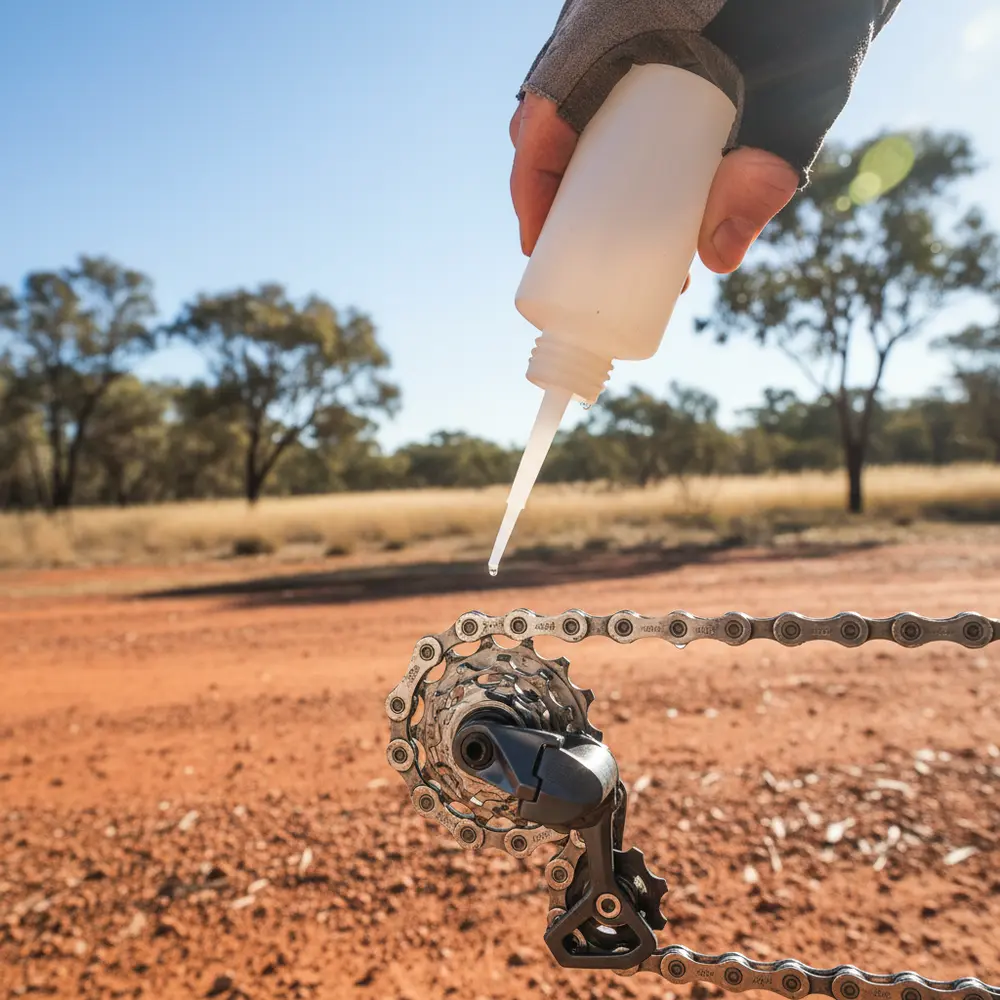
- Outback and red dirt trails: Dry lube only. Wet lube in dust is a drivetrain killer. Re-lube more frequently due to abrasive conditions.
The Correct Way to Apply Chain Lube - Step by Step
Application technique matters as much as lube choice. This is the step most riders rush, and rushing it is where the problems start. For a full walkthrough, CyclingTips has a detailed chain cleaning and lubrication process worth bookmarking.
- Start with a clean, dry chain. If the chain is dirty, degrease and rinse it first. Let it dry completely.
- Hold the lube applicator over the inner side of the lower run of chain (the section between the bottom bracket and rear derailleur).
- Apply one drop per link as you slowly backpedal. You do not need more than one drop. You are lubricating the pins and rollers, not coating the plates.
- Once you have gone around the full chain, give it another few slow revolutions to let the lube work into the links.
- Let it sit for a few minutes, ideally longer for wax-based lubes which need time to penetrate and set.
- Wipe off all excess lube with a clean rag. Run the chain through the rag a few times. This step is not optional.
Common Application Mistakes That Undo All Your Hard Work
- Applying lube to a dirty chain. You are just lubricating the grime.
- Squirting lube along the outside of the chain plates instead of the inner rollers.
- Using too much lube and not wiping off the excess.
- Using wet lube in dusty conditions because it was the only thing in the shed.
- Applying oil-based lube over a hot-waxed chain. This contaminates the wax and negates the benefit.
- Re-lubing mid-ride without cleaning first when the chain is already contaminated.
If You Are New to Maintaining Your Own Chain
- Start with a quality dry lube if you ride mostly in dry conditions. It is forgiving and easy to use.
- Buy a basic chain cleaning tool and degreaser at the same time as your lube. They work as a set.
- Learn what a clean chain feels like and sounds like. Silence and smooth shifting are your targets.
- Do not stress about getting it perfect from day one. Consistent basic maintenance beats irregular perfect maintenance.
- Check out our bike maintenance guides at Segment Club for more step-by-step tutorials.
If You Have Already Been Maintaining Your Chain
- Consider switching to a wax drip lube if you are still on a standard wet or dry oil. The cleanliness benefit alone is worth it for road and gravel.
- Look into hot wax immersion if you ride more than three times per week. The efficiency gains are real and the long-term cost can be lower than quality drip lubes.
- Use a chain wear indicator tool every month or two. Do not wait for shifting problems to tell you the chain is worn.
- Match your lube to the season, not to what is sitting on your workbench. Swap to wet lube heading into winter and back to dry or wax in summer.
- If you run a 12-speed drivetrain, treat it carefully. Narrower chains are less tolerant of contamination and wear faster under gritty conditions.
How Often Should You Re-Lube? Setting a Realistic Maintenance Schedule
There is no single answer that covers every rider in every condition. What you can do is use a few reliable signals to guide your timing.
- Dry lube: Every 150 to 250 km in dry conditions, or after any rain.
- Wet lube: Every 200 to 400 km, or after sustained wet riding. Wipe down and inspect after every wet ride.
- Wax drip: Every 150 to 300 km depending on conditions. You will hear and feel it when the wax is depleted.
- Hot wax immersion: Typically lasts 300 to 500 km before a re-wax is needed, longer in clean dry conditions.
The honest answer from a workshop perspective is this: lube when the chain needs it, not on a fixed calendar. Check it before long rides. If it sounds dry, feels stiff, or looks contaminated, deal with it before you ride. You can read more about general bicycle maintenance intervals and schedules on our site.
Chain Cleaning Before You Lube - Non-Negotiable or Overkill?
You do not need to do a full degrease before every single re-lube. But you do need to clean before re-lubing if the chain has visible grime, is making noise from contamination, or if you are switching lube types. Lubing over a dirty chain just makes a worse mess and shortens the life of whatever you apply.
For most riders in dry conditions, a wipe-down with a dry rag before applying fresh lube is enough between full cleans. For wet or muddy riding, a proper clean is more frequent. Use a chain cleaner tool with degreaser, rinse with water, and let the chain dry before lubing. Avoid leaving the chain wet, which accelerates rust on steel chains.
When Lubing Is No Longer Enough - Spotting Chain Wear and Stretch
Chain wear is not about the chain physically stretching. It is about the pins wearing down, which increases the pitch between links. That increased pitch then wears your cassette cogs unevenly. A worn chain that is left on too long forces a cassette replacement, sometimes a chainring replacement too. That is a significant cost difference compared to replacing just a chain.
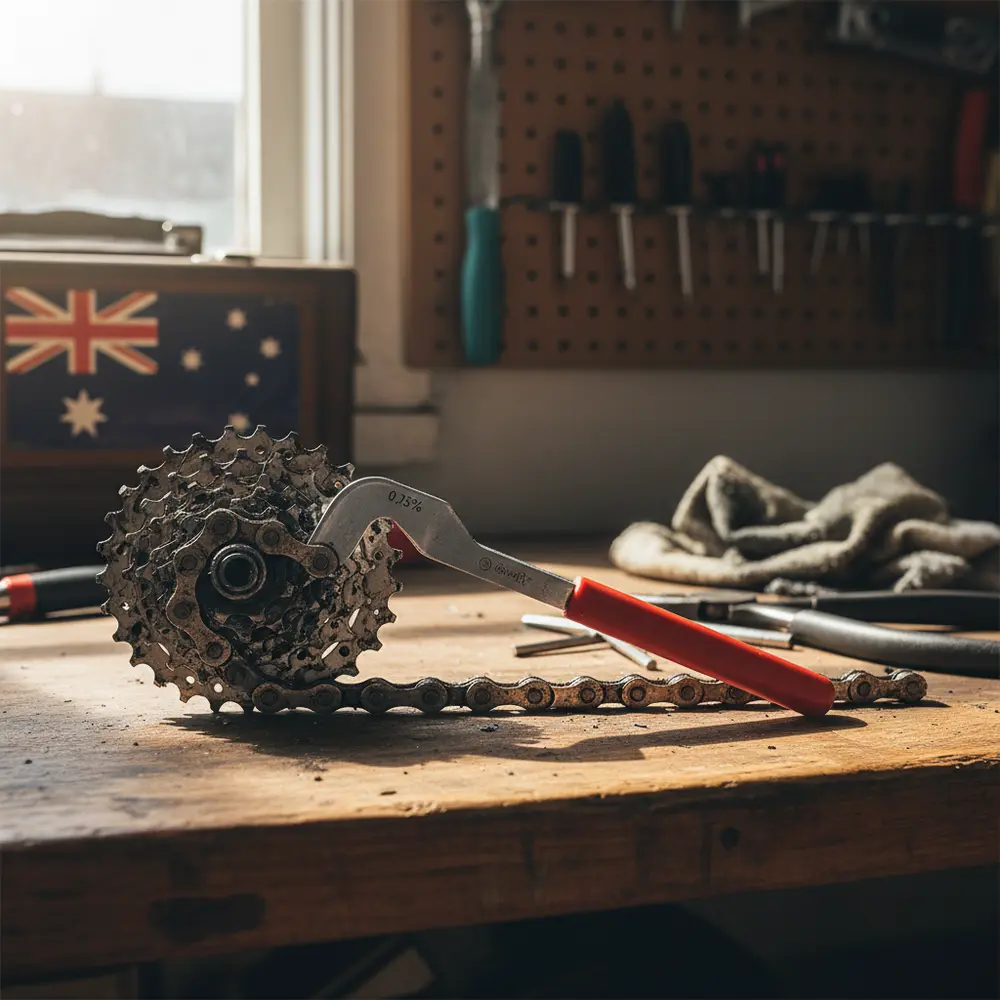
Use a chain wear indicator tool, available from any bike shop. Most tools measure at the 0.5% and 0.75% wear marks. Replace at 0.5% if you have a high-end or 12-speed drivetrain. Replace at 0.75% on more basic setups. Check your Shimano technical documentation for wear tolerances specific to your groupset tier. Good lubrication slows pin wear, but it does not stop it. Inspection is still necessary.
If you want more guidance on when to replace components, our drivetrain maintenance articles at Segment Club cover chain, cassette, and chainring replacement in detail.
Frequently asked questions
Is wet lube or dry lube better for Australian riding?
It depends entirely on your conditions. Wet lube is right for persistent rain and mud. Dry lube suits the majority of Australian riding, which is typically warm and dry. Many Australian riders keep both on hand and switch by season or region.
Does over-lubing actually cause more wear?
Yes. Excess lube on the outer chain plates attracts dirt and grit, which forms an abrasive paste. That paste grinds away at the chain, cassette teeth, and chainrings far faster than a properly lubed, wiped-clean chain would. Always wipe off the excess after applying.
Is hot wax immersion worth it for a regular rider?
For road and gravel riders who ride several times a week and care about drivetrain cleanliness and efficiency, yes. The setup cost is modest and the ongoing cost per application is low. It is not suitable for muddy mountain bike use, but for most other formats it is a genuinely effective technique with a strong following in the Australian cycling community.
Do ceramic lubes actually perform better?
Independent lab testing shows some ceramic lubes perform well in controlled conditions. The real-world gap over a quality wet or wax lube, applied correctly, is small for most riders. If you are already optimising your setup and want marginal gains, ceramic is a reasonable choice. For casual and recreational riders, the price premium is hard to justify.
How do I know when my chain needs replacing?
Use a chain wear indicator tool, not guesswork. Replace at 0.5% wear for 11 and 12-speed drivetrains. Waiting too long accelerates cassette wear significantly. If you have any doubts, take your bike to your local shop for a check. Feel free to get in touch with us at Segment Club if you have questions about drivetrain maintenance.
Wrapping Up
Chain lubrication is not complicated, but it does require the right product, the right technique, and a bit of consistency. Here is a quick summary to take with you.
- Match your lube type to your conditions, not your convenience or habit.
- Apply lube to the inner rollers, one drop per link, and always wipe off the excess.
- Clean before re-lubing if the chain is dirty. Do not skip this step.
- Set a rough re-lube interval based on your lube type and riding volume, then adjust for conditions.
- Check chain wear regularly. A worn chain that is caught early costs you a chain. One caught late costs you a cassette and possibly more.
This is educational content, not financial advice.