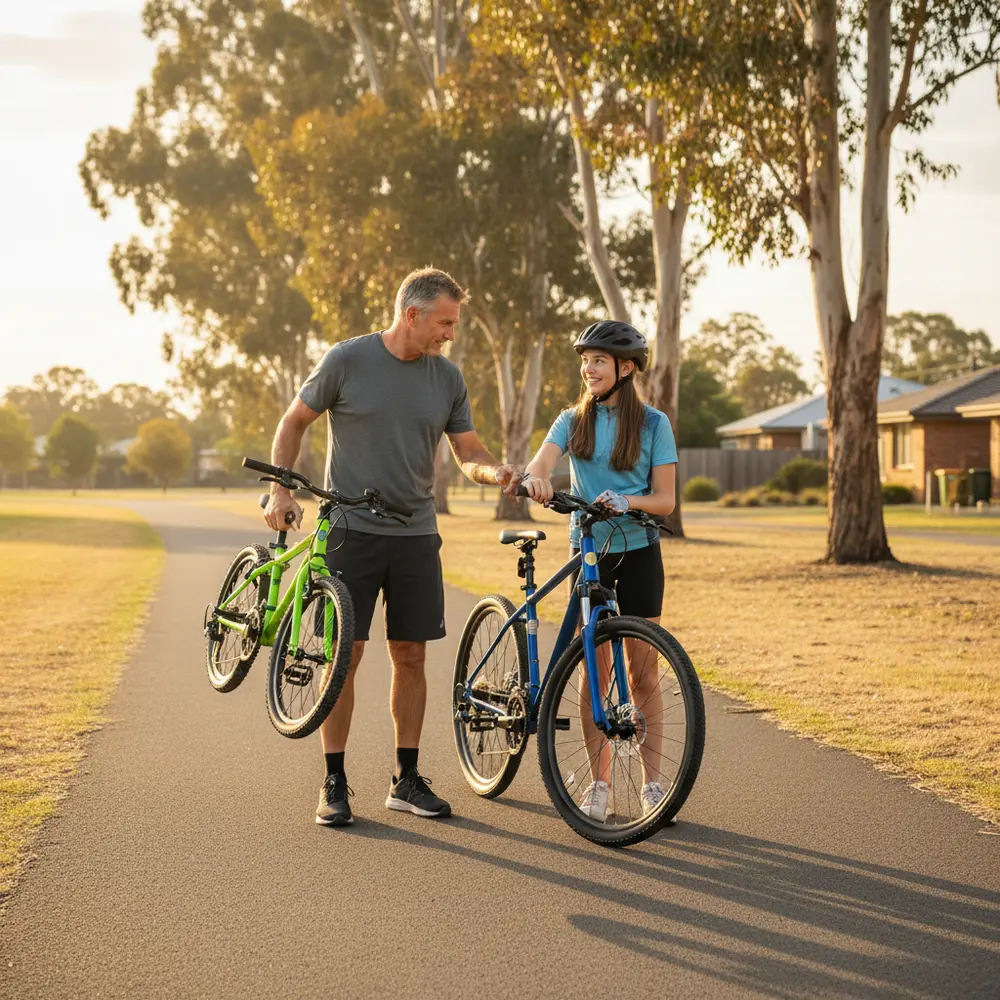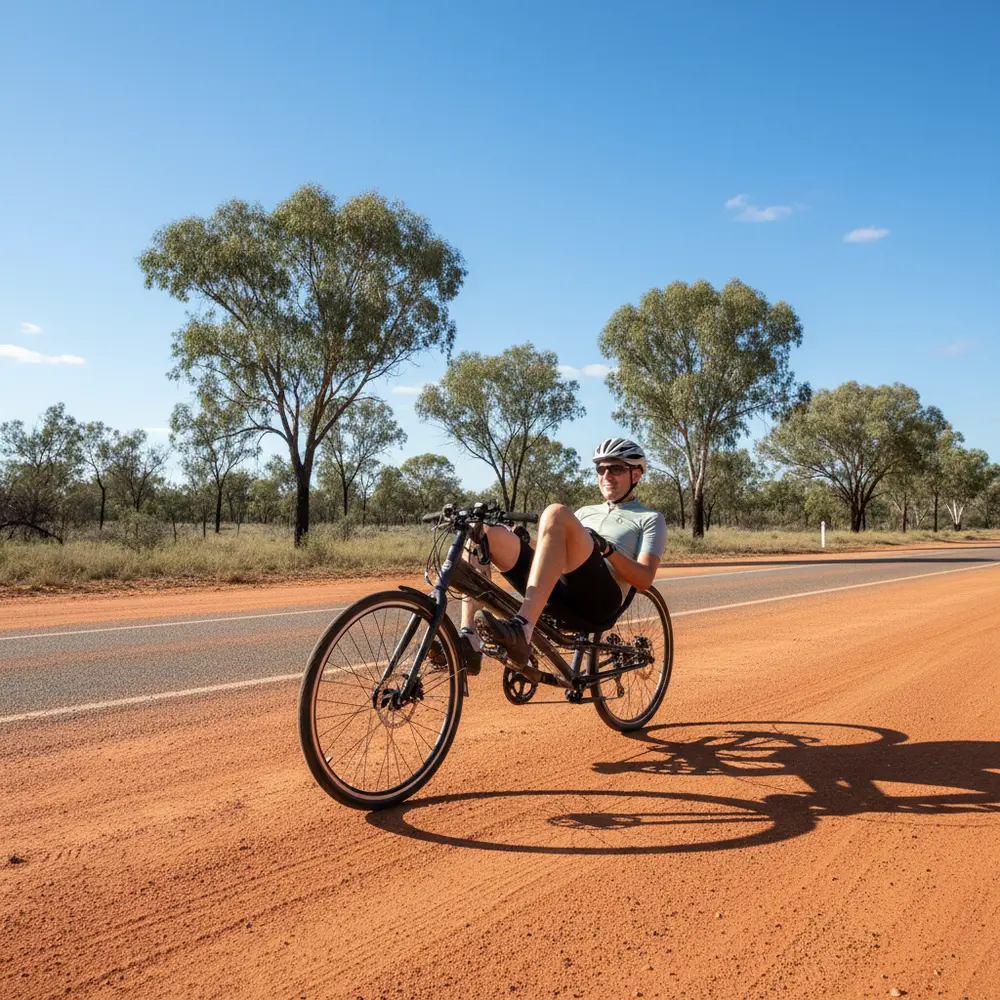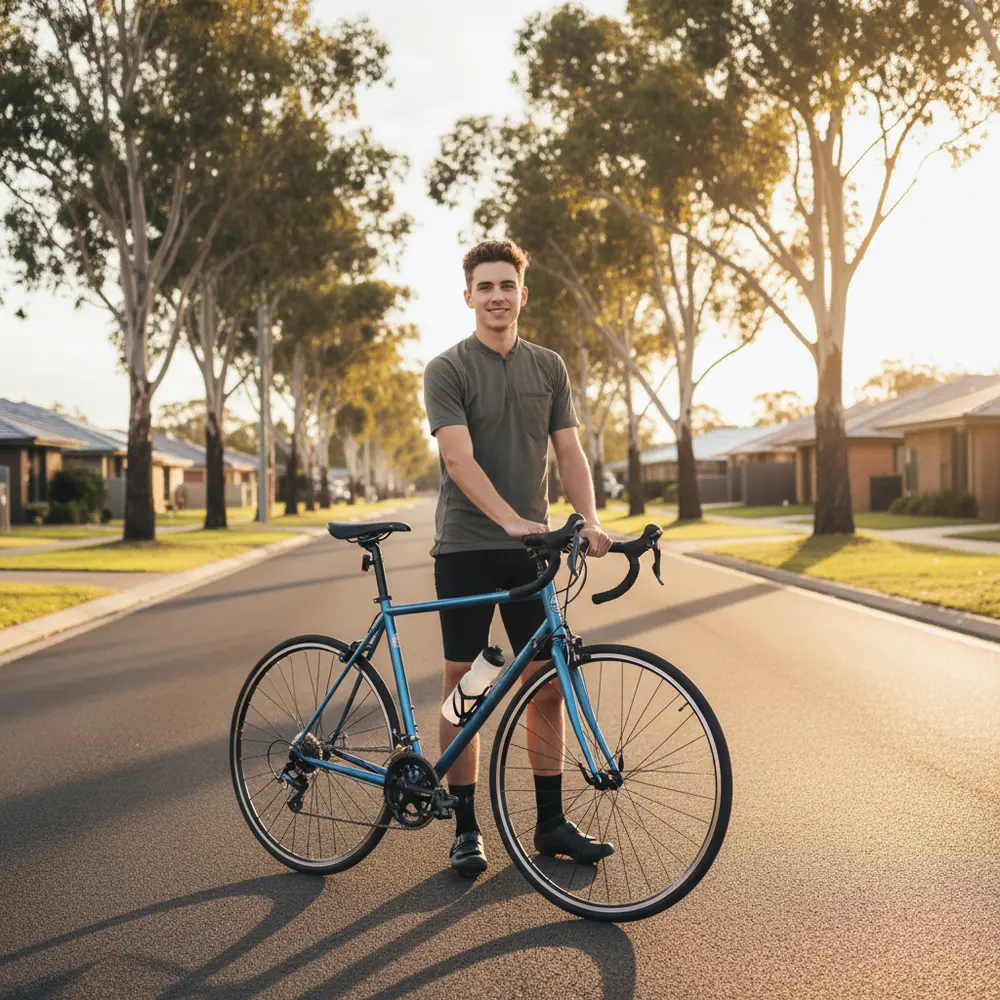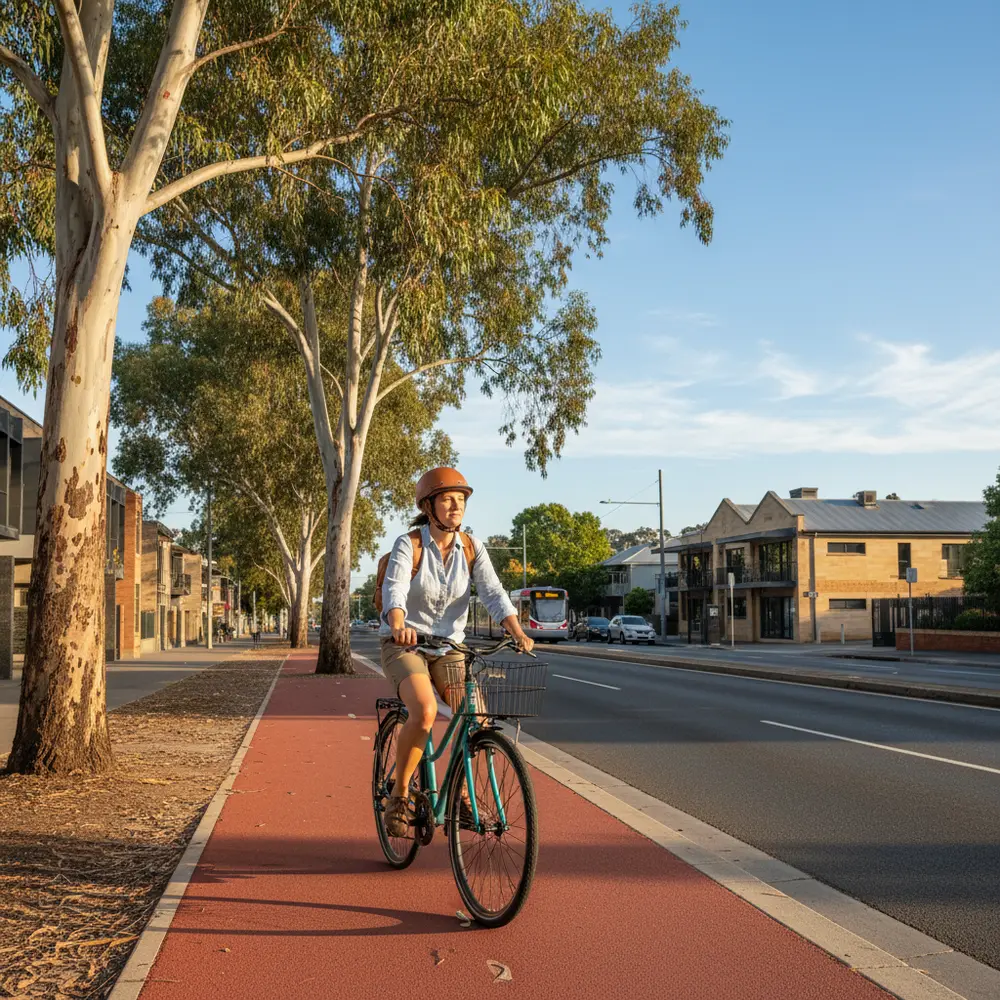
Australia is not an easy country to commute in by bike. The heat, UV, sudden downpours, dusty inland routes, and salt air along the coast all take a toll on bikes and riders alike. Picking the right commuter bike from the start saves you money, frustration, and more than a few roadside mechanical headaches.
By the end of this article you will know which bike types suit Australian conditions, what frame materials and components to look for, and exactly what to check before you buy. Whether you are walking into a bike shop for the first time or browsing online at midnight, this guide will help you make a confident, practical decision.
Note for Australia:
- Helmet laws apply in every Australian state and territory. You must wear an approved helmet whenever you ride on a road or road-related area.
- Front and rear lights are legally required when riding at night or in low visibility conditions. Rules vary slightly by state, so check your own state regulations. See NSW cycling road rules or Queensland cycling road rules for state-specific detail.
- Australian conditions vary enormously from tropical Queensland to dry inland NSW to temperate Victoria, so there is no single perfect commuter bike for every rider.
At a glance:
- Hybrid bikes are the most practical all-rounder for most Australian urban commuters.
- Aluminium frames are lightweight and do not rust, making them well suited to coastal and humid areas.
- Tyres in the 32mm to 42mm range offer the best balance of comfort, grip, and puncture resistance on Australian roads.
- Disc brakes perform more consistently in wet conditions, but good rim brakes are adequate for many Australian commutes.
Key takeaways:
- Match your bike type to your actual route, not to what looks good in a catalogue.
- Components that are easy to maintain and replace matter more than headline specs on a commuter bike.
- Budget at least $600 to $800 AUD for an entry-level commuter that will hold up to daily use.
Why Australian Weather Makes Commuter Bike Choice Different
Most commuter bike advice is written for northern hemisphere winters and mild, wet European climates. That does not translate well to an Australian summer. Here the challenge is often the opposite: relentless heat, UV radiation that degrades rubber and plastics quickly, and humidity that accelerates wear on unprotected components.
Australian roads are also more varied than people expect. Sydney has hills and patchy road surfaces. Melbourne laneways can be rough cobbled sections. Brisbane is flat but humid and prone to sudden intense rain. Perth has long, flat coastal routes with salt air. Inland routes in any state can be dusty and dry. Your bike needs to handle what is actually between you and your workplace, not some average condition dreamed up by a marketing team.
Heat, UV, Humidity and Sudden Rain - What Your Bike Has to Handle
UV exposure in Australia is among the highest in the world, and rubber components like tyres and handlebar grips can degrade faster here than in cooler climates. It is worth choosing UV-resistant grips and storing your bike out of direct sun where possible. Heat also affects tyre pressure, so check pressures regularly in summer.
Humidity, particularly in Queensland, northern New South Wales, and the Northern Territory, accelerates corrosion on unprotected steel parts. Salt air along coastal areas does the same. Cables, bolts, and exposed alloy components all benefit from regular cleaning and light lubrication. A bike that is easy to maintain is a real advantage in these conditions.
Sudden rain is a factor in most Australian cities at some point. Having mudguards fitted, or a frame with mudguard mounts, means you arrive at work without a stripe of road grime up your back.
What Type of Commuter Bike Actually Works in Australia
There are three main bike types worth considering for Australian commuting. Each suits a different kind of rider and route. The table below gives a quick comparison to help you narrow down your choice before you read further.
| Bike Type | Best For | Key Advantage | Main Limitation |
|---|---|---|---|
| Hybrid Bike | Mixed urban routes, varied surfaces | Versatile, comfortable, easy to fit with racks and mudguards | Heavier than a flat-bar road bike |
| Flat-Bar Road Bike | Faster, longer tarmac commutes | Lighter and quicker on smooth roads | Less comfortable, fewer mounting points |
| City / Dutch Bike | Short, flat urban routes | Very upright, easy to ride casually | Heavy, not suited to hills or longer distances |
Hybrid Bikes vs Flat-Bar Road Bikes vs City Bikes
A hybrid bike sits between a road bike and a mountain bike in terms of geometry and tyre clearance. It gives you a comfortable upright position, wider tyre clearance, and usually has mounting points for racks and mudguards. For most Australian commuters doing 5 to 20 kilometres each way on a mix of bike paths and roads, a hybrid is the sensible choice. Bicycle Network's commuter bike guide backs this up with practical, Australia-specific reasoning.
A flat-bar road bike is lighter and faster, and works well if your route is mostly smooth tarmac and you want to cover ground quickly. The trade-off is a less comfortable position on longer commutes and fewer options for mounting accessories. If your commute is over 20 kilometres each way and mostly on good roads, a flat-bar road bike is worth considering.
City bikes, sometimes called Dutch bikes, are built for short, flat, slow-paced commutes. They are heavy and upright, great for nipping around inner-city suburbs, but not practical if you have any significant hills or distance to cover. For a broader look at how these categories compare, the commuter bike buyer's guide for Australians at Bicycles.net.au is worth a read.
Frame Materials and What They Mean for Australian Conditions
Frame material affects weight, ride feel, longevity, and how much maintenance the bike needs. The three main options you will encounter in this price range are aluminium, steel, and carbon fibre.
- Aluminium is the most common frame material in the entry-to-mid range. It does not rust, which is a genuine advantage in coastal and humid Australian environments. It is light and stiff. The main downside is that it transmits road vibration more than steel, which can be tiring on rough roads over longer distances.
- Steel is heavier but absorbs vibration better, giving a more comfortable ride on rougher surfaces. Chromoly steel (a steel alloy) is durable and repairable, but it will rust if the paint is chipped and left untreated. In coastal or high-humidity areas, you need to stay on top of touch-ups and keep it clean.
- Carbon fibre is light and smooth-riding, but expensive and not easy to repair if damaged. For most commuters, it is not a practical choice at the entry level.
Aluminium, Steel and Carbon - Rust, Weight and Heat Considerations
The short version: aluminium is the safest bet for most Australian commuters, particularly if you live near the coast or in a humid climate. It will not rust, it is easy to find in most price ranges, and it is light enough to carry up stairs or onto public transport. Steel is a fine choice if you prioritise comfort and are prepared to maintain it. Carbon is for riders who already know exactly why they need it.
Key Components to Look For in an Australian Commuter Bike
Once you have settled on a bike type and frame material, the components are where the real day-to-day difference is made. A good frame with poor components is a frustrating bike to ride. Here is what to pay attention to.
Tyres, Brakes, Gearing and Mudguard Compatibility
Tyres: For most Australian urban roads, a tyre width of 32mm to 42mm offers a good balance of puncture resistance, comfort, and rolling efficiency. Narrower tyres (25mm and under) are faster on smooth roads but unforgiving on rough surfaces. Wider tyres absorb bumps better and are more resistant to pinch flats on potholed roads. Look for a tyre with a puncture-resistant belt if you are riding through areas with debris or glass. For a thorough technical explanation of how tyre width affects performance, Sheldon Brown's tyre reference is the definitive source.
Brakes: Disc brakes perform more consistently in wet conditions and require less hand force to slow down. Hydraulic disc brakes are the best performers but add cost and complexity. Mechanical disc brakes are a reasonable mid-range option. Rim brakes (V-brakes or caliper brakes) are adequate for the majority of Australian commutes where full rain-soaked braking is not a daily requirement. If you commute in a high-rainfall area or do steep descents, disc brakes are worth the extra cost.
Gearing: A wide gear range matters if your route includes hills. Flat-route commuters in Perth or coastal Melbourne can get away with fewer gears or even a single-speed. Internally geared hubs (where the gears are enclosed inside the rear hub) are lower maintenance than external derailleur systems in dusty or wet conditions, though they add weight and cost. For most beginners, a standard 7- to 8-speed external derailleur setup is perfectly adequate and easy to service.
Mudguard compatibility: Check that the frame and fork have mudguard mounts (also called fender mounts or eyelets). Without these, fitting mudguards is difficult and the result is often flimsy. If your local climate delivers regular rain, mudguards are not optional.
Practical Add-Ons That Make a Real Difference Day to Day
The bike itself is only part of the story. A few well-chosen accessories turn a basic commuter into a bike that genuinely works for you every day.
- Lights: Front and rear lights are legally required in all Australian states when riding at night or in low-visibility conditions. Rechargeable USB lights are convenient and cost-effective. Buy them before you need them, not after a fine.
- Rack and panniers or a good bag: A rear rack and pannier bags distribute weight better than a backpack and keep you cooler in summer. Check that your frame has rack mounts before you buy.
- Lock: In Australian cities, bike theft is a real problem. A decent D-lock or folding lock is worth the investment. Lock both the frame and the wheel to a fixed object.
- Bell: Required by law in most Australian states when riding on shared paths. Inexpensive and easy to fit.
- Kickstand: Not glamorous, but very practical for a daily commuter that you need to park quickly.
For a broader look at how more Australians are setting up their bikes for daily commuting, the ABC News piece on why Australians are choosing to commute by bike gives useful real-world context on how commuting habits are changing across Australian cities.
How to Choose the Right Commuter Bike for Your Route and Budget
Here is a practical pre-purchase checklist. Go through this before you walk into a shop or add anything to a cart online. It will save you from buying a bike that looks right but does not actually suit your situation.
- Measure your commute distance and terrain. Under 10 kilometres and flat? Almost any decent commuter will do. Over 15 kilometres with hills? Prioritise gearing range and saddle comfort.
- Check the road surface on your route. Rough, patchy roads favour wider tyres (35mm or more) and a steel or compliant aluminium frame. Smooth tarmac allows narrower tyres.
- Decide on brake type. Disc brakes if you ride in regular rain or do steep descents. Rim brakes are fine for most flat, dry-to-occasional-wet Australian commutes.
- Confirm mudguard and rack mounts. If you want to commute in all weather and carry gear, these are not negotiable. Check before you buy, not after.
- Consider your local climate. Coastal or humid area? Lean towards aluminium. Inland dusty routes? Enclosed gearing (internally geared hub) is worth considering. High UV? Store your bike out of direct sun and check rubber components regularly.
- Set a realistic budget. Entry-level commuters in Australia start around $600 to $800 AUD for something that will hold up to daily use. Mid-range bikes in the $1,000 to $1,500 AUD range offer noticeably better components and longer service life. The CHOICE bike buying guide for Australians is a good independent reference for understanding what your money gets you at each price point.
- Check lighting and helmet requirements for your state. Helmets are mandatory Australia-wide. Lights are required for night riding. Check our contact page if you have questions specific to your setup.
Common Mistakes When Buying a Commuter Bike in Australia
A few things trip up beginners more than others. Worth knowing before you spend a dollar.
- Buying a mountain bike thinking it will work well on roads. The knobby tyres and heavy frame make road commuting slow and tiring.
- Choosing a bike based on how it looks rather than how it fits your route and body. Fit matters more than aesthetics for a daily commuter.
- Skipping mudguard mounts to save money, then being surprised by rain.
- Buying the cheapest possible option and then spending more on repairs than you saved upfront.
- Not budgeting for accessories. Lights, a lock, and a helmet add up. Factor them in from the start.
- Ignoring the difference between a bike sized for you and one that is just roughly the right height. Get a proper fit, even at the entry level.
If You Are New to Commuter Cycling
If this is your first commuter bike, keep it simple. Here is where to focus your attention.
- Start with a hybrid bike in the $600 to $1,000 AUD range. It gives you the most flexibility without over-committing to a specific style of riding.
- Make sure the bike fits you properly. Ask the shop staff to check your reach and saddle height before you leave.
- Buy a good lock before you ride to work the first time. Do not learn that lesson the hard way.
- Ride your commute on a weekend first to find any surprises in the route before you are doing it in work clothes on a Monday morning.
- Check out our types of bikes section for more beginner guidance on choosing the right ride for your style.
If You Have Commuted Before and Are Upgrading
If you have already done a season or two on a basic commuter, you probably have a clearer picture of what you actually need. Use that knowledge.
- Identify the one or two things that frustrated you most on your old bike (comfort, weight, brakes, punctures) and prioritise fixing those in your next purchase.
- Consider moving up to hydraulic disc brakes if wet-weather braking was a consistent issue.
- Look at internally geared hubs if you are tired of maintaining a derailleur in dusty or wet conditions.
- A mid-range bike in the $1,200 to $1,800 AUD range will give you meaningfully better components and a longer service life than entry-level.
- If your commute is mostly smooth tarmac and you want to go faster, a flat-bar road bike is worth a test ride. Visit our shop for gear and accessories suited to upgrading your commute setup.
Frequently asked questions
What is the best commuter bike type for most Australian riders?
A hybrid bike is the most practical choice for the majority of Australian commuters. It handles mixed surfaces, accepts racks and mudguards, and suits a wide range of commute distances. Flat-bar road bikes are a good step up for faster, longer tarmac commutes.
Do I really need disc brakes for commuting in Australia?
Not necessarily. Disc brakes perform better in wet conditions and on steep descents, and they require less hand effort to apply. However, rim brakes are adequate for most Australian urban commutes, particularly in drier cities like Perth or Adelaide. If you regularly ride in heavy rain or do significant downhill sections, disc brakes are worth the extra cost.
Is aluminium or steel better for a commuter bike in Australia?
Aluminium is generally the safer choice for Australian conditions, especially near the coast or in humid climates, because it does not rust. Steel offers a more comfortable ride on rough roads but requires more attention to corrosion prevention. Both are valid options depending on your route and maintenance habits.
What tyre width should I use on a commuter bike in Australia?
A tyre width of 32mm to 42mm suits most Australian urban roads well. Wider tyres absorb road imperfections better, resist punctures more effectively, and are more forgiving on patchy surfaces. Narrower tyres (25mm and under) are faster but less comfortable and more vulnerable to pinch flats on rough roads.
Are there legal requirements I need to know about for commuting by bike in Australia?
Yes. Helmets are mandatory in every Australian state and territory. Front and rear lights are required when riding at night or in low-visibility conditions. Bell requirements and other rules vary slightly by state, so check the rules for your own state. NSW cycling road rules and Queensland cycling road rules are good starting points for NSW and QLD riders respectively.
Quick summary
- Match your bike type to your actual route: hybrid for most, flat-bar road bike for fast tarmac commutes, city bike for short flat rides only.
- Aluminium frames are the low-maintenance choice for Australian coastal and humid conditions.
- Tyres in the 32mm to 42mm range are the sweet spot for Australian urban roads.
- Disc brakes are a worthwhile upgrade if you ride in regular rain or on steep descents.
- Budget for accessories from day one: lights, lock, helmet, and mudguards are all either legally required or practically essential.
This is educational content, not financial advice.