If you have grown up riding BMX, you already know how to ride a bike. What you are about to discover is that a road bike is a very different animal, and getting comfortable on one takes a bit of adjustment, the right gear, and some honest expectations going in.
By the end of this guide, you will know exactly how a road bike differs from your BMX, what gear you actually need to get started, and how to plan your first rides on Australian roads with confidence.
Note for Australia:
- Helmet laws are mandatory for all cyclists in every Australian state and territory. There is no exception for adults.
- Road rules for cyclists vary slightly between states. Always check your own state or territory road authority for the rules that apply to you.
- Entry-level road bikes in Australia typically start around $800 to $1,200 AUD for a new bike from a local bike shop. The second-hand market can bring that figure down considerably.
At a glance:
- Your BMX background gives you real, transferable skills. Balance and bike handling are a genuine head start.
- The riding position, gearing, and brakes on a road bike all feel different at first. Expect a short adjustment period.
- Flat pedals are a perfectly valid starting point. You do not need to go clipless on day one.
- Planning your first rides on quiet roads or shared paths is the smart move before tackling traffic.
Key takeaways:
- Start with a basic, well-fitted road bike rather than spending big on entry-level gear you may outgrow quickly.
- Get your saddle height right from day one. It is the single most important fit adjustment for comfort and injury prevention.
- Learn the road rules for cyclists in your state before your first ride on public roads.
Why Make the Switch from BMX to Road Cycling?
The honest answer is: distance and variety. BMX is brilliant for skills, control, and short bursts of effort. Road cycling opens up the ability to cover real ground, explore new areas, and build a different kind of fitness. Whether you want to ride to work, join a group ride on weekends, or just clock some kilometres for fitness, a road bike gives you those options.
It is not that one is better than the other. They are just built for completely different things. Road cycling in Australia has a strong community around it, and once you are comfortable on a road bike, there are club rides, charity events, and bucket-list routes across the country waiting for you. Check out what is available through Cycling Australia's get into cycling pathways to see what is on near you.
What BMX Has Already Taught You (More Than You Think)
Do not underestimate what riding BMX has given you. Balance, body position awareness, and the ability to read terrain and react quickly are all skills that carry over. BMX riders typically have better low-speed bike handling than many newcomers to road cycling, because you have spent time on a bike that demands constant input and control.
Where you will notice the gap is in endurance, road positioning, and group riding etiquette. Those are all learnable, and they come quickly once you start riding regularly.
How a Road Bike Feels Different to a BMX
The differences hit you immediately. The bike is longer, the handlebars are lower, the wheels are much larger, and the whole thing feels a lot more twitchy at first. Understanding why it feels different helps you adapt faster.
Geometry, Riding Position and Weight Distribution
On a BMX, you sit fairly upright. Your weight is balanced over the bike in a way that feels natural and comfortable. On a road bike, you lean forward with your weight distributed between the handlebars and the saddle. This puts load on your lower back, hamstrings, and wrists in ways your body is not used to yet.
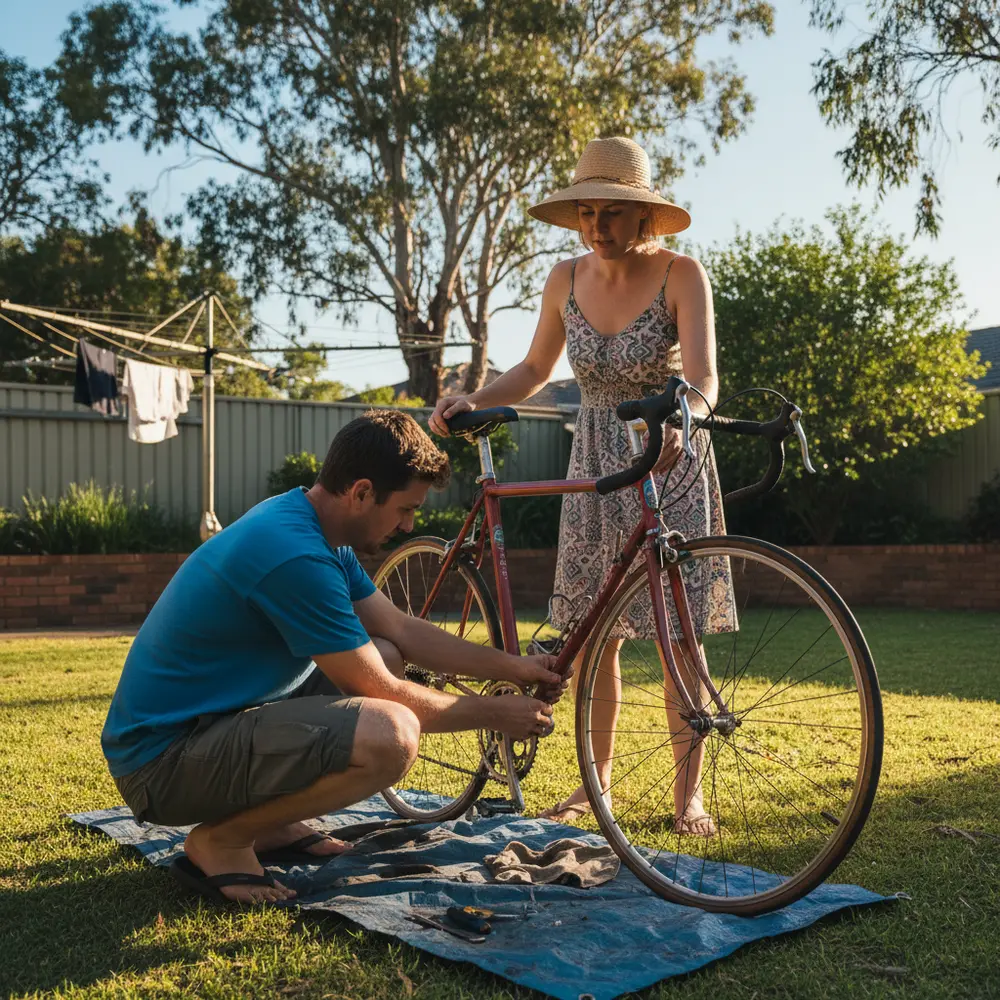
For your first few rides, expect some discomfort in those areas. It is normal and it does ease off as your body adapts. Getting the saddle height right from day one makes a real difference. A good starting point is to have a slight bend in your knee at the bottom of the pedal stroke. For a more detailed walkthrough, this road bike setup guide from BicycleSales.com.au covers the basics clearly.
A professional bike fit is not essential on day one, but getting the saddle and handlebar reach roughly right is. Most local bike shops will help you with a basic setup when you buy the bike. Take them up on it.
Gearing, Brakes and Why Everything Feels More Sensitive
BMX bikes are typically single-speed. Road bikes have multiple gears, sometimes quite a few of them. The concept is straightforward: easier gears for climbing, harder gears for speed on the flat. The adjustment is mostly muscle memory, and it comes with time.
Brakes are where you need to pay attention early. Road bike brakes, whether rim or disc, are significantly more powerful and responsive than what you are used to on a BMX. Squeezing the front brake hard at speed can pitch you forward. Practise braking gradually and use both brakes together. Front brake provides the most stopping power, rear brake keeps you stable. Get used to how they feel before you find yourself in a situation that demands a quick stop.
| Feature | BMX Bike | Road Bike |
|---|---|---|
| Riding position | Upright, weight centred | Leaned forward, weight shared |
| Gearing | Single speed | Multiple gears, front and rear |
| Braking | Responsive but forgiving | Very sensitive, especially front |
| Wheel size | Small, 20 inch typical | Large, 700c standard |
| Frame geometry | Short, compact | Long, stretched out |
| Best for | Tricks, short bursts, skills | Distance, speed, road riding |
What Gear Do You Actually Need to Get Started?
You do not need to spend a lot to get started. The cycling industry will happily sell you expensive kit, but for your first road bike setup, keep it practical and sensibly priced.
Choosing Your First Road Bike on an Australian Budget
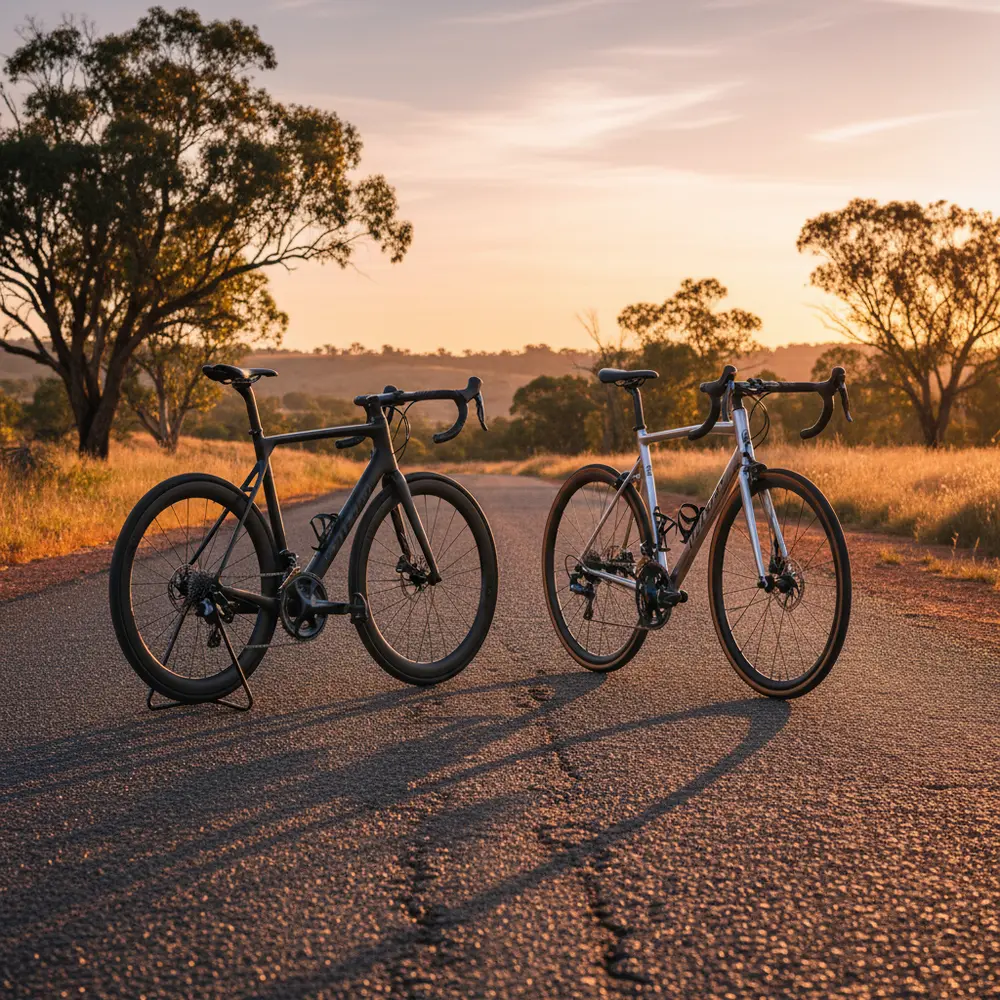
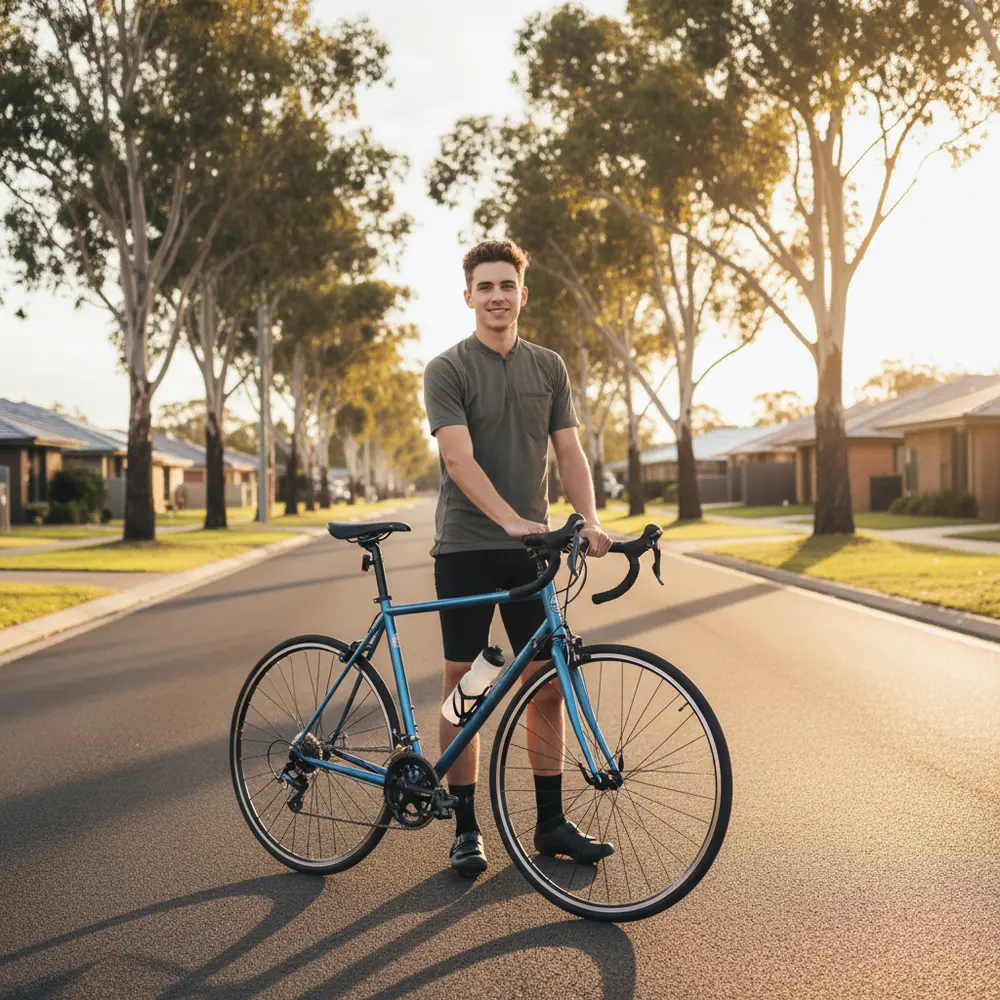
For a new entry-level road bike in Australia, you are generally looking at around $800 to $1,500 AUD to get something reliable from a reputable brand. Brands like Giant, Trek, Specialized, Merida, and Scott all have solid entry-level options available through Australian retailers. The second-hand market, including platforms like Facebook Marketplace and Gumtree, can get you into a quality used bike for less.
Avoid the very cheap department store road bikes. The components tend to be poor quality, they are harder to set up properly, and they can become a safety issue. A basic bike from a proper bike shop will serve you far better. You can browse and compare road bikes under $1,500 in Australia on 99 Spokes to get a sense of what is available at different price points.
The Helmet, Kit and Safety Essentials
In Australia, a helmet is not optional. It is the law for every cyclist on every public road and path, regardless of age. Make sure your helmet is Australian Standards certified, which means it carries the AS/NZS 2063 certification mark.
Beyond the helmet, here is what actually matters for your first rides:
- A well-fitted helmet, certified to Australian standards
- Padded cycling shorts, your backside will thank you
- A basic cycling jersey or moisture-wicking top
- Cycling gloves, useful for comfort and grip
- Sunglasses for eye protection in Australian conditions
- Sunscreen, non-negotiable in Australia
- A water bottle and cage mounted to the bike frame
- A basic saddle bag with a spare tube, tyre levers, and a mini pump
Learning to Ride a Road Bike - Key Skills for New Riders
The skills you need on a road bike are not drastically different from what you already know. The main adjustments are around braking technique, cornering with confidence on thinner tyres, and getting used to the longer, lower riding position. Spend your first few rides on quiet roads or shared paths before you take on traffic.
If you are new to road cycling and looking for structured beginner guidance, the Bicycle Network cycling tips library is a solid starting point with practical, Australia-specific advice.
Clipping In and Out - Clipless Pedals for Beginners
Almost every experienced road cyclist has a slow-speed clipless pedal fall story. You pull up at a set of lights, forget you are clipped in, and topple sideways. It is a rite of passage and it happens to most people at least once. The good news is that it is almost always at very low speed and the embarrassment is worse than the injury.
The honest advice is this: you do not need clipless pedals straight away. Starting on flat pedals is completely valid and lets you focus on everything else without adding another variable. When you are ready to make the switch, practise clipping in and out in a car park or on a quiet stretch of path before you take them onto the road. For a balanced look at the decision, CyclingTips covers flat pedals vs clipless pedals for beginners in useful detail.
If you are new to road cycling:
- Start on flat pedals and get comfortable on the bike first
- Practise braking smoothly before you need to do it in traffic
- Ride quiet roads and shared paths for your first few sessions
- Focus on holding a straight line and looking ahead, not down at the road
- Learn to signal and look over your shoulder without swerving
If you have ridden road bikes before:
- Help your BMX background by focusing on smooth, sustained power rather than bursts
- Work on your cadence, aim to spin the pedals rather than mash them
- Start joining beginner group rides to build road skills in a supported environment
- Experiment with clipless pedals in a controlled setting before committing
- Look into a basic bike fit session if you are riding more than a couple of hours at a time
Planning Your First Rides - Routes, Distance and Group Riding in Australia
Your first road rides should be short, quiet, and flat. Ten to twenty kilometres on a bike path or a low-traffic suburban road is plenty for the first few outings. Build distance gradually over a few weeks rather than trying to do a big ride early and burning out or getting hurt.
Group riding has its own culture and its own rules. If you join a bunch ride, you are expected to hold your line, call out hazards, and not brake suddenly without warning the rider behind you. Most beginner-friendly clubs will explain this before you head out, and riding with experienced people is genuinely the fastest way to learn. Bicycle NSW has solid beginner resources for finding local rides and clubs in New South Wales, and similar bodies exist in every other state.
Road rules for cyclists vary by state in Australia. Before your first ride on public roads, check the rules for your state. Key things to know include road positioning, when you can ride on footpaths, and what lighting you are required to carry at night. For NSW riders, the Transport for NSW road rules for cyclists is the right place to start. For other states, your state road authority will have the equivalent.
Your First Road Ride Ready Checklist
Keep this simple. The night before your first ride, run through the following:
- Helmet and kit checked. Helmet fits correctly, straps are adjusted, kit is comfortable.
- Tyre pressure checked. Road bike tyres run at higher pressure than a BMX. Check your tyre sidewall for the recommended range and pump accordingly.
- Water and nutrition sorted. One water bottle is fine for a short ride. Bring a snack for anything over an hour.
- Route planned and shared. Know where you are going and let someone know your plan and expected return time.
- Phone charged with a maps app ready. Google Maps cycling mode works well for route planning.
- Spare tube, levers and pump in your saddle bag. Know how to change a tube before you need to do it on the side of the road.
- Road rules reviewed. Understand the basics for your state before riding on public roads.
- Lights fitted if riding near dawn or dusk. Front white light and rear red light are required by law in all Australian states after dark.
Common Mistakes BMX Riders Make When Transitioning to Road
These come up again and again with riders making the switch. Being aware of them in advance gives you a genuine advantage.
- Riding in too hard a gear. It feels powerful but it is inefficient and puts unnecessary strain on your knees. Use easier gears and spin more.
- Grabbing the front brake too hard. Road bike brakes are sensitive. Apply both brakes progressively rather than grabbing.
- Looking down at the road surface. On a road bike, you need to look further ahead, both for safety and to hold a straight line.
- Forgetting to signal and check before moving in traffic. BMX riding rarely requires traffic awareness. Road cycling demands it constantly.
- Going out too hard on the first ride. Road cycling uses sustained effort across your whole body. Start easy and build up.
- Skipping the bike fit basics. Saddle too high or too low leads to sore knees quickly. Get the basics right from the start.
Frequently asked questions
Do I need clipless pedals to start road cycling?
No. Flat pedals are a completely valid starting point and many experienced riders still use them. Clipless pedals offer efficiency advantages once you are comfortable on the bike, but there is no need to add that learning curve on day one. Get confident on the bike first, then consider making the switch.
How much should I spend on my first road bike in Australia?
A reliable entry-level road bike from a reputable brand at a local bike shop will generally cost between $800 and $1,500 AUD new. The second-hand market can bring that down significantly. Avoid very cheap department store bikes as the components and build quality tend to be poor. You can browse options and compare specs using tools like 99 Spokes to see what is available at your budget.
Is a professional bike fit necessary for a beginner?
Not on day one, but getting the basics right matters. Saddle height is the most important adjustment. A rough guide is to have a slight bend in the knee at the bottom of the pedal stroke. Most bike shops will help you with a basic setup when you purchase. If you start riding regularly and experiencing pain or discomfort that does not settle, a proper bike fit is worth the investment.
What road rules do I need to know as a cyclist in Australia?
The specific rules vary by state and territory, so check with your relevant state road authority. Key rules that apply broadly include: wearing an approved helmet at all times, riding on the left side of the road, signalling your intentions, and knowing when you are and are not permitted to use footpaths. Understanding road positioning and how to interact with traffic safely is essential before riding on public roads.
Are there beginner-friendly group rides in Australia?
Yes, most major cycling clubs run beginner or social-paced rides and are genuinely welcoming to new riders. Bicycle Network in Victoria, Bicycle NSW, and your local Cycling Australia affiliated club are good starting points. Many clubs also have women-specific or young rider groups. Check out Cycling Australia's club finder to see what is available near you.
Wrapping up
Making the switch from BMX to road cycling is absolutely doable, and your existing riding background is a real asset. Here is the short version of what to take away:
- Your BMX skills in balance and bike handling give you a head start most beginners do not have.
- Expect the riding position, gearing, and brakes to feel different and give yourself time to adjust.
- Start with flat pedals, quiet roads, and short distances. Build from there.
- Get the saddle height roughly right from day one and do not skip the basic road rules for your state.
- The Australian cycling community is welcoming. Find a beginner group ride near you and use it.
If you want to explore more about different types of bikes to find the right fit for your riding goals, or read more beginner cycling tips to build your knowledge before hitting the road, we have you covered. And if you have questions about getting started or are not sure which direction to go, get in touch with us and we will point you in the right direction.
This is educational content, not financial advice.