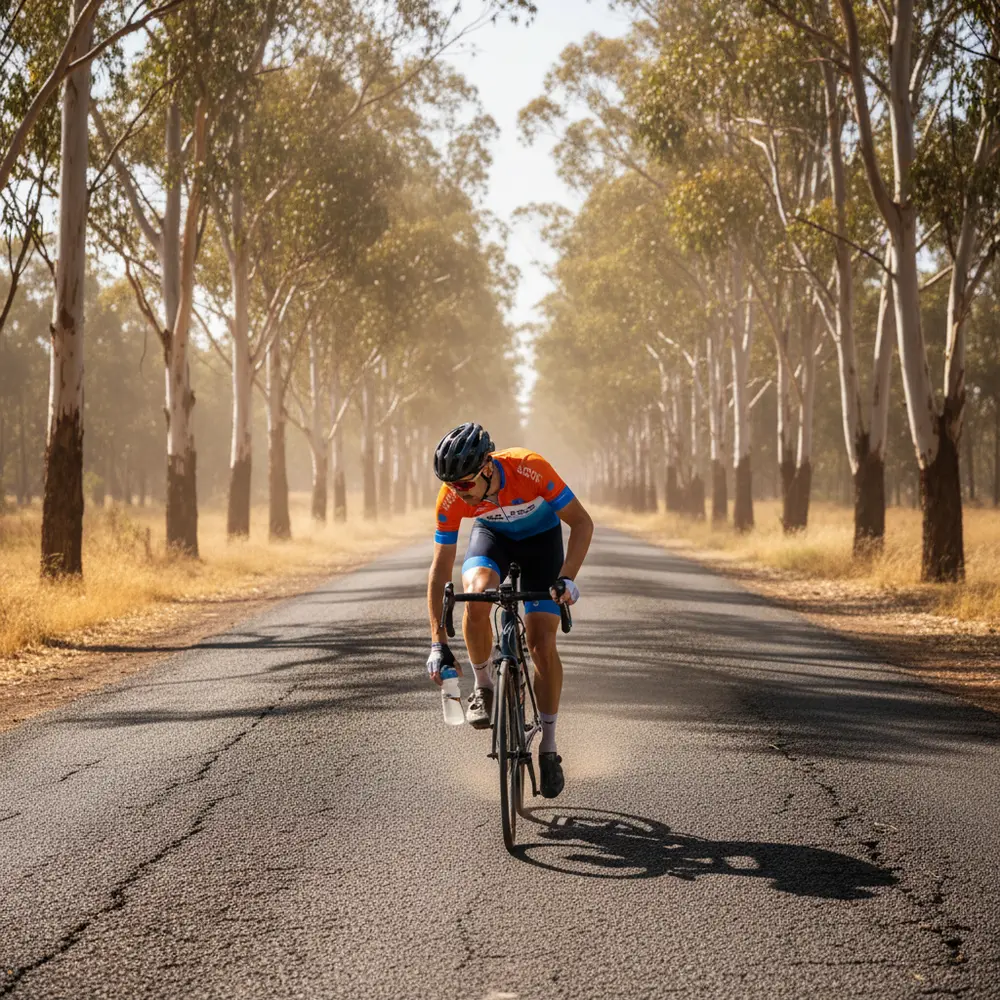
You have just rolled back from a hard ride in the Australian heat and your legs feel like wet cement. What you do in the next hour or two will either set you up to feel good on the next ride or leave you dragging yourself around for days.
By the end of this article you will know what to eat, roughly when to eat it, and which everyday Australian foods actually do the job. No spreadsheets, no complicated formulas. Just a practical framework you can use on any Sunday afternoon when you are tired and hungry.
Note for Australia:
- Australian summer riding can push sweat rates above one litre per hour, making rehydration a bigger immediate priority than in cooler climates.
- Foods like flavoured milk, Greek yoghurt, eggs on toast, and BBQ chicken from the servo are solid recovery options you can grab anywhere in the country.
- The Australian Institute of Sport nutrition guidelines and Sports Dietitians Australia are your best local references for anything more personalised.
At a glance:
- Eat something with carbohydrates and protein within 30 to 60 minutes of finishing a hard ride.
- Aim for roughly 1 to 1.2g of carbohydrate per kg of bodyweight in that first recovery window.
- Target around 20 to 25g of quality protein to kickstart muscle repair.
- Rehydrate with more fluid than you think you need, and include sodium to hold it in.
Key takeaways:
- The post-ride recovery window is real but not as narrow as many people think. Total daily intake matters most.
- Whole foods from the supermarket work just as well as most commercial supplements for intermediate cyclists.
- Post-ride beers are part of the culture but they do set back your recovery if you skip food and water first.
Why Recovery Nutrition Matters After a Hard Ride
What Actually Happens to Your Body After a Big Effort
When you finish a hard ride, your muscles are depleted of glycogen, the stored carbohydrate that fuels moderate to high intensity efforts. Your muscle fibres also have small amounts of damage from the repeated contraction, and your fluid and electrolyte levels are down from sweat losses. Three separate problems that need three separate solutions.
The good news is that the body is primed to absorb and use nutrients immediately after exercise. Blood flow to the muscles is elevated, and the enzymes responsible for rebuilding glycogen stores are highly active. If you do nothing, recovery still happens. It just happens more slowly and you feel rougher for longer.
According to Sports Dietitians Australia recovery nutrition guidelines, the four priorities after a hard session are straightforward: Refuel, Repair, Rehydrate, and Revitalise. These four Rs give you a simple mental checklist to work through every time you get off the bike.
The Recovery Window - Timing Your Post-Ride Nutrition
The 30-Minute Rule - Fact or Fiction
You have probably heard that you need to eat within 30 minutes or the window slams shut. The truth is a bit more nuanced. A widely cited review published in the Journal of the International Society of Sports Nutrition found that the post-exercise anabolic window is real but considerably wider than the fitness industry often suggests. For athletes training once a day, total daily intake of carbohydrates and protein is the primary driver of recovery, not minute-by-minute precision.
That said, if you are riding back-to-back days or doing two sessions in a day, getting carbohydrates in quickly does matter more. And practically speaking, eating something decent within 30 to 60 minutes just tends to make you feel better sooner. So the rule is still worth following, even if the consequences of missing it by a bit are less dramatic than advertised.
| Scenario | How urgent is the window? | Practical advice |
|---|---|---|
| Single ride day, light to moderate effort | Low urgency. Eat within 1 to 2 hours. | A normal meal when you get home is fine. |
| Single ride day, hard or long effort | Medium. Aim for 30 to 60 minutes. | Grab a snack quickly, then eat a full meal. |
| Back-to-back ride days | High. Start eating within 30 minutes. | Prioritise carbs immediately. Protein follows. |
| Two sessions in one day | Very high. Eat as soon as possible. | Recovery snack straight away, full meal within the hour. |
The Macronutrient Breakdown for Cycling Recovery
Carbohydrates - Refilling the Tank
Carbohydrates are the primary fuel source for the kind of efforts that leave you feeling wrecked. As noted in both AIS and Sports Dietitians Australia guidelines, a target of around 1 to 1.2g of carbohydrate per kilogram of bodyweight in the first hour after prolonged exercise supports rapid glycogen resynthesis. For an 80kg rider, that is roughly 80 to 96g of carbohydrates.
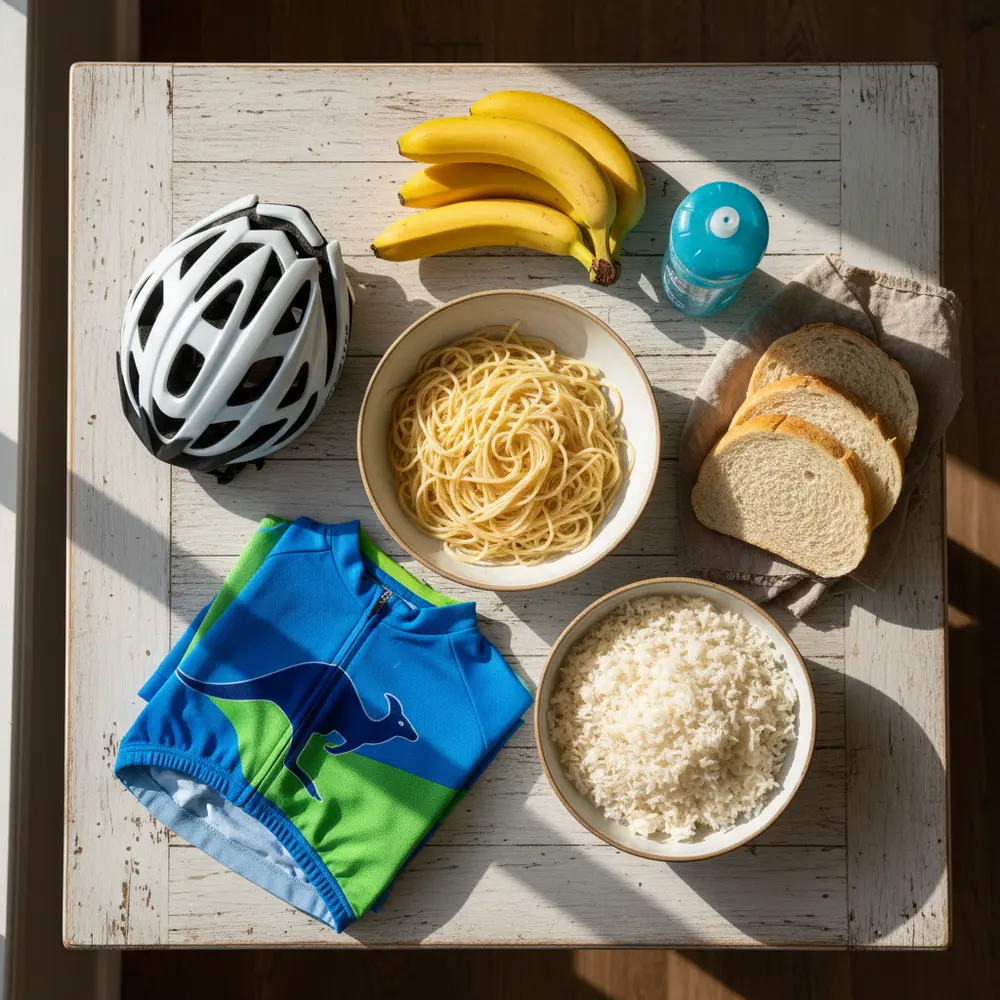
In practical terms, that is a couple of slices of toast with banana and honey, a bowl of rice with whatever protein you have handy, or a large glass of flavoured milk with a piece of fruit. You do not need to be precise about it. Just get a decent serve of carbs in reasonably soon after you get off the bike.
- Bread, rice, pasta, and oats are all solid carbohydrate sources.
- Fruit, particularly banana and mango, are quick and easy options after a ride.
- Flavoured milk gives you carbs and protein together in a ratio that works well for recovery.
- Vegemite on toast is a classic for a reason. Salt, carbs, and B vitamins in one go.
Protein - Repairing the Engine
Protein is what your muscles use to rebuild after the damage from a hard effort. Research on protein requirements for endurance cyclists consistently points to a post-exercise dose of around 20 to 25g of high-quality protein as the sweet spot for stimulating muscle protein synthesis in most people. Going much higher in one sitting does not provide additional benefit for most intermediate riders.
Good protein sources after a ride include eggs, Greek yoghurt, canned tuna or salmon, a chicken breast, or a glass of milk. Leucine-rich sources like dairy, eggs, and meat tend to drive the repair response most effectively. For the 80kg rider mentioned above, two eggs plus a cup of Greek yoghurt covers the target comfortably.
Fats and Micronutrients - The Supporting Cast
Fats do not need to be the immediate focus after a hard ride. They slow gastric emptying, which is actually useful for sustained energy but less ideal when you want quick nutrient delivery after exercise. Include them in your full recovery meal, just do not make them the centrepiece of your immediate post-ride snack.
Micronutrients like vitamin C, antioxidants from colourful vegetables and fruit, and anti-inflammatory foods all support longer-term recovery. Some cyclists swear by tart cherry juice, and the evidence is moderately promising. A literature review in Current Sports Medicine Reports found tart cherry juice for cycling recovery shows statistically significant reductions in muscle soreness markers, though the effect size varies and it is not a magic bullet.
Hydration and Electrolyte Replacement in the Australian Heat
This section matters more in Australia than it does for riders in cooler climates. Sweat rates on Australian summer rides in hot conditions can exceed one to two litres per hour, and if you have been out for three or four hours in 35-degree heat, you are almost certainly finishing in a meaningful fluid deficit. Water alone is not always enough.
Sodium is the primary electrolyte lost in sweat and it is critical for effective rehydration. Without adequate sodium, the kidneys signal the body to offload excess fluid rather than hold it. AIS guidance suggests aiming to replace around 125 to 150% of your estimated fluid losses after exercise. The simplest field check is urine colour. Pale straw means you are doing well. Dark yellow or amber means you still have work to do.
- Weigh yourself before and after if you want an accurate measure of sweat losses. Each kilogram lost equals roughly one litre of fluid.
- Salty foods like Vegemite toast, pretzels, or a savoury recovery meal help replace sodium naturally.
- Electrolyte tablets or powders can help, particularly after very long or very sweaty rides.
- Flavoured milk covers both fluid and sodium, which is part of why it works so well as a recovery drink.
Practical Recovery Meal Ideas Using Australian Staples
Quick Options for When You Just Want to Collapse on the Couch
Not every post-ride moment involves the energy to cook. Sometimes you roll in the door and need something immediately. These options take five minutes or less and hit the right nutritional marks.
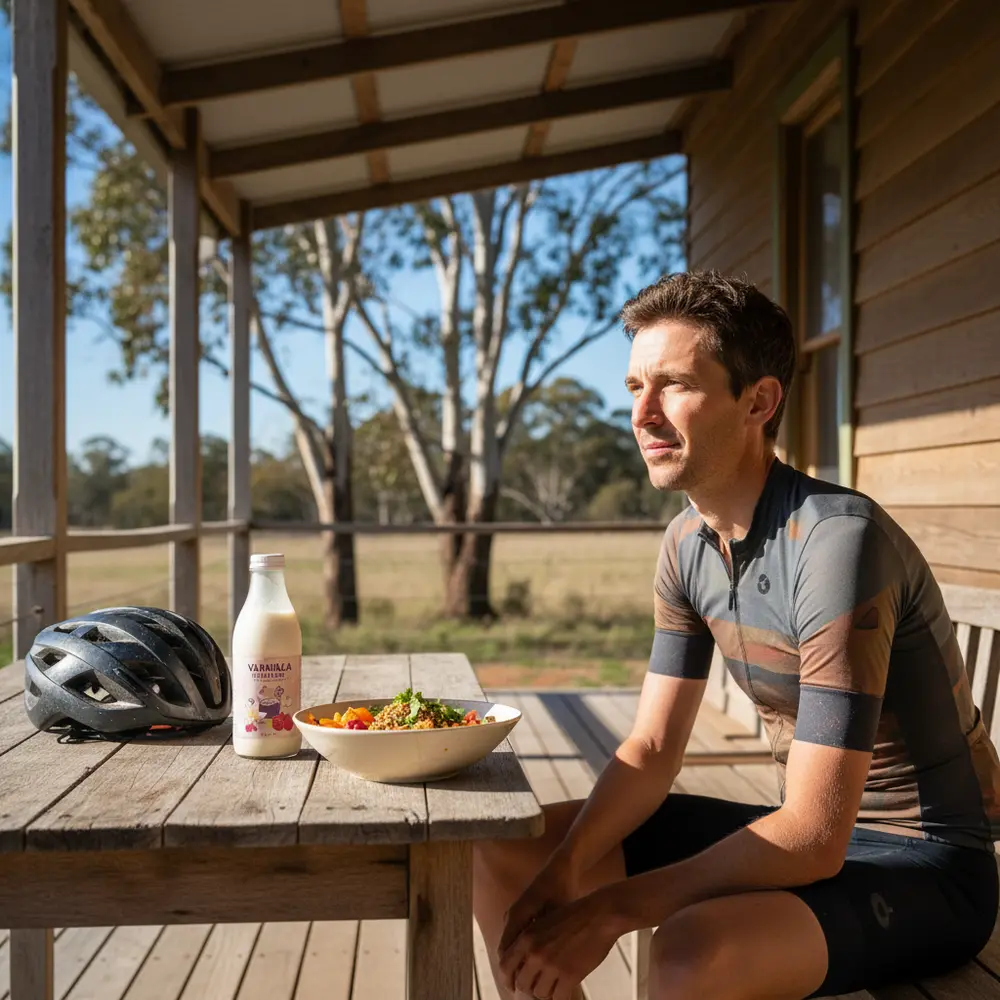
- A 600ml bottle of flavoured milk. Readily available, proven by research to work as well as most commercial recovery drinks, and costs a couple of dollars.
- Greek yoghurt with banana and a drizzle of honey. Quick, tasty, and hits both protein and carbs.
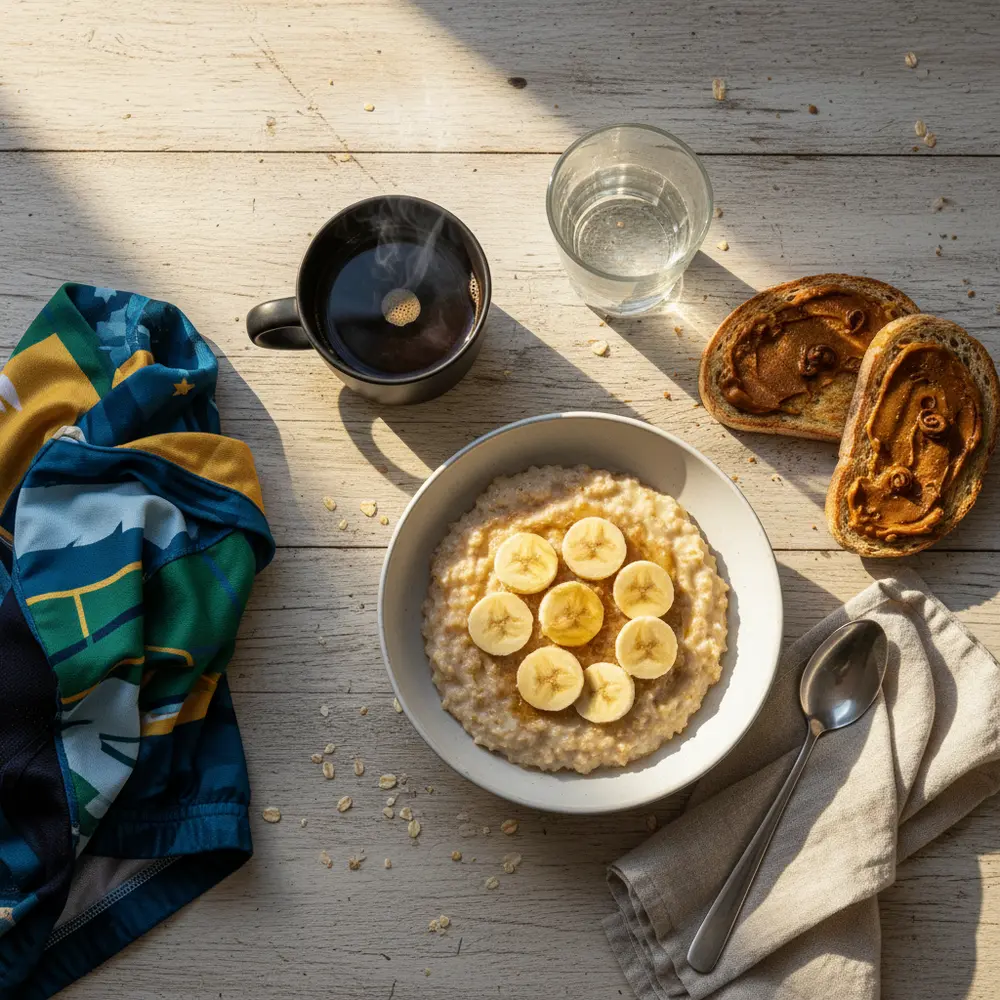
- Two slices of toast with peanut butter and sliced banana.
- A tub of cottage cheese with crackers and a piece of fruit.
- A pre-cooked BBQ chicken from the supermarket with a bread roll.
Full Recovery Meals Worth Cooking After a Long Ride
If you have ridden four hours or more, a proper sit-down meal is what your body really wants. These are the kinds of meals that leave you feeling genuinely recovered by the next morning.
- Chicken and rice bowl with steamed vegetables and a drizzle of soy and sesame.
- Eggs on sourdough toast with avocado and grilled tomato.
- Pasta with a meat-based sauce and a side salad.
- Grilled salmon with sweet potato and greens.
- Beef stir-fry with rice noodles and plenty of colourful vegetables.
The common thread across all of these is a solid serve of carbohydrates paired with a quality protein source and some vegetables for micronutrients. You do not need to hit exact numbers. Just build the plate around that logic and you are most of the way there.
If you are looking to understand how nutrition fits into your broader training load, the training resources on Segment Club cover pacing, periodisation, and building your weekly ride structure in plain language.
Common Recovery Nutrition Mistakes to Avoid
Most riders get recovery wrong not because they do not know the basics but because they skip steps when they are tired. Here are the ones that come up most often.
- Eating nothing for hours after a ride. Skipping the recovery window because you are not hungry is one of the most common errors. Appetite is often suppressed after hard exercise. Eat anyway.
- Only drinking water after a big sweat. Water without sodium does not rehydrate you properly after a significant sweat session. Include something salty alongside your fluids.
- Going straight to the post-ride beer. According to Sports Dietitians Australia alcohol advice, alcohol impairs glycogen resynthesis, slows muscle repair, worsens dehydration, and disrupts sleep. Enjoy one if you want to, but eat and rehydrate properly first.
- Relying on protein alone. Protein without carbohydrates will not refill your glycogen stores. You need both.
- Overcomplicating it with supplements. For most intermediate riders, whole foods cover everything a commercial recovery product does, usually at a fraction of the cost.
- Forgetting that sleep is a major recovery tool. Food and fluid matter, but poor sleep undoes a lot of good nutrition work. Alcohol makes this worse.
If You Are New to Thinking About Recovery Nutrition
If this is the first time you have really thought about what you eat after a ride, start here. Keep it simple.
- Grab a flavoured milk or yoghurt within an hour of finishing. That is step one and it covers most of the bases.
- Drink more fluid than you think you need after riding in the heat. The thirst signal often lags behind actual fluid needs.
- Eat a proper meal within two hours of getting home. Rice, pasta, eggs, chicken. Any combination of those works.
- Do not stress about exact grams and ratios on your first few attempts. Get the habit in place first, then refine it.
If You Have Done Post-Ride Nutrition Before
If you already have the basics locked in, here are the areas worth tightening up at the intermediate level.
- Start tracking your approximate carbohydrate and protein intake after long rides to see if you are hitting the 1 to 1.2g per kg carbohydrate target and the 20 to 25g protein target.
- Weigh yourself before and after a few rides to understand your actual sweat rate and fluid losses.
- Experiment with tart cherry juice concentrate in the days around a hard block or event, the evidence is modest but it is low risk and worth trying.
- Review how often alcohol is in your post-ride routine and consider pushing it back until after your recovery meal and first round of fluids.
- If you train twice a day or ride multiple days in a row, treat the post-ride window as non-negotiable and get carbohydrates in within 30 minutes.
Post-Ride Recovery Nutrition Checklist
Use this as a quick-reference card after every hard session. Stick it on the fridge if it helps.
- Within 30 to 60 minutes: Eat or drink something with carbohydrates and protein. Flavoured milk, yoghurt and fruit, or toast with eggs all work.
- Carbohydrate target: Aim for roughly 1 to 1.2g per kg of bodyweight. For an 80kg rider that is around 80 to 96g.
- Protein target: Around 20 to 25g of quality protein. Two eggs, a cup of Greek yoghurt, or a chicken breast each get you there.
- Rehydrate: Drink more than you think you need. Aim to replace 125 to 150% of fluid lost. Check urine colour. Pale straw is the target.
- Include sodium: Salty food with your recovery snack or meal helps your body hold onto the fluid you drink.
- If you are drinking alcohol: Eat and rehydrate first. At least one solid meal and plenty of water before the first beer makes a meaningful difference.
- Full meal within two hours: Round out your nutrition with a balanced meal covering carbs, protein, and vegetables.
- Sleep: Non-negotiable. It is when most of the repair actually happens.
For more on building a consistent training and nutrition routine, take a look at the Segment Club nutrition articles for practical guides across fuelling, hydration, and race-day eating.
Supplements - Do You Actually Need Them
Short answer for most intermediate cyclists: probably not, if your food is reasonably sorted. Commercial recovery powders, protein shakes, and recovery blends are convenient but they rarely outperform well-chosen whole foods. Research comparing whole food sources to commercial supplements consistently shows similar recovery outcomes for recreational and intermediate athletes.
Flavoured milk, in particular, has been validated in multiple peer-reviewed studies as a cost-effective recovery option. The carbohydrate-to-protein ratio is close to the recommended 3 to 4 parts carbohydrate to 1 part protein, and the sodium and potassium content supports rehydration. It is hard to beat a cold bottle of chocolate milk after a hot ride, and the research backs that up.
Where supplements can genuinely help is when you are travelling, racing on consecutive days, or struggling to get food in quickly after a session. A protein shake or a recovery sachet is better than nothing. But they should fill gaps, not replace a real meal. If you want personalised guidance, an accredited sports dietitian through Sports Dietitians Australia is the right call. They work with cyclists regularly and will give you targets specific to your training load and body weight.
You can also check what Cycling Australia nutrition resources link to for locally relevant guidance aligned with AIS and SDA recommendations.
Frequently asked questions
How soon after a ride do I really need to eat?
Aim for within 30 to 60 minutes for hard or long rides. If you are only doing one session per day, the consequences of eating an hour or two later are not catastrophic. But getting something in quickly generally makes you feel better sooner and supports glycogen resynthesis more effectively, especially if you are riding the next day.
Is chocolate milk actually a good recovery drink or just marketing?
It is genuinely backed by research. Multiple peer-reviewed studies have found that flavoured milk performs at least as well as commercial sports drinks for rehydration and recovery due to its carbohydrate and protein combination, sodium content, and fluid volume. It is also cheap and available at every servo in Australia.
How much protein do I need after a ride?
Around 20 to 25g of high-quality protein is the evidence-based target for stimulating muscle protein synthesis after exercise. That is roughly two eggs plus a cup of Greek yoghurt, or a palm-sized serve of chicken or fish. Going significantly higher in one sitting does not appear to provide extra benefit for most intermediate cyclists.
Does having a post-ride beer really affect recovery that much?
Yes, to a meaningful degree. Alcohol impairs glycogen resynthesis and muscle protein synthesis, acts as a diuretic which worsens dehydration, and disrupts sleep quality. The practical advice from Sports Dietitians Australia is to eat a full recovery meal and rehydrate properly before you drink. One beer after food and fluids is a very different situation to heading straight to the pub.
Do I need electrolyte supplements or will food cover it?
For most rides under two hours in moderate conditions, food with some salt covers your electrolyte needs. After longer rides in hot Australian conditions, where sweat losses are significant, an electrolyte drink or tablet can help accelerate rehydration. Salty foods like Vegemite toast, cheese, or pretzels alongside plenty of water also work well for most riders.
Wrapping It Up
Recovery nutrition does not need to be complicated. Here is the short version.
- Eat carbohydrates and protein within 30 to 60 minutes of a hard ride.
- Aim for roughly 1 to 1.2g of carbohydrate per kg of bodyweight and around 20 to 25g of protein.
- Rehydrate with more fluid than you think you need and include sodium.
- Whole foods like flavoured milk, eggs, toast, yoghurt, and rice work as well as most supplements.
- If you are drinking after a ride, eat and rehydrate properly first. Then enjoy it.
If you have questions about how this fits into your specific training plan or you want more tailored guidance, feel free to get in touch with the Segment Club team and we can point you in the right direction.
This is educational content, not financial advice.