Your first century ride is a serious physical undertaking, and what you eat in the three days before it will have a bigger impact on how you feel at kilometre 80 than almost anything else you do on the bike. Get the fuelling wrong and you will hit the wall hard. Get it right and the last 20km become a completely different experience.
By the end of this article you will understand exactly how carb loading works, what to eat and when to eat it, and you will have a simple 3-day plan you can follow before your event. Whether you are lining up for Amy's Gran Fondo, Ride Melbourne, or a local club century, this guide is written for you.
Note for Australian riders:
- Australian summer events mean heat is a real factor. Your hydration needs will be higher than you might expect, especially on rides starting in the early morning and pushing into warmer parts of the day.
- All food examples in this article are available at any Woolworths, Coles, or IGA. No specialist sports nutrition store required.
- If you eat gluten-free or plant-based, the same principles apply. Swap pasta and white bread for rice, rice noodles, or gluten-free alternatives and the plan works just as well.
At a glance:
- Carb loading is most effective for events lasting longer than 90 minutes at a solid pace, which means a 100km ride qualifies.
- The goal is to top up your muscle glycogen stores over 1 to 3 days before the event, not to eat as much as humanly possible.
- Target around 8 to 12 grams of carbohydrate per kilogram of bodyweight per day during the loading phase.
- You still need to fuel on the bike during the ride, even if you have carb loaded properly beforehand.
Key takeaways:
- Start shifting your meals toward high-carb, low-fibre, low-fat foods 3 days out from your event.
- Expect a small temporary weight gain of 1 to 2 kg from water stored alongside glycogen. This is normal and not a problem.
- Always trial your nutrition plan on a long training ride before you use it on event day.
What Is Carb Loading and Why Does It Matter for a Century Ride
Carb loading is simply the process of increasing your carbohydrate intake in the days before an endurance event to maximise the amount of glycogen stored in your muscles and liver. It is not about stuffing yourself. It is about replacing the fat and protein calories in your normal diet with carbohydrate calories so your body has a full tank going into the ride.
According to Sports Dietitians Australia's carbohydrate loading guidelines, carb loading is specifically recommended for events lasting longer than 90 minutes at moderate to high intensity. A 100km ride at your first-century pace sits squarely in that category for most riders. It is worth doing properly.
The Science Behind Glycogen and Why It Runs Out
Glycogen is the stored form of carbohydrate in your muscles and liver. It is your body's go-to fuel source when you are riding at a decent clip, anything above a light conversational pace. The problem is that your stores are limited and can be depleted within roughly 90 to 120 minutes of sustained effort, as outlined by the Australian Institute of Sport's carbohydrate guidelines.
When glycogen runs low, your body struggles to maintain power output and your brain starts sending you very strong signals to slow down. Cyclists call this bonking or hitting the wall. It is not a pleasant experience and it is largely preventable with smart preparation. Peer-reviewed research published in the Journal of the International Society of Sports Nutrition confirms that a structured loading protocol can increase muscle glycogen content by 20 to 40 percent, which is a meaningful buffer for a long ride.
How Far Out Should You Start Carb Loading
A 1 to 3 day loading protocol is considered effective for trained athletes. For most club-level riders targeting their first century, starting 3 days out is the safest and most practical approach. It gives you enough time to fill your stores without the stress of trying to cram everything into the day before.
The table below gives you a quick comparison of loading approaches so you can choose what suits your schedule.
| Protocol | Duration | Best for | Risk level |
|---|---|---|---|
| 3-day taper and load | Days 3, 2, and 1 before event | First-time century riders with time to prepare | Low. Gradual and well-tested. |
| 1-day load | Day before event only | Experienced athletes who know their gut | Moderate. Can cause bloating if overdone. |
| No specific load | Normal eating right up to event | Short or low-intensity rides under 90 minutes | Not recommended for a century ride. |
The 3-Day Taper and Load Protocol Explained
The idea is simple: reduce your training load while increasing your carbohydrate intake. Less exercise means your body is not burning through the glycogen you are trying to store. More carbs means more raw material for your muscles to stock up on.
- Keep training easy and short in the 3 days before the event.
- Shift your plate composition toward carbohydrates at every meal.
- Reduce fat and fibre intake, especially in the final 48 hours.
- Stay well hydrated throughout, because glycogen is stored with water.
What to Actually Eat When Carb Loading in Australia
This is where a lot of riders overcomplicate things. You do not need special products or expensive supplements. The foods that work best are simple, widely available, and cheap. The target intake during the loading phase is around 8 to 12 grams of carbohydrate per kilogram of bodyweight per day, based on guidance from both Sports Dietitians Australia and the research literature.
To put that in practical terms: a 70 kg rider is aiming for roughly 560 to 840 grams of carbohydrate per day. That sounds like a lot, but spread across 3 to 4 meals and a couple of snacks, it is very manageable with the right food choices.
Practical Aussie Food Choices That Work
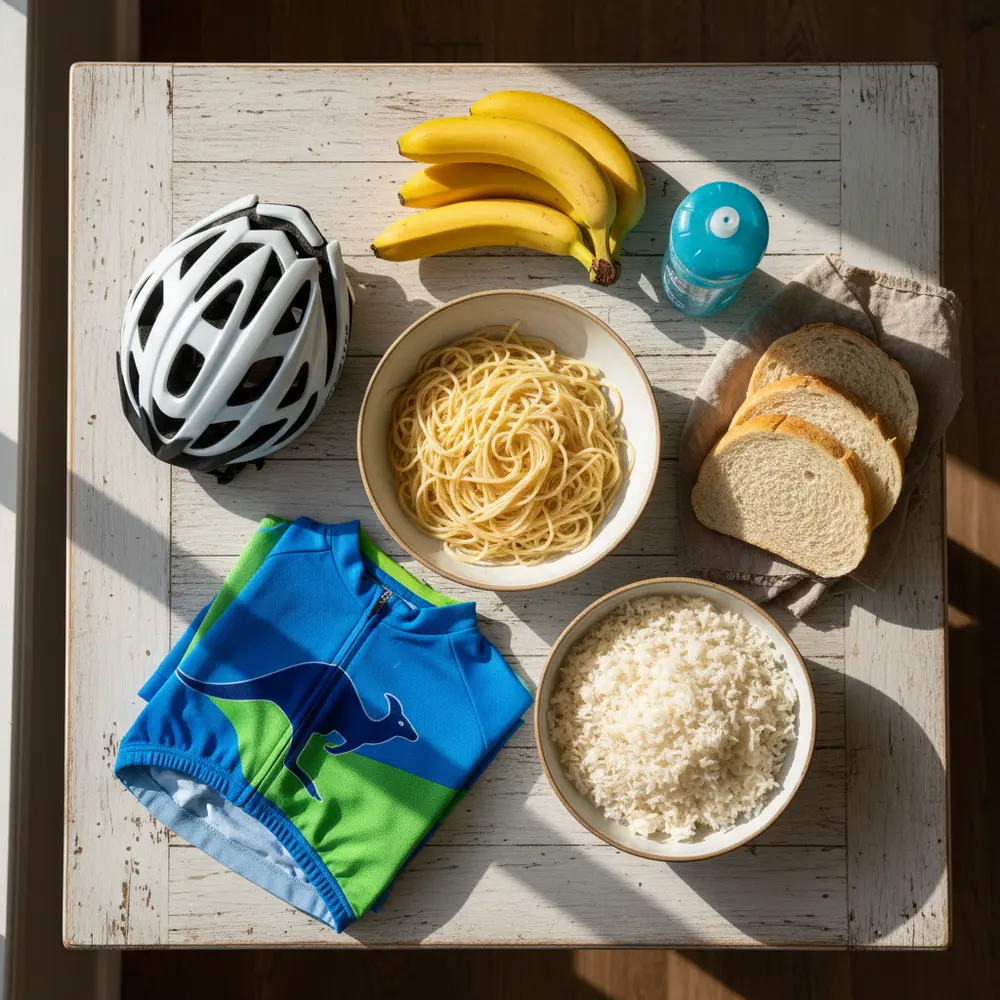
- White pasta: A large bowl of cooked pasta delivers around 70 to 80 grams of carbs. Easy to eat, easy to digest.
- White rice: A reliable option, especially for gluten-free riders. A cup of cooked rice has roughly 45 grams of carbs.
- White bread and toast: Two slices give you around 30 grams. Simple, familiar, and easy on the gut.
- Bananas: A medium banana has about 25 to 30 grams of carbs and is easy to eat as a snack between meals.
- Potatoes: Boiled or baked with minimal fat. A medium potato delivers around 30 grams of carbs.
- Sports drinks and cordial: Useful for topping up carbs between meals without adding bulk to the stomach.
- Fruit juice and soft drink: Fine in moderation during loading if you are struggling to hit your carb targets from food alone.
Foods to Avoid in the 48 Hours Before Your Ride
The goal in the final 48 hours is to reduce foods that slow digestion or cause gut discomfort. High-fibre and high-fat foods are the main ones to cut back on, not forever, just for two days.
- Whole grain bread, brown rice, and bran cereals. These are normally great, but not right now.
- Large serves of legumes, lentils, or beans. High fibre and known to cause bloating.
- Rich or creamy sauces, fried food, and takeaway. High fat slows gastric emptying.
- Large portions of raw vegetables and salad. Fibre load is too high for the timing.
- Alcohol. Dehydrating, disrupts sleep, and compromises glycogen storage.
- Anything unfamiliar. Not the time to try a new restaurant or a recipe you have never made.
Hydration and Electrolytes - The Part Most Riders Miss
Hydration is not a separate topic from carb loading. Glycogen is stored with water in your muscles, so if you are dehydrated during the loading phase, you are limiting how much glycogen you can store. Ride Melbourne's official nutrition guidance specifically recommends starting your hydration strategy at least two days before the event, which aligns with the 3-day loading window.
In Australian conditions, particularly summer events, sweat rates can be significantly higher than what riders train with in cooler months. Plan for this. Sip consistently throughout the day in the lead-up to your century, aim for pale yellow urine as your guide, and include some electrolytes rather than just plain water if you are sweating a lot.
A simple electrolyte approach for the loading phase:
- Add a pinch of salt to meals and cooking.
- Use a sports drink with sodium rather than plain water during long prep days.
- Include potassium-rich foods like bananas, potatoes, and yoghurt in your meals.
- Avoid excessive caffeine and alcohol, which work against hydration.
Race Morning Nutrition - What to Eat Before You Clip In
Your pre-race meal is the final piece of the fuelling puzzle. The goal is to top up liver glycogen after an overnight fast, settle your stomach, and get to the start line feeling comfortable and ready. Bicycling Australia recommends a pre-ride meal 2 to 3 hours before the start for optimal digestion and energy availability.
Keep it simple and familiar. This is not the morning to experiment.
- White toast with honey or jam: Easy to digest, quick carbs, well tolerated by most riders.
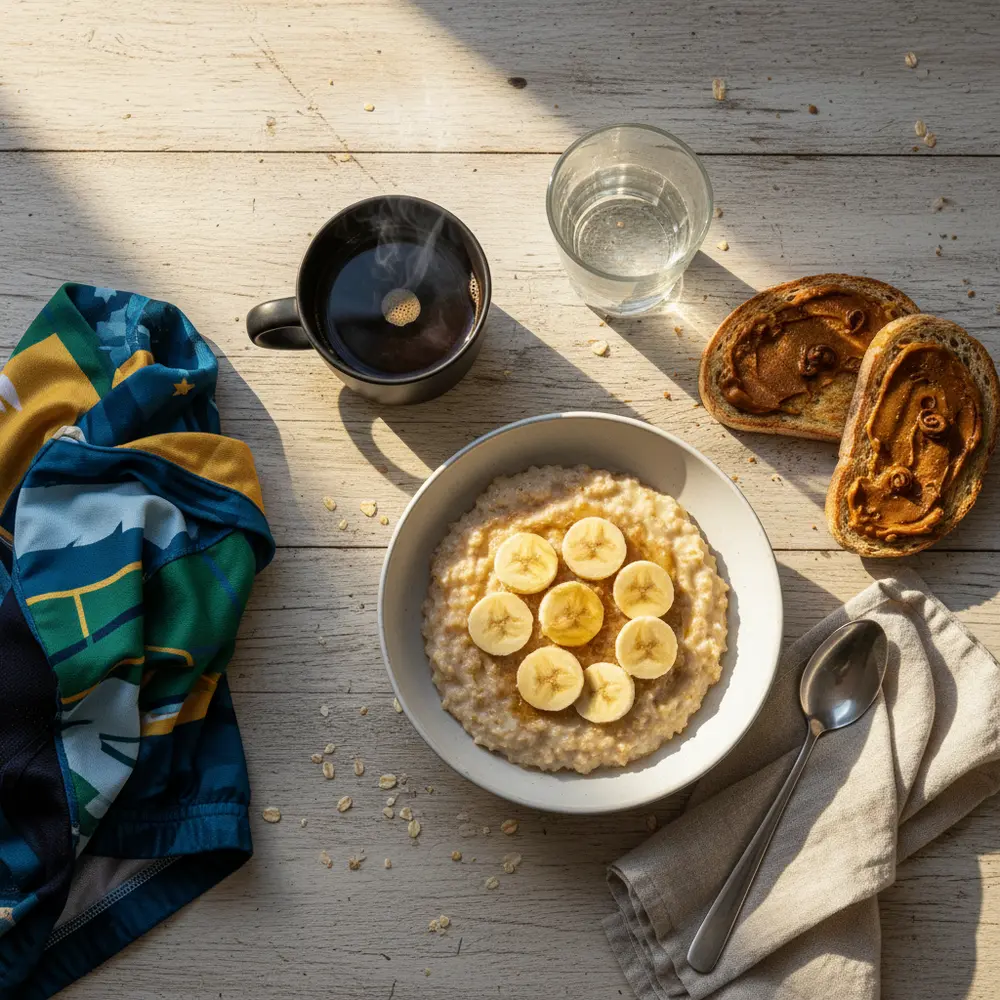
- Porridge with banana and a drizzle of honey: Slightly more sustaining and a classic pre-ride option.
- White rice with a small amount of scrambled eggs: Good if you prefer a savoury breakfast.
- A small glass of juice or sports drink: Helps top up carbs if you cannot stomach a full meal early in the morning.
Aim for around 1 to 4 grams of carbohydrate per kilogram of bodyweight in this meal, leaning toward the lower end if your stomach is nervy on race morning. Keep fat and fibre low. Drink around 500ml of water or a sports drink in the 2 hours before the start.
Common Carb Loading Mistakes and How to Avoid Them
Most riders make at least one of these errors on their first attempt. Knowing them in advance is half the battle.
- Trying it for the first time on race day. Always trial your full nutrition plan on a long training ride first. This is the single most important rule.
- Eating too much fat alongside the carbs. A big pasta dinner with a creamy sauce, garlic bread loaded with butter, and a dessert is too much fat. Keep sauces simple, use olive oil sparingly.
- Ignoring hydration and focusing only on food. Carb loading without adequate hydration limits glycogen storage and leaves you starting the ride already behind.
- Panicking about the 1 to 2 kg weight gain. This is water stored with glycogen. It is temporary, normal, and actually means the loading is working. It will not slow you down.
- Skipping on-bike fuelling because "you've carb loaded". Your glycogen stores will still deplete during the ride. Aim for around 60 to 90 grams of carbohydrate per hour on the bike for a ride over 2 hours, as recommended by CyclingTips' cycling nutrition guide.
- Increasing total calories massively. You are replacing fat calories with carbohydrate calories, not piling more on top. Total intake does not need to blow out dramatically.
Your Simple 3-Day Carb Loading Plan for a Century Ride
Here is a practical step-by-step plan counting down to event day. Individual needs vary based on body size, training history, and gut tolerance. Use this as a framework, not a rigid script, and always trial it on a long training ride before your event.
- Day 3 out (e.g. Thursday for a Sunday event): Start shifting meals toward carbohydrate-heavy options. Aim for around 8g of carbs per kg of bodyweight. Include pasta or rice at dinner, fruit and toast at breakfast, and a banana as a mid-afternoon snack. Keep training light, a short easy spin or rest day. Drink consistently throughout the day.
- Day 2 out (Friday): Step it up toward 10g of carbs per kg of bodyweight. Reduce high-fibre foods like wholegrain bread, raw vegetables, and legumes. Breakfast: porridge or white toast with honey. Lunch: a large serve of white rice with a simple protein like chicken or tofu. Dinner: pasta with a simple tomato-based sauce and a small serve of protein. Snack on bananas, white bread, or sports drinks between meals. Keep any training very easy or take a full rest day.
- Day before (Saturday): Final loading day. Aim for 10 to 12g of carbs per kg of bodyweight. Keep fat and fibre very low. Breakfast: white toast and honey, a glass of juice. Lunch: white rice or pasta, simple sauce. Dinner: a moderate serve of pasta or rice, not a massive blowout. Eat dinner early, around 6 to 7pm, so you have time to digest before an early start. Sip on a sports drink or water consistently. Get to bed at a reasonable time.
- Race morning: Eat 2 to 3 hours before the start. Aim for 1 to 2g of carbs per kg of bodyweight, keep it simple and familiar. White toast with honey, banana, small glass of juice. Drink around 500ml of water or a sports drink before the start. Bring gels, bars, or real food for on-bike fuelling and start eating from around the 45-minute mark.
If you are new to carb loading, check out our article on cycling nutrition fundamentals for a solid foundation before you start. And if you have questions about how to dial in your nutrition plan for a specific event, feel free to get in touch with the Segment Club team.
If You Are New to Carb Loading
- Start with the 3-day protocol rather than trying to cram everything into the day before.
- Focus on foods you already eat and enjoy. Do not introduce anything new in the days before the event.
- Expect to feel slightly fuller and heavier than normal. That is glycogen and water, and it is a good sign.
- Trial the whole plan on a long training ride of 3 to 4 hours at least 2 to 3 weeks before your event.
- Keep a simple log of what you ate and how you felt. It will be useful for future events.
If You Have Done a Long Ride Before
- You likely have a feel for what your gut tolerates. Use that knowledge to adjust portion sizes and timing.
- Consider tracking your carbohydrate intake using a simple app for the loading phase to check you are actually hitting your targets.
- If you have experienced GI distress on previous long rides, cut fibre even earlier, starting 3 days out rather than 2.
- Experiment with the combination of glucose and fructose sources during the ride itself, such as a gel and a banana, to improve carbohydrate absorption rates during the event.
- If you ride in Australian summer heat regularly, your sweat rate is likely higher than average. Factor in extra electrolytes and fluid during the loading phase.
Frequently asked questions
Does carb loading actually help for a 100km ride, or is it just for longer events?
Yes, it is relevant for a century ride. A 100km ride at a moderate to hard pace will take most intermediate riders anywhere from 3 to 5 hours, which is well within the range where glycogen depletion becomes a real performance limiter. The research consistently shows benefits for events lasting more than 90 minutes at a sustained effort. A century ride qualifies.
Will I gain weight from carb loading and does it matter?
Yes, you will likely see a temporary increase of 1 to 2 kg on the scales. This is water stored alongside glycogen in your muscles and it is a completely normal physiological response. It is not fat gain and it is not a problem. The extra water actually helps with hydration during the ride. Do not stress about it.
Do I still need to eat and drink during the ride if I have carb loaded?
Absolutely yes. Carb loading fills your tank before the ride, but that tank will still empty over the course of 3 to 5 hours of riding. Aim to take in around 60 to 90 grams of carbohydrate per hour during the event, starting from around the 45-minute mark. Gels, bananas, bars, rice cakes, and sports drinks at aid stations all count toward this. Do not wait until you feel hungry or tired.
Are the recommendations different for female cyclists?
There is some evidence that female athletes may have different carbohydrate metabolism characteristics compared to male athletes, and individual variation is significant. The broad principles of carb loading apply to all riders. Female athletes may find they need to be more deliberate about hitting their carb targets given that some research suggests a tendency to under-fuel. Consulting an accredited sports dietitian for personalised advice is worthwhile if you want to get into the detail.
What should I do if I have a sensitive stomach or have had GI issues on long rides before?
Start reducing fibre 3 full days before the event, not just 48 hours out. Stick to well-cooked, soft foods like white rice, pasta, and peeled potatoes. Avoid high-fat meals and anything that you know your gut does not handle well. Practise your pre-race breakfast on training ride mornings. If GI issues are a recurring problem, speaking with an accredited sports dietitian is the best move. You can also explore more on this topic in our cycling nutrition articles on Segment Club.
Quick summary before you go
- Start your 3-day carb loading protocol on the Thursday before a Sunday event and reduce training volume at the same time.
- Target 8 to 12 grams of carbohydrate per kilogram of bodyweight per day, using simple foods like white pasta, rice, bread, bananas, and potatoes.
- Cut high-fibre and high-fat foods in the final 48 hours to protect your gut on race day.
- Eat a familiar, low-fibre carbohydrate-rich breakfast 2 to 3 hours before the start.
- Keep fuelling on the bike throughout the ride. Carb loading is preparation, not a replacement for on-bike nutrition.
This is educational content, not financial advice.