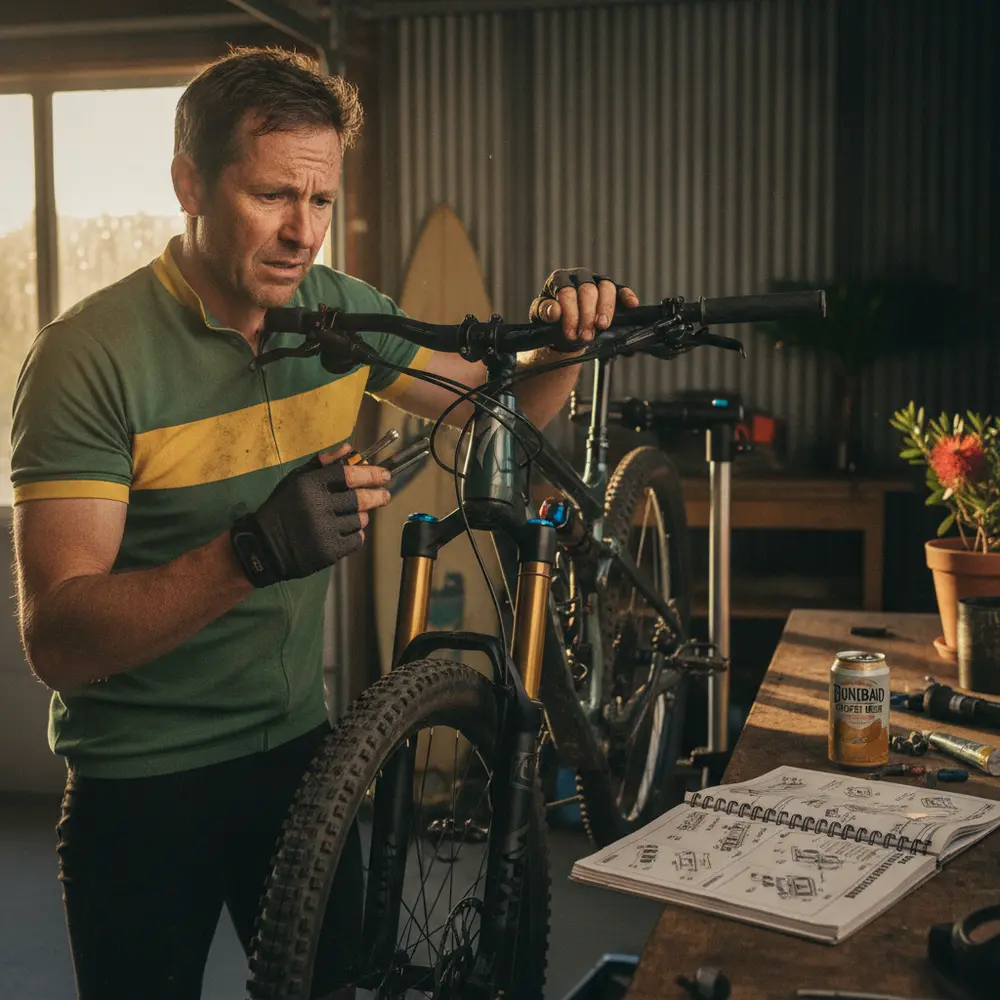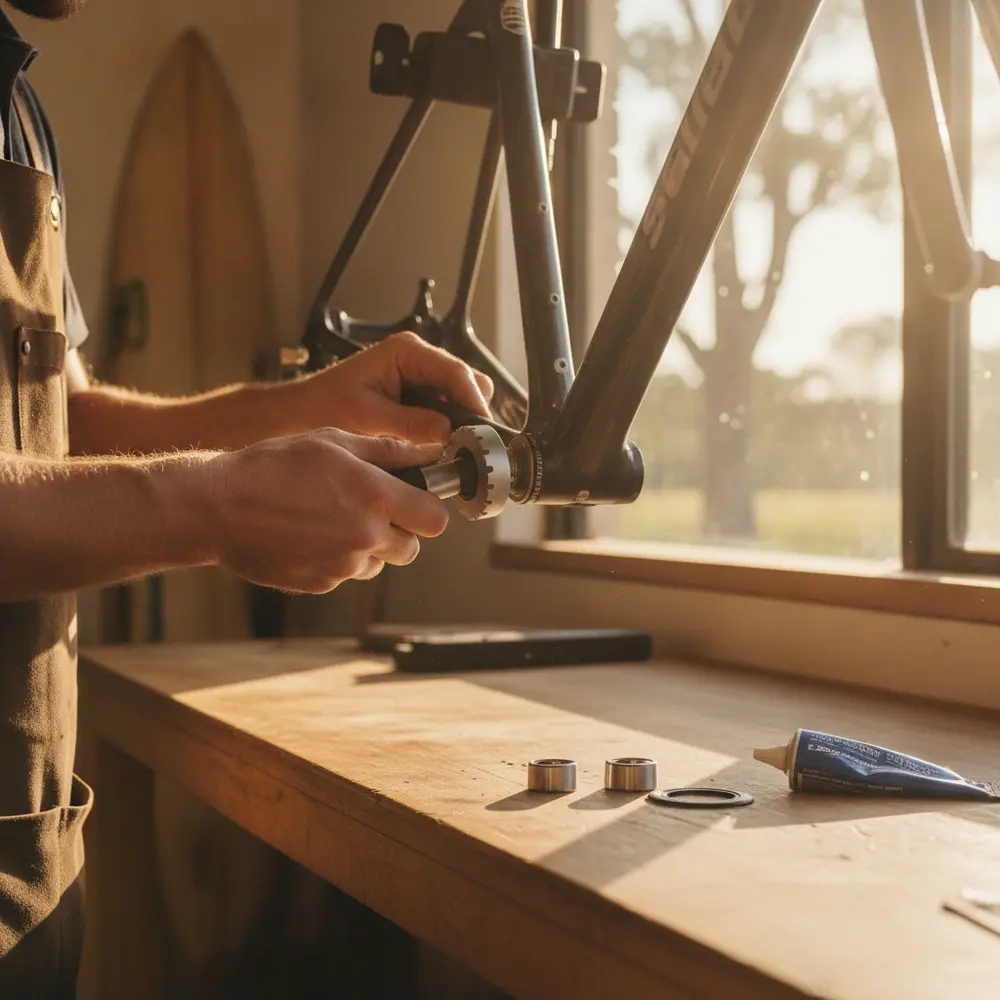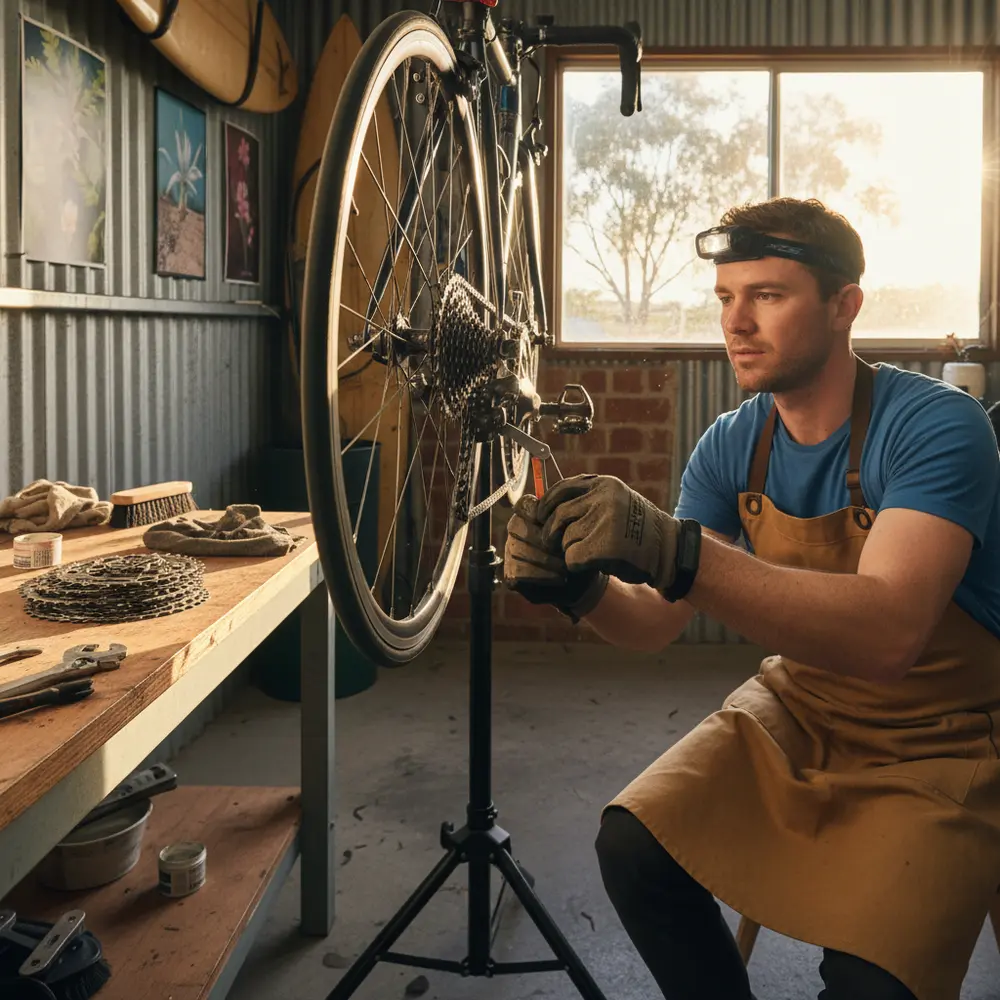
Your bike will tell you when something is wrong. You just need to know what to listen for, and when to hand it over to a cycling mechanic rather than trying to sort it yourself.
By the end of this article you will be able to identify the key warning signs across every major zone of your bike, know which problems are safe to monitor and which ones need professional attention right away, and walk into your local bike shop with confidence.
Note for Australian riders:
- Australian conditions including heat, dust, coastal salt air and variable terrain can accelerate component wear faster than mild climates.
- Riders who store bikes outdoors or commute year-round through summer heat may see cables, rubber seals and bearings degrade sooner than expected.
- If you ride on gravel, fire roads or in wet conditions regularly, shorten your service intervals compared to a rider doing clean tarmac only.
At a glance:
- Drivetrain noises, skipping gears and grinding are early signs that your chain, cassette or derailleur needs attention.
- Brake issues including grinding, squealing or a lever that pulls to the bar are safety concerns, not cosmetic problems.
- Wobbly wheels, broken spokes or a creaking frame need a professional eye before your next ride.
- Use the checklist at the bottom of this article to decide whether to book a service today.
Key takeaways:
- Most warning signs start small and get expensive if you ignore them.
- A cycling mechanic can spot problems you cannot see or feel yet.
- Regular servicing costs far less than replacing worn-out components that could have been saved.
Why Knowing Your Bike's Warning Signs Matters
Most beginners ignore early warning signs because they are not sure whether what they are experiencing is normal. That uncertainty is completely understandable. Bikes make noise, things shift around, and it can be hard to tell whether something is just "how it is" or a genuine problem building up.
The honest answer is that catching a problem early almost always saves money. A worn chain replaced at the right time protects your cassette and chainrings. A brake cable replaced before it snaps means you are not stopping with one brake in traffic. Small fixes stay small when you act on them.
The Difference Between a Home Fix and a Professional Job
There are things every rider should be doing at home: pumping tyres, wiping down the chain, checking bolts are snug. These are straightforward and do not require a workshop. But some jobs need tools, training and experience that most of us simply do not have at home.
| Home fix (you can do this) | Professional job (see a cycling mechanic) |
|---|---|
| Inflate tyres to correct pressure | Hydraulic disc brake bleed |
| Wipe and lube the chain | Wheel truing and spoke tensioning |
| Tighten loose bolts (if you know the torque) | Bottom bracket or headset replacement |
| Replace a punctured inner tube | Derailleur hanger alignment |
| Check tyre tread and sidewall condition | Carbon frame crack inspection |
Warning Signs in Your Drivetrain
The drivetrain is the hardest-working part of your bike. It is also the most likely to give you early warning signs. According to Park Tool's chain wear guidance, replacing a chain at the right time can significantly extend the life of your cassette and chainrings. Leave it too long and you are paying to replace all three at once.
Chain Skipping, Slipping or Grinding Noises
If your chain skips under load, particularly when you are pushing hard out of the saddle or accelerating, that is a classic sign of chain stretch or a worn cassette. A healthy drivetrain should be silent and smooth. Grinding or crunching sounds coming from the cranks or pedals suggest grit in the bottom bracket or a chain that is well past its service life.
- Chain skipping under power: likely chain stretch or worn cassette teeth.
- Crunching or grinding from the cranks: possibly a worn chain, dry bearings or a failing bottom bracket.
- Clicking with every pedal stroke: could be a tight chain link, worn chainring tooth or pedal thread issue.
Difficulty Shifting or Gears Not Indexing Properly
Gears that hesitate, overshoot or refuse to drop into the right sprocket are usually caused by cable stretch, a dirty or bent derailleur, or a hanger that is out of alignment. Cable stretch is normal over time and a minor adjustment is a straightforward job for a cycling mechanic. A bent derailleur hanger is a different matter and should be assessed professionally, especially if it happened after a knock or a fall.
Warning Signs in Your Brakes
Brakes are non-negotiable. If something feels off, do not put off getting it looked at. Brake pad wear and hydraulic disc brake servicing are well-documented areas where beginner riders often push on too long before seeking help.
Squealing, Grinding or Reduced Stopping Power
Squealing brakes are often a sign of contaminated or worn pads. On rim brakes, pad wear indicators or grooves wearing away signal that replacements are due. On disc brakes, a metallic grinding sound usually means the pad material has worn through and the metal backing plate is contacting the rotor. That damages the rotor quickly and is a safety risk.
- Squealing on rim brakes: dirty or misaligned pads, or glazed braking surface.
- Grinding on disc brakes: pads worn through, rotor contaminated or damaged.
- Reduced stopping power: worn pads, contaminated disc, or stretched cables on mechanical brakes.
- Contaminated disc brake pads (from oil or chain lube) often cannot be cleaned and need replacing entirely.
Brake Lever Pulling to the Bar
If your brake lever pulls most of the way to the handlebar before the brakes bite, that is a problem. On mechanical brakes, cable stretch is usually the culprit and it is an easy fix. On hydraulic brakes, a spongy or soft lever feel suggests air in the system. Bleeding hydraulic brakes requires specific tools and fluid knowledge, making it a professional job for most beginners.
Warning Signs in Your Wheels and Tyres
Wheels take a lot of punishment, especially on Australian roads and trails. A basic wheel inspection covers rim trueness, spoke tension and hub bearings. These are things you can check at home but should get a mechanic to fix.
Wobbling Wheels, Bent Rims and Spoke Issues
Lift your bike and spin each wheel slowly. If you see a side-to-side wobble, the wheel is out of true. A rim wobbling more than a couple of millimetres laterally needs to be trued by a mechanic. Out-of-true wheels on rim brake bikes cause brake rubbing and uneven stopping power. On any bike, an untrue wheel affects handling and can put uneven stress on spokes.
- Lateral wobble when spinning the wheel: needs truing.
- A broken or visibly loose spoke: get it replaced before riding, as it puts extra stress on the remaining spokes.
- Hub that feels rough or gritty when you spin it: bearings need attention.
- Visible cracks or dents in the rim: the wheel may need replacing entirely.
Warning Signs in Your Frame, Forks and Headset
Frame and fork issues are the most serious on this list. If you have any doubt about the structural integrity of your bike, stop riding it and take it to a mechanic. This applies especially to carbon fibre bikes, where carbon frame cracks can be subtle and are not always visible to the naked eye.
Creaks, Cracks and Headset Play
A creak is one of the most misleading noises on a bike. It feels like it is coming from the bottom bracket but it might actually be the seatpost, pedals, headset or even a crack in the frame. Do not assume you know the source. A creaking bottom bracket is common, but so is a creaking seatpost collar or a headset that needs grease.
Headset play is a genuine safety issue. To check it, apply the front brake and rock the bike forward and backward. If you feel a knock or looseness at the front end, the headset is loose or worn. This affects steering feel and should be assessed by a mechanic rather than ignored and deferred.
- Persistent creak that tightening bolts does not fix: see a cycling mechanic for diagnosis.
- Paint cracking or bubbling around welds or joints on aluminium: inspect carefully.
- Any visible crack or stress mark on a carbon frame or fork: stop riding immediately.
- Loose or knocking feeling at the front of the bike: headset play, needs attention.
Warning Signs in Your Cockpit and Seatpost
Slipping Saddle, Loose Stem or Handlebar Movement
A saddle that rotates or drops under load, a stem that moves when you pull on the bars, or handlebars that shift position are all signs that something needs to be tightened or inspected. Many of these are straightforward fixes, but they need to be torqued to the correct specification, especially on carbon components where over-tightening causes damage.
- Saddle tilting or dropping mid-ride: seatpost clamp or saddle rails need attention.
- Bars moving when pulling out of the saddle: stem bolts may need torquing, or stem may be worn.
- Seatpost creaking or slipping on a carbon frame: check for correct grease or carbon paste and clamp torque.
Common Mistakes Beginners Make
- Waiting until a problem is obvious before booking a service. By then, the damage is usually done.
- Assuming a noise will go away on its own. It almost never does.
- Lubricating a squeaky brake with oil. This contaminates the pads and makes things significantly worse.
- Ignoring a wobbly wheel because it does not seem to affect riding. It will affect the brakes and handling over time.
- Not checking quick-release skewers or thru-axles before a ride. A wheel that feels secure but is not properly fastened is a serious safety risk.
- Skipping the post-crash inspection. Even if the bike looks fine after a fall, check the frame, fork and headset before riding again.
How Often Should You Book a Professional Bike Service?
The honest answer is: it depends on how much you ride and in what conditions. As a starting point, commuter bikes used daily in Australian conditions should typically be serviced every three to six months, while a recreational road bike ridden on weekends might only need an annual service or one every few thousand kilometres.
If you ride in wet or muddy conditions, along the coast where salt air accelerates corrosion, or through the dry dusty inland, bring those intervals forward. Dirt and grit work into bearings and cables faster than most people realise.
| Rider type | Suggested service interval |
|---|---|
| Daily commuter | Every 3 to 6 months |
| Weekend recreational rider | Once a year or every 3,000 to 5,000 km |
| Regular off-road or gravel rider | Every 3 months or after significant wet riding |
| Coastal or high-humidity environment | Shorten interval by at least one month |
What to Expect When You Take Your Bike to a Cycling Mechanic
Walking into a bike shop for the first time can feel a bit daunting if you are not sure what to ask for. The good news is that most shops offer tiered service levels, so you are not committed to a full overhaul if all you need is a tune-up. A professional bike service in Australia will typically cover the following depending on the level you choose.
- Minor service: brake and gear adjustment, chain lubrication, safety check, tyre pressure.
- Major service: everything in a minor service plus bottom bracket, headset and wheel bearing inspection, cable replacement if needed.
- Full overhaul: complete strip, clean and rebuild of the entire bike. Recommended if you have not serviced the bike in a long time.
When you drop the bike off, describe what you have noticed. Be specific. "It makes a clicking noise when I pedal hard in the big ring" is far more useful to a mechanic than "it makes a noise sometimes." The more detail you give, the faster and more accurately they can diagnose the problem. If you are not sure where to start, have a read of our bike maintenance articles or get in touch and we can point you in the right direction.
If You Are New to Bike Ownership
- Book your first professional service within the first few months of riding, even if nothing feels wrong. It sets a good baseline.
- Ask the mechanic to show you what they found. A good mechanic will walk you through it.
- Learn to clean and lube your chain at home. It is the single highest-impact maintenance task you can do yourself.
- Get familiar with your bike so you notice when something changes. Knowing what "normal" feels like is the first step to spotting a problem.
- Do not over-lube. Too much lube attracts dirt and accelerates wear just as quickly as too little.
If You Have Serviced Your Bike Before
- If you have been doing your own adjustments, book a professional service at least once a year to catch anything you may have missed or gradually adapted to.
- Pay attention to component wear, not just function. A drivetrain can work well right up until it fails completely.
- Consider investing in a chain wear indicator tool. Catching chain stretch early is one of the cheapest ways to protect your drivetrain.
- After any crash or significant impact, inspect the frame, fork and headset before assuming everything is fine.
- If you are upgrading components or building a new wheel set, have a mechanic check the build before putting serious kilometres on it.
Quick Reference Checklist: Does Your Bike Need a Professional Service?
Work through each zone. If you tick more than two boxes in any single zone, it is time to find a cycling mechanic and book it in.
Drivetrain
- Chain skips or slips under load
- Grinding or crunching when pedalling
- Gears hesitate, overshoot or will not shift cleanly
- Chain looks rusty, stretched or stiff
Brakes
- Squealing or grinding when braking
- Lever pulls close to the bar before brakes engage
- Reduced stopping power compared to when the bike was new
- Pads visibly worn or contaminated
Wheels
- Visible side-to-side wobble when spinning the wheel
- Broken, loose or missing spokes
- Hub feels rough or gritty when you spin the wheel
- Rim has visible dents, cracks or flat spots
Frame, forks and headset
- Persistent creak that does not go away after tightening bolts
- Loose or knocking feeling at the front of the bike
- Visible cracks, chips or paint bubbling near welds
- Fork or frame inspected after a crash
Cockpit and seatpost
- Saddle tilts or drops while riding
- Handlebars or stem move under load
- Seatpost slips or creaks despite being tightened
Frequently asked questions
How do I know if my bike needs a service or just a clean?
If the issue disappears after cleaning and lubing, it was probably just dirt. If the noise or problem persists after a clean, book a service. A clean is always the right first step before trying to diagnose anything.
Is it safe to ride my bike if it is making a noise?
It depends on the noise and where it is coming from. A drivetrain click is usually okay for a short period. Grinding brakes, a knocking headset or any creak near the frame or fork are reasons to get it checked before riding further, particularly if you are heading out on a long ride or group ride.
How much does a professional bike service cost in Australia?
Costs vary by shop and service level. A basic safety check or minor service is typically the most affordable entry point. A major service or full overhaul costs more but is far cheaper than replacing a neglected drivetrain or a damaged rim. Check with your local bike shop for current pricing.
Can I ride on a slightly wobbly wheel?
A small amount of wobble may not immediately affect safety, but it will cause brake rubbing on rim brake bikes, affect handling, and put uneven stress on spokes that can lead to more breakages. Get it trued sooner rather than later.
Do I need to service my bike if I have only ridden it a few times?
Even lightly used bikes benefit from a periodic check, especially if they have been stored for a while. Cables can stretch, rubber can dry out and bearings can corrode even without high mileage. If your bike has been sitting for six months or more, a quick safety check before regular riding is a sensible idea.
Wrapping up
- Your bike gives you warning signs early. Acting on them saves money and keeps you safe.
- Drivetrain, brakes, wheels, frame and cockpit are the five zones to check regularly.
- Most of the diagnostic steps in this article take less than five minutes at home.
- When in doubt, take the bike to a cycling mechanic. A professional service costs far less than replacing components that failed because they were ignored.
- Use the checklist above before your next ride and again every few weeks if you are riding regularly.
This is educational content, not financial advice.