Your bike is trying to talk to you, and knowing what it is saying could be the difference between finishing your ride safely and going down hard. Unusual noises are one of the earliest warning signs that something is wrong, and dismissing them is one of the most common mistakes beginner cyclists make.
By the end of this article you will be able to identify the most common unusual bike noises, understand which ones mean stop right now and which ones can wait, and know exactly what to tell your cycling mechanic when you book a service.
Note for Australian riders:
- Australian conditions are tough on bikes. Dust, heat, and corrugated gravel roads accelerate component wear and can turn a minor noise into a serious problem faster than you might expect.
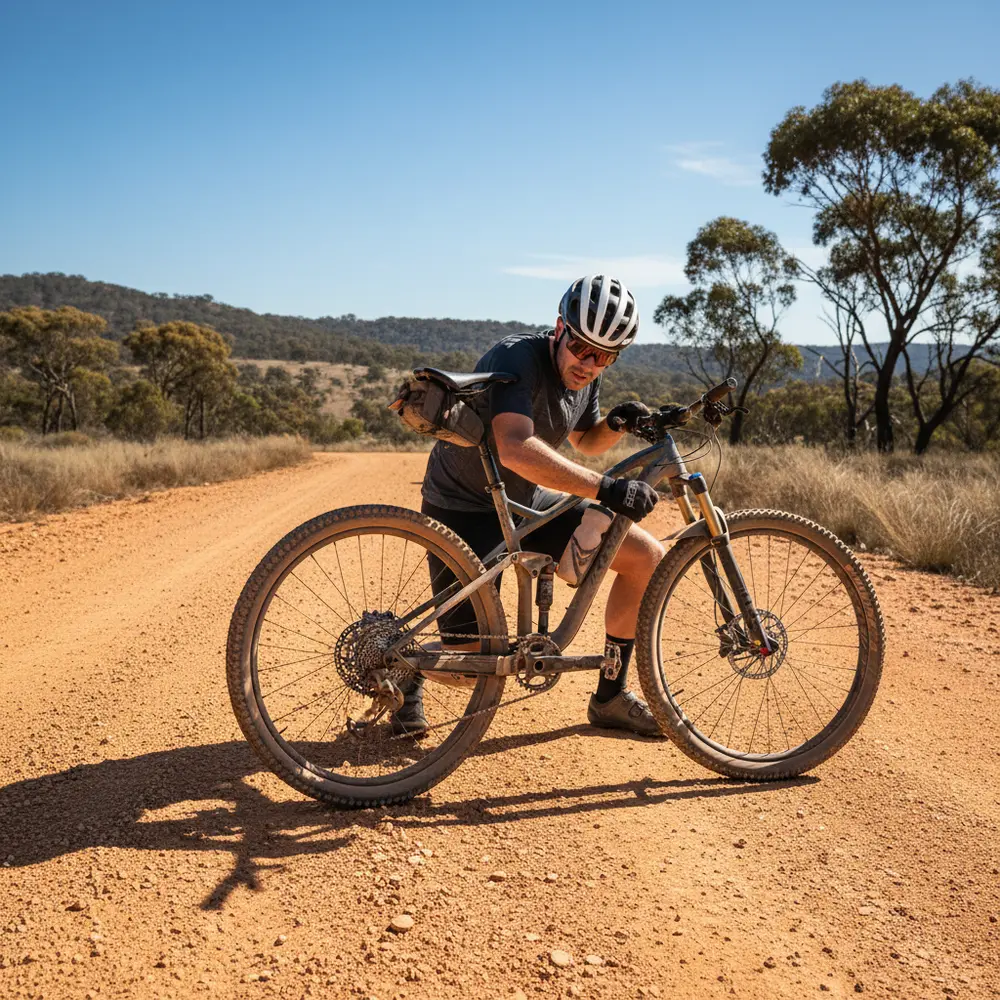
- If you are riding rural trails or remote roads, you may be a long way from help. Erring on the side of caution mid-ride is always the smarter call.
- In New South Wales and other states, Australian road rules require your bicycle to be in a safe and roadworthy condition. Defective brakes are a specific breach, and riding an unsafe bike can result in a fine on top of the safety risk.
At a glance:
- Some noises are annoying but harmless. Others mean you should stop immediately and not ride on.
- The location of the noise and whether it happens under load are your two biggest clues.
- A knocking headset or grinding brakes are stop-now situations. A creaking bottom bracket usually is not.
- When in doubt, stop and call your local cycling mechanic. No ride is worth a serious mechanical failure.
Key takeaways:
- Learn the three noise outcomes: stop now, book a service soon, or monitor and clean at home.
- Bring a specific description of the noise to your mechanic. It saves time and money.
- A basic pre-ride check catches most problems before they become dangerous.
Why bike noises matter and when they become a safety issue
A bicycle is a system of moving parts under load, and when something is loose, worn, or failing, it usually makes a noise first. The problem is that not every noise carries the same urgency, and beginners often either ignore a serious one or stress unnecessarily about a harmless one.
The key question to ask yourself is this: does the noise happen when you are pedalling hard, or does it happen all the time, even when coasting? Load-dependent noises point toward the drivetrain, cranks, or bottom bracket. Constant noises that happen even when you are rolling without pedalling tend to point toward the wheels, brakes, or headset.
The second question is equally important: does the bike feel different? Any noise accompanied by a change in how the bike handles, steers, or stops should be treated as a stop-now situation. Bicycle Network Australia puts it simply: if a noise comes with a change in how the bike behaves, do not ride on.
The most common unusual bike noises and what they mean
Creaking from the bottom bracket or cranks
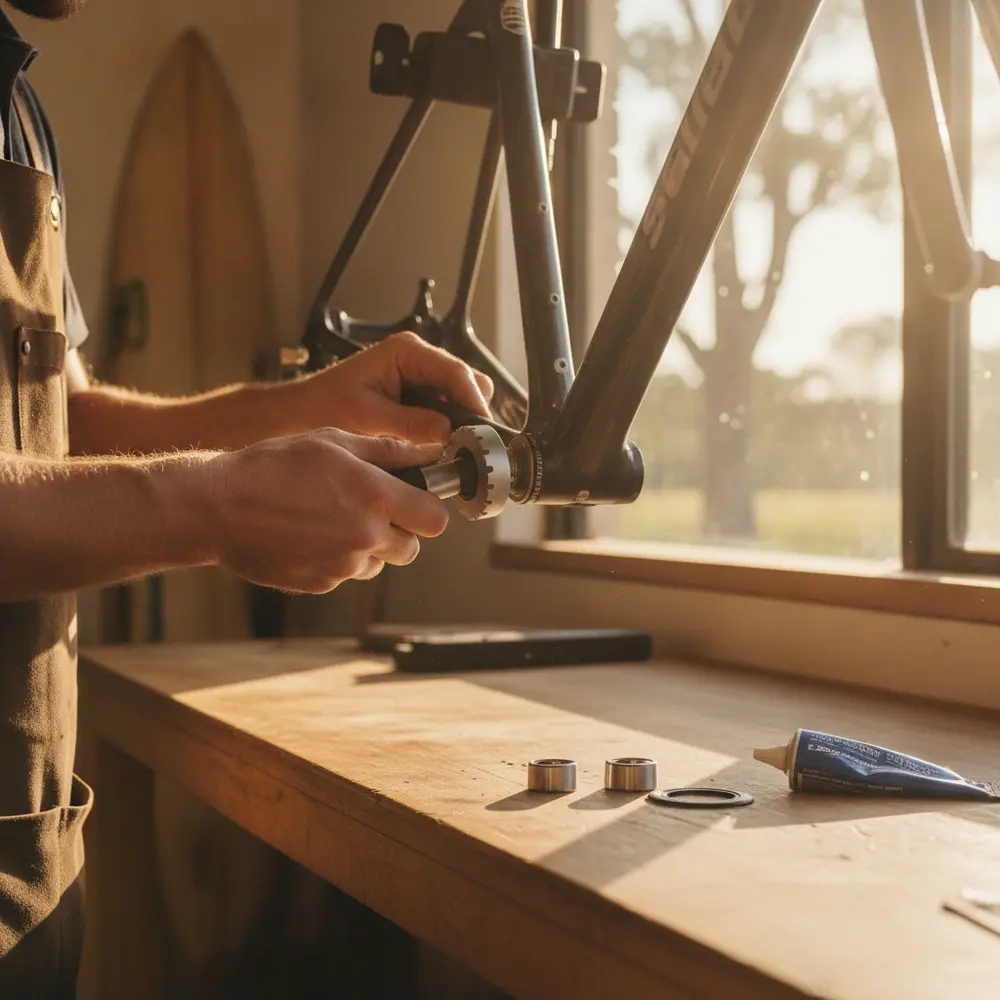
The bottom bracket is the axle and bearing assembly that sits in the frame where your pedals attach. It is one of the most common sources of creaking on any bike. The good news is that a creaking bottom bracket is not usually a stop-now emergency. It most often means the bearing needs cleaning and re-greasing, or the crank arm bolts have come slightly loose.
However, there is an important exception. If you ride a carbon frame bike and hear a creaking or ticking that is new and gets worse, carbon frames can develop cracks that produce noise before any visible damage appears. If you are on carbon and the creak is new, it is worth getting it checked by a cycling mechanic sooner rather than later.
Also worth knowing: a loose crank arm that keeps being ridden can permanently damage the bottom bracket spindle interface. If you can feel any side-to-side movement in the crank, stop riding and get it looked at.
One more thing to check before blaming the bottom bracket: pedals and cleats are the most commonly overlooked source of creaking and are frequently misidentified as a bottom bracket issue. Try tightening your pedals first.
Clicking or skipping through the drivetrain
The drivetrain is the chain, chainring (the large toothed ring at the front), cassette (the cluster of cogs at the rear wheel), and derailleur (the mechanism that shifts the chain). A clicking or skipping sound while pedalling is usually a cable tension or indexing issue, meaning the gears just need a minor adjustment.
But skipping can also mean a worn chain or cassette. A worn chain that has stretched will skip under load, particularly when you are climbing or sprinting. This is not an immediate safety emergency on flat ground, but it is worth getting checked soon. Continuing to ride on a worn drivetrain accelerates wear on every other component it touches.
Knocking or clunking from the headset or forks
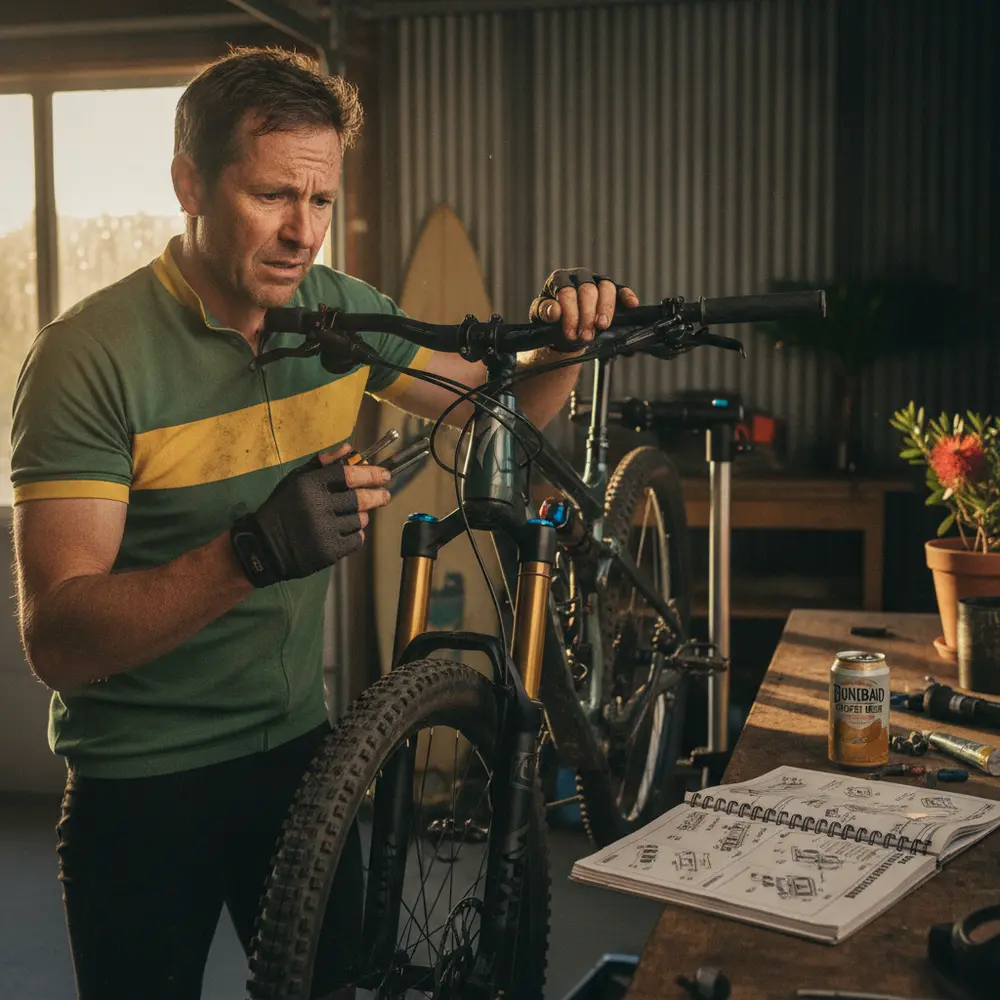
The headset is the bearing system at the top of the front fork, where the fork connects to the frame. It is what allows you to steer. A knocking or clunking from this area is one of the noises that should prompt an immediate stop.
A loose headset can cause unpredictable steering behaviour, particularly on descents or rough terrain. As Cycling Weekly notes, a knocking headset can produce genuinely dangerous handling at speed. To test for it, apply the front brake and rock the bike forward and back. If you feel or hear a knock, stop riding and call your mechanic.
Grinding from the brakes or wheels
Grinding from your brakes is always worth taking seriously. On rim brakes (where the pads press on the metal rim of the wheel), grinding can mean the brake pad material has worn through to the metal backing plate, which can quickly damage your rim and reduce braking power dramatically. On disc brakes, grinding often means contamination from oil or chain lube, which also significantly reduces your ability to stop.
A rhythmic ticking or rubbing from the wheel area, in time with each wheel rotation, can indicate a bent rotor or a wheel that is out of true. Sheldon Brown's technical reference on bicycle brakes is clear: brake noise should always be investigated before continuing a ride, because degraded braking is a direct safety risk.
Rattling or popping from the frame or components
A rattling noise can come from a loose bottle cage bolt, a rattling mudguard, or a poorly secured accessory mount. These are annoying but not dangerous. A popping or cracking from the frame itself is a different matter entirely, particularly on carbon bikes. Any structural noise from the frame warrants stopping and inspecting carefully.
Quick reference: noise, likely cause, and what to do
| Noise type | Where from | Likely cause | Action |
|---|---|---|---|
| Creaking | Cranks, pedals, seatpost | Loose bolts, dry grease | Monitor, service soon |
| Clicking or skipping | Drivetrain | Cable tension, worn chain | Adjust or service soon |
| Knocking or clunking | Headset, forks | Loose headset bearing | Stop riding now |
| Grinding | Brakes, wheels | Worn pads, contamination | Stop riding now |
| Rattling | Accessories, frame | Loose bolt or fitting | Check and tighten |
| Popping or cracking | Frame | Possible structural damage | Stop riding now |
Stop riding now: noises that signal a serious safety risk
Some noises are genuinely stop-now situations. If you hear any of the following, pull over safely, get off the bike, and do not ride on until a cycling mechanic has inspected it.
- Knocking or clunking from the headset or front forks. This affects your steering. Do not risk it, especially on a descent or in traffic.
- Grinding from the brakes. If your stopping ability is compromised, every metre you ride is a gamble.
- A metallic cracking or popping from the frame. Particularly on carbon, this can indicate structural failure.
- Wheel wobble accompanied by a knocking sound. A broken or loose spoke can rapidly lead to a wheel that collapses. As Pinkbike's technical team notes, wheel-related knocking from a loose spoke can quickly progress to a dangerously out-of-true wheel.
- Any noise that comes with a change in how the bike steers, brakes, or feels. Trust your instincts here.
Noises that can wait: what you can monitor until your next service
Not every noise is a drama. Some noises are worth monitoring and addressing at your next service without stopping your ride immediately. That said, do not let them drag on indefinitely.
- A creaking bottom bracket or cranks with no movement or wobble. Book a service within a week or two.
- A clicking drivetrain that only happens during shifts. A minor cable tension adjustment is likely all that is needed.
- A squeaky saddle or seatpost. Annoying but not dangerous. A bit of grease at the next service will sort it.
- A minor chain or cassette noise on flat ground with no skipping under load. Get the drivetrain checked at your next service.
Hear a noise? Here is what to do: a quick decision flow
Use this as a quick reference mid-ride, particularly if you are out on your own and not sure whether to keep going.
- Where is the noise coming from? Front of the bike (headset, forks, front wheel) or rear and middle (drivetrain, brakes, cranks)?
- Does it happen under load or all the time? Only when pedalling hard suggests drivetrain or cranks. All the time, even coasting, suggests wheels, brakes, or headset.
- Is there any movement or wobble in the area? Rock the bars forward and back. Check for side-to-side play in the cranks. If yes, stop now.
- Does the bike feel different to control? Any change in steering, braking, or stability means stop now.
- If none of the above, can you safely complete the ride? Monitor the noise, note when it happens, and book a service as soon as possible after your ride.
When in doubt, stop. No Strava segment or group ride finish is worth a crash caused by a mechanical failure you could have caught earlier.
What to tell your cycling mechanic when you book a service
A good mechanic can diagnose a noise much faster if you come in prepared. Here is what to note down before you call or walk in.
- When does the noise happen? Only when pedalling, only on descents, all the time, or only when braking?
- Where does it seem to come from? Front, rear, left side, right side?
- What does it sound like? Creak, click, knock, grind, rattle, or pop?
- How long has it been happening? Did it start suddenly or gradually get worse?
- Did anything happen before it started? A crash, a wet ride, a big climb, or a recent DIY adjustment?
The more specific you can be, the less time your mechanic spends hunting and the more time they spend fixing. You can also get in touch with us if you are not sure what to look for or want a second opinion before booking a service.
Simple checks every rider should do before and after a ride
The best way to catch a problem before it becomes dangerous is to build a quick habit. Bicycle Network Australia recommends a basic pre-ride check covering tyres, brakes, and quick-release or thru-axle security before every ride. It takes less than two minutes.
Before every ride:
- Squeeze both brake levers. They should feel firm and engage well before hitting the bars.
- Check tyre pressure by feel or gauge. Soft tyres can mimic mechanical noises and affect handling.
- Check that your wheels are secure. Give each wheel a side-to-side wiggle. No movement should be felt.
- Rock the bike forward with the front brake applied. No knock or clunk from the headset area.
After a ride, particularly on gravel or in wet conditions:
- Wipe the frame down and look for anything unusual, cracks, chips, or damage.
- Run the chain through your fingers with a rag. Grit and dirt accelerate wear, particularly in Australian summer dust.
- Listen for any noise as you roll the bike forward by hand. Anything new is worth noting.
Common mistakes to avoid
- Assuming it will fix itself. Mechanical noises do not disappear on their own. They get worse.
- Blaming the bottom bracket first. Pedals, cleats, and the seatpost are far more often the culprit. Check those first.
- Ignoring a noise because the bike still rides fine. A loose headset can feel fine right up until it does not.
- Over-tightening bolts to fix a creak. Over-torquing carbon components can cause damage. Use the correct torque settings or let a mechanic do it.
- Putting off a service because you do not ride that often. Time and Australian conditions affect components even when the bike is sitting still.
If you are new to cycling
- Get to know what your bike normally sounds and feels like. Ride it a few times before you can judge what is unusual.
- Your first service with a cycling mechanic is a great chance to ask questions. Ask them to walk you through what they found and why.
- Carry a basic multi-tool on rides so you can at least check bolts if something starts making noise mid-ride.
- Do not be embarrassed to ask. Every experienced rider has ignored a noise they should not have at some point.
- Check out our beginner cycling guide for more practical advice on starting out safely.
If you have dealt with bike mechanicals before
- Use load versus coast as your first diagnostic filter. It narrows the field quickly.
- If you are on a carbon frame and hear a new creak, do not wait. Carbon damage can be invisible and structural.
- Check spoke tension periodically, particularly after riding rough Australian gravel roads. A single loose spoke is easy to miss but can progress fast.
- Keep a service log. Knowing when components were last serviced helps you anticipate when noise is likely to indicate wear rather than just a loose bolt.
- Read more about bike maintenance tips to keep your drivetrain and components in good shape between professional services.
Frequently asked questions
Is a creaking bottom bracket always serious?
Not usually. A creaking bottom bracket is one of the most common bike noises and can often be resolved with cleaning and re-greasing. However, if you have a carbon frame and a new creak appears, get it checked promptly. Also check your pedals and cleats first, as they are the most frequently misidentified source of this noise.
Can a loose headset really cause a crash?
Yes. A loose headset affects your steering, and the effect is most dangerous at speed or on descents. The movement may feel minor at first but can become unpredictable on rough terrain. If you feel or hear a knock when you rock the bike with the front brake applied, stop riding and have it inspected by a cycling mechanic before your next ride.
Does grinding from my brakes always mean worn pads?
Not always. Grinding can also be caused by debris or contamination such as dirt, grit, or chain lube getting onto the brake pads or rotor. However, both causes reduce your braking performance and both warrant stopping and investigating. Do not assume contamination over wear without checking. Either way, it is a stop-now situation.
How quickly can a broken spoke make a wheel unsafe?
It depends on the wheel, the remaining spoke tension, and the terrain. On smooth roads a single broken spoke may allow you to finish a short ride, but on rough or corrugated Australian roads the remaining spokes take on extra load and the wheel can go out of true quickly. If the wheel is already visibly wobbling, stop immediately.
When should I book a professional cycling mechanic service even if nothing sounds wrong?
At least once a year, regardless of how the bike sounds or feels. Australian conditions, including heat, dust, and UV exposure, affect components even when the bike is not being ridden heavily. Regular servicing catches wear before it becomes noise, and noise before it becomes a safety issue. If you are preparing for an event, book a service well in advance. Bicycle Network Australia's events calendar is a good reminder of how many riders are out there on bikes that may not have been serviced recently.
Summary
- Unusual bike noises are your bike telling you something is wrong. Some noises mean stop now, and some can wait.
- Knocking from the headset, grinding brakes, wheel wobble, and cracking or popping from the frame are all stop-now situations.
- Creaking from the cranks or a clicking drivetrain usually means a service is needed soon, not immediately.
- Before every ride, do a quick two-minute check on tyres, brakes, and wheel security.
- When you book a service, describe the noise clearly to your cycling mechanic: what it sounds like, where it comes from, and when it happens. It saves time and gets the job done faster.
This is educational content, not financial advice.