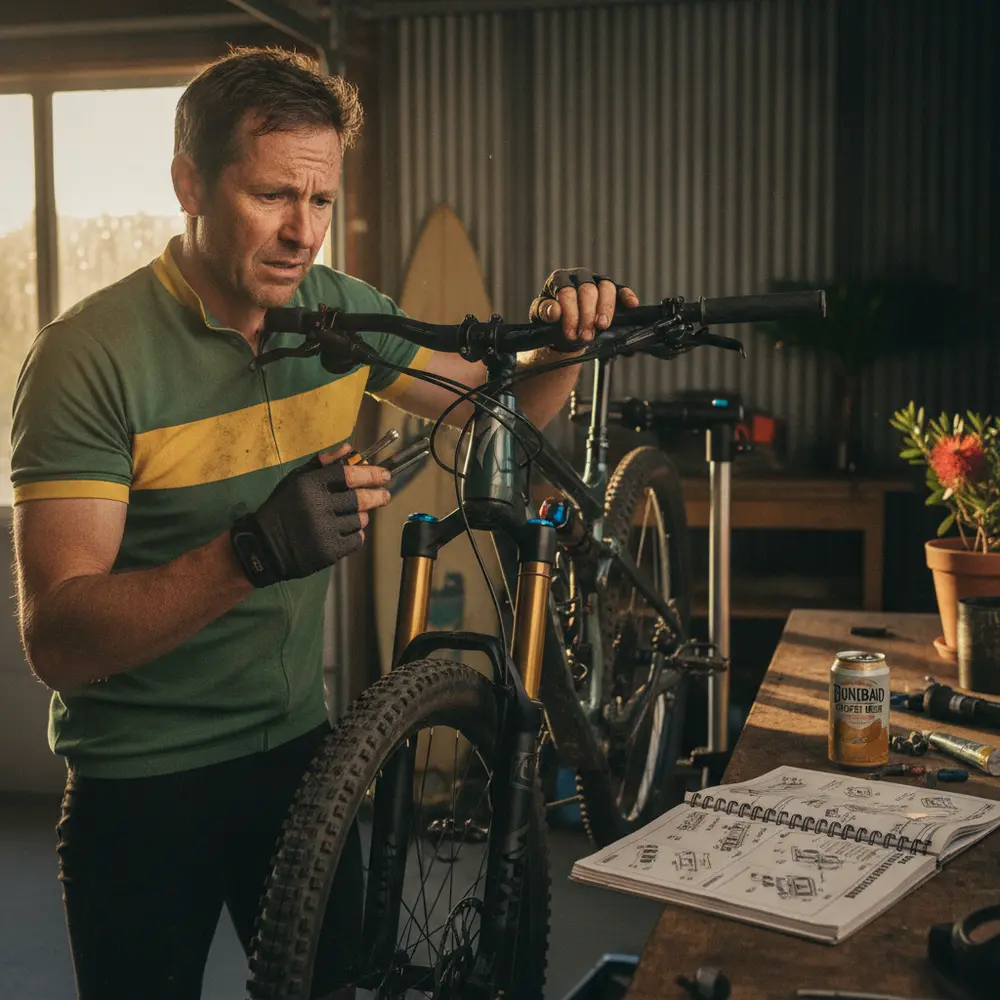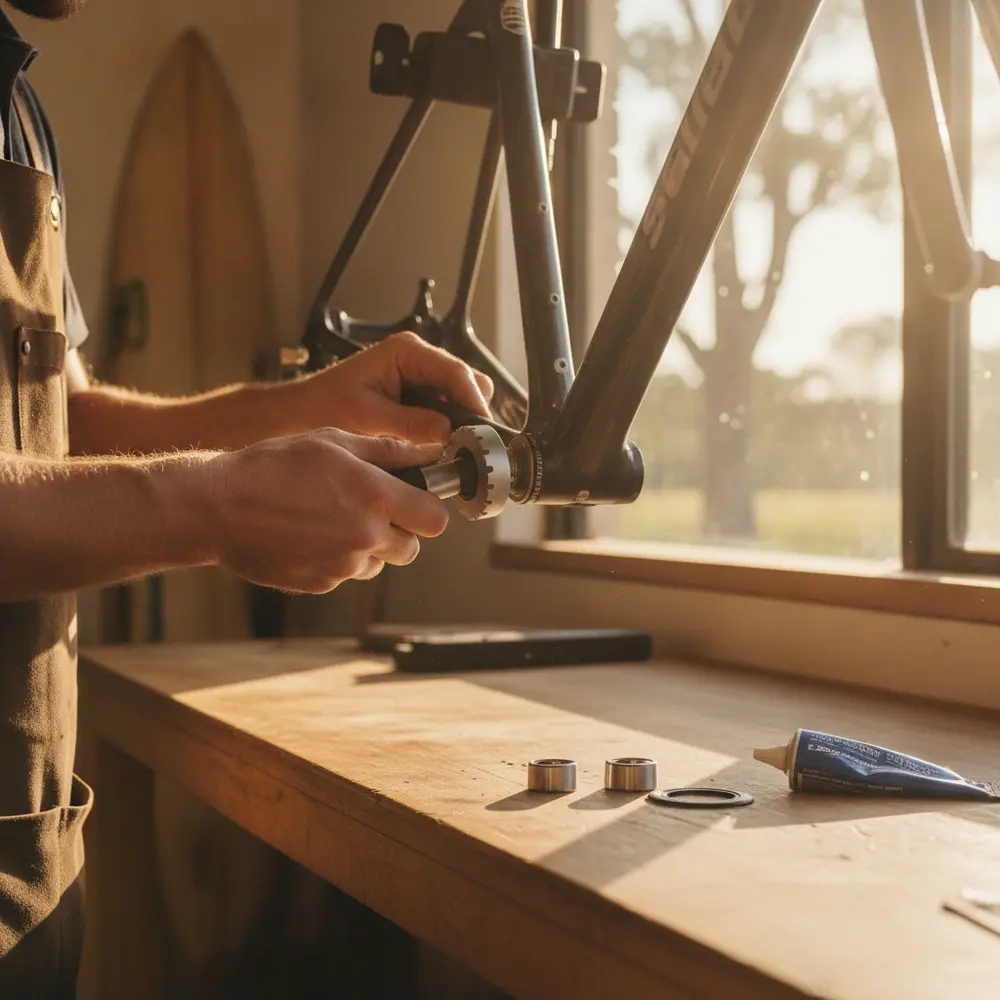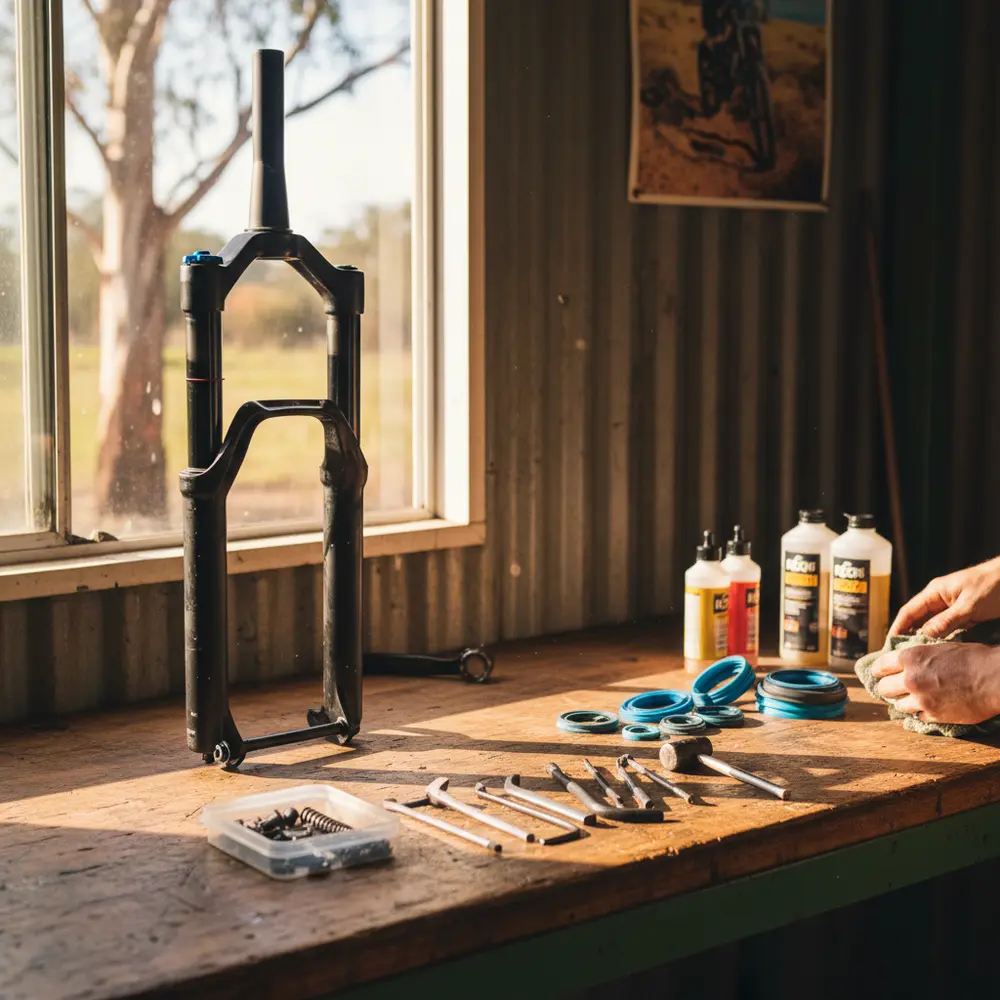
Your MTB suspension is doing serious work every time you ride, absorbing rock hits, roots, drops, and everything the trail throws at you. Neglect the service schedule and that plush, controlled feel disappears fast, often before you even notice it happening.
By the end of this article you will know what warning signs to look for, what a service actually involves, which tasks are safe to tackle yourself, and when it is time to hand it over to a qualified cycling mechanic. You will also walk away with a practical checklist you can run through before and after every ride.
Note for Australian riders:
- Australian trails vary enormously, from dusty hardpack in inland Victoria and Queensland to wet, muddy coastal tracks in NSW and WA. Conditions like these accelerate suspension wear beyond what the manufacturer calendar suggests.
- Popular trail networks like Stromlo, You Yangs, and Thredbo put real demands on suspension. If you are riding these regularly, treat the "at least annually" baseline as a minimum, not a target.
- Under the Australian Consumer Law service guarantees, any suspension work carried out by a bike shop must be done with due care and skill. If something goes wrong after a professional service, you have rights.
At a glance:
- Lower leg service: roughly every 50 hours of riding or at least once a year.
- Full rebuild: typically every 100 to 200 hours, or when performance drops noticeably.
- Key warning signs include oil weeping from seals, stiff or sticky travel, unusual noises, and visible wear on the stanchions.
- Sag, rebound, and compression adjustments are safe for beginners. Everything inside the fork or shock is mechanic territory.
Key takeaways:
- Skipping suspension service does not just hurt performance, it can cause permanent damage to the stanchions (the polished metal tubes that slide through the fork seals).
- You do not need to service everything yourself. Knowing when to stop and book it in is a skill in itself.
- Annual servicing at a minimum is the practical standard for most Australian recreational riders.
Why MTB Suspension Needs Regular Servicing
Inside your fork and rear shock there is oil, seals, foam rings, and in air-sprung units, pressurised air chambers. Every ride pushes trail grit and moisture past those seals. Over time the oil breaks down, the foam rings dry out, and the seals start to leak. The result is a fork that feels harsh, stiff, or unpredictable.
What most riders do not realise is that riding on degraded suspension does not just mean a worse experience. Contaminated oil acts like a mild abrasive, and dried-out seals let grit contact the stanchions directly. This can cause scoring or pitting on the stanchion surface, which is expensive to fix and sometimes means replacing the whole fork leg. A routine service is cheap compared to that.
How Trail Conditions Affect Service Intervals
Manufacturer service intervals are a starting point, not a fixed rule. Riding on Australian mountain bike trails that are dusty, rocky, or regularly muddy will shorten those intervals meaningfully. Fine dust is particularly hard on seals because it infiltrates even well-maintained wipers. If you are doing big days at places like Thredbo or riding the red dirt trails around Kalamunda, you should be checking your fork more often than a rider doing occasional fireroad laps.
A good rule of thumb: after any ride in genuinely wet or deeply muddy conditions, wipe down your stanchions and check for oil residue around the seals before your next ride. It takes two minutes and it tells you a lot.
Signs Your Suspension Is Due for a Service
The earlier you catch a problem, the cheaper and easier the fix. Here are the main things to look for.
What to Look For on Your Fork
- Oil weeping or a dirty film around the fork seals. A small amount of lube on the stanchion is normal. A visible oil ring or dirty residue building up around the seal is not.
- Stiff, sticky, or harsh travel. If the fork feels like it is not moving smoothly through its range, the oil may be contaminated or the foam rings dry.
- Unusual noises. Clunking, knocking, or a sucking sound through the travel points to air in the oil or worn internals.
- Scratches or dull patches on the stanchions. This means grit has already been in contact with the tubes. Get it to a mechanic promptly.
- Play at the crown or axle. Any lateral movement that is not coming from a loose bolt is a sign of internal wear.
What to Look For on Your Rear Shock
- Oil residue around the eyelet or shaft. Similar to the fork, a dirty film building up is a service indicator.
- Reduced travel or a harsh feel. Air pressure drops over time, but if correct pressure does not restore the feel, the internals need attention.
- Unusual noises under load. A healthy shock is quiet. Clunks or squeaks under compression or rebound mean something is off.
- Visible corrosion or damaged seals. Rear shocks live in a dirty, wet environment. Inspect the shaft and eyelets regularly.
What Happens During a Suspension Service
There are two main levels of service: the lower leg service and the full rebuild. They are quite different in scope, cost, and skill required. Understanding the difference will help you have a better conversation with your cycling mechanic when you book it in.
Lower Leg Service vs. Full Rebuild - What Is the Difference
| Service Type | What It Covers | Typical Interval | Who Does It |
|---|---|---|---|
| Lower leg service | Removes lower legs, cleans internals, replaces seals, foam rings, and oil in the lower legs only. Damper is not touched. | Every 50 hours or annually | Confident home mechanic or bike shop |
| Full rebuild | Complete disassembly including the damper cartridge. All seals replaced, all oil refreshed, internals inspected for wear. | Every 100 to 200 hours or when performance is significantly degraded | Qualified cycling mechanic or specialist |
The lower leg service is the one most riders will deal with regularly. It keeps the seals fresh, the oil clean in the sliding portion of the fork, and the foam rings lubricated. It does not touch the damper, which is the more complex mechanism controlling how the fork reacts to bumps. For that, you need a full rebuild.
Specialist services like professional suspension rebuild services go even further, with complete disassembly, inspection of damper internals, and optional custom valving. For most recreational riders this level of service is not needed every year, but it is worth knowing it exists when a standard shop service is not resolving a problem.
What You Can Do Yourself vs. What Needs a Cycling Mechanic
Suspension servicing is one of the more intimidating areas of bike maintenance, and that is completely fair. There is no shame in taking it to a mechanic. The internals are precision components, the tools are specific, and a mistake inside a damper cartridge can mean a costly rebuild. That said, there are things any beginner can and should be doing themselves.
Beginner-Safe Tasks: Sag, Rebound, and Compression Adjustments
Setting sag correctly is the single most impactful adjustment you can make for trail feel and control. Sag is the amount the suspension compresses under your body weight while sitting in your normal riding position. Most forks and shocks have a recommended sag percentage, and getting it right transforms how the bike feels on the trail. A good mountain bike suspension setup guide will walk you through it step by step.
Rebound and compression dials are also rider-adjustable on most forks and shocks. Rebound controls how fast the suspension returns after a hit. Compression controls how much resistance the suspension offers going into a hit. These are external adjusters, no tools required, and experimenting with them is encouraged.
Safe for beginners to do themselves:
- Checking and setting sag using a shock pump and the O-ring on the stanchion or shock shaft.
- Adjusting rebound and compression dials on external adjusters.
- Wiping down stanchions after every ride and checking for oil weep or damage.
- Checking air pressure with a shock pump before rides, especially after temperature changes.
Leave this to a cycling mechanic:
- Lower leg removal, seal replacement, and oil changes (unless you have done this before with proper guidance).
- Any work involving the damper cartridge.
- Diagnosing internal noises or play.
- Rear shock rebuilds of any kind.
If You Are New to MTB Suspension
- Start with sag. Get that right before touching anything else. If your sag is wrong, no amount of rebound or compression adjustment will fix the feel.
- Learn what your stanchions look like when they are clean. Then you will know immediately when something is off.
- Do not ignore small oil spots around your seals. They get bigger fast.
- Ask your local bike shop to show you the lower leg service process once before you attempt it yourself. Watching it done once is worth more than any YouTube video.
- Note your hours ridden if you can. Most cycling computers or apps will log this. It makes scheduling services much easier.
If You Have Serviced a Fork Before
- Consider timing your lower leg service to every season change, especially before and after winter riding in muddy conditions.
- If you are doing your own lower leg services, pick up the correct service kit for your specific fork model from the manufacturer. RockShox service intervals and kit contents are documented on the SRAM website for each model.
- Check Fox suspension service intervals if you are running Fox. Their recommended intervals differ slightly by model and service level.
- After a lower leg service, take it easy on the first ride and check for any oil weep at the seals before you commit to a full session.
- If you are hitting the same performance issues after a lower leg service, the damper needs attention. That is a full rebuild job.
Common Mistakes to Avoid
- Ignoring the service entirely. Annual servicing at minimum is the standard. Many riders go years without a service and wonder why their fork feels dead.
- Using the wrong oil weight. Fork oil comes in different viscosities. Using the wrong one changes how the fork feels and can damage seals over time. Always use the manufacturer-specified oil for your model.
- Skipping the sag check after an air pressure change. Temperature swings between seasons change your air pressure. A cold morning in Canberra will have your fork running firmer than it was at Thredbo in summer.
- Not cleaning stanchions after muddy rides. Dried mud becomes an abrasive. Clean the stanchions and wipe the seals after every dirty ride.
- Attempting a damper rebuild without the right tools or experience. The potential for damage to precision internals is real. If in doubt, book it in.
How to Find a Qualified Suspension Mechanic in Australia
Look for a bike shop that lists suspension servicing as a specific offering, not just a general tune-up. Ask directly whether they have staff trained on the brands you are running. Fox and RockShox both have authorised service centre networks in Australia, and using an authorised centre is important if your fork is under warranty, particularly for Fox Factory products where non-authorised servicing may affect warranty coverage.
Specialist suspension services also exist separately from standard bike shops. These are worth considering for full rebuilds or if you are chasing a specific performance outcome. Turnaround times vary, so plan ahead if you are sending a fork away before a big trip.
Remember that under your rights when paying for bike servicing in Australia, the work must be carried out with due care and skill. If you pay for a suspension service and the problem persists or the fork is returned in worse condition, you are entitled to a remedy. Keep your receipt and ask for a brief written description of what was done.
How Much Does MTB Suspension Servicing Cost in Australia
Costs vary by shop, brand, and service level. The figures below are general ballpark ranges based on typical Australian bike shop pricing. Always get a quote before committing.
| Service Type | Approx. Cost (AUD) | Notes |
|---|---|---|
| Lower leg service (fork) | $80 to $150 | Varies by fork model and shop. Parts extra if seals or foam rings need replacing. |
| Full fork rebuild | $180 to $350+ | More involved. Specialist shops may charge more but offer a higher level of service. |
| Rear shock service | $80 to $200+ | Coil shocks are generally simpler. Air shock rebuilds can be more involved. |
These are estimates. Prices in capital cities and tourist trail towns (think Thredbo, Derby) tend to run higher due to demand. Booking in advance and asking for a clear quote including parts is always a good move.
Practical Checklist: Is Your Suspension Due for a Service?
Run through this before and after rides. If you tick three or more of these boxes, it is time to book in with a cycling mechanic.
Visual checks (do these in the car park or at home after a ride):
- Oil ring or dirty residue visible around the fork seals or shock shaft seal.
- Scratches, dull patches, or pitting visible on the stanchions.
- Visible damage to wiper seals (torn, cracked, or sitting unevenly).
- Corrosion around shock eyelets or hardware.
Functional checks (do these on the bike, rider weight on):
- Sag is noticeably different from your last check despite no pressure change.
- Fork or shock feels stiff, sticky, or does not move smoothly through travel.
- Unusual sounds under compression or rebound, including clunks, knocks, or a sucking noise.
- Noticeable play or wobble at the fork crown or rear shock mounts.
Interval reminders:
- It has been more than 12 months since your last lower leg service.
- You have ridden more than 50 hours since the last lower leg service.
- You have recently completed multiple rides in deep mud, standing water, or heavy dust.
- You cannot remember the last time the fork was serviced.
If you ticked three or more boxes above, do not wait. Get it booked in. The longer you leave it, the more likely you are looking at a full rebuild rather than a simple lower leg service.
Frequently asked questions
How often should I service my MTB fork?
As a baseline, a lower leg service every 50 hours of riding or at least once a year is a sensible starting point for most recreational riders. If you ride in dusty, muddy, or wet conditions regularly, check your fork more frequently. Manufacturers like RockShox and Fox publish model-specific intervals, and it is worth checking what applies to your fork.
Can I do a lower leg service myself as a beginner?
With the right tools, the correct service kit for your fork model, and a good walkthrough video from the manufacturer, a lower leg service is achievable for a mechanically confident beginner. That said, if you have never done one before, getting a mechanic to walk you through it the first time is worth it. Using the wrong oil or reassembling incorrectly can cause more damage than the service prevents.
What is the difference between a lower leg service and a full rebuild?
A lower leg service covers the sliding portion of the fork, replacing seals, foam rings, and oil in the lower legs without touching the damper. A full rebuild goes further, completely disassembling the fork including the damper cartridge, replacing all seals and oil, and inspecting internals for wear. Full rebuilds are less frequent but necessary when performance drops significantly or after very high hours.
Does riding in Australian conditions affect how often I need to service my suspension?
Yes, meaningfully. Fine dust common on inland trails infiltrates seals faster than normal wear. Muddy coastal trails and wet conditions do the same from the other direction. If you are riding trail conditions across Australia that are consistently dusty, rocky, or muddy, treat manufacturer intervals as a maximum and inspect your suspension more frequently.
Will my warranty be affected if I service my own suspension?
It depends on the brand and the model. Fox Factory suspension in particular recommends using authorised service centres, and non-authorised servicing may affect warranty coverage on some products. Check the warranty terms for your specific fork or shock, and when in doubt, use an authorised service centre for the first service at minimum. Ask your local shop directly if they are authorised for your brand.
Quick summary
- Service your suspension on a schedule, not just when it feels bad. Annual lower leg service at minimum, full rebuild when performance drops or hours demand it.
- Clean your stanchions after dirty rides. Two minutes of post-ride care extends seal life significantly.
- Sag, rebound, and compression are yours to adjust. Internals belong to a mechanic unless you have done it before with proper guidance.
- Australian trail conditions, particularly dust and mud, accelerate wear. Factor that into your service planning.
- If in doubt, get in touch with us or ask your local bike shop. A quick conversation can save you a costly rebuild down the track.
This is educational content, not financial advice.