Picking up a tool and working on your own bike feels great, right up until the moment you realise that the repair you just tried may have cost you your warranty coverage. It happens more often than most riders expect, and a few minutes of reading now can save you a very expensive lesson later.
By the end of this article you will know which repairs are safe to handle at home, which ones put your warranty at risk, and what your rights are as an Australian cyclist under the Australian Consumer Law (ACL). You will also have a simple decision tree to help you make the call next time you are standing over your bike with a spanner in hand.
Note for Australia:
- Your rights under the Australian Consumer Law guarantees exist independently of any manufacturer warranty and cannot be taken away by warranty fine print.
- A manufacturer cannot automatically void your ACL consumer guarantee just because you performed routine maintenance, unless they can show your work caused the defect.
- Always buy from an authorised Australian retailer so your warranty and ACL rights are clearly in place from day one.
At a glance:
- Routine tasks like cleaning, lubing your chain, and swapping tyres are safe DIY territory.
- Suspension, carbon frame work, and electronic groupsets carry genuine warranty risk if done incorrectly at home.
- ACL consumer guarantees in Australia are stronger than a manufacturer warranty and cannot be excluded.
- Always read your specific warranty document before picking up a tool on anything structural or technical.
Key takeaways:
- Know the difference between a manufacturer warranty and your ACL consumer guarantee before making a claim.
- Keep receipts and service records whether you do the work yourself or use a professional cycling mechanic.
- When in doubt, book a qualified mechanic, especially for suspension, brakes, and electronic systems.
What Does a Bike Warranty Actually Cover?
A bike warranty is a voluntary promise from the manufacturer that the product will be free from defects in materials and workmanship for a defined period. Most bikes sold in Australia come with at least two layers of warranty: one for the frame and fork, and a separate one for the components bolted to it. These are usually governed by different rules and different durations.
It is worth understanding this distinction early, because a problem with your derailleur is treated very differently from a crack in your frame. Knowing which document covers which part of your bike is the first step to protecting yourself.
Frame and Fork Warranties vs Component Warranties
Frame warranties from major brands tend to be generous. Trek Australia warranty terms include a lifetime warranty on frames for the original owner, while Specialized Australia warranty terms and Giant Australia warranty follow a similar pattern, though specific terms vary by product tier and frame material. Component warranties, covering parts like derailleurs, brakes, and cranksets, are typically shorter, often one to two years depending on the brand and part.
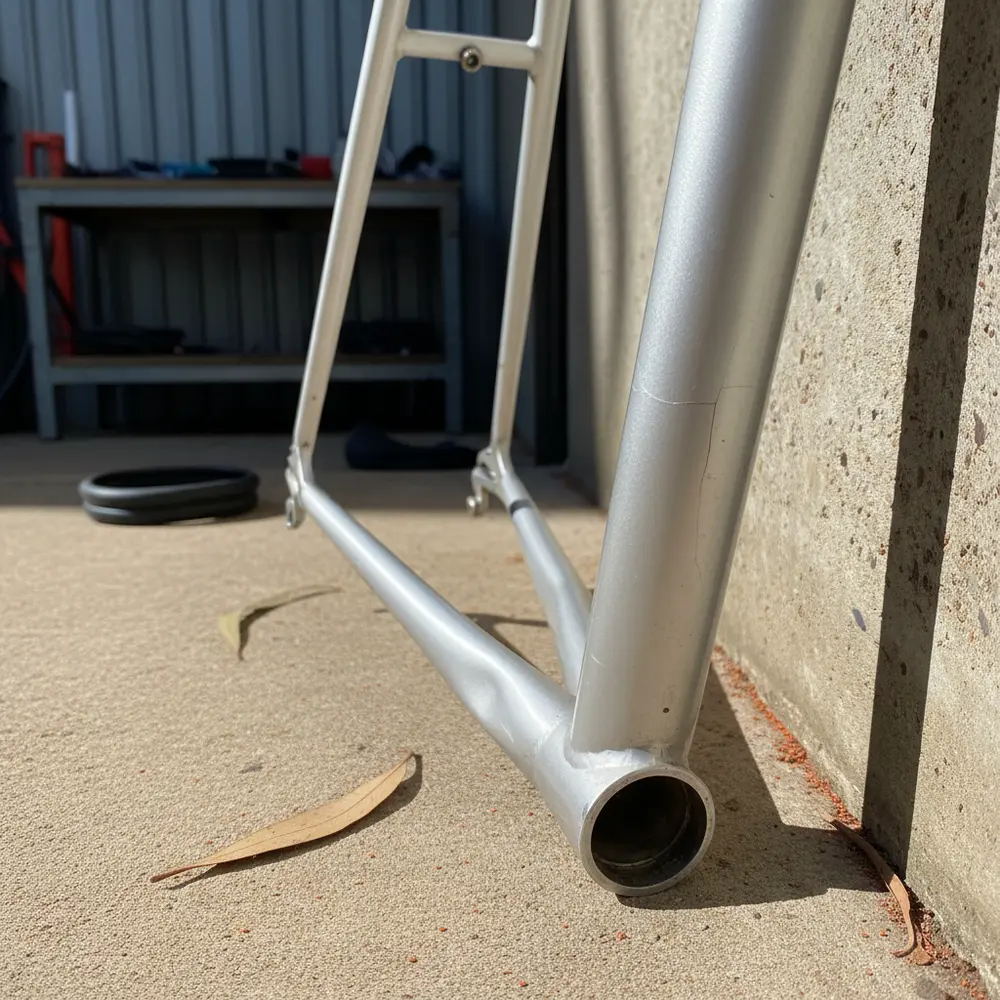
Carbon frames are a special case. Brands like Specialized and Giant treat carbon frame damage from impact or improper repair as an exclusion, not a covered defect. If you work on a carbon frame without proper knowledge and cause damage, you are unlikely to have any warranty protection at all.
What Is NOT Covered by Most Bike Warranties
- Damage from crashes, impacts, or accidents
- Normal wear and tear on consumable parts (tyres, brake pads, chains, cables)
- Improper assembly or installation that deviates from manufacturer specifications
- Modifications to the bike, including cutting steerer tubes or trimming brake hoses
- Cosmetic damage like scratches and paint chips
- Use of the bike for purposes outside its intended design
Your Rights Under Australian Consumer Law
Here is where many riders are genuinely surprised. The manufacturer warranty is not your only protection when you buy a bike in Australia. The ACL, which is administered by the Australian Competition and Consumer Commission (ACCC), gives you a separate set of statutory consumer guarantees that apply automatically to every product sold in Australia.
These guarantees cannot be excluded by warranty fine print, and businesses cannot legally represent a manufacturer warranty as your only remedy. This matters a lot when a warranty claim gets complicated.
Consumer Guarantees vs Manufacturer Warranties - What Is the Difference?
| Feature | Manufacturer Warranty | ACL Consumer Guarantee |
|---|---|---|
| Source | Voluntary promise from the brand | Automatic legal right under Australian law |
| Can be excluded? | Conditions can be placed on it | Cannot be excluded or limited |
| Who provides the remedy? | Manufacturer or authorised dealer | Retailer is primarily responsible |
| Does DIY affect it? | Possibly, if the repair caused the defect | Only if your DIY work caused the specific fault |
| Duration | Defined by the brand (e.g. 1 year, lifetime) | Reasonable time given the nature of the product |
The key point here is that under the ACL, a brand or retailer generally needs to show that your DIY maintenance actually caused the defect in order to deny a claim on those grounds. Changing your own brake pads should not put your frame warranty at risk. The relationship between the cause and the defect has to be there.
That said, this is general information and individual situations vary. If you have a complex warranty dispute, speaking with a consumer rights advocate or contacting the ACCC directly is the right move. For everyday decisions, the principle is simple: routine maintenance is generally safe, complex technical work carries more risk.
The DIY Repairs That Are Generally Safe to Do Yourself
Most riders are surprised by how much they can confidently handle at home without touching their warranty. The key is sticking to routine, well-documented tasks where the risk of causing a defect is very low. If you are new to home maintenance, start here and build your skills gradually.
If you are new to DIY bike maintenance, start with these tasks:
- Cleaning the drivetrain (chain, cassette, chainrings) and applying fresh lubricant
- Checking and adjusting tyre pressure
- Replacing inner tubes after a puncture
- Adjusting saddle height and handlebar reach within the safe minimum insertion marks
- Replacing brake pads (mechanical disc or rim brakes)
- Basic gear cable tension adjustments using the barrel adjuster
These jobs are well within reach for a beginner with the right tools and a good tutorial. They are also the kinds of tasks that, if done correctly, will not give a manufacturer any grounds to question a warranty claim on an unrelated component.
The DIY Repairs That Are Most Likely to Void Your Warranty
Once you move into more technical territory, the risk profile changes. The following areas are where DIY work is most commonly flagged in warranty documentation as either excluded or subject to specific service requirements. Approach these with care.
Common mistakes riders make in this territory:
- Attempting suspension service without the correct seals, oil, and torque specs
- Bleeding hydraulic brakes with the wrong fluid type or technique
- Modifying carbon components, such as cutting a steerer tube, without proper training and tooling
- Updating or flashing electronic groupset firmware using unofficial methods
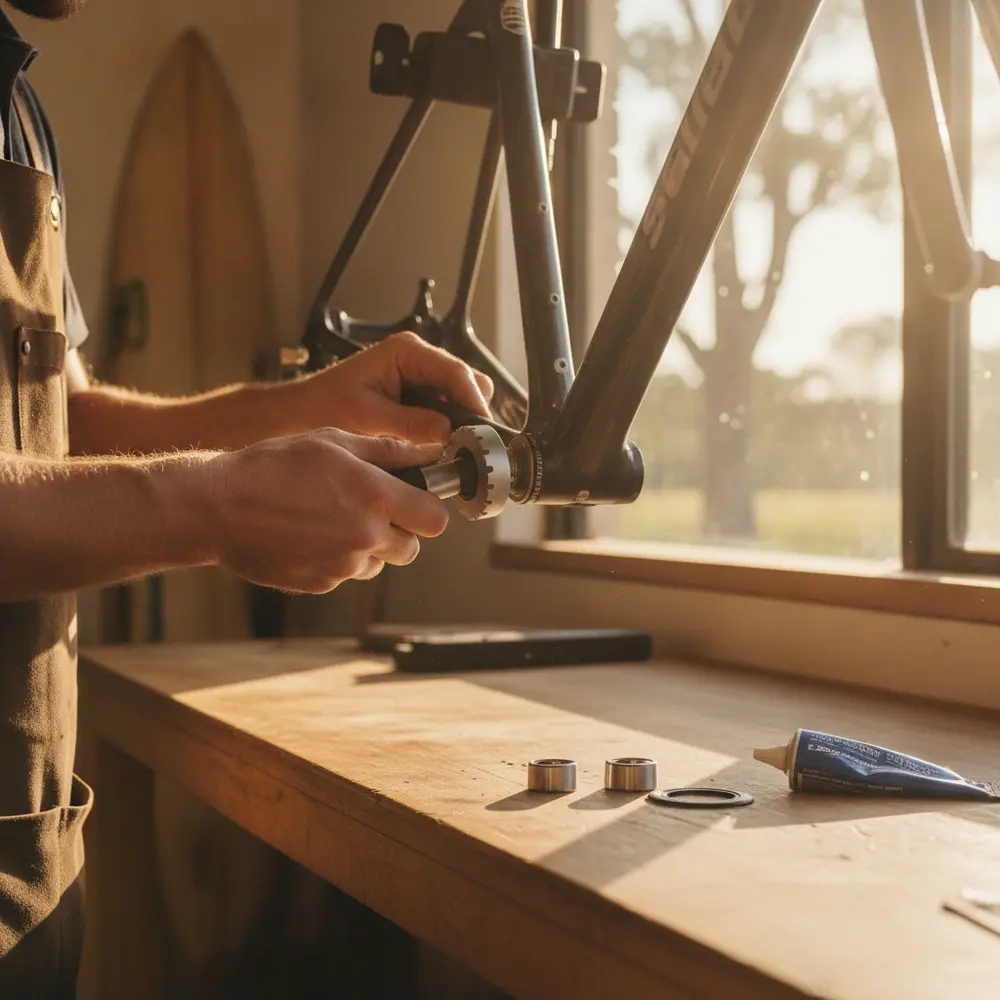
- Reassembling press-fit bottom brackets or headset bearings without the correct installation tools
- Assuming that because a job looks simple on YouTube it is safe to do on your specific bike
Suspension Forks and Rear Shocks
Suspension service is one of the clearest examples of DIY work that can directly affect your warranty. Brands like Fox and RockShox (made by SRAM) have specific service interval recommendations, and their warranty documentation excludes damage from improper service or failure to maintain within those intervals. The SRAM component warranty notes that RockShox suspension products require service to meet manufacturer specifications, and damage from improper handling is excluded.
Suspension work also requires specialist tools and oils that most home mechanics do not own. Getting it wrong can damage seals, introduce air into damper circuits, or cause uneven wear that shortens the life of the product significantly. This is one area where the cost of a professional service is genuinely worth it.
Carbon Frame Work and Structural Modifications
Carbon fibre is strong in the right directions and surprisingly vulnerable in others. Any work that involves cutting, drilling, or applying force to a carbon frame or fork needs to be approached with extreme caution. Most major brands explicitly exclude warranty coverage for damage caused by improper repairs on carbon components.
Cutting a carbon steerer tube is a common job that looks straightforward but requires the right guide, saw, and reaming technique to avoid delamination. If you get it wrong, the fork is compromised and no warranty will cover it. For carbon frame work, a professional cycling mechanic is the right call every time.
Electronic Groupsets and Firmware
Shimano Di2 and SRAM AXS (pronounced "access") are the two most common electronic groupset systems on bikes sold in Australia. Both have specific installation and service requirements in their warranty documentation. Shimano component warranty terms state that improper assembly or installation contrary to their technical documentation voids coverage, and Di2 wiring and junction box configurations have specific requirements.
Updating firmware outside of an authorised service channel, or modifying wiring in ways not specified by the manufacturer, are the kinds of actions most likely to create a grey area in a warranty claim. If your electronic groupset has an issue, take it to a dealer who works with that system regularly before attempting anything yourself.
What to Look for in Your Warranty Documentation Before You Pick Up a Tool
The single most useful thing you can do before attempting any repair is to actually read your warranty document. Most riders never do this until something goes wrong. Warranty terms vary significantly between brands and even between product lines within the same brand, so generic advice only goes so far.
When reading your warranty document, look for these specific things:
- Whether the warranty requires servicing to be performed by an authorised dealer
- What specific actions or modifications are listed as exclusions
- Whether there are service interval requirements (common in suspension and hydraulic systems)
- What evidence you need to make a claim (receipts, proof of purchase, service history)
- Whether the warranty transfers to a new owner if you sell the bike
Keep a folder, physical or digital, with your proof of purchase, the warranty document, and a record of any service work done. This applies whether the work was done by you or by a professional. It is one of the simplest things you can do to protect yourself and it costs nothing.
Should I DIY This Repair or See a Cycling Mechanic?
Use this simple decision tree before you start any repair job. Work through each question in order.
- Is the bike still under warranty? If yes, continue to question 2. If no, you have more freedom but still consider safety.
- Does the repair involve suspension, carbon components, hydraulic brakes, or an electronic groupset? If yes, go to question 4. If no, continue to question 3.
- Is it a routine task like cleaning, lubing, tyre changes, or pad replacement? If yes, safe to DIY. If no, continue to question 4.
- Does the repair require specialist tools you do not own? If yes, book a mechanic. If no, continue to question 5.
- Does your warranty document require authorised service for this specific job? If yes, book a mechanic. If no, proceed carefully and document your work.
When the answer is to book a mechanic, look for someone with specific experience on your brand and component type. Ask your local bike shop (LBS, meaning a dedicated bicycle retailer with in-house workshop) whether their mechanics have worked on your system before. A good mechanic will also let you know upfront if a repair might affect your warranty. You can also get in touch with the Segment Club community if you need help finding the right person for the job.
When to Call in a Cycling Mechanic
Beyond warranty concerns, there is a safety dimension to some repairs that is worth taking seriously. The AS ISO 4210 bicycle safety standard in Australia sets minimum requirements for bicycle structural integrity, brakes, and steering systems. Repairs that deviate from safe practice do not just risk a warranty claim, they can create genuine safety hazards on the road or trail.
If you have done basic maintenance before and are considering stepping up, keep this in mind:
- Hydraulic brake bleeding requires the correct fluid (mineral oil for Shimano, DOT fluid for SRAM and some others) and the wrong type will damage seals and void warranty immediately.
- Bottom bracket and headset bearing installation requires press tools. Improvising with a hammer and a block of wood is a common mistake that damages bearing seats.
- Wheel truing is a skill that takes time to develop. A badly trued wheel under load can fail at the worst moment.
- Torque specs on carbon components are not suggestions. Under-torquing causes slipping, over-torquing causes cracking, and neither is covered by warranty.
The cost of a professional service on complex components is almost always less than the cost of replacing a damaged part or dealing with a warranty dispute. A qualified cycling mechanic brings specialist tools, brand-specific knowledge, and accountability that a first-time home attempt cannot replicate. Find a trusted local cycling mechanic through the Segment Club platform to get the job done right.
Quick Tips for Keeping Your Warranty Intact Without Giving Up on DIY
- Do the basics yourself and do them well. Clean, lube, inflate, and inspect regularly. These habits extend the life of your bike more than any single repair.
- Read the warranty document for your specific bike and components before attempting anything new.
- When you do DIY work, photograph the before and after state and keep a simple log of what you did and when.
- Use the correct tools. Improvising with the wrong tool is the fastest way to damage a component and lose a warranty claim.
- Buy from an authorised Australian retailer. Your consumer rights as an Australian cyclist are strongest when the purchase is through an authorised channel.
- If you are unsure, ask. A good LBS mechanic would rather answer a quick question than see you come in with a damaged bike and a voided warranty.
Frequently asked questions
Can I change my own brake pads without voiding my warranty?
In most cases, yes. Replacing brake pads is a routine maintenance task and most warranty documents do not list it as an exclusion. However, if you are dealing with hydraulic disc brakes and you go beyond pad replacement into bleeding the system, that is where the risk increases. Always check your specific brake brand's documentation before going further than a pad swap.
Does Australian Consumer Law protect me even if I have done some DIY maintenance?
Generally, yes, provided your DIY work did not cause the defect you are claiming for. Under the ACL, a manufacturer or retailer needs to demonstrate that your actions caused the specific fault in order to deny a claim on that basis. Routine maintenance like chain lubrication or tyre changes would not typically be grounds to void your ACL consumer guarantee on an unrelated component failure.
Do I need to use an authorised dealer for servicing to keep my warranty valid?
Some warranty documents do include language requiring authorised dealer service for certain repairs, particularly suspension and electronic systems. Under Australian law, such conditions may not be automatically enforceable if the service requirement is unrelated to the defect. That said, using an authorised dealer for complex work is still the safest approach to protect both your warranty and the condition of your bike.
What happens if I cut my carbon steerer tube myself?
Cutting a carbon steerer tube yourself is one of the higher-risk DIY jobs on a bike. If done incorrectly it can cause delamination or structural weakness that is not immediately visible. Most brands will exclude warranty coverage for carbon damage caused by improper repair. More importantly, a compromised steerer tube is a genuine safety risk. This is a job for a professional cycling mechanic with the right guide and saw.
How do I find a qualified cycling mechanic in Australia?
Start with your local bike shop. Ask whether their mechanics have experience with your specific brand and component type, particularly if you have an electronic groupset or suspension system. Word of mouth from other riders is reliable, and online reviews can help narrow down the options. The Segment Club platform is also a useful way to connect with experienced mechanics in your area.
Quick summary
- Routine maintenance tasks are safe DIY territory and will not typically affect your warranty.
- Suspension, carbon frame work, hydraulic brakes, and electronic groupsets carry real warranty risk if handled incorrectly at home.
- Your ACL consumer guarantees in Australia exist independently of the manufacturer warranty and cannot be excluded by fine print.
- Read your warranty document before starting any repair, keep your receipts, and log your service history.
- When in doubt, a qualified cycling mechanic is the right call, for your warranty, your safety, and your peace of mind.
This is educational content, not financial advice.