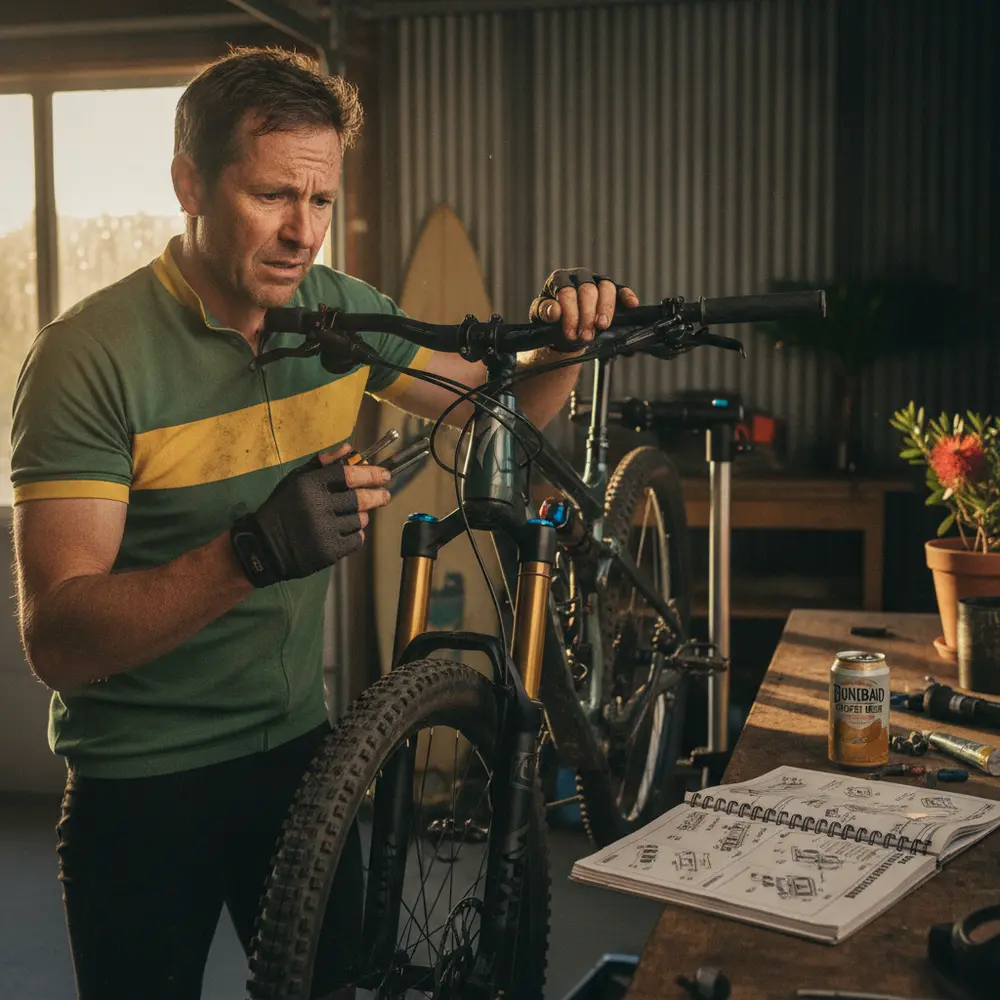
A crash that looks minor can still leave your bike structurally compromised in ways you simply cannot see with the naked eye. Riding a damaged frame is one of the most avoidable risks in cycling, and it is the one most riders underestimate.
By the end of this article, you will know exactly what a professional frame inspection involves, how to do a basic at-home check first, and how to decide whether your bike is safe to ride again. You will also have a clear picture of what it costs and what your rights are as an Australian consumer.
Note for Australia:
- Australian Consumer Law (ACL) protects you if a crash reveals a manufacturing defect in your frame. A professional inspection report can support a warranty or replacement claim.
- Most local bike shops (LBS) across Australia offer post-crash inspections. Prices generally sit in the range of $50 to $150 depending on complexity.
- Carbon frames are common in the Australian road and gravel market. If your frame is carbon, a visual check alone is not sufficient after any impact.
At a glance:
- Never assume a bike is safe to ride just because it looks intact after a crash.
- Carbon frames can fail internally with zero visible signs. Always get a professional check.
- A basic at-home check is a useful first step, but it does not replace a mechanic's assessment.
- A post-crash inspection at an Australian LBS typically costs between $50 and $150.
Key takeaways:
- Your cycling mechanic is the only person qualified to confirm your frame is safe after a crash.
- Frame material matters. Carbon, aluminium and steel each fail differently and require different inspection approaches.
- Getting a written inspection report protects you for insurance and warranty purposes.
Why You Should Never Skip a Frame Check After a Crash
Most riders pick their bike up, dust themselves off, and do a quick look over the handlebars and tyres. If nothing looks bent, they ride home. It is understandable, but it is the wrong call. The frame is the structural backbone of the entire bike, and damage to it does not always announce itself.
As Bicycle NSW outlines in their riding safety resources, equipment integrity is a core component of cycling safety. Their recommendation is clear: have your bike checked by a professional after any incident. That is not overcautious advice. It is the baseline.
The risk is not just a second crash. A compromised frame can fail suddenly under normal riding load, on a descent, in a bunch, or while cornering. The consequences of that kind of failure are serious.
The Difference Between a Scratch and Structural Damage
Paint scratches, scuffs and cosmetic marks are almost always harmless. Structural damage is a different category entirely. Structural damage affects the integrity of the frame tubes and joints, and it determines whether the frame can safely bear your weight and the forces of riding.
The problem is that the two can look identical from the outside. A carbon frame with internal delamination may show nothing more than a small paint chip at the impact point. An aluminium frame with a stress crack may look no different to a surface scratch. That is exactly why a professional assessment matters.
What a Cycling Mechanic Actually Looks For
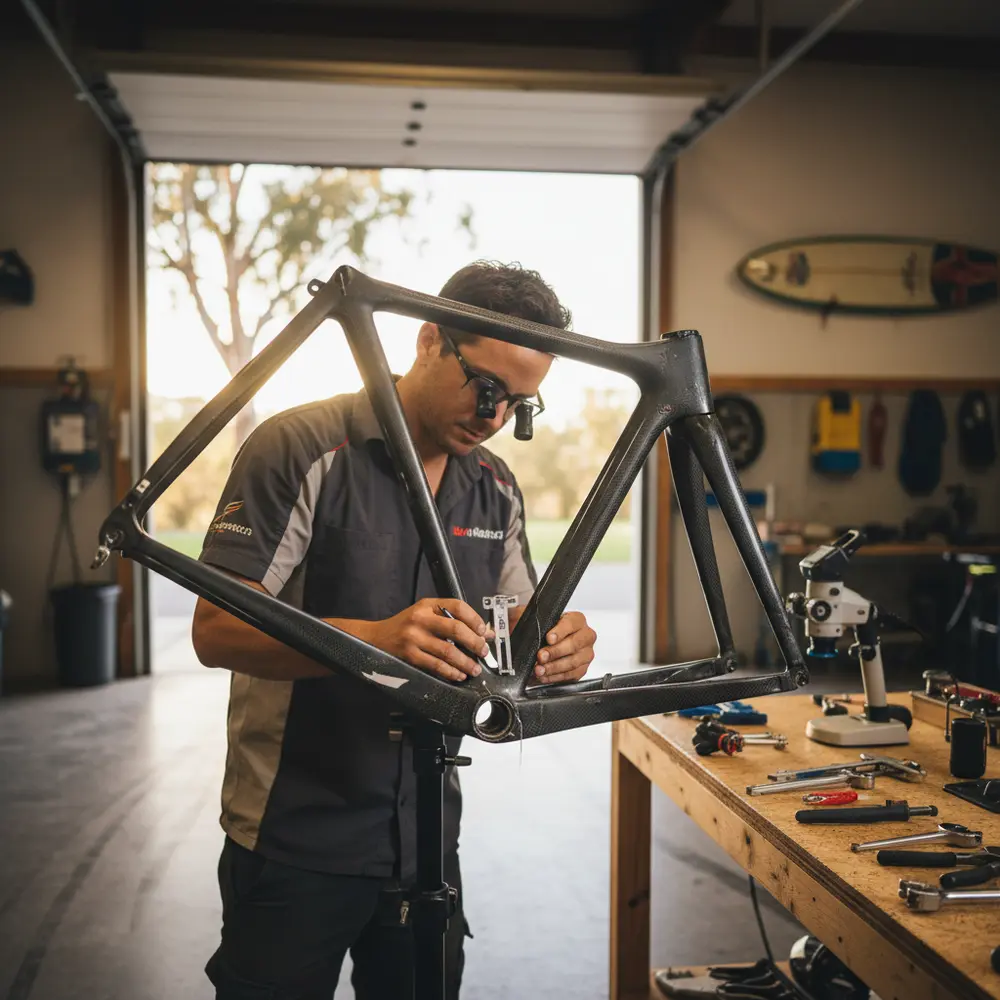
A trained cycling mechanic does not just eyeball the frame. They follow a systematic process, starting at the point of impact and working outward. They check the frame, the fork, the headset, the bottom bracket shell, and the contact points. Each zone tells them something different about how the crash energy travelled through the bike.
According to this breakdown of what a cycling mechanic checks after a crash, mechanics document cosmetic damage separately from structural findings. This matters because it creates a clear record for insurance or warranty purposes.
Key areas your mechanic will focus on include:
- Head tube and fork crown - these absorb the most energy in a frontal impact.
- Down tube - a common point of stress concentration in side impacts and tip-overs.
- Chainstays and seat stays - checked for bends and cracks, especially after rear-end impacts.
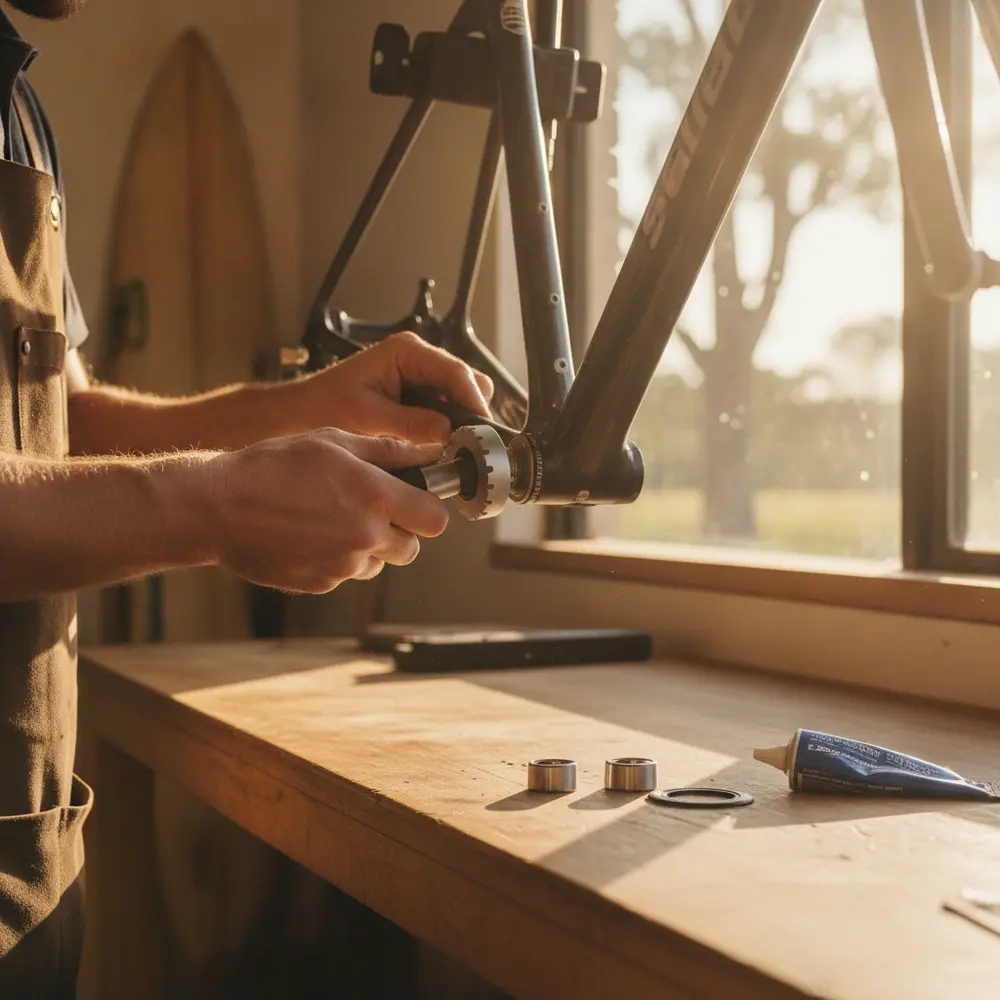
- Bottom bracket shell - alignment is verified, as even a slight distortion affects drivetrain performance and frame stress.
- Headset - checked for looseness, play and correct alignment post-impact.
- Wheels and fork alignment - spoke tension, wheel dish, and whether the fork sits true in the frame.
Carbon Fibre Frames – Why the Damage Is Often Hidden
Carbon fibre is engineered to be strong in specific directions. Under a crash impact, the force often comes from a direction the layup was not designed to handle. When that happens, the fibre layers can separate internally, a process called delamination, with little or no visible sign on the surface.
As CyclingTips explains in their detailed piece on carbon frame inspection methods, the coin tap test is a basic but imperfect tool for detecting delamination. A dull sound compared to the surrounding area can indicate a problem, but it is not definitive. Ultrasonic testing is the most accurate non-destructive method available, and some specialist repairers in Australia offer this service.
The key point for beginners: if your frame is carbon and it took any direct impact, get it inspected. Do not ride it on the assumption it looks fine. Australian cyclists have shared real-world accounts of carbon frame failures after crashes where the frame passed a visual check but failed under load shortly after.
Aluminium and Steel Frames – Dents, Bends and Stress Cracks
Aluminium and steel behave more predictably in a crash than carbon, but they are not without risk. Understanding how different frame materials behave in a crash helps set realistic expectations for what your mechanic will be looking for.
| Frame Material | How Damage Typically Shows | Professional Check Still Needed? |
|---|---|---|
| Carbon fibre | Damage often invisible. Internal delamination possible with no surface sign. | Yes, always. Even after minor impacts. |
| Aluminium | Dents and cracks more likely to be visible. Can also develop stress cracks near welds. | Yes, especially near tube junctions and the head tube area. |
| Steel | Bends before breaking. Damage generally more visible and easier to assess. | Yes for any significant impact, though steel is more forgiving to inspect visually. |
Aluminium is more likely to show visible damage than carbon, but stress cracks near welds and tube junctions can still be easy to miss without a trained eye. Steel is the most forgiving material to assess visually, but a hard impact still warrants a professional look, particularly at the fork and head tube area.
What Happens During a Professional Bike Inspection
Bring your bike in as it came off the crash. Do not try to straighten anything first, as the deformation can actually help the mechanic understand how the crash load was distributed. Let them know the direction of impact and your speed if you can recall it.
A standard post-crash inspection at an Australian LBS typically follows this process:
- Initial consultation - you describe the crash, the mechanic listens and notes the key details.
- Point-of-impact assessment - the mechanic examines the most likely stress zones first.
- Systematic check outward - fork, headset, bottom bracket, wheels, drivetrain and contact points.
- Material-specific tests - for carbon, a tap test and visual magnification at the impact site. For aluminium and steel, close inspection of welds and tube junctions.
- Written findings - the mechanic documents what they found, separating cosmetic from structural concerns.
- Repair or replace recommendation - a clear, direct conversation about your options.
The mechanic can also advise you on insurance claims and whether the findings support a manufacturer warranty or consumer rights claim under Australian Consumer Law for bike product safety.
Can You Do a Basic Visual Check Yourself First?
Yes, and you should. A basic at-home check before you call the shop is a sensible first step. It helps you gather information and identifies any obvious safety issues that mean you definitely should not ride until the bike has been seen.
Things a Home Check Will and Will Not Catch
An at-home check is useful for spotting obvious problems. It is not a substitute for a professional assessment, but it helps you make an informed decision about whether to ride the bike to the shop or transport it.
Part 1 – At-home visual and tactile check (do this immediately after the crash):
- Tyres - check for cuts, punctures, sidewall damage and correct seating on the rim.
- Wheels - spin each wheel and look for wobble. Check spoke tension by squeezing pairs together.
- Handlebars and stem - check that they have not rotated in the clamp and are still aligned with the front wheel.
- Brakes - squeeze each lever and confirm the bike stops cleanly. Check pad alignment on the rim or rotor.
- Saddle and seatpost - confirm the saddle has not shifted and the seatpost clamp is secure.
- Frame surface - run your fingers over the frame tubes and look for paint chips, cracks, or anything that feels different to the surrounding area.
Part 2 – Take it to your mechanic if any of these apply:
- The crash involved a direct impact to the head tube, down tube, or fork.
- You notice any creak, flex, or change in handling that was not there before the crash.
- Your frame is carbon and it took any impact at all, even a low-speed tip-over.
- The headset feels loose, stiff, or misaligned when you turn the bars.
- Any tube shows a dent, flat spot, or visible crack, even a hairline one.
- You are not confident the wheels are running true after your check.
How Much Does a Post-Crash Bike Inspection Cost in Australia?
Cost anxiety is one of the main reasons riders skip the mechanic visit. It is worth being direct about this: a post-crash inspection at an Australian LBS typically costs somewhere in the range of $50 to $150, depending on the complexity of the check and the shop.
That is a modest amount compared to the cost of a new frame, or the cost of a second crash caused by a compromised one. Many shops will also apply the inspection fee toward any repair work that comes out of it, so it is worth asking when you book.
If you have bike insurance, check whether your policy covers inspection costs or frame replacement after a crash. Some policies do, and your mechanic's written report will be the document that supports your claim. For guidance on your consumer rights, the ACCC product safety page is a useful starting point.
When to Repair, When to Replace – What Your Mechanic Will Tell You
Your mechanic's job is to give you an honest assessment, not to sell you a new frame. A good LBS mechanic will tell you clearly whether the damage is cosmetic, repairable, or grounds for replacement.
For carbon frames, there are certified repair specialists in Australia who can assess and, in some cases, reinforce damaged sections. This is not a DIY job. The repair needs to restore structural integrity, not just cover the damage. Your mechanic can refer you to a reputable specialist if needed.
For aluminium and steel, repair is sometimes possible depending on the location and severity of the damage. Cracks near the head tube or bottom bracket shell are generally a stronger case for replacement than a dent on a chainstay.
Some frame manufacturers also offer crash replacement programs, which may require a documented professional inspection as part of the claim process. Ask your mechanic if your brand has such a program.
Common Mistakes After a Crash
These are the ones mechanics see repeatedly. Avoiding them keeps you safer and often saves you money in the long run.
- Riding home on a potentially damaged frame - if you are unsure, transport the bike. A short ride on a compromised frame is not worth the risk.
- Assuming carbon is fine because it looks fine - internal delamination has no external signature. Do not make this assumption.
- Straightening bent components yourself - leave deformation in place so the mechanic can assess how the crash load travelled through the frame.
- Skipping the mechanic because the crash was slow or minor - a low-speed tip-over onto a hard surface can still concentrate significant force on a tube junction or the head tube.
- Not asking for a written report - always ask. It protects you for insurance and warranty purposes.
- Delaying the inspection for weeks - get it done before you ride again. Not after your next few rides.
If You Are New to Cycling
If this is your first crash, it can feel overwhelming. Here is what to focus on straight away:
- Do not ride the bike again until it has been checked, even if it looks fine.
- Take photos of the bike and the crash scene before you move anything.
- Write down what happened as soon as you can, including the speed and direction of impact.
- Call your local bike shop and describe the situation. They will advise whether to ride in or transport the bike.
- Ask the mechanic to explain what they found in plain language. A good mechanic will take the time to do this.
If You Have Been Through a Crash Before
If you have dealt with crash damage before, you likely know the basics. A few things worth reinforcing for experienced riders:
- Carbon frame behaviour changes over time and with repeated minor impacts. A frame that survived one crash may be closer to its limit than you think after a second.
- If you have upgraded components since your last inspection, make sure the mechanic knows. New stems, bars or forks can change the stress profile of the bike.
- Consider asking your mechanic about regular bike maintenance schedules so that frame integrity checks become part of your annual service rather than a reactive step after a crash.
- If you are racing or riding in a group, a compromised frame is not just a risk to you. It is a risk to everyone around you.
Frequently asked questions
Is a professional frame check always necessary, or only after serious crashes?
A professional check is recommended after any crash that involved a direct impact to the frame, fork, or headset. Low-speed tip-overs can concentrate significant force on specific points. If your frame is carbon, the threshold for getting a professional inspection is lower because the damage can be invisible and the failure mode is more abrupt.
How long does a post-crash bike inspection take at a bike shop?
A standard inspection typically takes between 30 minutes and an hour for most bikes. A more thorough assessment involving carbon-specific testing or detailed component checks may take longer. Call ahead and describe the crash so the mechanic can allocate the right amount of time.
Can I claim the cost of a post-crash inspection on my bike insurance?
Some Australian bike insurance policies cover inspection costs after a crash. Check your policy documentation or call your insurer before you visit the shop. Ask the mechanic for a written report and itemised invoice, as insurers typically require both to process a claim.
What happens if my frame is found to be damaged beyond repair?
Your mechanic will give you a written report outlining the structural findings. You can use this to support a claim under your bike insurance policy, a manufacturer crash replacement program, or, if a manufacturing defect contributed to the failure, under Australian Consumer Law for bike product safety. Your LBS can guide you through the process.
Are steel frames safe to ride after a minor crash without an inspection?
Steel is the most forgiving frame material in terms of crash behaviour and visual assessment. That said, a direct impact to the head tube, down tube, or fork crown on any frame material warrants professional eyes. Do not skip the check on the assumption that steel always shows visible damage when it is compromised.
Summary
- Never ride a bike after a crash without at least completing an at-home visual check and preferably getting a professional inspection.
- Carbon frames require professional assessment after any impact, even if the frame looks undamaged.
- A post-crash inspection at an Australian LBS typically costs $50 to $150 and is money well spent.
- Always ask for a written report. It supports insurance claims, warranty processes and consumer rights claims.
- Build a relationship with your local bike shop. A mechanic who knows your bike is better placed to spot anything out of the ordinary. If you have questions or want advice on finding the right mechanic, get in touch with the Segment Club team.
This is educational content, not financial advice.