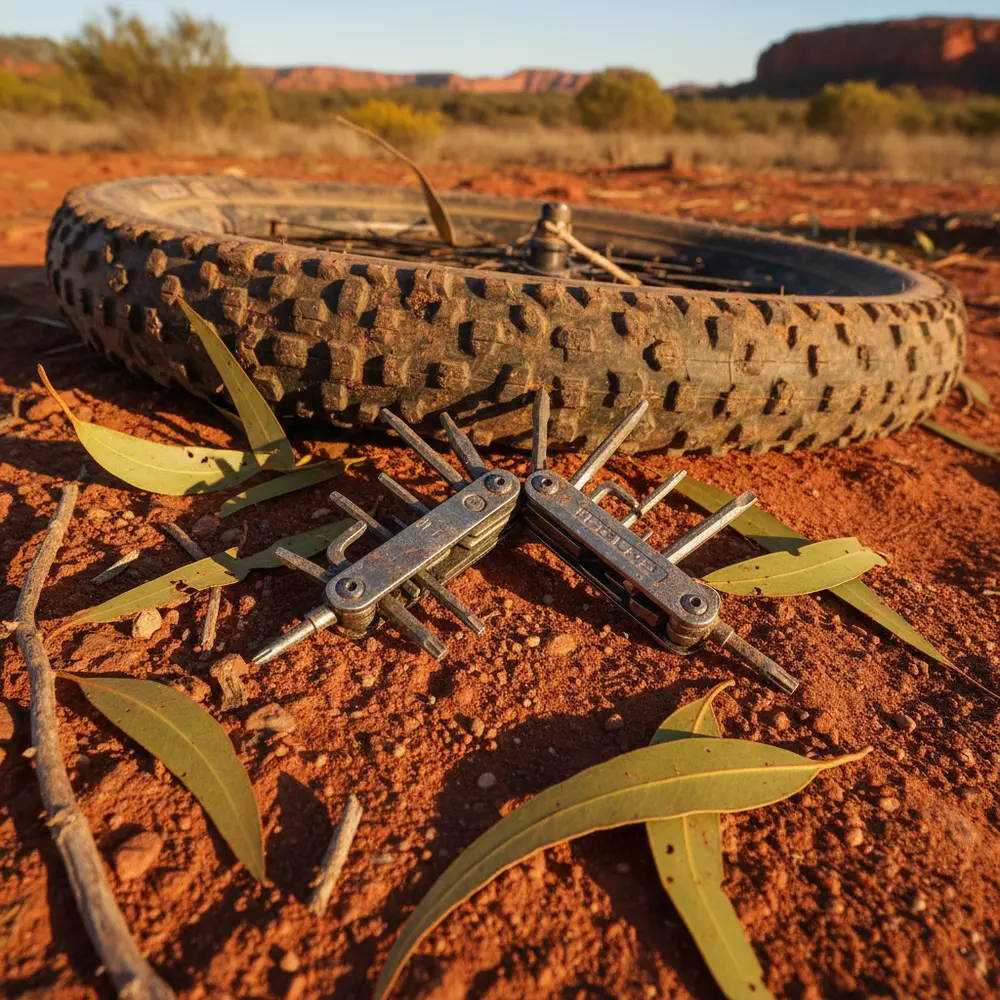
A snapped derailleur bolt or a loose stem bolt 15km from the trailhead is not the time to realise your multi-tool is at home on the workbench. For Aussie riders tackling remote trails from Derby in Tasmania to Stromlo in Canberra, a good cycling multi-tool is as essential as your helmet.
By the end of this article, you will know exactly what to look for in a trail-ready multi-tool, which models are worth your money in 2026, and where to buy one locally. You will also have a practical checklist to run through before your next ride.
Note for Australia:
- Many popular cycling trails in Australia are remote, with the nearest bike shop often 50km or more away. A reliable multi-tool is not optional.
- Heat, red dust, and mud in conditions across Queensland, WA, and NSW can accelerate wear on cheaper pivot mechanisms. Material quality matters more here than it might in cooler climates.
- Stick to brands with confirmed Australian distribution and local warranty support. Topeak, Lezyne, and Crankbrothers are all well-stocked through major Australian retailers.
At a glance:
- The best all-round trail tool needs hex keys (2 to 8mm), a T25 Torx, and a chain tool as a minimum.
- Weight under 200g is a practical target. Most good tools land between 120g and 180g.
- Topeak, Lezyne, and Crankbrothers are the three brands worth comparing for Australian buyers in 2026.
- You can pick up a solid multi-tool from 99 Bikes, Pushys, or your local bike shop, usually in the $40 to $120 range.
Key takeaways:
- Do not buy a multi-tool without a chain tool if you ride trails. A broken chain 10km out is a long walk home.
- T25 Torx is now effectively essential for modern MTB disc brake rotors and some drivetrain components.
- Budget tools are fine for road riding. For trails, spend a little more and get CRV steel construction and solid pivot action.
Why a Good Multi-Tool Matters on Australian Trails
Riding in Australia is genuinely different from riding in Europe or North America. We have longer distances between trailheads and towns, extreme heat in summer, and trails that are often far from help. That context changes how you should think about the gear you carry.
A cheap multi-tool that seizes up in red dust or strips a hex key after two uses is worse than useless. It gives you false confidence and then lets you down at the worst moment. A good tool, carried consistently, is cheap insurance against a long hike or a rescue call.
The Unique Demands of Aussie Terrain and Conditions
Australian trails vary enormously. You have the loamy flow trails at You Yangs in Victoria, the technical rocky terrain at Thredbo, and the red-dirt epics of WA and Queensland. Each throws different stresses at both your bike and your gear.
Heat is a real factor. Pivot joints on cheaper tools can gum up with dust and dry lubricant in high temperatures, making them stiff and awkward to use when you actually need them. Fine red dust in particular works its way into every gap and accelerates wear on lower-grade steel alloys.
The takeaway is simple. Buy a tool made from CRV (chrome vanadium) steel or better, keep it lightly oiled, and it will handle whatever the Australian bush throws at it.
What to Look for in a Cycling Multi-Tool
Before comparing specific models, it helps to know what the non-negotiables are. Not every multi-tool is built the same, and the feature list matters a lot more than the number of functions printed on the packaging.
Essential Functions - Hex Keys, Torx, Chain Tool and Tyre Levers
Here is what you actually need on an Australian trail ride:
- Hex keys: 2mm, 2.5mm, 3mm, 4mm, 5mm, 6mm, and 8mm. The 4mm and 5mm are the most-used sizes on modern trail bikes, covering bottle cage bolts, derailleur limit screws, brake lever clamps, and more.
- T25 Torx: Now standard on most disc brake rotor bolts and increasingly common on drivetrain components. Non-negotiable for MTB riders.
- Chain tool: Absolutely required for trail riding. A broken chain is a ride-ender without one. Check that the chain tool is compatible with 11 and 12-speed chains if your bike runs a modern drivetrain.
- Tyre levers: Useful if you are running tubes or need to reseat a tubeless tyre after a bad burp. Some multi-tools include them; others do not.
- Screwdrivers: Both flat head and Phillips (cross-head). Used less often but still called for on cable barrel adjusters and some older components.
- Spoke wrench: A bonus inclusion. Handy for a quick wheel true if a spoke loosens mid-ride.
For more on what to pack for different ride types, the team at 99 Bikes has a practical breakdown of what to carry on a trail ride that is worth reading alongside this article.
Build Quality, Weight and Pocket Size
Weight matters, but not as much as some riders think. A tool that is 30g lighter but has flimsy pivot action or blades that flex under load is a bad trade. Aim for under 200g as a practical upper limit. Most well-built tools land between 120g and 180g, which is comfortable in a jersey pocket or saddle bag.
CRV steel is the material benchmark for quality multi-tools. It holds an edge well, resists corrosion better than standard steel, and handles the torque loads you will put through hex keys without rounding off. If a tool does not list its steel grade, that is usually a sign it is cutting corners.
Top Multi-Tool Picks for Australian Riders in 2026
The comparison table below covers the three categories most Aussie riders need to choose between. Check manufacturer pages for current confirmed specifications before purchasing, as product lines do get updated.
| Category | Recommended Tool | Key Strengths | Watch Out For |
|---|---|---|---|
| Best All-Round Trail | Topeak Ratchet Rocket Lite DX+ | Ratchet mechanism, chain tool, full hex and Torx range | Slightly heavier than fixed-blade tools |
| Best Lightweight | Lezyne RAP 21 | CRV steel, 21 functions, compact profile | Chain tool on some variants may not suit all 12-speed chains - verify before buying |
| Best Budget | Crankbrothers M17 | 17 functions, chain tool, Torx, good value | Pivot action not as smooth as premium options |
Best All-Round Trail Multi-Tool
The Topeak Ratchet Rocket Lite DX+ is consistently one of the most recommended trail tools for good reason. The ratchet mechanism makes it much faster to drive bolts in and out compared to a fixed wrench, which is a real benefit when your hands are cold, muddy, or shaking after a big descent. It covers the full hex range, includes T25 Torx, and has a chain tool built in.
It is not the lightest tool on the market, but the ratchet function justifies the extra grams for most trail riders. Widely available through Australian bike shops and online retailers. Topeak has solid local distribution, so warranty claims are straightforward if something goes wrong.
Best Lightweight Option for Road and Gravel
The Lezyne RAP 21 is a well-regarded option for riders who want a compact, light tool without sacrificing function. The CRV steel construction holds up well in Australian conditions, and the 21-function list covers everything a road or gravel rider is likely to need on the road. It sits comfortably in a jersey pocket without adding noticeable bulk.
One thing to verify before you buy is chain tool compatibility with your specific drivetrain. Chain tool design across different multi-tools can vary, and 12-speed chains in particular have tighter tolerances. Check the Lezyne product page or ask your local shop to confirm before committing.
Best Budget Multi-Tool That Still Gets the Job Done
The Crankbrothers M17 is the honest budget recommendation. It includes 17 functions, a chain tool, and Torx fittings, which is genuinely all most trail riders will ever need. The pivot action is not as slick as Topeak or Lezyne, and the steel is not quite the same grade, but it is a real tool that will get you home.
If you are new to trail riding and not yet sure how much you will use a multi-tool, the M17 is a sensible place to start. It is widely stocked at Australian MTB-focused shops and is easy to replace or upgrade once you know what you want. Just keep it clean and lightly oiled, especially after dusty rides.
Trail-Ready Multi-Tool Checklist
Run through this before you buy a new tool or before heading out on a long trail ride. A quick visual check takes 30 seconds and could save you a lot of trouble later. Check out our full ride-day checklist for Australian cyclists for more pre-ride prep tips.
- 2mm hex key included
- 2.5mm hex key included
- 3mm hex key included
- 4mm hex key included
- 5mm hex key included
- 6mm hex key included
- 8mm hex key included
- T25 Torx bit included
- Chain tool present and compatible with your chain speed (check 11 or 12-speed)
- Tyre levers included or carried separately
- Flat head screwdriver included
- Phillips (cross-head) screwdriver included
- Spoke wrench included (bonus, not essential)
- Total weight under 200g
- CRV steel or equivalent corrosion-resistant material
- Pivot action smooth and not stiff when opened fresh
Common Mistakes to Avoid
- Buying a tool without a chain tool included. On a trail ride, a broken chain without a chain tool means walking. Do not skip this function.
- Ignoring material quality. A multi-tool made from low-grade steel will round off hex keys and seize up in dust and heat. Check the spec sheet before buying.
- Leaving it at home. The most common mistake. The tool lives in your saddle bag or pack, always. Not on the workbench.
- Not checking chain tool compatibility. 12-speed chains have tighter tolerances. A chain tool sized for older chains may not work cleanly on a modern drivetrain.
- Buying based on function count alone. 25 functions sounds impressive but if half of them are rarely used sizes and the pivot action is poor, a 17-function tool with better build quality will serve you better.
- Never cleaning or lubricating the tool. After a dusty or muddy ride, wipe the tool down and add a drop of light oil to the pivots. It will last years longer.
If You Are New to Carrying a Multi-Tool
- Start with a mid-range tool in the $50 to $80 range. You do not need the most expensive option to get reliable function.
- Make sure it includes a chain tool, T25 Torx, and hex keys from 2mm to 8mm. Those three things cover 90% of trailside repairs.
- Keep it in your saddle bag or pack permanently. Do not move it in and out. You will forget it one day.
- Practise using the chain tool at home before you need it on the trail. Threading a chain pin under pressure with tired hands is harder than it looks the first time.
- Ask your local bike shop to walk you through the functions. Most shops are happy to spend five minutes doing this when you buy.
If You Have Used a Multi-Tool Before
- Consider upgrading to a ratchet-style tool if you are still on a basic fixed-blade design. The speed difference is noticeable when you are doing multiple turns in the field.
- Verify that your current chain tool is compatible with your drivetrain speed. Many riders are on 12-speed now and older chain tools do not always handle the narrower pins cleanly.
- Check the T25 Torx blade on your existing tool. If it is worn or rounded, it is time for a replacement. A stripped rotor bolt is a bad day.
- If your current tool has stiff or corroded pivots, clean it with a degreaser and re-lube. If the pivots are damaged, replace the tool rather than fighting it mid-ride.
- Think about whether a separate chain breaker or a quick-link carrier makes sense for your kit. A multi-tool chain tool is reliable for a field fix, but a dedicated chain breaker at home is easier to use for routine maintenance.
How to Use Your Multi-Tool in the Field
Knowing you have the right tool is one thing. Using it calmly under pressure is another. Here is a simple approach for the most common trailside fixes.
- Stop safely. Get off the trail, find a flat spot, and take a breath. Rushing causes more damage than the original issue.
- Identify the problem. Loose bolt, broken chain, slipped component. Be specific before you reach for the tool.
- Use the correct size. Do not force a close-fitting hex key. A stripped bolt in the field is much worse than the original loose bolt.
- For a chain break: Remove the damaged link, use a quick-link if you have one, or rejoin with the chain tool. Keep tension even and check the join flexes freely before riding.
- Tighten bolts to firm, not cranked. Multi-tool arms are short for a reason. They limit torque. Snug is enough in the field. Re-torque properly when you get home.
For more on trailside repairs and what else to carry, see our guide to essential cycling gear for Australian riders.
Where to Buy Cycling Multi-Tools in Australia
Stick to retailers with local stock and proper warranty support. Here are the main options for Australian riders:
- Local bike shops: Best option if you want to handle the tool before buying and get advice from staff who know what suits your bike. Most LBS in Australia stock Topeak, Lezyne, and Crankbrothers.
- 99 Bikes: Large national chain with stores across Australia and a strong online store. Good range across all price points.
- Pushys: One of Australia's most popular online cycling retailers. Check their range of cycling multi-tools at Pushys for current stock and pricing.
- Wiggle AU and Chain Reaction Cycles: International retailers with Australian shipping. Useful for pricing comparison but check warranty terms carefully.
For a broader look at what Australian riders are carrying and recommending, Bicycles Network Australia's buyer's guide is a solid local reference. If you have questions about gear choices or need a recommendation tailored to your riding, feel free to get in touch with us and we will point you in the right direction.
Final Verdict - Which Multi-Tool Should You Grab?
For most Australian trail riders, the Topeak Ratchet Rocket Lite DX+ is the strongest all-round choice. The ratchet mechanism genuinely makes it faster to use in the field, and it covers every function you are likely to need. If weight is your priority and you ride road or gravel more than trail, the Lezyne RAP 21 is the cleaner pick.
For riders just getting started or those who want a no-fuss tool without spending too much, the Crankbrothers M17 does everything that matters at a price that makes sense. Just keep it clean, lube the pivots after dusty rides, and it will serve you well.
The best multi-tool is the one you actually carry. Pick one that suits your riding, put it in your saddle bag, and leave it there. Explore more useful cycling tools for Australian riders on Segment Club to keep your kit sorted.
Frequently asked questions
Do I really need a chain tool in my multi-tool for trail riding?
Yes, for trail riding it is worth having. A broken chain on a remote trail is a ride-ender without one. The chain tool on most quality multi-tools is reliable enough for a field fix on 10 and 11-speed chains. For 12-speed, verify compatibility before you buy. A quick-link in your pack alongside the multi-tool gives you an even faster repair option.
Is T25 Torx now essential for modern mountain bikes in Australia?
Yes, in practical terms. T25 Torx is now standard on most disc brake rotor bolts and is increasingly used on derailleur fittings and other components across MTB, gravel, and road bikes. If your multi-tool does not have it, you will eventually be caught short on a ride. Any new multi-tool purchase should include T25 as a baseline requirement.
Will cheaper multi-tools hold up in Australian heat and dust?
They will function, but they will degrade faster. Cheaper tools often use lower-grade steel alloys that corrode more readily and pivot joints that gum up with fine dust. In the relatively mild conditions of a paved commute this matters less. On Australian dirt trails in summer, the difference in longevity between budget and mid-range tools is noticeable. Spending an extra $30 to $40 on a CRV steel tool is worth it for regular trail riders.
Can the chain tool on a multi-tool do a proper chain repair, or do I need a separate tool?
For a trailside emergency fix, yes, a multi-tool chain tool is sufficient. It will break and rejoin a chain well enough to get you home. For regular maintenance at home, a dedicated chain breaker is easier to use and more precise. Think of the multi-tool chain tool as your emergency option and use a proper workshop tool for routine chain work.
What are the most used hex key sizes on modern trail bikes in Australia?
The 4mm and 5mm hex keys get the most use on modern trail bikes. The 4mm covers bottle cage bolts, brake lever clamps, and many cable fixing bolts. The 5mm is commonly used on stem bolts, saddle rail clamps, and derailleur bolts. The 6mm and 8mm are used less frequently but are essential for crank bolts and some stem face plates. Do not buy a multi-tool that is missing any size from 2mm to 8mm.
Quick summary
- A reliable multi-tool is essential gear for any Australian trail ride, especially on remote networks far from help.
- Minimum requirements are hex keys from 2 to 8mm, T25 Torx, a chain tool, and flat and Phillips screwdrivers.
- Top picks for 2026: Topeak Ratchet Rocket Lite DX+ for trail, Lezyne RAP 21 for road and gravel, Crankbrothers M17 for budget.
- Buy from Australian retailers with local stock and warranty support. Pushys, 99 Bikes, and local bike shops are the go-to options.
- The tool lives in your saddle bag permanently. That is the most important rule of all.
This is educational content, not financial advice.