Choosing between a road bike and a gravel bike is one of the most common decisions Australian cyclists face right now, and it matters more than ever given how much the local market and riding culture has shifted. Get it wrong and you end up with a bike that fights you half the time you ride it.
By the end of this article you will have a clear picture of how these two bikes actually differ, how Australian terrain and riding habits shape the decision, and a simple framework to work out which one fits your life. No fluff, just the practical stuff.
Note for Australia:
- Australian roads vary dramatically, from smooth coastal paths to rough rural bitumen and red dirt fire trails, and that variety matters when picking a bike.
- Many Australian cyclists own one bike and need it to handle multiple jobs, commuting, weekend rides, the odd gravel road, and that reality shapes this whole comparison.
- Events like Dirty Speed (SA) and You Yanks (VIC) have pushed gravel riding into the mainstream here, so the gravel bike is no longer a niche choice.
At a glance:
- Road bikes are faster and more efficient on sealed surfaces, especially for performance-focused or competitive riders.
- Gravel bikes handle mixed terrain and are more comfortable on rough or unpaved surfaces, including fire trails and rural roads.
- Most non-competitive Australian riders who ride varied terrain will find a gravel bike more useful day to day.
- If you ride mostly smooth sealed roads and train or race seriously, a road bike still makes more sense.
Key takeaways:
- The best bike is the one that matches where you actually ride, not where you wish you rode.
- Gravel bikes can handle sealed roads well enough for most recreational riders, but they are slower than a road bike in like-for-like conditions.
- A second wheelset with narrower tyres on a gravel bike can cover a lot of ground, but it adds cost and effort.
Road Bike vs Gravel Bike – What Is the Actual Difference?
At first glance a road bike and a gravel bike look similar. Both use drop bars, both come in similar frame sizes, and both sit in a comparable price range at most levels of the market. The differences are in the details, and those details add up quickly once you are out on the road.
Geometry and Riding Position
Road bikes are built around an aggressive, stretched-out position. The geometry pushes you forward and low, which is efficient for power transfer and aerodynamics on smooth sealed roads. It is a position that rewards you over kilometres of clean bitumen.
Gravel bikes use a more relaxed geometry. The stack is higher, the reach is shorter, and the bottom bracket is often a touch lower. You sit more upright, which reduces strain on your neck, shoulders, and lower back over a long ride. For Australian riders covering big distances on mixed terrain, that comfort adds up across the hours.
Tyre Clearance and Wheel Size
This is probably the most practical difference. Road bikes typically run tyres in the 25 to 32mm range. Gravel bikes are designed to fit tyres from around 35mm up to 50mm or wider, depending on the frame. Wider tyres absorb more vibration, roll over rough surfaces more confidently, and handle loose gravel and dirt with far more control.
The trade-off is rolling resistance on sealed roads. A 45mm gravel tyre will be slower on smooth bitumen than a 28mm road tyre at the same pressure, but the gap is smaller than many riders expect, particularly at recreational pace. CyclingTips covers the rolling resistance trade-offs in detail and the conclusion is broadly that gravel tyres on sealed roads are a reasonable compromise for most non-racing riders.
Gearing, Brakes, and Componentry
Disc brakes are now standard across both categories at mid-range price points in Australia, so that is largely a non-issue when comparing the two. Gearing is where they diverge. Road bikes use tighter gear ratios suited to smooth, predictable gradients. Gravel bikes typically come with wider-range gearing, either a single chainring setup or a compact double, to handle steep climbs and loose surfaces where you need to keep your cadence up.
Mounts are another practical difference worth noting. Gravel frames usually include mounts for racks, mudguards, and extra bottle cages. Road bikes, particularly performance-focused ones, often do not. If bikepacking or loaded touring is even a distant possibility for you, that matters.
Australian Terrain – What Are You Actually Riding On?
This is the question that should drive your decision more than any spec sheet. Australia is not Europe. Our riding surfaces are more varied, our distances between towns are bigger, and a lot of the best riding happens well away from smooth sealed roads.
Urban Roads, Bike Paths, and Sealed Surfaces
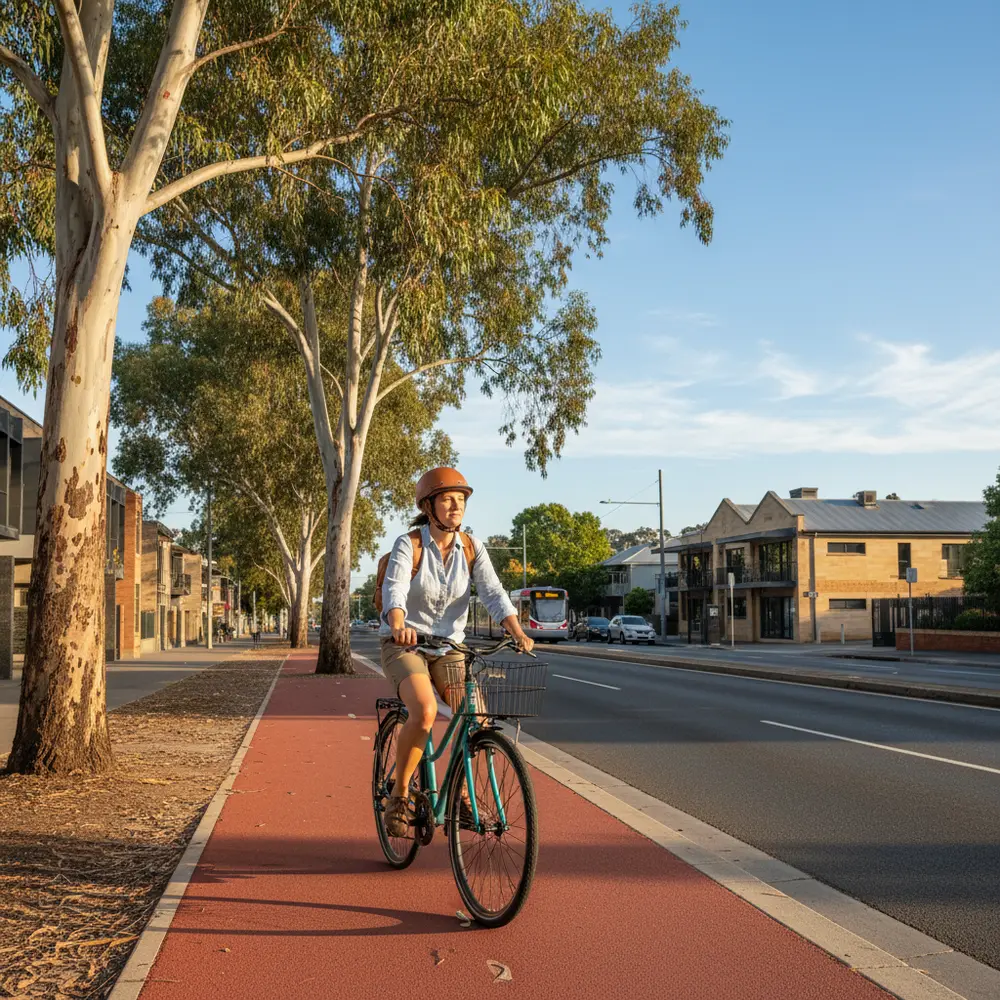
If you live in a capital city and your riding is mostly commuting, weekend group rides, and the occasional gran fondo, you are largely on sealed surfaces. The roads vary in quality but most of your distance will be on bitumen. In this scenario a road bike is genuinely efficient and a gravel bike's extra capability is rarely used. Cycling in Victoria covers a range of popular route types and most of the well-known options are sealed, though many connect to gravel and trail options nearby.
Gravel Roads, Fire Trails, and Rural Routes
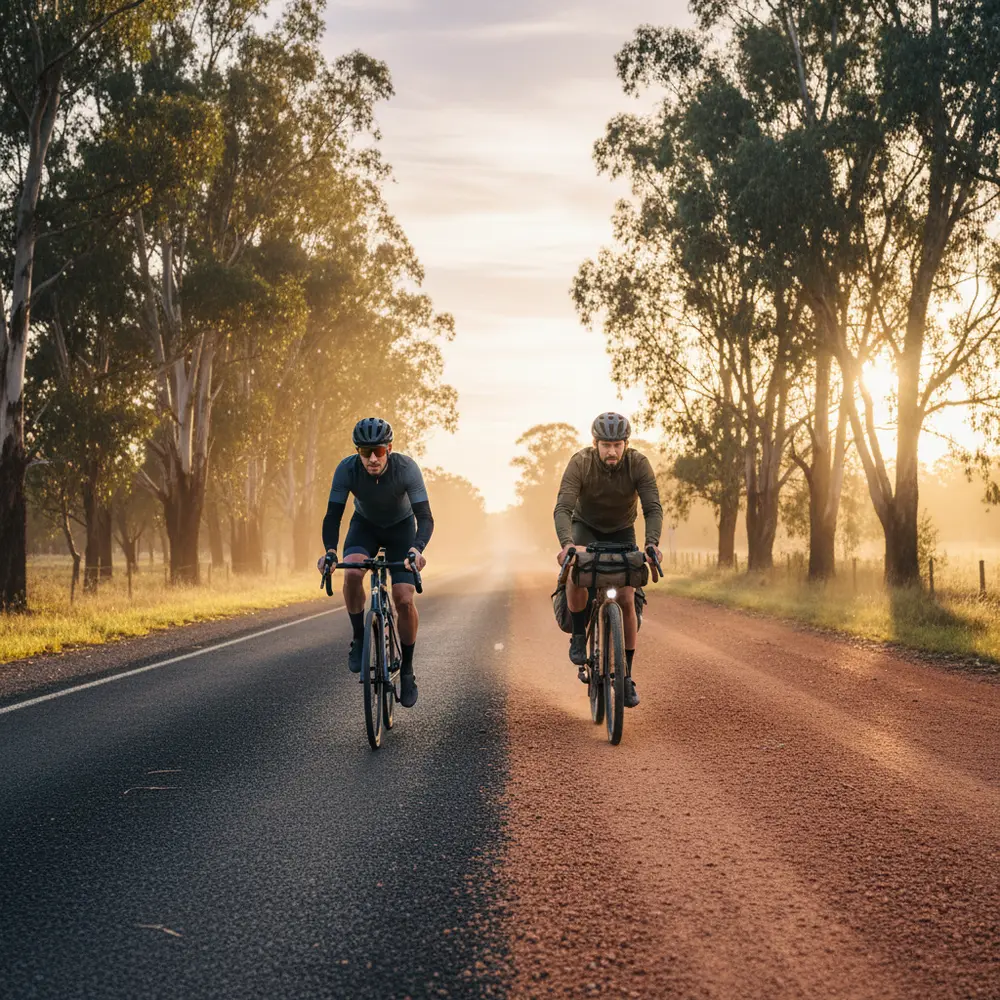
Step outside the metro area and the picture changes fast. Regional Victoria, the Adelaide Hills, the Riverina in NSW, and the south-west of WA all have extensive networks of gravel roads and fire trails that are perfectly rideable on a gravel bike and genuinely punishing on a road bike. In parts of rural Australia, bitumen roads in poor condition are common, and wide tyres make those rides far more comfortable and safer. Browse the gravel and trail riding routes across Australian states on Trailforks to get a sense of just how much unpaved riding is available near most major centres.
Road Bike Strengths – Where It Still Wins
The road bike gets unfairly dismissed in a lot of current cycling content, so let's be straight about where it is still the better tool.
- Speed on sealed roads. A road bike with narrow tyres and an aggressive position is faster on smooth bitumen, full stop. If you are training for timed events, riding with a fast group, or chasing segments, this matters.
- Efficiency for high-volume training. The geometry and component choices on a road bike are optimised for repeated efforts on sealed roads. If you ride 200 to 300 km a week on tarmac, that optimisation pays off.
- Lighter weight at comparable price. Road bikes are generally lighter than gravel bikes at the same price point because they do not carry the extra clearance, mounts, or robust build needed for off-road use.
- Competitive and event-oriented riding. Road racing, criteriums, and most timed gran fondos on sealed courses are still better suited to a road bike for anyone with competitive intent.
Gravel Bike Strengths – Why It Has Taken Off in Australia
The growth of gravel riding across Australia is not a trend driven by marketing. It is driven by practical reality. A gravel bike genuinely solves problems that a lot of Australian riders have.
- One bike, many surfaces. Gravel roads, fire trails, rough bitumen, bike paths, and commuting routes are all within reach on a single gravel bike. That versatility has real value when you own one bike.
- More comfortable on long rides. The relaxed geometry reduces upper-body fatigue over hours in the saddle. On a 100 km ride with patchy road surfaces, you will feel the difference.
- Suited to Australian conditions. Wide tyres handle the loose gravel, red dirt, and broken bitumen found across regional Australia far better than narrow road tyres.
- Growing event scene. Events like Dirty Speed in South Australia and You Yanks in Victoria have created genuine demand for gravel-capable bikes. You can turn up and ride without a specialist setup.
- Commuting utility. Urban riders using a mix of roads and shared paths find that a gravel bike handles the transitions without fuss. It also accepts mudguards and racks for practical daily use.
The Overlap Zone – When Either Bike Will Do the Job
There is a wide middle ground where both bikes work well and the choice comes down to personal preference. If your riding is mostly sealed roads with the occasional gravel detour, a modern gravel bike with 38 to 40mm tyres will handle everything without feeling like a compromise. Equally, a modern endurance road bike with 32mm tyres is more capable on rough surfaces than a race bike from ten years ago.
The gap between the two categories has narrowed. This road bike vs gravel bike comparison from BikeExchange Australia reflects current market reality well. For recreational riders covering mixed terrain at non-competitive pace, either bike can do the job with the right tyre choice.
| Factor | Road Bike | Gravel Bike |
|---|---|---|
| Speed on sealed roads | Faster, more efficient | Slightly slower, still capable |
| Comfort on long rides | Lower, more aggressive position | More upright, less fatigue |
| Tyre width range | Typically 25 to 32mm | Typically 35 to 50mm |
| Off-road capability | Limited. Not suited to gravel or trails | Handles gravel, fire trails, rough roads |
| Mounts for racks/bags | Rare on performance models | Usually included |
| Gearing range | Tighter, optimised for tarmac | Wider range for varied terrain |
| Weight at same price | Generally lighter | Generally heavier |
| Best suited to | Training, racing, sealed events | Mixed terrain, touring, gravel events |
Key Factors to Help You Choose
How to Decide Based on Your Riding Mix
Use this decision framework to work through your situation honestly. Answer each question and follow the direction it points.
- What percentage of your riding is on sealed roads? If it is 90% or more and you ride at a fast or competitive pace, a road bike is the right call. If it is below 75%, a gravel bike will suit you better.
- Do you ride any gravel, fire trails, or unpaved paths, even occasionally? If yes, a gravel bike opens up those options without you needing to worry about your tyres or your bike's limits.
- Are you targeting road racing, criteriums, or timed events on sealed courses? If yes and you want to be competitive, get a road bike. If you are riding these events for participation rather than podium, a gravel bike is fine.
- Do you want one bike that handles multiple surfaces? If you own one bike and want it to commute, do weekend rides, and occasionally venture onto gravel, a gravel bike is the more practical choice.
- What is your typical ride type and weekly distance? High-volume road training riders benefit from road bike efficiency. Mixed or moderate riders benefit from gravel bike versatility.
If you are still unsure, the bike selection guide from Bicycle Info provides a solid neutral starting point for thinking through your riding needs.
Common Mistakes
- Buying for the riding you imagine, not the riding you do. Most riders overestimate how much off-road they will actually do. Be honest with yourself before you buy.
- Assuming a gravel bike is always slower. At recreational pace, the speed difference on sealed roads is smaller than most people expect.
- Ignoring fit. A poorly fitted road bike is more uncomfortable than a well-fitted gravel bike, regardless of geometry. Fit matters more than the category.
- Thinking a second wheelset solves everything. Running road tyres on a gravel frame works, but swapping wheelsets adds cost, time, and faff. It is a workaround, not a perfect solution.
- Dismissing the road bike as outdated. Modern endurance road bikes with wider tyre clearance are genuinely capable machines. Do not write them off based on old assumptions.
If You Are New to Buying a Bike
- Start by honestly listing the surfaces you ride most. That single answer narrows the choice faster than anything else.
- Visit a local bike shop and test ride both types if you can. The geometry difference is easier to feel than to describe.
- Consider how many bikes you plan to own. If this is your only bike for the next few years, versatility has real value.
- Budget for tyres separately. Swapping to a different tyre width can meaningfully change how either bike feels on different surfaces.
- Do not be swayed by what the fast riders in your group are riding. Their use case may be completely different from yours.
- Check out resources like Bicycle Network's recreational cycling guidance to get a broader picture of the types of riding available to you in Australia.
If You Already Own a Road Bike or Gravel Bike
- Before upgrading, ask whether a tyre change on your current bike would solve the problem. Going from 25mm to 32mm road tyres, or from 38mm to 45mm gravel tyres, can make a meaningful difference.
- If you own a road bike and keep ending up on surfaces that punish it, that is a clear signal a gravel bike would suit your riding better.
- If you own a gravel bike and feel it is holding you back on fast sealed group rides, consider whether a second wheelset with narrower road tyres would bridge the gap before buying a second bike.
- Think about what rides you are not doing because of your current bike's limitations. That is often the clearest indicator of what you actually need.
- Explore the gravel bike reviews and buyer guides at Bicycling Australia to see how current models are being tested in real Australian conditions.
Our Take – Which One Makes More Sense for Most Australian Riders?
If you ride a genuine mix of sealed and unsealed surfaces, or you own one bike and need it to cover multiple jobs, a gravel bike is the more practical choice for most Australian riders right now. The terrain in this country rewards versatility, and the gravel event scene has given riders more reasons than ever to own a capable mixed-surface bike.
That said, if you are a performance-focused road rider who trains seriously, targets events, and rides predominantly on sealed roads, a road bike is still the right tool. Do not let the gravel trend talk you out of a bike that is genuinely better for what you do. The changing face of cycling in Australia reflects a shift toward more varied riding, but road cycling is far from gone.
The honest answer is that neither bike is universally better. The right one is the one that fits where you actually ride.
Frequently asked questions
Can I use a gravel bike for road cycling in Australia?
Yes. A gravel bike with 38 to 40mm tyres rolls well enough on sealed roads for recreational and fitness riding. You will be slightly slower than on a road bike, but for most non-competitive riders the difference is not significant enough to matter on day-to-day rides or events like gran fondos.
Is a gravel bike good for commuting in Australian cities?
A gravel bike works well for urban commuting, particularly on routes that mix roads, bike paths, and rough surfaces. It accepts mudguards and racks on most frames, which adds practical utility. If your commute is entirely on smooth sealed paths, a road or hybrid bike is also a solid option.
What tyre size should I run on a gravel bike in Australia?
For mixed riding, 38 to 42mm tyres hit a practical sweet spot. They roll reasonably well on sealed roads and handle gravel, fire trails, and rougher surfaces with confidence. If you are doing more dirt riding than road riding, moving toward 45mm or wider makes sense depending on your frame's clearance.
Do gravel events in Australia require a gravel-specific bike?
Most grassroots gravel events like Dirty Speed and You Yanks are open to any bike that can handle the terrain. There is no strict bike category requirement for non-competitive participants. A capable gravel setup is recommended simply because the course conditions are what they are, not because of a rule.
Is the price difference between road bikes and gravel bikes significant in Australia?
At entry and mid-range price points, road and gravel bikes from the same brand typically sit in a similar price bracket. Gravel bikes sometimes cost slightly more at equivalent component levels due to the wider frame and component requirements. The gap has narrowed considerably in recent years as gravel has become a mainstream category.
Quick summary
- Road bikes are faster and more efficient on smooth sealed roads, making them the right choice for performance-focused and competitive riders.
- Gravel bikes handle mixed terrain, offer more comfort over long rides, and suit the practical one-bike reality of many Australian cyclists.
- Australian terrain is varied enough that most riders outside the metro grind will benefit from a gravel bike's extra capability.
- The choice comes down to your actual riding mix, not the riding you aspire to do.
- If you are still unsure, visit a local shop, test ride both, and be honest about where you spend your riding time.
This is educational content, not financial advice.