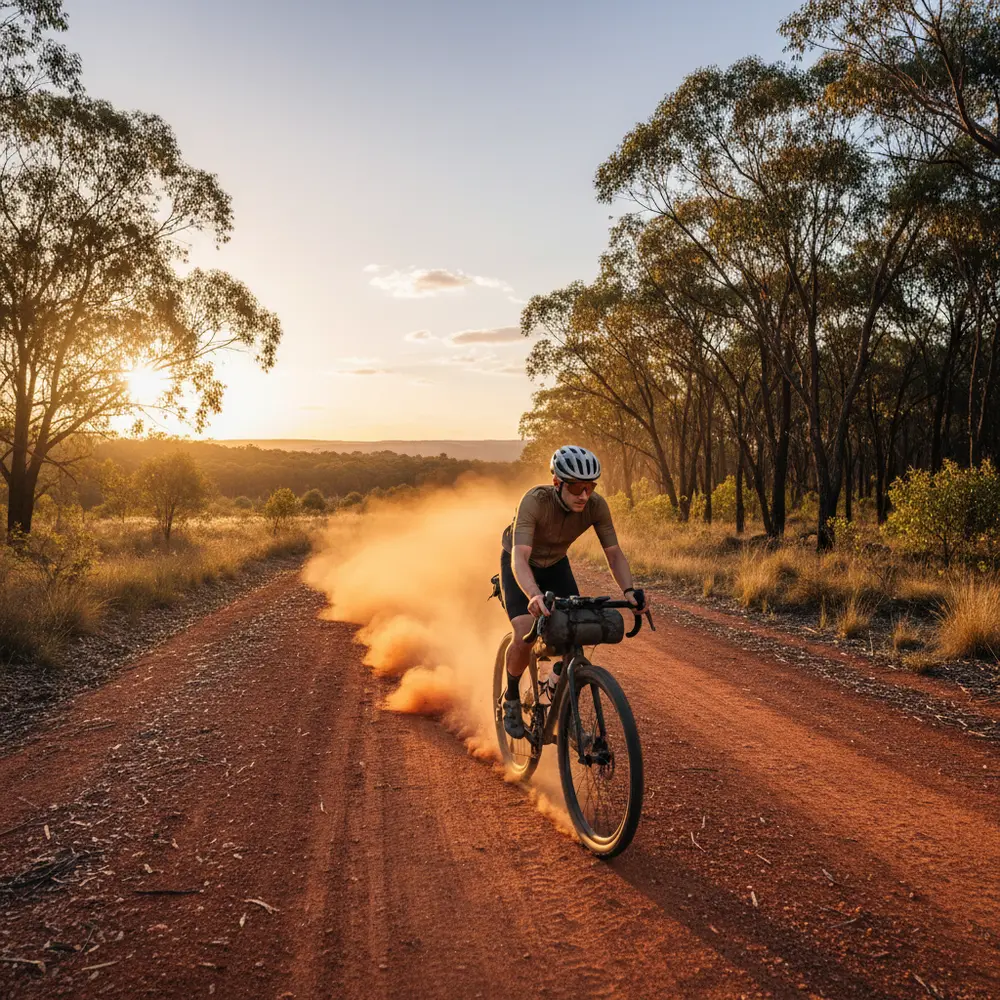
Australia is one of the best places in the world to ride a gravel bike, and most road cyclists have no idea what they are missing. From the red dirt fire trails of regional New South Wales to the forested tracks of the Munda Biddi in Western Australia, there is more rideable off-road terrain here than most riders will ever get through in a lifetime.
By the end of this article you will understand how gravel bikes differ from road and mountain bikes, what specs matter for Australian conditions, and whether a gravel bike makes sense for the kind of riding you actually do. You will also get a practical buyer checklist and a look at some local routes and events worth putting on your radar.
Note for Australian riders:
- Gravel bike pricing in Australia tends to sit higher than equivalent US or European retail, so factor in a 15 to 25 percent premium when comparing prices you see in international reviews.
- Fire trail access rules vary by state and land manager. Always check with your local national park or council before heading out on unfamiliar tracks.
- Australian summer heat adds a real workload on longer gravel rides. Sun protection, hydration carry capacity and tyre pressure management in the heat are all worth thinking about before you kit up.
At a glance:
- Gravel bikes sit between road and mountain bikes and handle mixed surfaces well.
- Tyre clearance of 40mm or more is the starting point for most Australian gravel and fire road riding.
- Frame materials range from aluminium at entry level to carbon and steel at mid-to-high price points.
- Tubeless tyre setup is increasingly standard and worth prioritising for puncture resistance on rough Australian surfaces.
Key takeaways:
- A gravel bike is genuinely versatile but is not a replacement for a dedicated road or mountain bike if you ride mostly sealed roads or technical singletrack.
- Gearing range matters more in Australia than many buyers expect, especially in hilly regions like the Blue Mountains, Adelaide Hills and the Snowy Mountains.
- Mounting points for bags and accessories make gravel bikes a practical choice for bikepacking and touring, not just day rides.
What Is a Gravel Bike and Why Is It Built for Adventure?
A gravel bike is a drop-bar bicycle designed to handle surfaces beyond sealed roads. It shares DNA with a road bike but is built with a more relaxed geometry, wider tyre clearance, and a sturdier frame that can soak up rough ground over long distances. The result is a bike that is genuinely capable on fire trails, gravel roads, rail trails and even rough tarmac, without completely sacrificing speed on the bitumen.
The category grew out of long-distance endurance racing in the United States but has taken off strongly in Australia over the last several years. The reason is simple. A huge proportion of Australian riding exists on mixed surfaces, and a gravel bike handles that reality better than a pure road bike does.
How Gravel Bikes Differ from Road and Mountain Bikes
If you are coming from road cycling, the differences are noticeable but not dramatic. A gravel bike has a slacker head tube angle, longer wheelbase and more tyre clearance. These changes make it more stable at speed on loose surfaces and more comfortable over long days in the saddle. The trade-off is that it feels slightly less responsive on sealed climbs and in tight corners compared to a dedicated road bike.
Compared to a mountain bike, a gravel bike is lighter, more efficient on flat and rolling terrain, and much better on sealed road sections. It is not designed for technical singletrack, rock gardens or significant drops. Think of it this way: a mountain bike is built for what is under your wheels, while a gravel bike is built for where those wheels will take you over a full day of mixed riding.
For a detailed technical comparison, Cycling Weekly's gravel bike vs road bike breakdown is worth a read before you head to the shop.
| Bike Type | Best Surface | Tyre Width (typical) | Drop Bars | Mounting Points |
|---|---|---|---|---|
| Road Bike | Sealed roads | 25 to 32mm | Yes | Minimal |
| Gravel Bike | Mixed: gravel, fire roads, tarmac | 38 to 50mm | Yes | Many: frame, fork, top tube |
| Mountain Bike | Off-road, singletrack, technical trails | 2.2 to 2.5 inches | No | Moderate |
Why Gravel Bikes Suit Australian Riding Conditions
Australia has an unusually high ratio of unsealed to sealed road, particularly once you get out of major cities. Rail trails, fire service roads and old farming tracks criss-cross most states, and a lot of them are rideable on a gravel bike with the right tyre choice. The terrain diversity here is also remarkable, from the wet and rooty forest trails of East Gippsland to the dry, loose gravel of the Flinders Ranges.
The heat is also a real factor. Long gravel rides often take you away from convenience stores and shade for extended stretches. A gravel bike typically allows you to carry more water and gear than a road bike through its additional mounting points. That practical capacity matters a lot in Australian conditions.
The Terrain You Can Tackle: Fire Trails, Dirt Roads and Beyond
Most Australian fire trails are accessible to cyclists, though rules do vary by state and land manager, so checking locally before you go is always the right move. On a gravel bike with appropriate tyres, the majority of maintained fire trails in national parks and state forests are very manageable.
Rail trails are another major asset for gravel riders in Australia. Many run on compacted gravel or crushed rock surfaces and are well maintained. The Rail Trails Australia directory lists trails across every state and territory and is a useful planning tool. In Victoria alone there are dozens of options suitable for a gravel bike, and the Bicycle Network rail trail guide covers many of them with surface and difficulty details.
For those chasing something bigger, the Munda Biddi Trail in Western Australia stretches over 1,000 kilometres through the state's southwest forests. It is one of the world's longest off-road cycling trails and a benchmark for what adventure riding in Australia can look like on a well-specced gravel or light trail bike.
Key Features to Look For in a Gravel Bike
Not all gravel bikes are built the same. Knowing which specs actually matter for Australian riding will save you from spending money in the wrong places.
Frame Geometry, Tyre Clearance and Gearing Explained
Tyre clearance is the first thing to check. For most Australian gravel and fire road riding, you want a frame that clears at least 40mm tyres, and ideally 45mm or more. Wider tyres run at lower pressures absorb more vibration, roll better over loose ground and give you more grip. Going narrower than 38mm on typical Australian fire trail surfaces is a compromise you will feel.
Gearing is often overlooked by riders coming off road bikes. Australian gravel riding regularly involves significant climbing, particularly in the regions that attract the most riders: the Blue Mountains, the Adelaide Hills, the Snowy Mountains and the Victorian highlands. A 1x drivetrain (a single front chainring paired with a wide-range rear cassette) keeps things simple and reduces mechanical complexity on the trail. A 2x setup (two front chainrings) gives you more total range and finer steps between gears, which some riders prefer for long climbs. Neither is universally better. It depends on your terrain and your fitness. For more on this trade-off, BikeRadar's gravel bike buyer guide covers 1x versus 2x in practical detail.
Frame material is a common question. Here is a straightforward summary:
- Aluminium: Common at entry to mid level, stiff and durable, can feel harsher on rough surfaces but works well.
- Steel: Heavier than aluminium but absorbs trail vibration well, repairable in regional areas, favoured by long-distance tourers.
- Carbon: Light and well-damped, typically found on mid to high-end bikes, more expensive to repair if damaged.
Mounting Points, Drop Bars and Comfort Over Long Distances
Mounting points are one of the most practical differentiators of a gravel bike. Look for mounts on the fork legs, down tube, top tube and seat tube if you plan to carry gear for bikepacking or longer rides. Even for day rides in Australian heat, the ability to carry two or three water bottles makes a real difference.
Drop bars give you multiple hand positions across a long ride, which reduces fatigue significantly compared to flat bars. Gravel-specific drop bars are often flared at the ends, giving better control and leverage on rough descents. Most riders crossing over from road bikes adapt quickly.
Dropper post compatibility is worth checking if you plan to ride more technical terrain. Not essential, but useful on steeper descents. Tubeless tyre readiness is increasingly standard across mid and upper-range gravel bikes and is worth prioritising. Tubeless lets you run lower pressures without pinch flat risk and seals small punctures automatically, which is genuinely useful on rough Australian surfaces.
What to Spend: Gravel Bike Price Ranges in Australia
Gravel bikes in Australia generally sit across three broad price tiers. Entry-level bikes with aluminium frames and reliable but basic groupsets start around $1,500 to $2,500 AUD. Mid-range bikes, often with better geometry, wider tyre clearance and improved components, typically fall between $2,500 and $5,000 AUD. High-end carbon builds with top-tier drivetrains go well above that. For a local perspective on pricing and what is available through Australian retail, the Pushys gravel bike buying guide is a practical starting point.
For most intermediate riders who are mixing road days with weekend fire trail or rail trail riding, the $2,500 to $4,000 AUD range delivers a very capable bike without overspending. Spending more buys you weight savings and component refinement, not a fundamentally different riding experience.
Setting Up Your Gravel Bike for Australian Conditions
Buying the bike is just the start. Setting it up for Australian riding conditions makes a real difference to how it performs and how you feel at the end of a long day.
- Tyres first: Fit the widest tyre your frame comfortably clears and convert to tubeless if the bike supports it.
- Tyre pressure: Run lower pressures than you would on a road bike. The right pressure depends on your weight, terrain and tyre width. Experiment and keep notes.
- Water carry: Fit at least two bottle cages and consider a frame bag or feed bag for longer rides away from services.
- Sun protection: Arm sleeves, neck coverage and high-SPF sunscreen are non-negotiable on long Australian summer rides. Factor this into your kit before you ride.
- Saddle and bar position: Gravel riding puts you in the saddle for longer stretches than typical road rides. Get a proper fit if you are planning any serious distance.
- Spare kit: Carry more than you would on a road ride. A spare tube, plugs, a multi-tool and a small pump are the minimum. Remote fire trails can leave you a long way from help.
Popular Gravel Routes and Events in Australia Worth Knowing About
The gravel riding scene in Australia has grown quickly, and there are now genuine landmark events and routes worth building towards. The Dirty Deeds gravel event in the Snowy Mountains of New South Wales is one of the most well-regarded on the calendar. It runs multiple distance options across demanding terrain that includes long climbs and open fire road descents. If you are looking for a benchmark for what a gravel bike needs to do in Australia, Dirty Deeds is a good reference point.
The Munda Biddi Trail in WA is the obvious choice for anyone drawn to multi-day adventure riding. The rail trails of Victoria offer more accessible options for riders building their confidence or planning a weekend away. The Murray to Mountains Rail Trail and the Great Victorian Rail Trail are both well-regarded and gravel-bike friendly.
The gravel community in Australia is active and growing. Strava segments on local fire trails, Facebook groups and local cycling clubs are all good ways to find out who else is riding gravel in your area and what routes are worth your time. Connecting with other riders locally is one of the quickest ways to get useful, current intel on trail conditions and access.
Common Mistakes When Buying a Gravel Bike
- Prioritising weight over tyre clearance. A lighter bike with limited tyre clearance will be outperformed on Australian gravel by a heavier bike with the right rubber fitted.
- Underestimating gearing needs. Australian gravel rides frequently involve long climbs. Do not assume your road bike gearing will translate directly.
- Skipping tubeless. Punctures on remote fire trails are more than an inconvenience. Tubeless setup is worth doing before your first proper ride.
- Buying too road-biased a geometry. Some bikes marketed as gravel bikes are essentially road bikes with slightly wider tyre clearance. Check the geometry numbers and compare.
- Ignoring mounting points. If you plan to carry gear, check for mounts before you commit to a bike. Adding them later is difficult.
- Not factoring in Australian heat. A bike that works brilliantly in a European climate review may need meaningful setup changes for a long Australian summer ride.
If You Are New to Gravel Riding
- Start on well-maintained rail trails before tackling fire roads. The surfaces are more forgiving and the navigation is simpler.
- Ride with someone who knows the terrain. Local knowledge about surface conditions and water access is genuinely valuable.
- Keep your first few rides shorter than you think you need to. Mixed surfaces are more physically demanding than sealed roads at the same distance.
- Learn basic tubeless tyre repair before you head out. Practice at home so you are not doing it for the first time on a remote track.
- Do not overthink the bike spec at first. A decent aluminium gravel bike with good tyres will take you further than you expect.
If You Have Ridden Road or Mountain Bikes Before
- Your road fitness transfers well but expect more upper body fatigue early on. Gravel riding engages your core and arms more than sealed road riding.
- If you are coming from mountain biking, the efficiency gain on long flat sections will be immediately obvious. The trade-off is less technical capability on gnarly terrain.
- Road cyclists will need to adjust their cornering instincts on loose surfaces. Slow in, smooth out, and trust wider tyres at lower pressures.
- Experienced road riders often find a gravel bike doubles effectively as a commuter or touring bike, reducing the need for a separate bike in the garage. Check out our bike types guide for more on how different bikes can serve multiple purposes.
- If you already own a quality road bike, do not rush to replace it. A gravel bike is a complement to a road bike, not always a direct replacement. Read our thoughts on cycling gear and equipment to help you think through what you actually need.
Gravel Bike Buyer Checklist
Before you commit to a purchase, run through this list. It will sharpen your thinking and help you avoid buying a bike that does not suit your actual riding.
- Intended terrain: Mostly fire roads and gravel, sealed roads with occasional gravel, or genuinely mixed including some singletrack? Your answer shapes every other decision.
- Tyre clearance: Does the frame clear at least 40mm? Ideally 45mm or more for typical Australian gravel surfaces.
- Frame material: Aluminium for value and durability, steel for comfort and repairability, carbon for weight and ride quality if budget allows.
- Mounting points: Does the bike have mounts for at least two bottle cages, plus fork and frame bag options if you plan to tour or bikepack?
- Dropper post compatibility: Not essential, but worth checking if you plan to ride steeper descents.
- Gearing range: Is the gearing low enough for the climbs in your area? Check the cassette range and front chainring size before you buy.
- Tubeless readiness: Are the wheels and tyres tubeless compatible? If not, factor in the cost of converting.
- Local dealer or service access: Can you get the bike serviced locally? Warranty support and parts availability matter more for gravel bikes that take more mechanical punishment.
Frequently Asked Questions
Is a gravel bike worth it if I mostly ride on sealed roads?
Probably not as your primary bike. A gravel bike is slower and less efficient on sealed roads than a comparable road bike. If 80 percent or more of your riding is on tarmac, a road bike is the better tool. If you regularly ride mixed surfaces or want to explore fire trails and rail trails, a gravel bike earns its place quickly. For more on finding the right bike for your riding style, visit our bike types section.
What tyre width do I need for Australian gravel riding?
For most fire road and gravel rail trail riding in Australia, 40mm is a workable minimum and 43 to 47mm gives you a more comfortable and confident ride. On particularly rough or loose surfaces, some riders go wider still. Narrower than 38mm is a noticeable compromise on anything loose or corrugated.
Are 1x drivetrains enough for hilly Australian gravel riding?
Yes, for most riders. Modern 1x systems with a wide-range cassette provide enough range for significant climbing, including the grades you will find at events like Dirty Deeds in the Snowy Mountains. Riders who prefer finer gear steps and maximum range for mixed road and gravel riding may prefer a 2x setup. Neither is a bad choice if the gearing range is appropriate for your terrain.
Is tubeless setup standard on gravel bikes sold in Australia?
It depends on the price point. At mid-range and above, tubeless-ready wheels and tyres are increasingly standard. At entry level, some bikes still ship with clincher tyres and tubes. Tubeless is worth prioritising. It allows lower tyre pressures, reduces pinch flats and seals small punctures on the trail. It is one of the most practical upgrades available if your bike does not come set up that way.
Can a gravel bike work as a commuter or touring bike?
Yes, and this is one of the genuinely practical reasons to consider one. The mounting points, relaxed geometry and tyre clearance make gravel bikes well suited to commuting on mixed urban surfaces, loaded touring and bikepacking. For an intermediate rider without room or budget for multiple bikes, a gravel bike is one of the most versatile single options available. Have a look at our contact page if you have questions about which type of bike suits your situation best.
Wrapping Up
- Gravel bikes are genuinely suited to Australian riding conditions, with the terrain diversity, distance and heat all pointing toward the versatility the category offers.
- Tyre clearance, gearing range and tubeless readiness are the three specs that matter most for Australian riding. Do not compromise on these.
- There is a real and growing local scene, including well-run events, quality rail trails and iconic long-distance routes that reward a capable gravel setup.
- A gravel bike is not a magic solution. It will not outperform a road bike on sealed roads or a mountain bike on technical trails, but for mixed-surface adventure riding it is hard to beat.
- Take the buyer checklist seriously before you spend. The right bike for your terrain and riding habits will serve you far better than the most expensive one on the shop floor.
This is educational content, not financial advice.