Getting the kids to school by bike is one of those ideas that sounds great in theory but gets complicated fast once you start looking at the options. Cargo bikes and bike trailers come in more shapes and sizes than most beginners expect, and picking the wrong one for your situation can be an expensive lesson.
By the end of this article you will know the difference between the main cargo bike and trailer formats, understand the Australian road rules that apply, and have a clear framework for deciding which setup suits your family. We will also cover what to budget, what to check before you buy, and how to build your confidence on that first ride.
Note for Australian riders:
- Road rules for child passengers vary between states and territories. Always check with your state transport authority before riding with kids on board.
- All bicycle riders and passengers in Australia must wear an approved helmet. This includes children in bike trailers in most states.
- Electric cargo bikes must have a motor with a maximum continuous rated power of 250W and pedal-assist that cuts out at 25 km/h to be classified as a bicycle under Australian federal standards. State rules may add further conditions.
At a glance:
- Cargo bikes carry kids on the bike itself. Trailers tow behind your existing bike.
- Trailers are cheaper to buy and easier to store, but add length and handling quirks.
- Cargo bikes cost more and take up more room, but offer a more integrated, stable ride.
- Electric assist makes a big difference on a heavy cargo bike, especially on hills.
Key takeaways:
- Your budget, storage space, and number of children are the three biggest decision factors.
- Second-hand cargo bikes and trailers are widely available in Australia and worth considering.
- Never confuse a child passenger trailer with a cargo-only trailer. They are built to different standards.
What Are Cargo Bikes and Bike Trailers?
A cargo bike is a purpose-built bicycle designed to carry extra load, whether that is kids, groceries, or both. A bike trailer is a separate wheeled attachment you tow behind a standard bike using a hitch. Both solve the same problem, but they do it very differently, and each has genuine trade-offs.
If you are new to the idea, think of it this way. A cargo bike replaces your regular bike entirely. A trailer adds carrying capacity to the bike you already own. That distinction matters a lot when you are working out what to spend and where to park it.
Cargo Bikes - Longtails, Longjohns and Box Bikes Explained
There are three main cargo bike formats you will come across in Australia. Understanding the differences upfront will save you a lot of time at the bike shop. For a detailed breakdown of each format, cargo bike types explained by Cycling Weekly is worth a read.
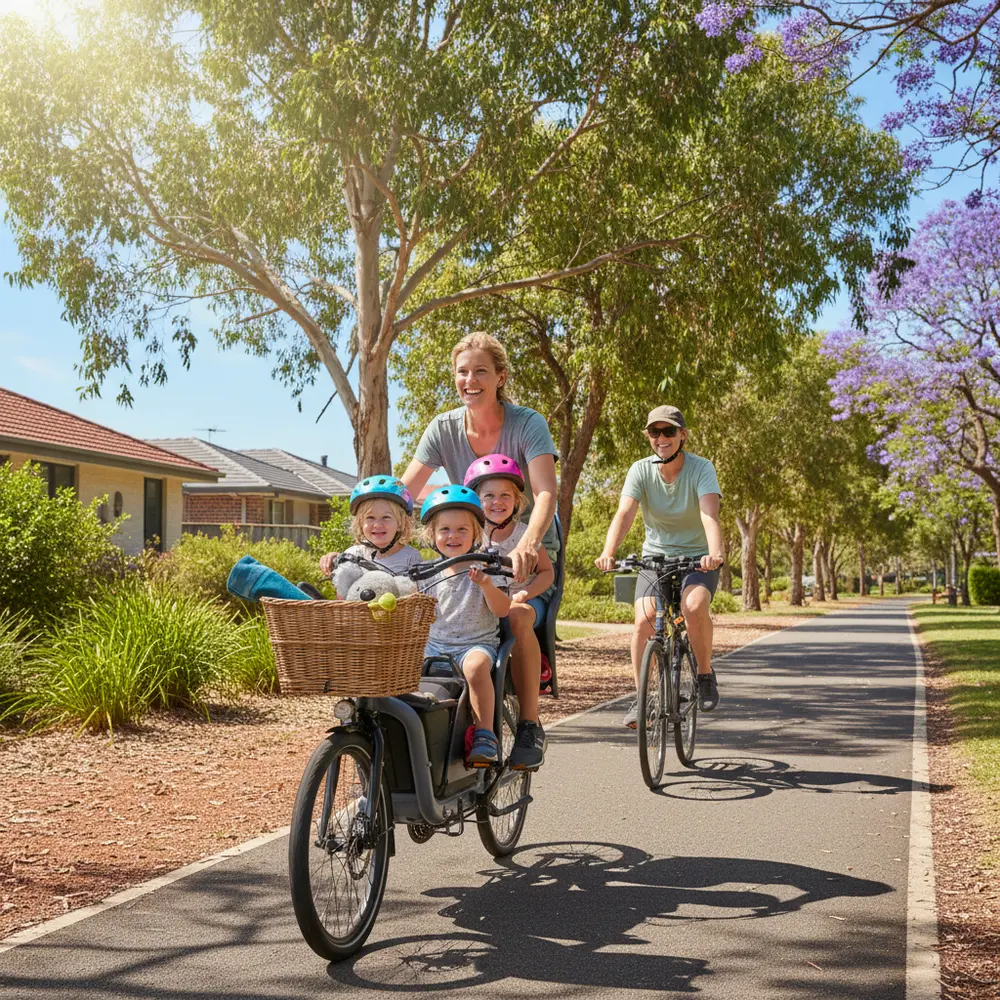
- Longtail: Looks like a regular bike with an extended rear rack. Kids sit on the back. Handles similarly to a standard bicycle, which makes it the easiest format for beginners to get used to. Generally the most common type in Australian suburbs.
- Longjohn (front-loader): The cargo box sits between the handlebars and the front wheel. Kids face forward and you can see them while riding. Steering feels very different to a normal bike and takes a few rides to get comfortable.
- Box bike (bakfiets): A Dutch-style bike with a large wooden or plastic box at the front. Great for carrying multiple kids plus bags. Heavier and wider than the other formats, which can be tricky in tight spaces or on narrow paths.
Payload limits are set by the manufacturer rather than regulated by Australian law, so always check the specific model you are considering. Most longtails are rated to carry between 100 kg and 200 kg total, including rider, kids, and cargo. Box bikes tend to have similar or higher limits but are significantly heavier to start with.
Bike Trailers - Single, Double and Convertible Options
A child bike trailer attaches to the rear axle or frame of your existing bike and rolls on two wheels. Most models fold flat for storage, which is a real advantage if you live in a unit or have a small garage. Key trailer types include:
- Single trailer: Fits one child, lighter to tow, easier to handle through corners and on shared paths.
- Double trailer: Fits two children side by side, more stable in a rollover scenario due to the wider wheelbase, but adds significant width and wind resistance.
- Convertible trailer: Can switch between a trailer, a pram, or a jogger. Useful if you want one piece of gear that works off the bike too.
One thing beginners often get wrong: not all trailers are rated for child passengers. A cargo-only trailer is built to carry gear, not kids. Always check that the trailer you are buying is specifically certified as a child passenger trailer, with harness systems, rollover protection, and appropriate ventilation. CHOICE Australia's bike trailer review is a good starting point for comparing what is available locally.
Cargo Bike vs Bike Trailer - Which One Suits Your Family?
There is no single right answer here. The better choice depends on your budget, how many kids you are carrying, where you live, and how much space you have at home. Use the decision tree below to work it out quickly.
Simple Decision Tree
Work through these questions in order and stop when you hit a recommendation.
- How many children are you carrying? If three or more, a box bike or longtail with accessories is your most practical option. If one or two, keep going.
- What is your budget? Under $500: look at a single or double child trailer. $500 to $2,000: consider a quality double trailer or a second-hand longtail. $2,000 and above: a new longtail or longjohn is realistic, and an electric version becomes achievable at the higher end.
- How much storage space do you have? Small apartment or unit: a folding trailer wins on space every time. Garage or shed: a cargo bike is manageable. No secure off-street parking: a trailer you can bring inside is far more practical.
- What are your typical rides like? Flat suburban routes under 10 km: any format works. Hilly terrain or longer distances: electric assist on a cargo bike makes a major difference. Mixed paths and roads: a longtail or trailer both handle this well.
- Do you need electric assist? Yes and budget allows: electric longtail. Yes but budget is tight: second-hand electric longtail or a quality trailer on a geared bike. No preference: a non-electric longtail or a double trailer are both solid starting points.
Comparing Cost, Storage, Safety and Everyday Practicality
| Factor | Cargo Bike | Bike Trailer |
|---|---|---|
| Entry price (AUD) | From around $1,500 second-hand, $3,000+ new | From around $300 for a basic single trailer |
| Storage space needed | Large. Similar footprint to a motorcycle. | Compact when folded. Can fit in a cupboard. |
| Handling for beginners | Longtail is close to a normal bike. Box bike takes adjustment. | Adds length. Reversing and tight turns need practice. |
| Safety | Kids are on the bike with you. Stable platform. | Sits low to ground. Double trailers are wide and stable. |
| Visibility of children | Easy on a longjohn. Harder on a longtail. | Behind you. Use a flag and mirror for awareness. |
| Second-hand availability | Good. Facebook Marketplace and Gumtree regularly list cargo bikes. | Very common. Often sold once kids grow out of them. |
Key Things to Look For When Buying in Australia
Weight Limits, Age Suitability and Australian Road Rules for Child Passengers
Before you buy anything, check the manufacturer's weight and age ratings for the specific product. Most child bike trailers are rated for children from around 12 months (once they can hold their head up in a helmet) up to a maximum combined child weight that varies by model. Cargo bikes are similar: the rear seat or box will have a maximum child weight rating separate from the total payload.
On the road rules side, requirements differ between Australian states and territories. In New South Wales, for example, NSW road rules for cycling with children cover helmet requirements, age restrictions, and how trailers must be attached. Victoria has similar requirements outlined by VicRoads cycling with passengers. Always check your own state's rules before you ride.
A few practical points that apply broadly across Australia:
- Helmets are required for all child passengers, including those in bike trailers, in most states.
- Trailers should be securely attached and not exceed the width permitted on shared paths in your area.
- A safety flag on a trailer is strongly recommended and may be required depending on your state. Check lighting requirements for riding in low-light conditions.
- The child must be securely harnessed inside the trailer at all times.
For a broader overview of cycling with kids in Australia, the Bicycle Network has clear, beginner-friendly guidance that covers the key safety points without the legal jargon.
Electric Cargo Bikes - Are They Worth It for Australian Families?
An electric cargo bike adds a motor to assist your pedalling. For a fully loaded cargo bike with two kids and a bag of groceries, that assist is not a luxury on anything with an incline. It is the difference between arriving home feeling okay and arriving completely cooked.
Under Australian federal standards, an electric bicycle must have a motor with a maximum continuous rated power of 250W and pedal-assist that cuts out at 25 km/h to be legally classified as a bicycle. If it meets those requirements, you do not need registration or a licence to ride it. Throttle-only e-bikes sit in a different category and face varying state rules, so if you are considering one, check with your state transport authority first.
The honest cost picture for electric cargo bikes in Australia looks roughly like this:
- Entry-level electric longtail (new): Around $4,000 to $6,000 AUD.
- Mid-range electric longtail or longjohn (new): Around $6,000 to $10,000 AUD.
- Premium or specialist electric box bikes: Can exceed $12,000 to $15,000 AUD.
- Second-hand electric cargo bikes: Regularly listed on Facebook Marketplace and Gumtree in major cities, often between $2,000 and $5,000 depending on age and condition.
If the price of a new electric cargo bike is stopping you from getting started, a second-hand option is a realistic path. Do your checks on battery health and service history before committing, the same as you would with any used electric vehicle.
How to Get Started with Family Cycling
The biggest barrier for most families is the first ride. Everything feels different with extra weight and passengers on board, and that is completely normal. Cycling Australia's family cycling resources are a good starting point if you want structured guidance and local community links.
If you are brand new to cargo bikes or towing a trailer:
- Do your first few rides without kids on board. Get used to the handling before adding passengers.
- Find a quiet car park or low-traffic path for your practice runs.
- Practice stopping distances. A loaded bike or trailer takes longer to pull up than your regular bike.
- Try a few gentle corners and low-speed manoeuvres before heading onto shared paths.
- Check your hitch connection or load every time before you set off.
If you have ridden with kids before but are new to this type of setup:
- A longtail will feel the most familiar if you have ridden a rear child seat before.
- A box bike or longjohn will need a dedicated settling-in period of several rides before it feels natural.
- Adjust your speed on corners. The wider or longer your setup, the more space you need.
- Consider your route carefully for the first few weeks. Stick to paths and quiet streets while you build confidence.
Common Mistakes to Avoid
- Buying a cargo trailer instead of a child passenger trailer. These are not the same product and are not built to the same safety standards.
- Skipping the test ride. A cargo bike handles nothing like a standard bike, especially a longjohn. Always ride before you buy if you can.
- Underestimating storage. A non-folding cargo bike needs a proper dedicated space. Measure before you commit.
- Ignoring second-hand options. New cargo bikes are expensive. The second-hand market in Australian cities is active and a good-condition used bike can save you thousands.
- Not checking state-specific road rules. Assuming that what applies in NSW applies in Queensland or WA is a common mistake. Rules do differ.
- Overloading the bike or trailer. Manufacturer weight limits exist for structural and safety reasons. Do not exceed them.
Maintenance and Safety Checks You Should Do Regularly
A cargo bike or trailer with kids on board needs to be roadworthy every time you roll out. This is not the place to defer maintenance. Build these into a quick pre-ride routine and a monthly check.
Before every ride:
- Check tyre pressure on all wheels, including trailer wheels if applicable.
- Confirm the trailer hitch or child seat attachment is secure and correctly locked.
- Test the brakes before you leave your driveway.
- Make sure all kids are helmeted and harnessed before moving.
Monthly checks:
- Inspect the hitch and coupling point for wear, cracks, or play in the connection.
- Check the trailer frame for any signs of damage, especially at weld points.
- Lubricate the chain and check for wear.
- Check the brake pads. Cargo bikes are heavier and stop harder, so pads wear faster than on a regular bike.
- Inspect any cargo straps, harnesses, or quick-release mechanisms for fraying or degradation.
If you want to ask about maintenance or get advice specific to your setup, feel free to reach out. It is worth doing a professional service once a year on a cargo bike, more often if you are riding daily.
Frequently asked questions
Do children in bike trailers need to wear a helmet in Australia?
In most Australian states, yes. Helmet laws apply to all bicycle riders and passengers, including children in trailers. The specifics can vary by state, so check your local road rules. As a practical matter, always put a helmet on a child in a trailer regardless of what the rules say in your area.
What is the minimum age for a child to ride in a cargo bike or bike trailer?
There is no single national minimum age rule in Australia. Most manufacturers recommend trailers for children from around 12 months old, once they can support their own head while wearing a helmet. Some states have age-related rules for bicycle-mounted seats. Always check your state transport authority and the manufacturer's guidance before putting an infant in any cycling setup.
Can I use any bike trailer for carrying my kids?
No. You need a trailer that is specifically rated and certified for child passengers. Cargo-only trailers are not built with harness systems, rollover protection, or the ventilation that child passenger trailers require. Check the product specifications carefully and look for a trailer that meets relevant safety standards.
Is a second-hand cargo bike a safe option to buy?
It can be, if you do the right checks. Look for any cracks in the frame, especially at weld points and the cargo mounting areas. Check the hitch system if it is a trailer. Have the bike inspected by a bike mechanic before your first ride with kids on board. Buying from a private seller on Facebook Marketplace or Gumtree is common in Australia and can save you a significant amount compared to buying new.
Do electric cargo bikes need registration in Australia?
No, as long as the motor meets the national standard of a maximum continuous rated power of 250W and the pedal-assist cuts out at 25 km/h. A bike meeting those specifications is classified as a bicycle under Australian federal law and does not require registration or a licence. Throttle-only models may be treated differently depending on the state, so check with your state transport authority if you are considering one.
Wrapping up
Family cycling with a cargo bike or trailer is genuinely practical once you have the right setup for your situation. Here is a quick summary to take away:
- Trailers are cheaper and easier to store. Cargo bikes are more integrated and better for longer, regular use.
- Your budget, number of children, storage space, and terrain are the four things to nail down before you buy anything.
- Always check your state's road rules for child passengers before your first ride.
- Electric assist is worth the extra cost if you are doing hilly terrain or regular longer rides with a full load.
- The second-hand market in Australia is active. Do not rule it out if the price of a new cargo bike is a barrier.
If you are looking for more guidance on types of bikes for Australian riders or want to explore beginner cycling tips for getting started safely, we have got plenty more on the site. And if you have a specific question about your setup, get in touch and we will point you in the right direction.
This is educational content, not financial advice.