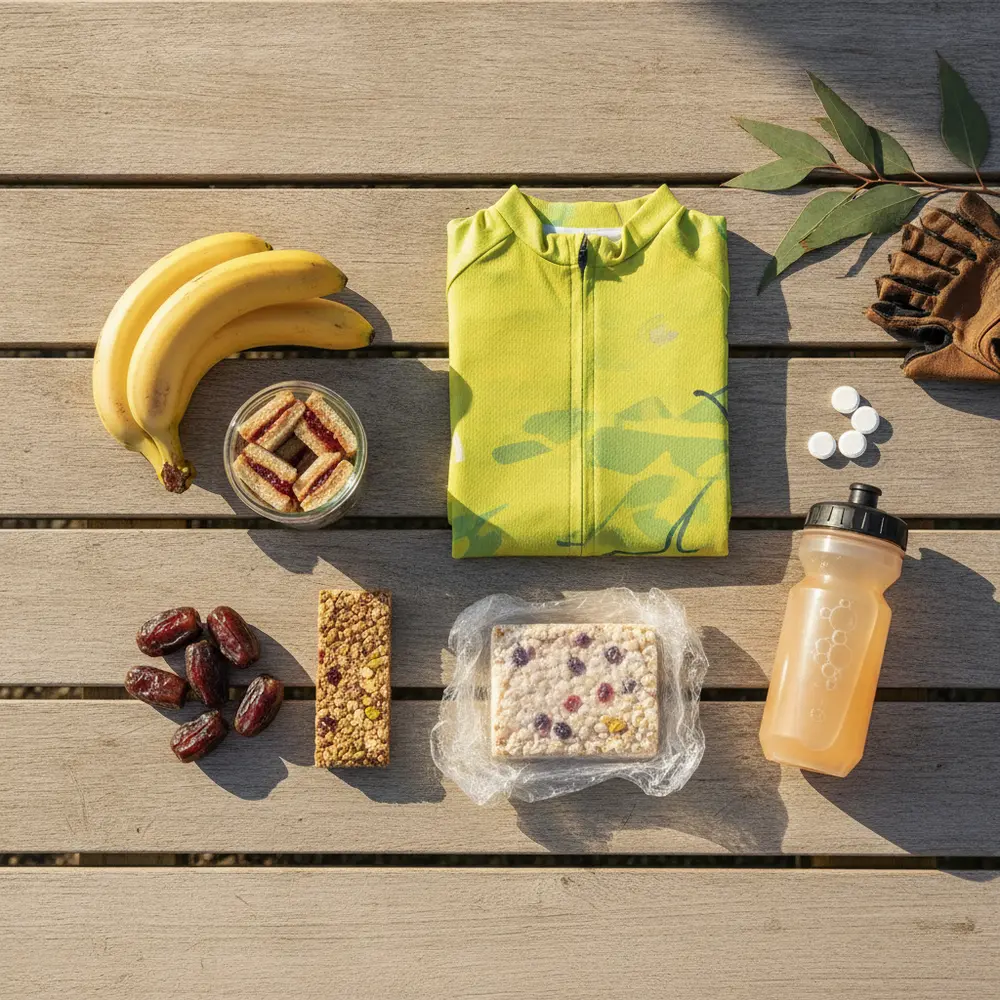
Losing weight while cycling is entirely doable, but most riders get it wrong by cutting too many kilos from their plate instead of being smart about when and what they eat. Get the balance right and you will drop body fat, keep your legs fresh, and still be competitive on the Saturday morning club ride.
By the end of this article you will have a clear framework for building a four-week cycling weight loss plan, know exactly how to fuel your rides without bonking, and understand which training sessions actually move the needle on fat loss.
Note for Australian riders:
- Hot Australian summers significantly increase sweat rate and calorie burn, so fluid and electrolyte needs are higher than generic overseas plans suggest.
- Familiar local foods like Weet-Bix, Vegemite toast, and eggs are perfectly solid options for fuelling rides. No need to import anything exotic.
- If you are already lean, training heavily, or have a history of disordered eating, book in with an accredited sports dietitian before changing your eating habits. Sports Dietitians Australia has a find-a-dietitian tool to help you locate someone local.
At a glance:
- A conservative calorie deficit of 250 to 500 calories per day is the sweet spot for cyclists who want to lose fat without losing fitness.
- Protein intake matters more than most riders realise, especially when in a calorie deficit.
- Zone 2 rides and one weekly interval session form the backbone of an effective fat-loss training week.
- Tracking body weight weekly, alongside energy levels and ride quality, gives you a much clearer picture than the scales alone.
Key takeaways:
- Fuel harder rides with carbohydrates. Save the calorie trimming for rest days and easy sessions.
- A realistic and healthy rate of weight loss for an active cyclist is around 0.5 kilograms per week.
- Starving yourself on the bike does not accelerate fat loss. It tanks your performance and can stall progress entirely.
Why Cycling Is One of the Best Tools for Sustainable Weight Loss
Cycling sits in a sweet spot for fat loss. It is low impact, so you can do it day after day without wrecking your joints the way running can. It also scales well, meaning a two-hour ride burns a meaningful amount of calories without leaving you destroyed for the rest of the week.
The Better Health Channel notes that cycling is an effective aerobic exercise for weight management precisely because it is sustainable over the long term and adaptable to different fitness levels. That adaptability is the key. You can dial intensity up or down depending on your training phase, your energy levels, and your goals.
What the Research Actually Says About Cycling and Fat Loss
The honest answer is that exercise alone rarely produces significant weight loss without some attention to what you eat. Cycling burns calories, but it also makes you hungry. If you ride for two hours and then eat back everything you burned, you will stay exactly where you are.
What cycling does brilliantly is improve your body's capacity to burn fat as a fuel source over time. Research published in the Journal of Sport and Health Science confirms that sustained aerobic exercise increases fat oxidation and improves metabolic health, with consistency of training being more important than any single session's intensity. The practical takeaway: ride regularly, keep the intensity varied, and manage your food with a light but deliberate hand.
The Problem With Starving Yourself While Riding
Here is where a lot of well-meaning riders come unstuck. They decide to lose weight, slash their food intake, and then wonder why they feel terrible on the bike, get dropped on climbs they used to handle fine, and stop making progress after a few weeks.
Cutting calories too aggressively while training hard creates a condition called Relative Energy Deficiency in Sport, or RED-S. According to research published in BMJ Open Sport and Exercise Medicine, RED-S affects both male and female athletes and is not limited to elite riders. Recreational cyclists who significantly under-fuel relative to their training load are at real risk.
How Under-Fuelling Kills Performance and Stalls Fat Loss
When your body does not get enough energy to cover both your training demands and basic physiological functions, it adapts by doing things you do not want. Hormones that regulate metabolism and muscle repair get disrupted. Your immune system takes a hit. Your mood suffers. And critically, your body starts holding onto fat rather than burning it, because it thinks it is in a crisis.
The warning signs to watch for include:
- Persistent fatigue that does not improve with rest.
- Getting sick more often than usual.
- Flat, heavy legs that used to feel fine on the same rides.
- Mood dips and poor concentration.
- No improvement or actual decline in performance over several weeks.
If any of those sound familiar, eat more before you do anything else. Then consider talking to a sports dietitian.
Building Your Cycling Nutrition Plan for Weight Loss
How to Calculate a Sensible Calorie Deficit as a Cyclist
Start with your Total Daily Energy Expenditure (TDEE), which accounts for your base metabolic rate plus all activity including your rides. There are plenty of free TDEE calculators online that let you input your ride frequency and duration. Once you have that number, create a deficit of 250 to 500 calories per day. That is the range recommended by Sports Dietitians Australia for athletes who want to lose weight without compromising training quality.
The American College of Sports Medicine recommends a maximum weight loss rate of around 0.5 to 1 kilogram per week for athletes. Faster than that and you risk losing muscle, which is the last thing you want as a cyclist. Patience here genuinely pays off.
Here is a quick reference for how to think about your deficit on different types of days:
| Day Type | Calorie Approach | Carbohydrate Priority |
|---|---|---|
| Rest day | Modest deficit, no need to eat back calories | Lower carbs, focus on protein and vegetables |
| Easy Zone 2 ride (under 90 min) | Small deficit still achievable | Light carb intake, real food fuelling |
| Interval or threshold session | Fuel well, deficit is minimal on this day | Carbs before and during if needed |
| Long ride (2+ hours) | Eat to perform, deficit is not the focus today | Carbs before, during, and after |
What to Eat Before, During, and After Rides
The Australian Institute of Sport is clear that carbohydrates are the primary fuel for moderate to high intensity cycling. Cutting carbs too aggressively will leave you hitting the wall, known to most riders as the bonk. That is not a fat-burning state. That is a performance disaster.
A practical approach for a 70 kg rider doing a 90-minute morning ride might look like this:
- Before the ride (60 to 90 min prior): Two slices of Vegemite toast, a small banana, and a coffee. Simple, fast-digesting, and enough to top up glycogen.
- During the ride (if over 75 minutes): One piece of fruit, a small rice cake, or a plain muesli bar. No need for gels unless you are riding hard.
- After the ride (within 30 to 60 minutes): Eggs on toast, Greek yoghurt with oats, or a chicken and rice bowl. Get your protein in here to support muscle repair.
On easy or rest days, reduce your carbohydrate intake and let protein and vegetables do more of the work. This approach, sometimes called periodised nutrition, is backed by the AIS as an effective body composition strategy for endurance athletes.
Training Smarter - Which Rides Actually Burn the Most Fat
Zone 2 Riding, Interval Sessions, and Their Role in Body Composition
Zone 2 is your conversational pace, the effort where you can speak full sentences without gasping. At this intensity, fat is the dominant fuel source. Sports Dietitians Australia confirms that fat oxidation is highest during low to moderate intensity exercise and decreases as intensity rises. That does not mean hard efforts are useless for fat loss. Interval sessions burn more total calories in less time and create an elevated metabolic rate after the session ends.
A balanced weekly structure for fat loss and performance looks like this:
- 2 x Zone 2 rides: 60 to 90 minutes each, easy pace, these build your fat-burning engine over time.
- 1 x Interval session: 45 to 60 minutes with efforts at threshold or above, burns calories efficiently and keeps fitness sharp.
- 1 x Long ride: 2 to 3 hours at an easy to moderate pace, the bread and butter of aerobic conditioning and total calorie burn for the week.
Note that fasted training, doing a ride before eating, can slightly increase fat oxidation during the session. However, it also carries a real risk of impaired performance and slower recovery. Most recreational riders are better off having a small amount of food before early morning rides and keeping the deficit elsewhere in the day.
Build Your 4-Week Cycling Weight Loss Plan - Step by Step
This is meant to be a starting framework, not a rigid programme. Adjust it based on how you feel after the first two weeks.
- Step 1 - Establish your baseline. Use a TDEE calculator to estimate your daily calorie needs accounting for your current ride volume. This is your starting number.
- Step 2 - Set a conservative deficit. Subtract 250 to 500 calories from your TDEE. Do not go lower than this on days when you are training.
- Step 3 - Structure your ride fuelling. Fuel harder sessions with carbohydrates before and during. On easy rides and rest days, reduce carbs and prioritise protein and vegetables.
- Step 4 - Plan your weekly ride mix. Aim for two Zone 2 sessions, one interval session, and one longer ride each week. Adjust based on your current fitness and schedule.
- Step 5 - Set a weekly check-in routine. Weigh yourself on the same day each week, same time, same conditions. Also note your energy level, ride quality, and sleep. All four together tell the full story.
- Step 6 - Review and adjust after four weeks. If you are losing around 0.5 kg per week and feeling good on the bike, the plan is working. If performance is dropping or you feel flat, eat a little more. If nothing is changing, tighten the deficit slightly on rest days first.
Protein - The Nutrient Most Cyclists Underestimate
When you are in a calorie deficit, protein does the heavy lifting of preserving the muscle you have worked hard to build. The AIS recommends endurance athletes consume between 1.4 and 1.7 grams of protein per kilogram of body weight per day, and notes that this can rise toward 2.0 grams per kilogram during periods of calorie restriction. For a 75 kg rider, that is roughly 112 to 150 grams of protein daily.
Good whole-food protein sources for Australian cyclists include:
- Eggs, whether scrambled, boiled, or as an omelette.
- Tinned or fresh fish, especially salmon and tuna.
- Lean chicken or turkey.
- Greek yoghurt and cottage cheese.
- Legumes like lentils and chickpeas, particularly useful for those eating less meat.
Spread your protein intake across the day in meals of around 20 to 40 grams rather than loading it all into dinner. That pattern supports muscle protein synthesis more effectively, according to the AIS.
Common Mistakes That Slow Down Weight Loss for Cyclists
Most riders hit the same handful of walls. Here is what to watch for:
- Eating back all ride calories. Cycling apps often overestimate calories burned. Use those numbers as a rough guide only, not a licence to eat a large pizza after every ride.
- Cutting carbs on hard training days. This is the quickest way to bonk, feel awful, and underperform. Save the carb reduction for rest days.
- Ignoring protein. Without enough protein, a calorie deficit means you lose muscle along with fat. That leaves you lighter but slower and weaker on the bike.
- Expecting fast results. Half a kilogram per week is a genuine, sustainable result. Expecting one to two kilograms per week will push you toward restriction that hurts your riding.
- Only tracking weight. Body weight fluctuates daily due to hydration, food volume, and hormonal cycles. A single weigh-in tells you almost nothing on its own.
- Skipping recovery. Poor sleep and under-recovery make it harder for your body to shift body fat. Recovery is not optional if weight loss is the goal.
Tracking Progress Without Obsessing Over the Scales
The scales measure one thing: total body weight. That includes water, food in your gut, muscle, and fat. On their own, they are a noisy signal. Combine your weekly weigh-in with these:
- How do your legs feel on rides compared to four weeks ago?
- Are you keeping up on the same climbs or segment efforts?
- Is your kit fitting differently, even if the scale has not moved much?
- How is your sleep and your general mood?
If the trend over four weeks is moving in the right direction across most of those measures, you are on track. Do not let a single bad weigh-in derail a plan that is working. Check out our guide on building a structured training plan and our piece on cycling nutrition fundamentals to complement what you are doing here.
If you are not sure where you currently sit on the spectrum from beginner to well-trained rider, our cycling fitness guide is worth a read before you start adjusting your training load significantly.
If You Are New to Structured Cycling Nutrition
Start simple. Do not overhaul everything at once.
- Pick one meal to improve, usually breakfast on ride days, and start there.
- Make sure you are eating something before rides longer than 60 minutes.
- Drink water consistently throughout the day, not just on the bike.
- Aim to eat enough protein at each meal. Two eggs, a tin of tuna, or a cup of Greek yoghurt all count.
- Give any change at least two to three weeks before judging whether it is working.
If You Have Already Tried Cycling for Weight Loss Before
If you have been at this for a while and progress has stalled, the issue is usually one of three things: your deficit has stopped being a deficit because your appetite has adjusted, your training load has plateaued, or you are not recovering well enough for your body to adapt.
- Recalculate your TDEE, your needs change as your body weight changes.
- Add one new training stimulus, a new interval format or a longer weekend ride, to give your body a fresh signal.
- Audit your sleep. Even one or two nights of poor sleep per week can meaningfully blunt fat loss.
- Consider whether you would benefit from a consultation with a sports dietitian to personalise your approach further.
- Check in with the Cycling Australia community for structured training events and group rides that add variety to your week.
And if you have questions about how to structure your riding or your food around a specific event goal, feel free to get in touch with us and we will point you in the right direction.
Frequently asked questions
How many calories should I cut per day as a cyclist trying to lose weight?
A deficit of 250 to 500 calories per day is the recommended range for active cyclists. This is enough to produce steady fat loss of around 0.5 kilograms per week without compromising training quality or muscle mass. Avoid cutting more than this on days when you have hard sessions planned.
Should I ride in a fasted state to burn more fat?
Fasted riding can slightly increase fat oxidation during the session, but the evidence does not support it as a reliable long-term fat loss strategy for most recreational riders. The risk of poor performance, muscle breakdown, and impaired recovery outweighs the marginal benefit for most people. A small, easily digested meal before your ride is usually the better call.
Are carbohydrates bad for cyclists trying to lose weight?
No. Carbohydrates are the primary fuel for cycling at moderate to high intensity. The strategy is not to cut carbs overall but to time them around your harder sessions and reduce them on easier days and rest days. This approach is sometimes called periodised nutrition and is recommended by the AIS for athletes managing body composition.
How much protein do I need when cycling in a calorie deficit?
The AIS recommends 1.4 to 1.7 grams of protein per kilogram of body weight per day for endurance athletes, rising toward 2.0 grams per kilogram during calorie restriction. For a 75 kg rider, that is roughly 112 to 150 grams per day. Spread it across meals rather than loading it into one sitting.
What is a healthy rate of weight loss for a cyclist?
Around 0.5 kilograms per week is the target. The ACSM recommends a maximum of 0.5 to 1 kilogram per week for athletes to minimise muscle loss. Faster than that usually means you are cutting too deep, which hurts recovery, performance, and long-term results. Slower is fine too. Sustainable beats fast every time.
Wrapping it up
Here is what to take away from this article:
- A calorie deficit of 250 to 500 calories per day is the safe and effective range for cycling weight loss.
- Fuel hard sessions with carbohydrates and save the calorie reduction for easy days and rest days.
- Protein is non-negotiable. Aim for at least 1.4 to 2.0 grams per kilogram of body weight per day.
- A mix of Zone 2 rides, interval sessions, and one long ride per week is a well-rounded structure for fat loss and fitness.
- Track more than just the scales. Energy, ride quality, and how your kit fits all matter.
Browse our cycling gear and accessories shop to kit yourself out for those early morning rides, and if you have questions about any of the advice in this article, reach out to the team and we will help where we can.
This is educational content, not financial advice.