Bonking on a 50 km ride is one of those experiences you only need once before you start taking breakfast seriously. That sudden heavy-legged, foggy-headed wall hits fast, and no amount of willpower gets you home comfortably after it does.
This article walks you through exactly what to eat before a 50 km ride, when to eat it, and how to make a solid pre-ride breakfast part of your routine. By the end, you will know how to build a breakfast that keeps your legs turning for the full distance.
Note for Australian riders:
- Early morning summer rides mean heat starts building quickly, so hydration is part of your pre-ride breakfast plan, not an afterthought.
- Common Aussie staples like Weet-Bix, oats, Vegemite toast, and bananas are genuinely good pre-ride foods, not just folklore.
- If you are riding before work and pressed for time, there are practical options for the 30-to-60-minute eating window too.
At a glance:
- Eat a carbohydrate-rich meal 2 to 3 hours before your ride where possible.
- Keep fat and fibre low in the hour or two closest to roll-out time.
- Protein and fat play a supporting role, carbohydrates are the primary fuel.
- Pack on-bike snacks as a backup, especially if breakfast was light or early.
Key takeaways:
- Breakfast tops up liver glycogen depleted overnight, which is your first line of defence against bonking.
- Timing your meal to the ride matters as much as what you eat.
- Individual gut tolerance varies, so test your breakfast strategy in training, not on your first big ride.
What Actually Causes Bonking (and Why Breakfast Is Your First Line of Defence)
Bonking, or hitting the wall, is not just tiredness. It is what happens when your body runs out of readily available carbohydrate fuel. Your muscles and liver store energy as glycogen, and when those stores hit empty, your body cannot sustain the power output needed to keep riding at pace.
The frustrating part is how suddenly it happens. One minute you are fine, the next your legs feel like wet concrete and your brain is running on dial-up. Understanding why helps you prevent it.
The Science Behind Glycogen Depletion
Your body stores glycogen in muscles and in the liver. Overnight, while you sleep, liver glycogen gets drawn down to keep your blood glucose stable. So by the time you clip in for a morning ride, your liver stores are already partially or fully depleted, even if you feel fine standing in the kitchen.
At a moderate pace, most riders have roughly 90 to 120 minutes of glycogen available before stores become critically low, according to Bicycling Magazine's guide on how bonking happens and how to prevent it. A 50 km ride at 20 to 25 km/h puts you right in that window. Breakfast is what fills the tank back up before you leave the driveway.
Going out without eating is a gamble. Some riders get away with it on easy spins. On a proper 50 km effort, especially in summer heat, fasted riding is a reliable path to a bad time.
How Far in Advance Should You Eat Before a Ride?
Timing matters almost as much as food choice. Eat too close to riding and you risk gut discomfort. Eat too early and the fuel has already been processed before your legs need it most.
The 1-Hour, 2-Hour and 3-Hour Eating Windows Explained
The Australian Institute of Sport pre-exercise nutrition guidelines recommend 1 to 4 grams of carbohydrate per kilogram of body weight in the 1 to 4 hours before exercise. The earlier you eat, the larger the meal you can handle comfortably.
| Time Before Ride | Meal Size | Fat and Fibre | Best Approach |
|---|---|---|---|
| 3 to 4 hours | Larger meal fine | Moderate amounts okay | Full bowl of oats, eggs on toast, smoothie with fruit |
| 2 to 3 hours | Medium meal | Keep it low | Porridge with banana, Weet-Bix with milk, toast with honey or Vegemite |
| 1 hour | Small, light snack | Very low fat and fibre | Banana, white toast with jam, a small cereal bar |
| Under 30 min | Very small only | Avoid fat and fibre entirely | A banana half, a few dates, a sports gel if needed |
Sports Dietitians Australia's competition day eating guidelines back this up, recommending that riders reduce fat and fibre intake the closer they get to exercise to minimise gut discomfort. This is practical advice, not just for race day but for every Saturday morning club ride.
For the before-work crowd: if you are rolling out at 6 am, a small carbohydrate-focused snack 30 to 60 minutes before is better than nothing. You can top it up with on-bike food once you are moving.
What Your Pre-Ride Breakfast Should Actually Contain
There is a clear hierarchy here. It is not complicated, but it is worth understanding so you are not second-guessing yourself at 5:30 am.
Carbohydrates - The Non-Negotiable
Carbohydrates are the primary fuel for cycling. That is not up for debate. Despite the noise around low-carb diets, ABC Health reporting on carbs and cycling performance notes that Australian sports dietitians are consistent on this point: cutting carbohydrates before a 50 km ride is likely to hurt your performance, not help it. For rides of this distance and duration, carbohydrates are not optional.
Good pre-ride carbohydrate sources include:
- Rolled oats or porridge (low-to-medium GI, sustained energy release)
- Weet-Bix with milk (familiar, practical, solid carbohydrate base)
- White or wholegrain toast with honey, jam, or Vegemite
- Bananas (medium GI, easy on the gut, genuinely useful)
- Rice cakes or plain cereal with milk if you prefer lighter options
The University of Sydney glycaemic index database shows rolled oats at around GI 55 (low-to-medium), while white bread sits higher and releases energy faster. Both have a place depending on your timing window. Oats two hours out is a good call. White toast with honey thirty minutes out works fine too.
Protein and Fat - Supporting Roles, Not the Main Act
A small amount of protein adds some staying power to your breakfast and is not a problem 2 to 3 hours before riding. An egg on toast or some yoghurt alongside oats is fine at that window. The mistake is loading up on bacon, avocado, and full-fat milk right before you ride, because fat slows gastric emptying and can leave you feeling heavy or nauseous on the bike.
Keep fat and fibre low in that final hour. A dry Weet-Bix with honey beats a bowl of granola with nuts every time when you are riding in 60 minutes.
Five Practical Pre-Ride Breakfast Ideas for Australian Riders
These are not exotic recipes. They are real breakfasts that work for early starts, group rides, and pre-work training.
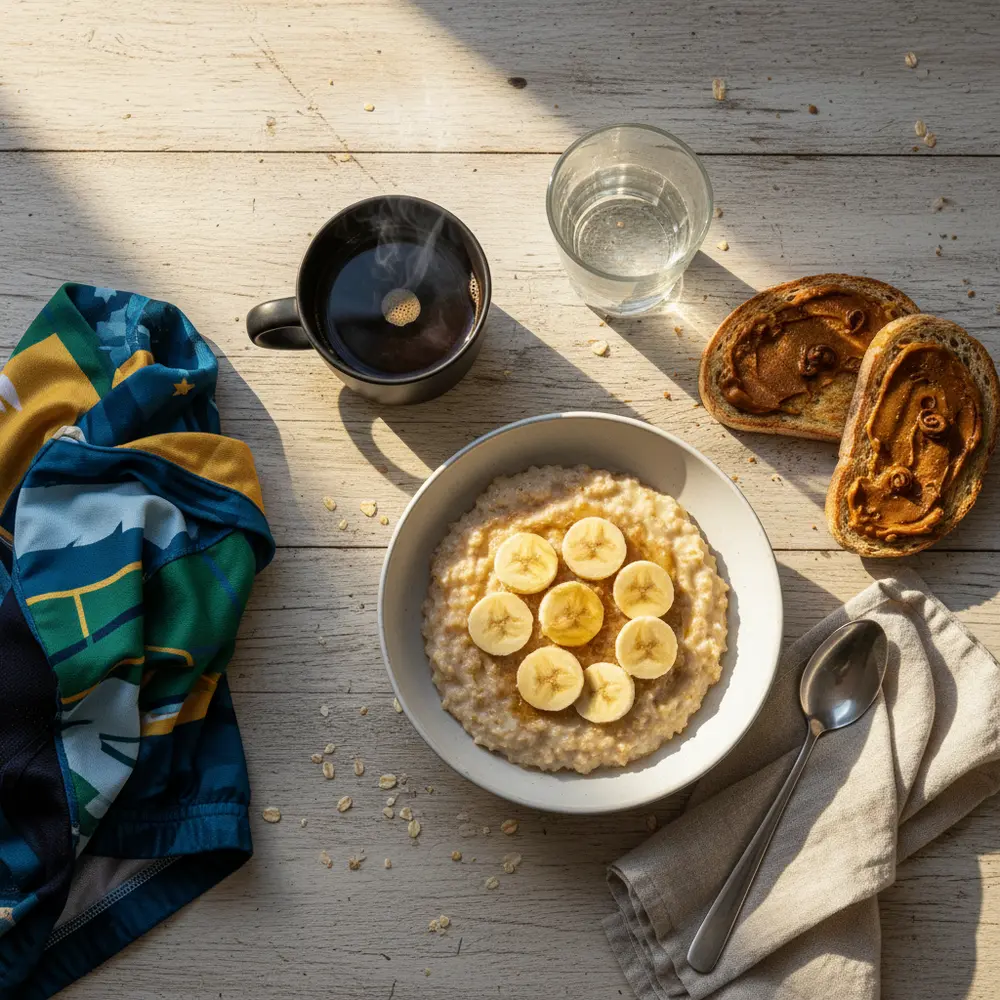
- Porridge with banana and honey. Two hours out. Rolled oats cooked with water or milk, a sliced banana, a drizzle of honey. Easy to digest, reliable energy, and genuinely filling without sitting heavy.
- Weet-Bix with milk and fruit. Two to three hours out. Two to three biscuits, reduced-fat milk, sliced banana or tinned peaches. A classic Aussie breakfast that does the job properly.
- Vegemite toast with a small amount of peanut butter. Two hours out. Two slices of wholegrain or white toast. The peanut butter adds a little protein and fat, which is fine at this timing. Vegemite also adds a bit of sodium, useful before a hot ride.
- Banana and white toast with jam. One hour out or less. Simple, low in fat and fibre, fast to prepare. This is your backup breakfast for early starts or when your appetite is not cooperating.
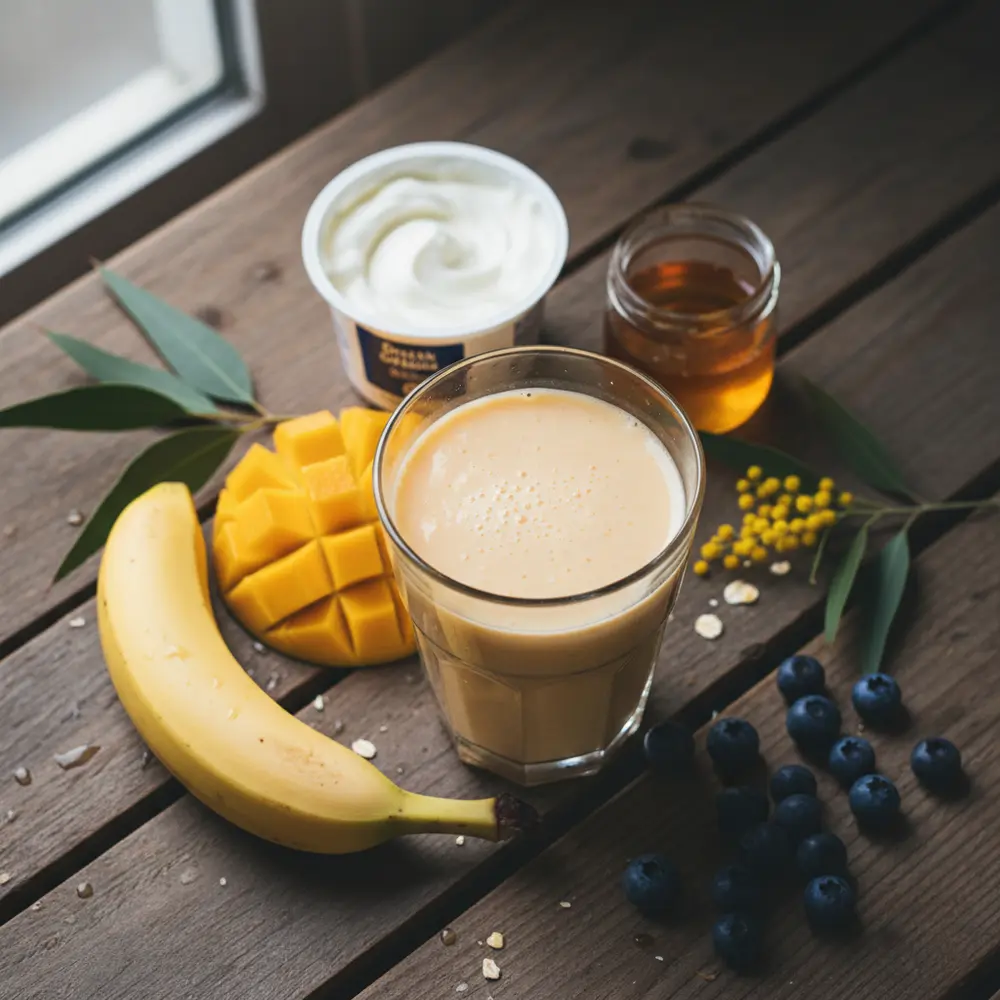
- Greek yoghurt with banana and a drizzle of honey. Two to three hours out. Adds some protein, easy on the gut, and works well in warmer months when a hot breakfast does not appeal at 5 am.
Keep it simple. The best pre-ride breakfast is one you will actually eat consistently, not one that looks perfect in a nutrition textbook.
What to Avoid Eating Before a 50 km Ride
Knowing what not to eat is just as useful as knowing what to eat. These are the common offenders.
Common mistakes to avoid:
- A large high-fat breakfast (full cooked fry-up, lots of avocado, fatty meats) within two hours of riding
- High-fibre foods like bran cereals or large portions of raw vegetables close to ride time
- Heavy protein shakes or large protein-heavy meals that displace carbohydrates in the meal
- Skipping breakfast entirely and relying only on on-bike fuel from the start
- Trying a completely new breakfast on the morning of a big ride or event
- Eating a very large meal within one hour and then going out hard immediately
The gut-irritating foods are a particular issue in summer heat. Riding in 28 degrees with a belly full of fibre and fat is a fast track to discomfort. Keep it simple and light as the temperature climbs.
On-Bike Fuelling as a Backup - When Breakfast Is Not Enough
Breakfast sets you up, but it does not cover the full energy cost of a 50 km ride at an honest pace. At moderate intensity, you are burning through a significant amount of fuel, and for rides pushing 90 minutes or beyond, on-bike fuelling bridges the gap.
Think of it as a safety net, not a substitute for breakfast. If you eat well beforehand and still bring something to eat on the bike, you are covered from both ends.
What works well on-bike:
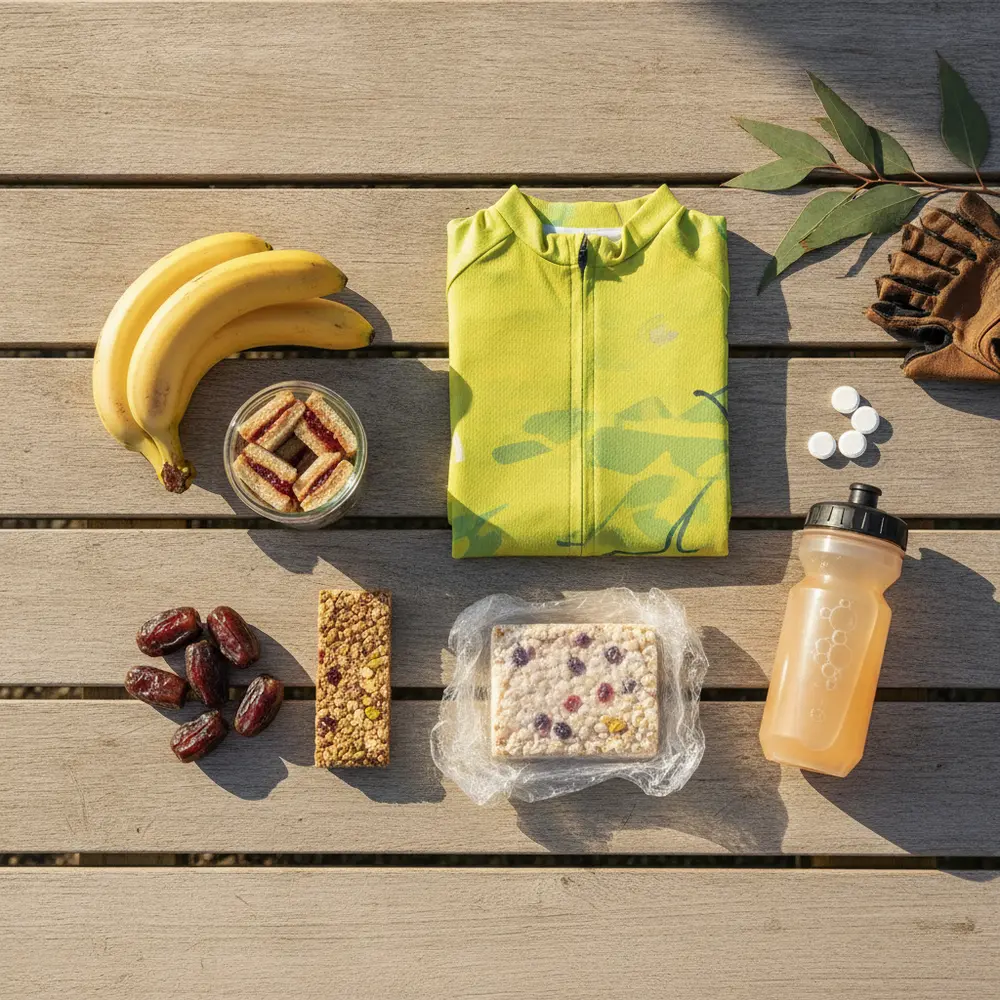
- Bananas (practical, cheap, real food)
- Muesli bars or oat-based cereal bars (not too high in fat)
- Medjool dates or dried fruit (compact, fast carbohydrates)
- Sports gels if you tolerate them and the ride intensity warrants it
- Plain rice cakes or a small homemade rice cake if you prefer real food over packaged options
Aim to start eating around the 45 to 60 minute mark if you are riding hard, or around the one-hour mark at a social pace. Do not wait until you feel the bonk coming. By then it is too late to catch up quickly. See our article on on-bike fuelling strategies for longer rides for more detail on mid-ride nutrition.
If You Are New to Pre-Ride Nutrition
- Start with a simple carbohydrate-based breakfast like oats or toast two hours before your ride.
- Do not overthink it. Familiar food your gut knows is better than an optimised meal your gut has never seen.
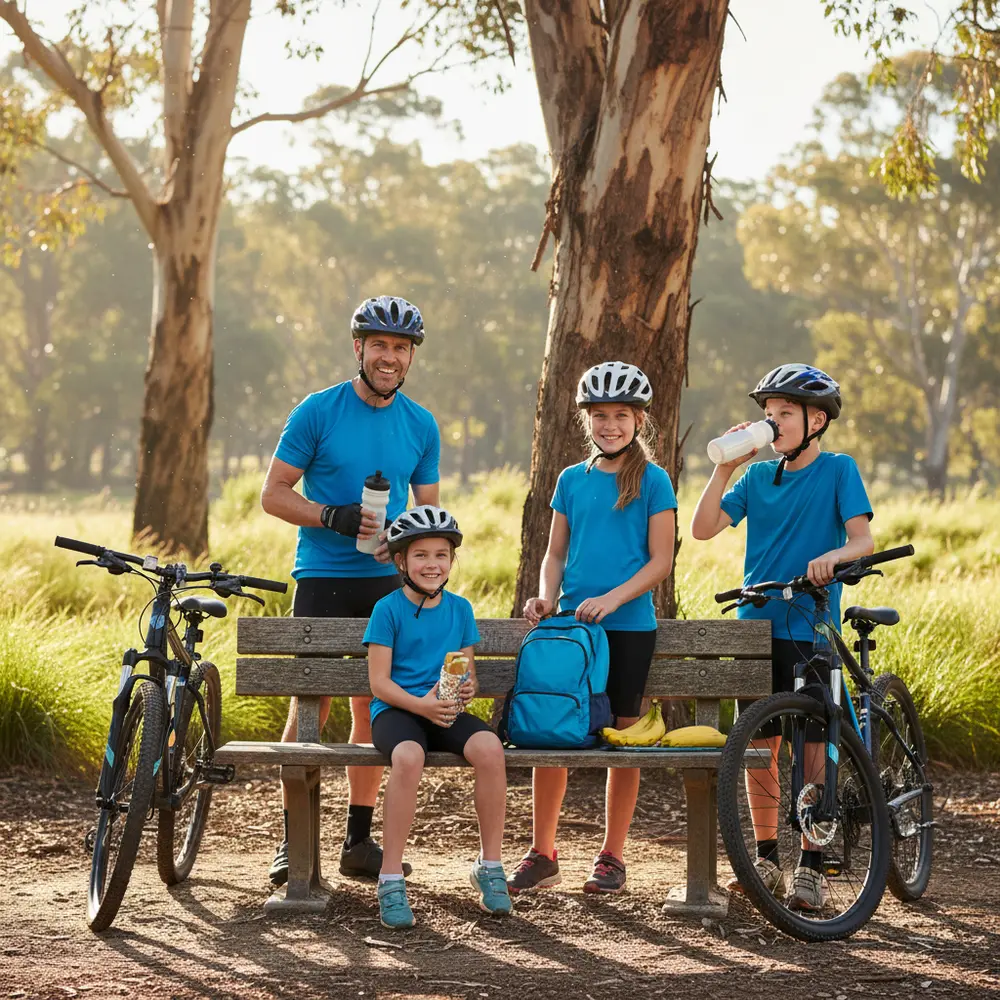
- Bring one snack on-bike as a backup, even a single banana in your jersey pocket.
- Drink 400 to 600 ml of water with your breakfast, especially in warm weather.
- Test your breakfast strategy on a training ride before a big event or group ride.
If You Have Done 50 km Rides Before
- Dial in your timing window by experimenting with 2-hour versus 3-hour pre-ride meals in training.
- If you ride early mornings regularly, try a smaller snack 30 to 45 minutes out and on-bike food from the first hour.
- Note how different breakfasts affect your gut in summer heat versus cooler mornings.
- Consider the glycaemic index of your carbohydrate sources and how they affect your energy curve mid-ride.
- Work with an accredited sports dietitian for personalised pre-exercise nutrition advice if you are training consistently and want to level up your fuelling strategy.
Pre-Ride Breakfast Checklist
Stick this on the fridge or save it to your phone. Run through it the night before and again on the morning of your ride.
- Timing confirmed. Planned to eat 1 to 3 hours before roll-out depending on meal size.
- Carbohydrate-rich base food selected. Oats, Weet-Bix, toast, banana, or similar.
- Fat and fibre kept moderate to low. Especially in the final 60 to 90 minutes.
- Protein kept small. A bit of yoghurt or an egg is fine 2 to 3 hours out, but not the centrepiece.
- Hydration started. At least 400 to 600 ml of water with or after breakfast.
- Gut-irritating foods avoided. No bran cereals, fried food, or heavy fat close to ride time.
- On-bike snack packed. Banana, bar, or gel in the jersey pocket as a backup.
- Nothing new on race or event day. Only breakfast foods your gut already knows.
For more on how to prepare for your rides, check out our ride preparation guide for Australian cyclists.
Frequently asked questions
What is the best breakfast before a 50 km bike ride?
A carbohydrate-rich meal eaten 2 to 3 hours before riding is the standard recommendation. Rolled oat porridge with banana, Weet-Bix with milk and fruit, or toast with honey or Vegemite are all solid options for Australian riders. Keep fat and fibre low, keep it familiar, and include a glass or two of water.
What happens if I skip breakfast before a 50 km ride?
Your liver glycogen is already partially depleted after an overnight fast. Riding 50 km without topping it up means you are starting with a partial tank. For many intermediate riders at a moderate pace, that is enough to cause heavy legs, low energy, and possible bonking in the second half of the ride, especially in summer heat.
Can I eat just a banana before a 50 km ride?
A banana is better than nothing, particularly if you only have 30 to 45 minutes before rolling out. It has a medium glycaemic index and is easy to digest. But for a full 50 km at a decent pace, a single banana alone is a thin fuel base. Pair it with toast or another carbohydrate source if you have the time and appetite.
How long before a ride should I drink coffee?
The AIS notes that caffeine consumed around 45 to 60 minutes before exercise can provide a useful performance boost for recreational cyclists. A standard black coffee or flat white with your breakfast fits neatly into that window for most morning rides. If you are sensitive to caffeine on an empty stomach, have it with your food rather than before eating.
Should I eat if I am not hungry before an early morning ride?
This is common with very early starts. If a full breakfast is not happening, a small carbohydrate snack (half a banana, a slice of toast, a few dates) is still worth having over nothing. You can make up some of the difference with on-bike food once you are moving. Riding 50 km on absolutely nothing is the higher-risk choice for most intermediate riders.
Wrapping it up
Pre-ride breakfast does not need to be complicated. Here is what matters:
- Eat a carbohydrate-based meal 2 to 3 hours before riding whenever you can.
- Keep fat and fibre low in the final hour before you clip in.
- Familiar Aussie staples like oats, Weet-Bix, toast, and bananas do the job well.
- Always bring something on-bike as a backup for the second half of the ride.
- Test your breakfast strategy in training, not on the morning of a big ride.
If you want to dig deeper into your cycling nutrition, you can find more articles in our Nutrition section, or get in touch with us if you have questions about fuelling for your rides.
This is educational content, not financial advice.