Gut trouble on a long ride is not just uncomfortable, it is one of the most common reasons riders fall apart before the finish. Whether it is nausea at kilometre 80 or a bonk that comes out of nowhere, most of these problems trace back to nutrition decisions made hours before you even clipped in.
By the end of this article you will know how to structure your eating before, during, and after a long ride to keep your gut settled and your legs turning. You will have a practical fuelling plan you can follow this weekend, with real food options available from any Australian supermarket or bike shop.
Note for Australian riders:
- Summer riding in Queensland, NSW, and Victoria means heat and humidity significantly increase fluid and sodium losses compared to cooler conditions.
- Gut tolerance often drops in the heat, so what works in a cool June morning ride may not work on a 35-degree January day.
- Locally available products like SiS gels, Clif Bars, and Hydralyte electrolyte tabs are mentioned as examples throughout. You will find most of these at your local bike shop or chemist.
At a glance:
- Eat 60 to 90g of carbohydrate per hour on rides over 90 minutes.
- Start fuelling within the first 30 to 45 minutes, before hunger hits.
- Low-fibre, low-fat foods before and during a ride reduce GI risk significantly.
- Training your gut takes 4 to 6 weeks of consistent practice on training rides.
- Electrolytes matter more than most riders think, especially in Australian summer heat.
Key takeaways:
- Your gut is trainable. Start low, build progressively, and practice on training rides, not on event day.
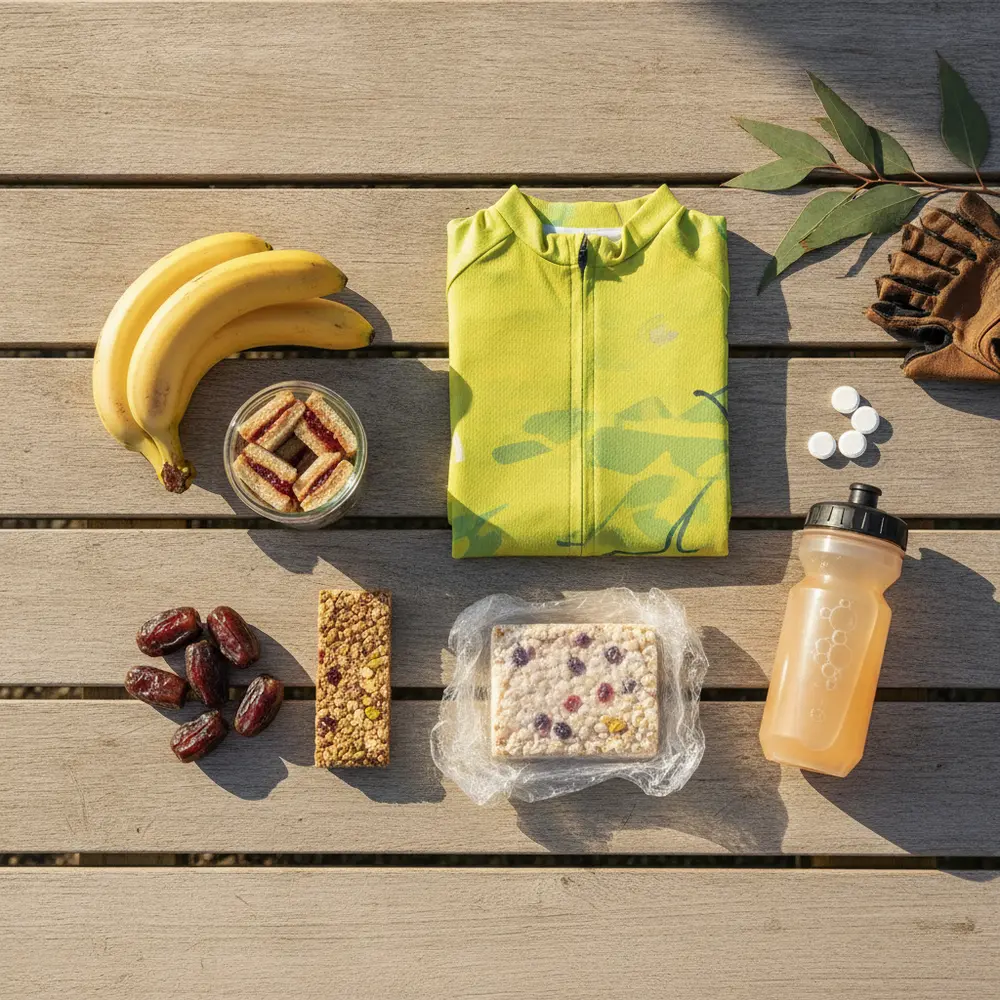
- Real food like bananas, white bread with honey, and Vegemite rice cakes works just as well as commercial gels for many riders.
- If GI issues are persistent or severe, an Accredited Sports Dietitian is the right next step, not more trial and error.
Why your gut struggles on long rides
How exercise redirects blood flow away from digestion
When you ride hard, your body prioritises delivering blood to your working muscles. The digestive system gets deprioritised. Research published on PubMed Central shows that splanchnic blood flow can be reduced by up to 80% during high-intensity exercise, which significantly impairs your gut's ability to process food and absorb nutrients.
The harder you ride, the less blood your gut gets. This is why eating a big meal and then smashing a climb rarely ends well. It is also why fuelling strategy matters more at race pace than on easy spins.
Common GI symptoms cyclists experience and why they happen
Nausea, bloating, stomach cramps, and the urgent need for a roadside stop are all classic signs of GI distress. These symptoms are not random. They are usually caused by one or more of the following:
- Eating high-fat, high-fibre, or high-protein foods too close to a ride.
- Taking in too many carbohydrates at once, overwhelming gut absorption capacity.
- Dehydration, which slows gastric emptying and makes things worse.
- Anxiety or pre-event nerves, which directly affect gut function.
- Trying new foods or products on a big day without testing them first.
Research into GI distress in endurance athletes suggests that up to 70% of endurance athletes report symptoms during competition. You are not alone, and more importantly, most of it is preventable.
The foundations of gut-friendly cycling nutrition
Carbohydrates, fats, and fibre: what to prioritise and what to avoid
Carbohydrates are your primary fuel source on the bike. For rides over 90 minutes, the Sports Dietitians Australia cycling nutrition guide recommends 60 to 90g of carbohydrate per hour. The key is what type of carbohydrate and when you eat it.
In the hours before and during a ride, fat and fibre are your gut's enemies. Both slow gastric emptying and increase the risk of bloating and discomfort. Protein is fine at meals but should be kept minimal in the two to three hours before you roll out.
General principles to follow:
- Before a ride: prioritise easily digestible, low-fibre carbohydrates like white rice, white bread, oats, and bananas.
- During a ride: stick to simple sugars, gels, sports drink, fruit, or white-bread-based snacks.
- Avoid high-fat foods like nut butters, avocado, or full-fat dairy in the three hours before riding.
- Avoid raw vegetables, legumes, and high-fibre cereals close to ride time.
Hydration and electrolytes: more than just drinking water
Dehydration directly worsens gut function. It slows gastric emptying, which means food sits in your stomach longer and the risk of nausea increases. But the answer is not just drinking more plain water.
Research on sodium intake and hydration in endurance athletes highlights that drinking excessive plain water on long rides can dilute blood sodium levels, leading to hyponatraemia, a condition that is more dangerous than mild dehydration. Sodium in your drink helps your body retain fluid and maintains plasma volume.
For Australian riders in summer, this is not a small detail. A two-hour ride in 33-degree heat in Brisbane or on the Sydney coast will have you sweating significantly more than the same ride in cooler weather. Electrolyte tabs, sports drinks, or a small pinch of salt in your bottle are practical solutions that work.
Pre-ride nutrition: setting your gut up for success
What to eat the night before a long ride
The night before a long ride is not the time to experiment with food. Keep it simple, carbohydrate-focused, and avoid anything you know disagrees with you. Think pasta, rice, bread, or potatoes with a moderate protein serve like chicken or fish. Keep fat relatively low and skip the heavy sauces.
This is also not the night for a big restaurant meal or a lot of alcohol. Your gut will thank you in the morning.
The pre-ride meal: timing and food choices that work
Timing your pre-ride breakfast is important. Eating too close to the start of a hard ride is a recipe for discomfort. As a general guide:
- 3 hours before: A full meal is fine. Think oats with banana, eggs on white toast, or rice with a small protein serve. Around 80 to 100g of carbohydrate.
- 1 to 2 hours before: A lighter option works better. White toast with honey or jam, a banana, or a low-fat muffin. Around 50 to 60g of carbohydrate.
- 30 minutes before: A small top-up if needed. Half a banana, a couple of medjool dates, or a small gel. Around 20 to 30g of carbohydrate.
Avoid anything high in fat or fibre at every stage. This is not the morning for a big fry-up or a heavy smoothie loaded with nuts and seeds.
On-bike fuelling: how much, how often, and what to choose
Carbohydrate targets per hour and how to hit them
The target of 60 to 90g of carbohydrate per hour for rides over 90 minutes is well supported by sports science. The Australian Institute of Sport cycling nutrition guidance notes that carbohydrate needs scale with intensity, from around 30g per hour for easy efforts up to 90g per hour for sustained hard work.
The reason you can push toward 90g per hour (rather than being capped at 60g) comes down to carbohydrate type. Research on multiple transportable carbohydrates shows that glucose alone saturates intestinal transporters at around 60g per hour. Adding fructose at a roughly 2:1 glucose-to-fructose ratio opens up a second absorption pathway, allowing total uptake of up to 90g per hour with less GI distress than glucose alone at the same volume.
Practically, this means looking for gels and sports drinks that list both glucose (or maltodextrin) and fructose on the label. Many modern products are already formulated this way.
Real food vs gels and bars: choosing what your gut tolerates
There is no rule that says you have to use commercial products. Plenty of experienced riders do long gran fondos on homemade food and feel better for it. The key is finding what your gut tolerates and sticking to it.
| Option | Approx. carbs | Gut friendliness | Notes |
|---|---|---|---|
| Banana (medium) | ~25g | High | Easy to carry, widely available, no packaging fuss. |
| White bread with honey | ~35g per 2 slices | High | Cheap, simple, and works well for most riders. |
| Vegemite rice cake (2 cakes) | ~25g | High | A classic home-made option, savoury is helpful after 2-plus hours of sweet. |
| Medjool dates (2 to 3) | ~40g | Medium-High | Dense and easy to eat one-handed but can be sticky in heat. |
| Energy gel (standard) | ~22 to 25g | Medium | Convenient, fast-absorbing. Needs water alongside to avoid GI issues. |
| Sports bar (e.g. Clif Bar) | ~40 to 45g | Medium | Better for early in a ride when gut is settled. Can be harder to digest at high effort. |
The practical rule: eat consistently, every 20 to 30 minutes, starting within the first 30 to 45 minutes of a ride before hunger even registers. Do not wait until you feel empty. By then, you are already behind.
Post-ride recovery nutrition and gut reset
What you do in the 30 to 45 minutes after finishing a long ride matters. The AIS recommends targeting around 1 to 1.2g of carbohydrate per kilogram of body weight in that post-ride window, alongside 20 to 40g of protein to support muscle repair.
Practical post-ride options that work:
- Chocolate milk (a surprisingly well-researched recovery option with carbohydrate and protein).
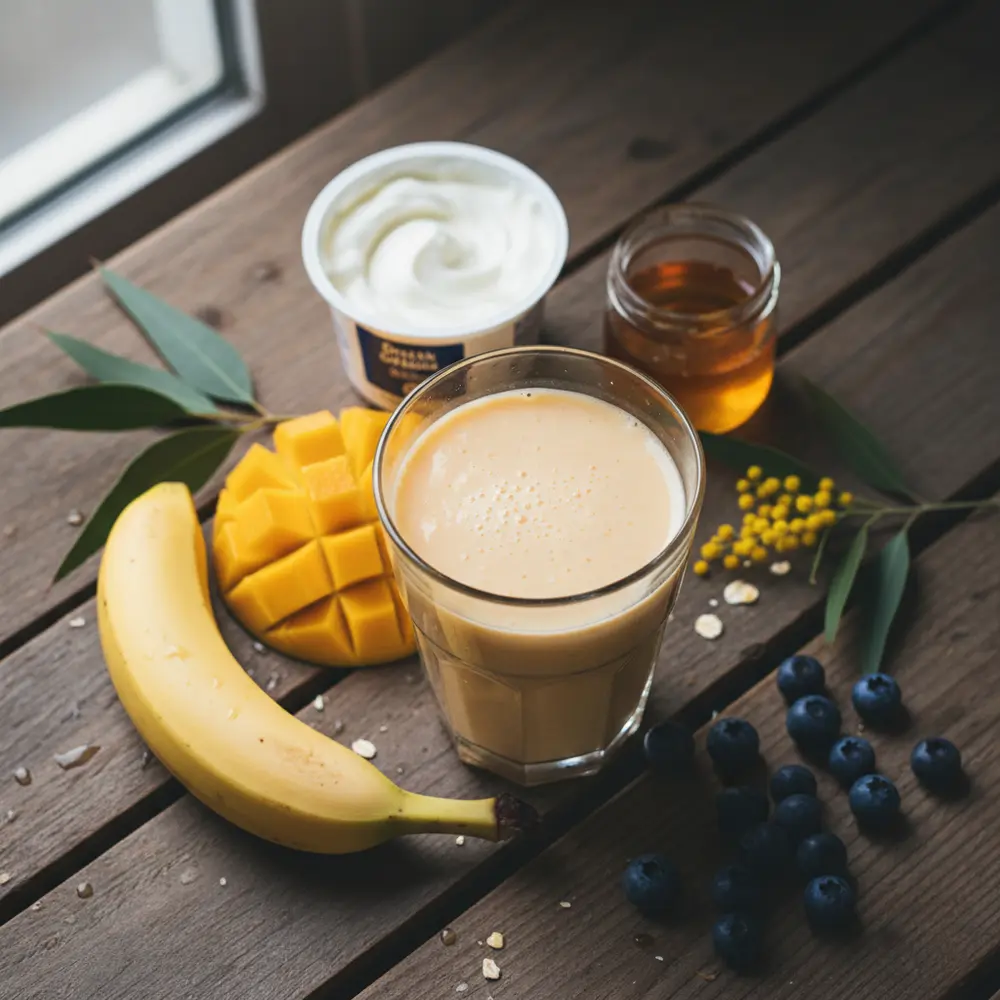
- A smoothie with banana, yoghurt, and milk.
- Rice with chicken or tuna.
- Toast with eggs and a glass of juice.
Your gut has been under stress for hours, so ease back into solid food if you feel queasy. A liquid option like a recovery shake or flavoured milk is often easier to get down in that first 30 minutes. Rehydrate steadily rather than flooding your system all at once.
Practical tips for Australian riders: heat, humidity, and local terrain
Riding in Australian summer conditions adds a layer of complexity that a lot of generic nutrition guides gloss over. Heat accelerates fluid and sodium loss, suppresses appetite, and can make gels and sticky foods genuinely hard to eat. Here is what works:
- Carry at least one electrolyte drink per hour of riding in temperatures above 28 degrees. Plain water alone is not enough for rides over two hours in the heat.
- Consider chilled bottles where possible, especially for the first hour. Cooler fluids are better tolerated and may help with core temperature.
- Shift toward more liquid calories in extreme heat. Gels washed down with water, or sports drink, are easier to manage than solid food when your body is prioritising cooling.
- If you are riding coastal Queensland or inland NSW in summer, plan for more sodium. Heat-adapted riders lose less sodium over time, but if you are not yet acclimatised, the losses can be substantial.
- Do not rely on thirst alone as your only hydration cue. In high humidity, sweat evaporation is less obvious, and riders can be more dehydrated than they feel.
How to train your gut for long rides
This is the section most riders skip, and it is the one that makes the biggest difference over time. Your gut is trainable. Research from the Gatorade Sports Science Institute on gut training strategies shows that progressively practising higher carbohydrate intakes during training rides can upregulate intestinal transporters, reducing nausea, bloating, and discomfort over a 4 to 6 week period.
The practical approach:
- Week 1 to 2: Aim for 40 to 50g of carbohydrate per hour on training rides of 2-plus hours. Use foods you know your gut handles well.
- Week 3 to 4: Build to 60g per hour. Introduce gels or sports drink alongside real food if you want to use those on event day.
- Week 5 to 6: Push toward 75 to 90g per hour on your longest training rides. Practice the exact foods and products you plan to use in your event.
The golden rule here is simple: never try new foods or products on race day. Every fuel choice you make on a big event should have been tested at least two or three times in training first.
Common mistakes
- Waiting until you are hungry to start eating on the bike. By the time you feel it, you are already behind.
- Eating too much fat, fibre, or protein in the three hours before a ride.
- Drinking only plain water on rides over two hours, especially in summer.
- Trying to eat 90g of carbohydrate per hour from the first ride without gut training.
- Using brand-new gels or bars for the first time on a gran fondo or event day.
- Skipping the recovery window after a long ride and then wondering why training feels heavy the next day.
If you are new to long ride nutrition
- Start with real food you know and trust. Bananas, white bread with honey, and a bottle of sports drink will get you through most rides up to three hours.
- Eat a small amount every 30 minutes rather than trying to plan complex feeding schedules.
- Do not stress about hitting 90g of carbohydrate per hour on your first long ride. Start with 40 to 50g and build from there.
- Focus on hydration first. Many new riders underestimate how much fluid they need, particularly in Australian summer conditions.
- Experiment on training rides. Keep a simple note on your phone about what worked and what did not.
If you have done long rides before but still struggle with gut issues
- Audit what you are eating in the 12 to 24 hours before a long ride. High-fibre or high-fat meals the evening before can carry over and cause trouble.
- Check your gel or bar labels. If they are glucose-only, switching to a glucose-fructose combination product may help at higher intake levels.
- Look at your pacing. Riding above your threshold for extended periods diverts even more blood away from digestion. Gut comfort often improves when intensity is managed.
- Consider caffeine. If you use caffeinated gels, these can worsen GI symptoms for some riders. Try a caffeine-free option and see if it makes a difference.
- If problems persist despite adjusting diet and pacing, talk to an accredited sports dietitian or reach out and we can point you in the right direction. Sports Dietitians Australia lists accredited practitioners at sportsdietitians.com.au.
Your step-by-step fuelling plan for a 4-hour ride
Here is a practical day-of plan you can follow directly. Adjust food choices to suit your gut preferences, but keep the timing and carbohydrate targets as close to these as you can.
- Night before: Pasta, rice, or potatoes with a moderate protein serve. Keep fat low. Aim for a carbohydrate-rich dinner without overdoing it. Avoid alcohol and anything you know upsets your gut.
- 3 hours before the ride: A solid breakfast. Oats with banana and a drizzle of honey, or eggs on white toast with a glass of juice. Around 80 to 100g of carbohydrate. Drink 400 to 600ml of water or light electrolyte drink with this meal.
- 1 hour before: A small top-up if needed. Half a banana or a slice of white bread with jam. Around 30 to 40g of carbohydrate. Avoid anything with significant fat or fibre at this point.
- 30 minutes before: A small gel or a few dates if your stomach is settled. This is optional but helps prime fuel availability for the start. Around 20g of carbohydrate.
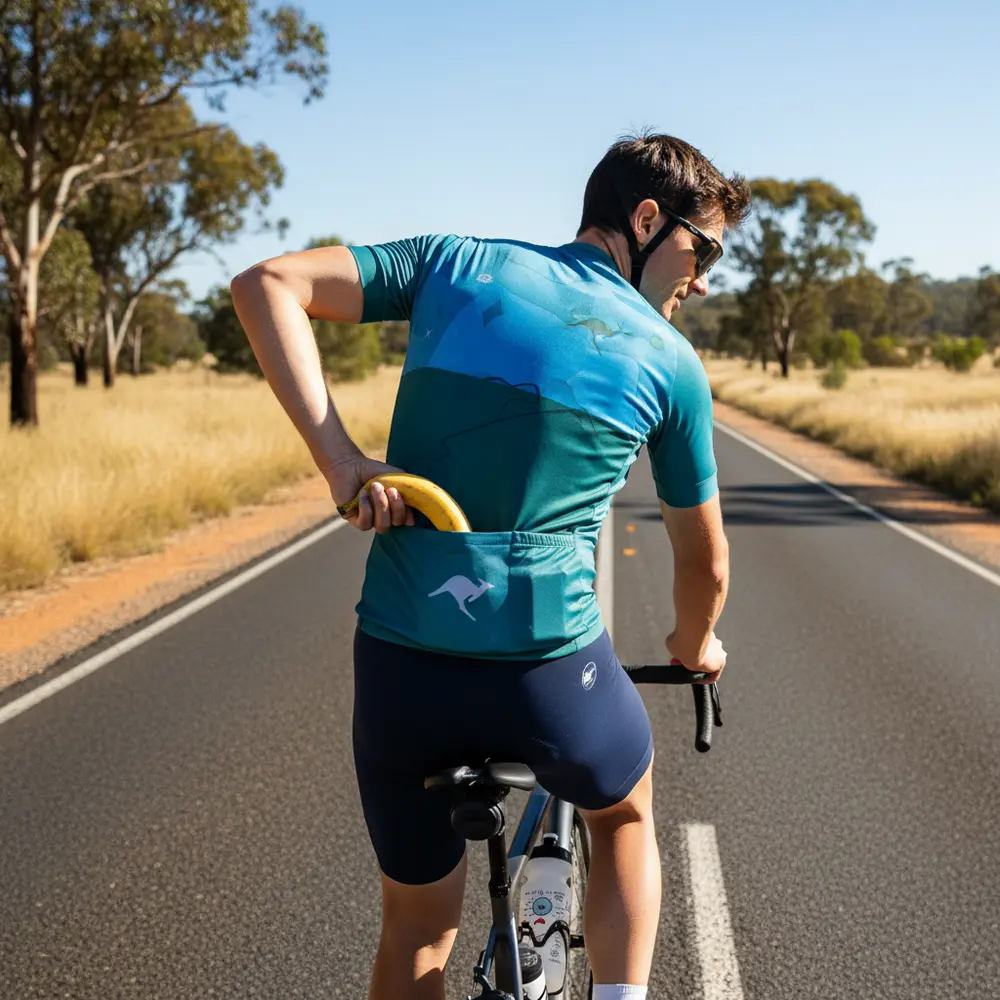
- On the bike, first feed at 30 to 45 minutes: Start eating before you feel hungry. A banana, two Vegemite rice cakes, or half a Clif Bar. Around 20 to 25g of carbohydrate. Drink 150 to 200ml of electrolyte drink alongside.
- Every 20 to 30 minutes after that: Rotate through your chosen foods and gels. Aim for 60 to 75g of carbohydrate per hour in total. For a 4-hour ride, that is roughly 240 to 300g of carbohydrate consumed on the bike.
- Hour 3 onwards: This is where a caffeinated gel can be useful if you tolerate caffeine well. Switch to more liquid calories if solid food becomes difficult. Keep drinking electrolytes consistently.
- Within 30 to 45 minutes of finishing: Hit the recovery window. Aim for 1 to 1.2g of carbohydrate per kg of body weight alongside 20 to 30g of protein. Chocolate milk, a recovery shake, or rice and chicken all work well. Rehydrate steadily.
For more guidance on training and riding in Australian conditions, check out our cycling nutrition articles and our training and ride preparation guides.
Frequently asked questions
How many carbohydrates do I actually need per hour on a long ride?
For rides over 90 minutes, the evidence-backed target is 60 to 90g of carbohydrate per hour depending on intensity. At moderate effort, 60g per hour is a solid target. At sustained high intensity, pushing toward 90g per hour is appropriate, provided you use a glucose-fructose combination product and have trained your gut to handle that volume.
Can I use real food instead of gels on a long ride?
Absolutely. Bananas, white bread with honey or jam, Vegemite rice cakes, and medjool dates are all solid options. Many experienced riders prefer real food, especially in the first half of a long ride when appetite is still working normally. Gels become more useful in the final stages when chewing feels like too much effort. The key is testing your choices in training first.
Do I need electrolytes or is water enough?
For rides under 90 minutes in mild conditions, water is generally fine. For anything longer, or any ride in hot and humid Australian summer conditions, electrolytes become important. Sodium in particular helps maintain plasma volume, supports fluid absorption, and reduces the risk of hyponatraemia from over-drinking plain water. Electrolyte tabs, sports drinks, or even a small pinch of salt in your bottle are practical options.
How long does gut training actually take?
Most riders start noticing improved gut tolerance within 4 to 6 weeks of consistently practising higher carbohydrate intakes on training rides. The key is being progressive. Start at 40 to 50g per hour and build toward your target intake over several weeks. Do not try to jump straight to 90g per hour on your first attempt.
When should I see a sports dietitian about gut problems on the bike?
If you have tried adjusting your nutrition timing and food choices and are still experiencing significant GI distress on long rides, it is worth seeing an Accredited Sports Dietitian (ASD). This is especially true if symptoms are affecting your ability to train or complete events. Sports Dietitians Australia lists accredited practitioners who specialise in cycling and endurance sport. Generic advice only goes so far. A personalised plan from a professional is a worthwhile investment if the problem is persistent.
Wrapping up
- Gut trouble on long rides is common but largely preventable with the right nutrition timing and food choices.
- Target 60 to 90g of carbohydrate per hour and start eating within the first 30 to 45 minutes, not when you feel hungry.
- Avoid high-fat and high-fibre foods in the hours before and during a ride to reduce GI risk.
- Electrolytes matter, especially in Australian summer heat. Plain water is not enough for long rides.
- Train your gut progressively over 4 to 6 weeks using training rides, not event day.
If you have questions about fuelling or want to talk through your nutrition strategy, get in touch with the Segment Club team and we are happy to help point you in the right direction.
This is educational content, not personalised nutrition advice. Consult an Accredited Sports Dietitian for guidance specific to your needs and health status.