Commercial sports drinks are expensive, and for most training rides they are not doing anything your kitchen bench cannot replicate for a fraction of the cost. If you have ever squinted at the back of a Gatorade bottle and wondered what you are actually paying for, this article is for you.
By the end, you will know exactly what electrolytes do, what goes into a solid cycling drink, and how to mix four practical recipes suited to different ride types and Australian conditions. These are evidence-informed starting points, not prescriptions, so adjust them based on how you feel on the bike.
Note for Australian riders:
- Riding in 35-degree heat in Queensland, WA or inland NSW changes your hydration needs significantly compared to a mild morning in Melbourne. Factor that in.
- All ingredients in these recipes are available at Coles, Woolworths, Chemist Warehouse, or bulk food stores like The Source Bulk Foods.
- If you are a heavy or salty sweater (white crust on your kit after a ride is a tell), you will likely need more sodium than the base recipes suggest.
At a glance:
- DIY electrolyte drinks can match commercial options for sodium and carbs at a lower per-serve cost.
- Sodium is the most critical electrolyte for cyclists. Get that right first, then worry about the rest.
- For rides under 60-90 minutes in mild conditions, plain water is fine. Electrolyte drinks earn their keep on longer or hotter efforts.
- Four recipes are included here: basic training, long ride, hot weather, and low-sugar options.
Key takeaways:
- The Australian Institute of Sport recommends 400-1100 mg of sodium per litre in a sports drink, with a carbohydrate concentration of around 4-8%.
- Cream of tartar, sea salt, honey and citrus juice are the core pantry staples for a functional homemade drink.
- Batch-make a dry mix and store it in a jar. Mix with water before each ride to save time.
Why Bother Making Your Own Electrolyte Drink
The honest answer is cost and control. A tub of commercial electrolyte powder can run anywhere from $30 to $60 and may last you a few weeks of regular riding. A jar of sea salt, a tub of cream of tartar, and a bottle of honey will cover many more serves for less money, and you know exactly what is in each bottle.
There is also the flexibility angle. Once you understand the basic formula, you can tweak it for the conditions, your sweat rate, and your gut. Commercial products are built for the average athlete. You are not average, you are you.
Cost Comparison: DIY vs Gatorade vs Dedicated Cycling Drink Mixes
Exact prices shift with promotions and pack sizes, but the general pattern holds. A 600ml Gatorade from a servo costs around $4-5. A quality cycling electrolyte powder serve can cost $2-4. A well-made homemade version using bulk ingredients typically comes in well under $1 per 750ml bottle, once you have the pantry stocked.
The table below gives a rough comparison across the three categories. These figures are approximate and based on typical Australian retail pricing.
| Option | Approx. cost per serve | Sodium per litre | Carbs per serve | Notes |
|---|---|---|---|---|
| Gatorade (600ml, servo) | $4-5 | ~450 mg/L | ~36g per 600ml | Convenient but expensive. High sugar. |
| Cycling electrolyte powder | $2-4 | Varies widely | Varies by product | Better formulated but costly per serve. |
| DIY recipe (this article) | Under $1 | You control it | You control it | Best value. Requires a few minutes prep. |
As The Conversation notes in their review of sports drink evidence, many of the performance claims behind commercial products are supported by manufacturer-funded research. That does not mean the drinks do not work, but it is worth keeping in mind when you are paying a premium.
What Electrolytes Actually Do When You Ride
Electrolytes are minerals that carry an electrical charge in your body. They regulate fluid movement in and out of cells, support nerve and muscle function, and help your body hold onto the water you drink. Lose too many and things start going wrong: cramping, fatigue, poor concentration, or worse.
Research published on PubMed confirms that even a 1-2% loss of body mass through dehydration can reduce high-intensity exercise performance. That is not a huge amount of fluid, and in Australian summer heat you can hit that threshold faster than you think.
The Key Electrolytes: Sodium, Potassium, Magnesium and Chloride
Sodium is the big one. It is the primary electrolyte lost in sweat, it drives thirst, helps your gut absorb fluid, and supports blood plasma volume. If you only focus on one electrolyte, make it sodium. Potassium supports cellular fluid balance and muscle contraction. It works alongside sodium and matters more on longer efforts. Magnesium plays a role in muscle relaxation and energy production, though the evidence for supplementing it during exercise is limited unless you are already running low in your diet. Chloride is the other side of the salt equation, naturally present when you use regular table or sea salt, so you rarely need to think about it separately.
What Goes Into a Good Cycling Electrolyte Drink
Strip it back and a functional cycling drink has four things: water, sodium, a carbohydrate source, and ideally a potassium contribution. Everything else is optional. Sports Dietitians Australia notes that sodium is the primary electrolyte to replace during and after exercise, and that drinks containing sodium and carbohydrates absorb better than plain water.
Carbohydrates: Do You Need Them and How Much
For rides under about 60-90 minutes at moderate intensity, you likely do not need carbs in your bottle. Your glycogen stores will cover you. Once you push past that window, particularly in heat, adding carbohydrates into your drink becomes worthwhile. The AIS recommends a carbohydrate concentration of around 4-8% for optimal fluid absorption and energy delivery. That works out to roughly 20-40g of sugar or honey per 500ml. Go much higher and the drink can slow gastric emptying and cause gut issues on the bike.
Getting the Sodium-to-Fluid Ratio Right
The AIS guidance puts the recommended sodium concentration in a sports drink at approximately 400-1100 mg per litre. For most training rides, aiming for around 500-700 mg per litre is a sensible starting point. One level teaspoon of table salt contains roughly 2,300 mg of sodium, so for a 750ml bottle you are looking at about a quarter teaspoon as a base. Heavy sweaters and anyone riding in serious heat should push closer to half a teaspoon per 750ml. White salt residue on your jersey after a ride is a sign you are a saltier sweater than average and should adjust upward.
DIY Electrolyte Drink Recipes for Different Ride Types
These recipes are built around the principles above. They are practical, use ingredients you can find in most Australian supermarkets or bulk food stores, and they are adjustable. Treat them as starting points and tune them to how you feel.
Recipe 1: The Basic Training Ride Mix (Under 2 Hours)
This is your everyday training drink. Light on carbs, enough sodium to support fluid retention, and easy to make in 30 seconds.
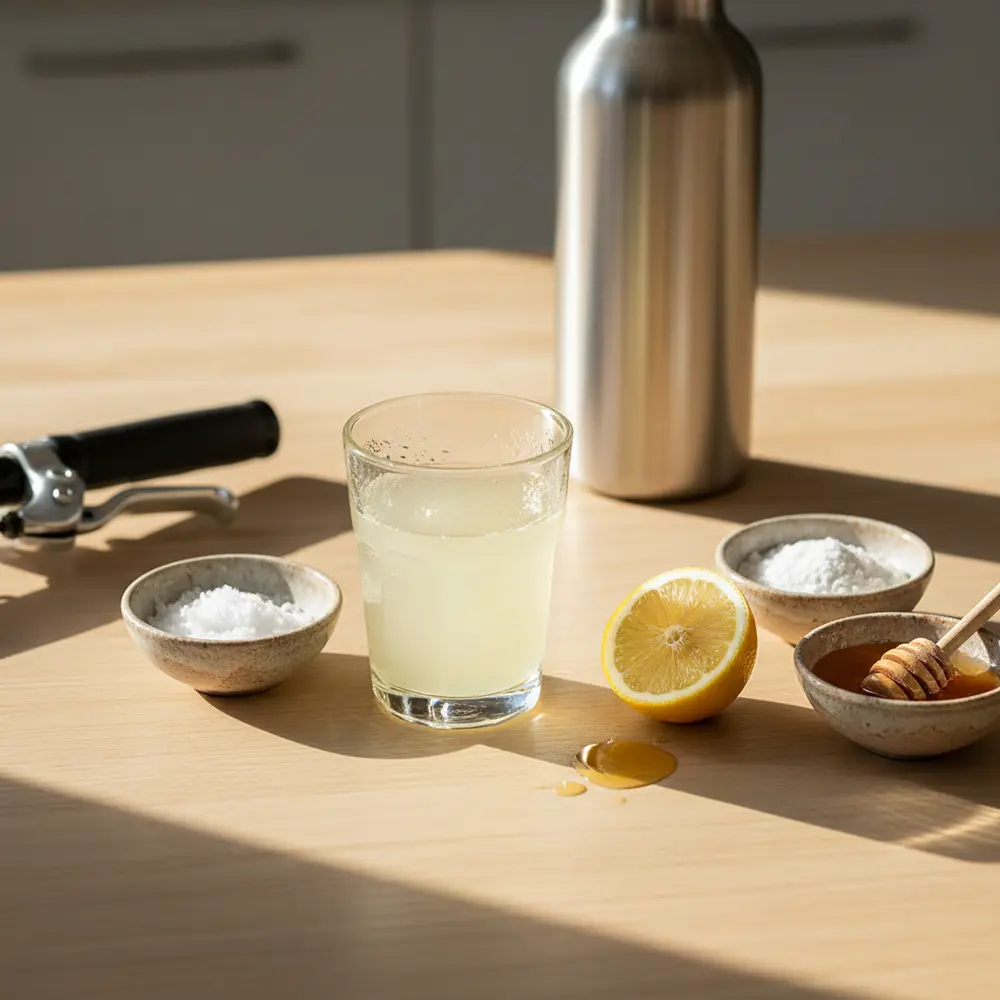
- 500ml cold water
- 1/4 teaspoon sea salt or table salt (approx. 500-600 mg sodium)
- 1 tablespoon honey or sugar (approx. 15-20g carbs)
- Juice of half a lemon or lime
- Optional: 1/4 teaspoon cream of tartar (adds some potassium)
Mix well until the salt and sweetener dissolve. The citrus juice adds flavour and a small vitamin C contribution. This drink is simple, cheap, and does the job for most morning rides.
Recipe 2: The Long Ride Formula (2 Hours Plus)
Once you are riding beyond two hours, you need more carbohydrates and a bit more sodium. This recipe scales up both.
- 750ml water
- 1/3 teaspoon sea salt (approx. 700-750 mg sodium)
- 2 tablespoons honey (approx. 30-35g carbs)
- Juice of one lemon
- 1/4 teaspoon cream of tartar
- A small pinch of magnesium powder if you have it (optional)
You can mix a concentrate of the dry ingredients and keep it in a small container in your jersey pocket, then add water at a refill stop. For rides of three hours or more, pair this drink with solid food rather than trying to get all your carbs from the bottle.
Recipe 3: Hot Weather and Australian Summer Riding
Riding in 35-plus degrees changes the equation. Sweat rates climb, sodium losses increase, and you need to drink more often. This is not the time to be conservative with your electrolytes.
- 750ml cold water
- 1/2 teaspoon sea salt (approx. 1,000-1,100 mg sodium)
- 2 tablespoons honey or coconut sugar
- Juice of one lemon or orange
- 1/4 teaspoon cream of tartar
- A few mint leaves if you have them (flavour only, but it helps on a stinking hot day)
Pre-mix a batch the night before and keep it in the fridge. Starting a hot ride with a cold bottle of this is genuinely one of the better decisions you can make before heading out. Keep sipping every 10-15 minutes rather than waiting until you are thirsty.
Recipe 4: Low-Sugar or Keto-Friendly Option
If you are riding fat-adapted or just prefer to keep sugar low, you can drop the carbohydrate component and focus purely on electrolytes. This option suits shorter efforts or recovery spins where you are not working hard enough to need exogenous carbs.
- 500ml water
- 1/4 teaspoon sea salt
- 1/4 teaspoon cream of tartar
- Juice of half a lemon
- A small squeeze of liquid stevia or monk fruit sweetener if you want some flavour
This is not a fuel drink, it is a hydration and electrolyte drink. Use it for rides under 90 minutes where your goals are staying hydrated and maintaining electrolyte balance, not topping up glycogen.
How to Batch Make and Store Your Mix
The fastest way to make this sustainable is to pre-mix your dry ingredients and keep a jar by the kettle or on your bench. Combine your salt, cream of tartar, and any other dry ingredients in a ratio that makes sense for your usual ride type, then label the jar with the amount to use per 500 or 750ml of water.
- A pre-mixed dry blend keeps for months in a sealed jar.
- Pre-mixed liquid drinks are best used within 24-48 hours when kept in the fridge.
- Use a small funnel and a digital kitchen scale if you want to be precise about sodium content.
- Rinse and dry your water bottles thoroughly. Honey and sugar residue left in a bottle is a recipe for mould.
For most riders, spending 10 minutes on a Sunday to batch-mix a week's supply is all it takes to make this a habit rather than a chore.
Common Mistakes When Making Your Own Electrolyte Drinks
Getting the basics right is not hard, but a few common errors are worth knowing upfront.
- Too little sodium. This is the most common one. A drink that is all sugar and citrus with barely any salt is not an electrolyte drink, it is a weak cordial.
- Too much sugar. Pushing carbs above 8-9% concentration slows gastric emptying and can cause bloating or nausea mid-ride.
- Using Epsom salt for magnesium. Epsom salt (magnesium sulfate) is not approved for internal use as a food supplement in Australia and has a laxative effect at meaningful doses. Stick to food-grade magnesium powder or just skip magnesium in the drink altogether.
- Not accounting for heat. Making the same drink for a 15-degree autumn ride and a 38-degree January grind is not ideal. Adjust sodium upward in hot conditions.
- Ignoring individual variation. Sweat sodium concentration varies widely between people, from around 200 mg to over 1,700 mg per litre according to data from the sports science literature. If the base recipe is leaving you with cramps or heavy legs, try more salt.
- Mixing too far in advance. A liquid drink mixed three days ago and left in a warm bottle cage is a food safety risk. Mix fresh or refrigerate and use within 48 hours.
DIY Electrolyte Drink Starter Checklist
Here is a quick checklist of pantry staples to keep on hand, plus where to source them cheaply in Australia.
- Sea salt or table salt - Coles or Woolworths, basic table salt is fine. Sea salt adds trace minerals but the difference is minor at these volumes.
- Cream of tartar - Supermarket baking aisle or in bulk from bulk food stores like The Source Bulk Foods. Provides a small amount of potassium per teaspoon.
- Honey, sugar, or maple syrup - Any supermarket. Honey is easiest to work with and dissolves well in slightly warm water.
- Citrus fruit (lemon, lime, orange) - Coles or Woolworths. Citric acid powder from a bulk store also works.
- Magnesium powder (food grade) - Chemist Warehouse or bulk food stores. Optional and low priority for most riders with a reasonable diet.
- Small digital kitchen scale and a good labelled jar - Makes batch mixing consistent and repeatable.
Quick reference ratio guide per 750ml bottle:
- Sodium target: 375-825 mg (scale up in heat or for salty sweaters)
- Salt needed: roughly 1/4 to 1/3 teaspoon of table salt
- Carbs: 0-40g depending on ride length and intensity
- Potassium: a pinch of cream of tartar adds a useful but modest amount
When a Commercial Drink Mix Actually Makes Sense
This article is not anti-commercial. There are situations where buying a product makes more sense than making your own.
- Race day. You do not want to be experimenting with homemade recipes during your A-event. If you know a commercial product works for you, use it on race day and save the DIY mix for training.
- Travelling. When you are away from home and do not have your kit with you, a sachet of commercial electrolyte powder is far more convenient.
- Very high-carb formats. Products like Maurten use specific carbohydrate polymer ratios that are genuinely difficult to replicate at home. If that formulation works for you in long events, keep using it.
- You simply do not want the hassle. That is a valid reason. The convenience premium of a quality electrolyte product is a reasonable trade-off for some riders.
For everyday training rides, though, the DIY route is hard to beat on cost, and once it is part of your routine it is no slower than scooping powder from a tub. If you want to learn more about how cycling nutrition fits into your overall training approach, check out our cycling nutrition articles on Segment Club.
If You Are New to Making Your Own Sports Drinks
- Start with Recipe 1. It is the simplest and hardest to get wrong.
- Do not over-engineer it at first. Salt, water, a sweetener, and some citrus is genuinely all you need.
- Taste it before you ride. If it tastes too salty, dial back slightly. If it tastes like nothing, add a bit more salt.
- Make one bottle and try it on a ride before committing to a batch.
- Keep a notes app entry or a sticky note with your preferred recipe so you do not have to remember it every time.
If You Have Already Tried DIY Drinks Before
- Consider doing a simple sweat test (weigh yourself before and after a one-hour ride without drinking) to get a rough sense of your sweat rate and adjust volume accordingly.
- Experiment with cream of tartar dosing if you are getting cramps, as potassium deficiency can be a contributing factor.
- Try the hot weather recipe during your next summer block and compare how you feel in the final hour of a long ride versus your usual mix.
- Batch-making a labelled dry blend is the upgrade that makes DIY drinks as convenient as commercial powder.
- If you want to dial things in further, a consult with a Sports Dietitians Australia accredited practitioner is the best way to get a personalised sweat and electrolyte plan.
Frequently asked questions
Is a homemade electrolyte drink actually as good as Gatorade for cycling?
For most training rides, yes. A well-made DIY drink hits the same core markers: sodium, carbohydrates, and fluid. Where commercial drinks have an edge is consistency and convenience, which matters more in racing than training. The AIS recommends 400-1100 mg of sodium per litre in a sports drink, and you can hit that easily with salt at home.
How much sodium should I put in my cycling drink?
A good starting point is around 500-700 mg of sodium per litre for moderate conditions. In hot weather or if you are a heavy sweater, push toward 900-1100 mg per litre. One level teaspoon of table salt has about 2,300 mg of sodium, so a quarter teaspoon in 500ml is a reasonable base. Adjust based on how you feel on the bike.
Can I use cream of tartar for potassium in my drink?
Yes, cream of tartar contains potassium and is a common DIY sports drink ingredient. The potassium content per teaspoon is modest, so it contributes rather than fully replaces a dietary potassium source. It is safe for healthy adults in the amounts used in these recipes. If you have kidney disease or a heart condition, check with your GP before adding potassium supplements of any kind.
Is it safe to use Epsom salt in a homemade electrolyte drink?
No, not recommended. Epsom salt (magnesium sulfate) is not approved as a food-grade supplement in Australia and has a known laxative effect at doses that would provide meaningful magnesium. Use food-grade magnesium powder if you want to add magnesium, or simply skip it. Most people with a reasonable diet are not magnesium-deficient enough for it to matter during a training ride.
How long does a pre-mixed liquid electrolyte drink last?
A pre-mixed liquid drink kept in the fridge is best used within 24-48 hours. Honey and sugar are food sources, so left in a warm bottle they will support bacterial growth over time. Dry pre-mixes in a sealed jar last for months. If you want to prep ahead, batch-mix the dry ingredients and add water fresh each morning.
Quick summary
- Sodium is the non-negotiable electrolyte for cyclists. Build your drink around it first.
- Four recipes cover most situations: basic training, long ride, hot weather, and low-sugar. Start with Recipe 1 and adjust from there.
- Batch-mix dry ingredients for convenience. Mix with water fresh each day.
- Commercial drinks are fine on race day and for travel. For training, DIY is hard to beat on cost.
- If you want a personalised plan, an accredited sports dietitian is the right call. For general questions about your cycling training and nutrition approach, get in touch with the Segment Club team.
This is educational content, not medical or dietary advice.