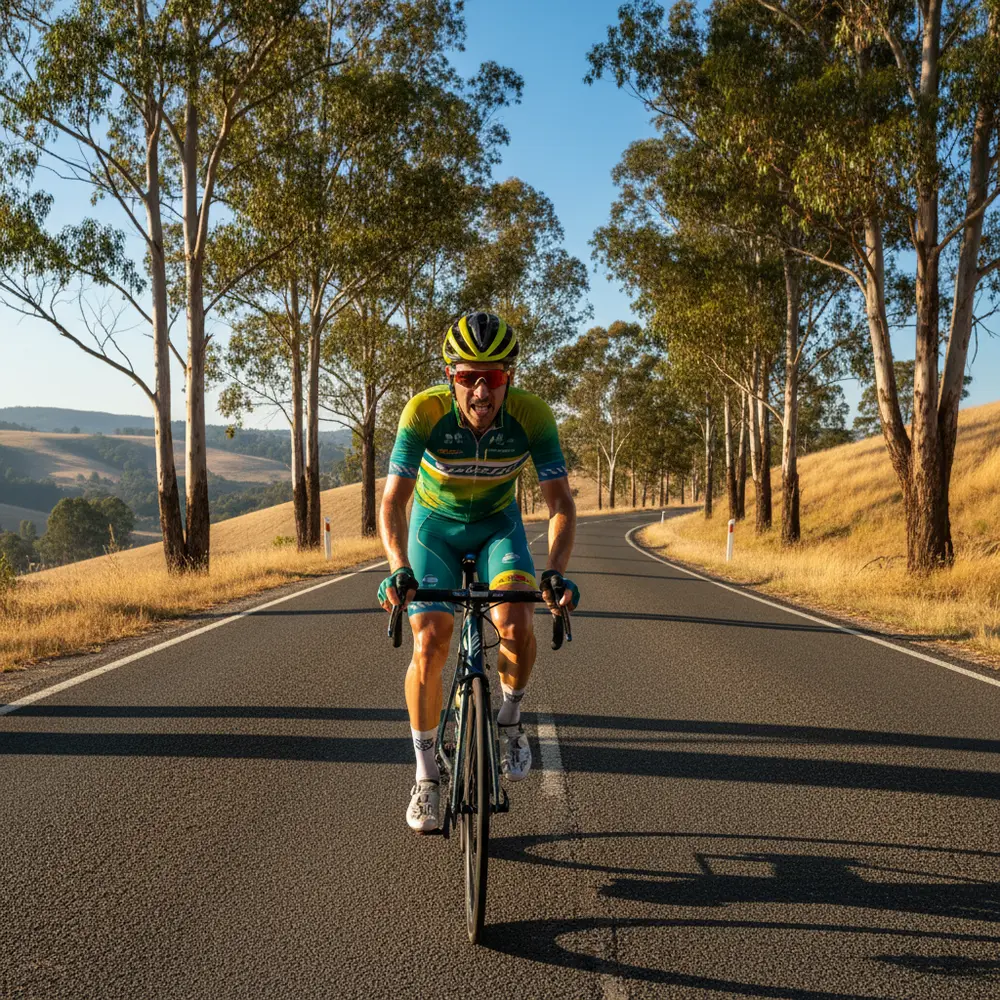
Caffeine is one of the most studied and consistently effective performance aids available to cyclists, and most of us are already using it without thinking too hard about it. The difference between a flat pre-ride flat white and a deliberate caffeine strategy can be meaningful when you hit that long exposed climb or grind into a headwind for 40 kilometres.
By the end of this article you will know how much caffeine to take, when to take it, and which source to use so that your next big ride or club event feels that bit more manageable. We will keep it practical and grounded in what the research actually says.
Note for Australian cyclists:
- Caffeine content in Australian cafe coffee varies widely depending on the roast, machine, and barista. Do not assume a standard number of milligrams per cup.
- Hot conditions on Australian summer rides make hydration strategy more important than usual. Caffeine at exercise doses does not significantly increase dehydration risk, but you still need to drink on time.
- If you compete under anti-doping rules, caffeine is not prohibited but it is on the WADA monitoring program. Check the WADA prohibited list and look for HASTA-certified products.
At a glance:
- Effective dose is 3 to 6 mg per kg of body weight, taken 45 to 60 minutes before the key effort.
- Mid-ride top-ups of 1 to 3 mg per kg can extend the benefit on longer rides.
- Gels and capsules give more predictable dosing than brewed coffee.
- Habitual daily users get a reduced benefit. A short break before a big event can help restore it.
Key takeaways:
- Time your caffeine hit to peak at the hardest part of the ride, not just at the start.
- Caffeine works by reducing how hard the effort feels, not by making you fitter overnight.
- Always test your caffeine strategy in training before race day or a big event.
Why Caffeine Actually Works for Cyclists
What Happens in Your Body When You Take Caffeine
Caffeine works primarily by blocking adenosine receptors in the brain. Adenosine is the chemical that builds up during exercise and signals fatigue. When caffeine occupies those receptors, the fatigue signal is dulled and the effort feels easier than it actually is. This is not a trick or a placebo. The evidence on caffeine endurance performance is well established across a wide range of endurance sports.
There is also a secondary effect on fat oxidation at moderate intensities, which can be useful on long climbs. But the main reason caffeine helps on the bike is the reduction in perceived exertion, plain and simple.
Why Hills and Headwinds Specifically Benefit From Caffeine
Both climbing and riding into a headwind are sustained, high-effort situations where the mental grind is just as hard as the physical one. When you are 30 minutes into a cat-4 climb or pushing into a consistent southerly on a coastal road, the feeling of fatigue compounds quickly. Caffeine does not remove the work, but it does reduce how overwhelming that effort feels.
Research supports that endurance activities lasting more than around five minutes show clear benefit from caffeine. A long drag up a local climb or a 20-kilometre headwind section sits well within that range.
How Much Caffeine Do You Actually Need
Dosage Guidelines Based on Body Weight
The AIS caffeine guidelines recommend a dose of 3 to 6 mg per kg of body weight for a pre-exercise hit, taken around 30 to 90 minutes before the effort. For mid-ride top-ups, a smaller dose of 1 to 3 mg per kg is appropriate.
More is not better above that range. Higher doses increase side effect risk, including gut issues, elevated heart rate, and jitteriness, without delivering proportionally more performance benefit.
| Body Weight | Low Dose (3 mg/kg) | High Dose (6 mg/kg) | Mid-ride Top-up (2 mg/kg) |
|---|---|---|---|
| 60 kg | 180 mg | 360 mg | 120 mg |
| 70 kg | 210 mg | 420 mg | 140 mg |
| 80 kg | 240 mg | 480 mg | 160 mg |
| 90 kg | 270 mg | 540 mg | 180 mg |
Most riders find the sweet spot somewhere around 3 to 4 mg/kg. Start at the lower end, especially if you are new to using caffeine strategically or if you are riding in the heat.
Caffeine Timing - Before, During, or Both
The Pre-Ride Window and Why It Matters
Caffeine peaks in your bloodstream roughly 45 to 60 minutes after ingestion for most people, though the form of delivery makes a small difference. If you are targeting a hard climb that starts 90 minutes into a ride, work backwards from there and time your dose accordingly.
The Saturday morning coffee ride culture in Australian clubs is actually well-suited to this. A double shot at the cafe before the roll-out can land perfectly for riders heading into the first hard section of the morning. The catch is that brewed coffee varies considerably in caffeine content depending on the machine and the barista, so you cannot always rely on it for precise dosing.
Mid-Ride Timing for Sustained Climbs and Long Headwind Sections
Pre-ride caffeine has a lifespan. On a long ride, the effect fades and a strategic mid-ride gel or chew can pick it back up right when you need it most. According to research on caffeine supplementation strategies among competitive cyclists, mid-ride use is actually underutilised. Most riders load up before the start and do not think about timing a second hit around the hardest section of the route.
If you know your route has a long exposed climb or a coastal stretch that always brings a headwind, plan your caffeine gel 30 to 45 minutes before that section, not at the base of the climb when it is too late for the timing to work.
Caffeine Sources on the Bike - Coffee, Gels, Chews, and Drinks
Choosing the right source comes down to precision and convenience. Here is a straightforward comparison:
| Source | Caffeine Accuracy | Onset Time | Practical Notes |
|---|---|---|---|
| Brewed coffee | Variable. Hard to dose precisely. | 45 to 60 min | Good for pre-ride but not mid-ride dosing. |
| Caffeine gel | Consistent. Label is reliable. | Around 30 to 45 min | Easy to carry. Read the label carefully. |
| Caffeine chew | Consistent. Easier to split a dose. | Around 30 to 45 min | Useful for smaller top-ups mid-ride. |
| Caffeinated drink | Moderate. Varies by brand and mix. | 45 to 60 min | Combines hydration and caffeine. |
| Caffeine capsule | Very consistent. Exact dose per pill. | 45 to 60 min | Not always easy to take mid-ride on the go. |
As Sports Dietitians Australia note, gels and capsules give you more predictable dosing than brewed coffee, which matters when you are trying to hit a specific mg per kg target. Always read the label on any gel or chew, as caffeine content varies significantly between Australian products.
Tolerance, Habituation, and the Case for Caffeine Cycling
If you drink three or four coffees a day, your adenosine receptors have adapted and caffeine will have a blunted performance effect. This is a real issue and one worth planning around if you have a big event coming up.
The AIS notes that habitual caffeine use reduces the performance benefit, and that periodic withdrawal can help restore it. A commonly referenced approach is reducing or cutting caffeine intake for around three to seven days before a key event, though this can be uncomfortable and individual responses vary.
A few honest points about caffeine cycling:
- You will feel flat and possibly get headaches during the withdrawal period. Plan this for a low-key training week, not race week.
- The benefit restoration is real but not guaranteed to work the same for everyone.
- If your daily coffee habit is moderate (one to two cups), the tolerance issue is less significant and you may not need to bother.
- Always try any new approach in training before applying it to a race or event.
Practical Timing Plan for a Typical Australian Ride
Here is a step-by-step guide built around a weekend club ride of 80 to 120 km with a cat-4 climb or a coastal road exposed to a consistent sea breeze.
- Assess your baseline tolerance. How much caffeine do you drink daily? If you are having more than two coffees a day, your response to caffeine may be dulled. Consider a reduction week before a key event.
- Calculate your dose. Multiply your body weight in kg by 3 for a conservative pre-ride dose. A 75 kg rider is looking at around 225 mg as a starting point. Check your gel or capsule label to match that number.
- Decide on your pre-ride source. If the ride starts at 6am from a car park, a gel or capsule 45 minutes before roll-out is more reliable than hunting for a cafe. If you are meeting at a cafe before the ride, a double shot works but note you cannot control the exact dose.
- Identify the key effort moment on your route. Look at your route before the ride. Where is the hardest climb or the longest headwind section? Plan to take your mid-ride gel around 30 to 45 minutes before that point. For a climb that starts at the 60 km mark, take the gel around the 45 km mark.
- Manage hydration alongside caffeine. At typical exercise doses, caffeine does not significantly increase dehydration risk during exercise. But the Australian heat is unforgiving. Stick to your normal hydration plan - one bidon per hour as a rough guide - and do not let the caffeine conversation distract you from drinking on time.
- Factor in sleep if the ride finishes late. Caffeine has a half-life of roughly five to six hours in most people. A gel taken at 3pm could still be active at 9pm. If you ride in the afternoon or evening to avoid summer heat, think about whether a caffeine hit mid-ride is worth the disrupted sleep that night. Recovery sleep matters more than a marginal gain on one ride.
Common Mistakes
- Taking caffeine right at the base of the climb instead of 30 to 45 minutes before it, so the effect has not kicked in yet.
- Assuming a flat white gives a reliable dose. Cafe coffee varies enormously and cannot be used for precise dosing.
- Stacking pre-ride coffee on top of a mid-ride gel without tracking the total dose, then wondering why you feel jittery or have gut issues.
- Using caffeine as a substitute for proper carbohydrate fuelling. Caffeine reduces perceived effort but does not replace the energy your muscles need.
- Not testing the strategy in training before using it on a race day or an event where it matters.
- Using a new caffeine product during a ride in summer heat without knowing how your gut handles it.
If You Are New to Using Caffeine Strategically
- Start at the low end of the dose range, around 2 to 3 mg per kg, and see how your body responds.
- Use a gel or capsule for your first few attempts so you know exactly what you are taking.
- Pick a training ride rather than a race or group event to test it for the first time.
- Pay attention to how your gut, heart rate, and sleep respond before scaling up the dose or frequency.
- Do not skip carbohydrate nutrition just because you feel good from the caffeine. Keep eating to your ride plan.
If You Have Used Caffeine Before but Want to Optimise
- Shift your focus from "caffeine before the ride" to "caffeine timed to the hardest part of the ride."
- Consider a short withdrawal period before a big event if you are a heavy daily user.
- Experiment with a mid-ride gel on a long training ride to get your personal timing dialled in.
- Look at your current daily caffeine intake and be honest about whether tolerance is blunting your results.
- Check that the products you are using are accurately labelled. Not all gels are created equal.
What to Watch Out For - Side Effects and When Not to Use It
Caffeine is effective but not without trade-offs. The most common issues on the bike are gut discomfort and jitteriness at higher doses. Both are more likely in hot conditions or when you are already well into a hard effort.
Key side effects to know about:
- GI upset: More common at higher doses and in hot conditions. Start low and test in training.
- Elevated heart rate: Normal at exercise doses but can feel uncomfortable for some riders.
- Sleep disruption: Caffeine consumed within six hours of sleep can reduce sleep quality, according to Sleep Foundation guidance on caffeine and sleep. This is the big one for afternoon riders.
- Caffeine crash: Less common at moderate exercise doses but possible if you take a large hit and do not follow it with carbohydrates.
If you are a competitive rider, make sure any caffeine supplement you use carries HASTA or Informed Sport batch-testing certification. Under anti-doping rules, the athlete is personally responsible for any substance found in their system. Check the Sport Integrity Australia supplement safety guidance for what to look for before buying.
Frequently asked questions
Is caffeine banned in cycling competitions?
No. Caffeine is not on the WADA prohibited list. It is on the monitoring program, which means WADA tracks usage patterns among athletes but does not prohibit it. Always check the current WADA list before competing, as classifications can change. If you compete under Cycling Australia rules, Sport Integrity Australia administers anti-doping regulations locally.
How long before a climb should I take a caffeine gel?
Around 30 to 45 minutes before the hardest effort is the practical target for most caffeine gels. If you are taking a capsule or drinking coffee, allow closer to 45 to 60 minutes. The goal is to time peak plasma concentration to land when you are actually at the pointy end of the climb or the headwind section.
Does caffeine dehydrate you when riding in Australian summer heat?
At the doses used during exercise, caffeine does not significantly increase dehydration risk compared to riding without it. Research on caffeine and fluid balance shows the diuretic effect is more pronounced at rest and at higher doses than cyclists typically use. That said, Australian heat is a real concern and normal hydration discipline still applies. Drink to your plan regardless of whether you have taken caffeine.
What is the difference between using coffee and a caffeine gel?
The main difference is precision. A gel has a stated caffeine content that you can rely on for dosing. Brewed coffee varies considerably depending on the roast, grind, machine, and how long the shot was pulled. For pre-ride use where exact dosing is less critical, coffee is fine. For mid-ride strategic dosing, gels or chews give you more control.
Can caffeine replace carbohydrate fuelling on a long ride?
No, and this is a trap worth flagging clearly. Caffeine reduces how hard the effort feels, but your muscles still need carbohydrates to sustain the power output. Feeling less fatigued does not mean you are fuelled. Keep eating to your normal ride nutrition plan and use caffeine on top of it, not instead of it. For more on cycling nutrition strategies, check out the Segment Club nutrition hub.
Wrapping Up
To summarise what matters most:
- Dose around 3 to 6 mg per kg of body weight before the ride, timed so peak effect lands at the hardest section.
- Use a mid-ride gel or chew if the ride is long enough that the pre-ride dose will fade before the climb or headwind section arrives.
- Gels and capsules give more reliable dosing than cafe coffee for anything where precision matters.
- Heavy daily coffee drinkers may need a short break before a big event to get a meaningful performance response.
- Always factor in sleep, especially if you ride in the afternoon or evening. Recovery matters more than a marginal caffeine gain on any single ride.
If you want to talk through your ride nutrition plan in more detail, or you have questions about what works for your specific riding conditions, feel free to get in touch with the Segment Club team. And if you are looking for gear or accessories to support your riding, head over to the Segment Club shop.
This is educational content, not personalised sports nutrition advice. Individual responses to caffeine vary and it is worth consulting a qualified sports dietitian if you have specific health considerations or are preparing for a significant event.