E-bike batteries are the most expensive single component on your bike, with replacements in Australia costing anywhere from $500 to well over $1,500 depending on the brand. The good news is that heat damage is largely preventable, and a few consistent habits during summer will protect that investment and keep your battery performing for years.
By the end of this article you will know exactly how to charge, store and ride your e-bike safely through a hot Australian summer. Whether you are new to e-bikes or a seasoned commuter, the practical steps here are straightforward to put into practice straight away.
Note for Australia:
- According to Bureau of Meteorology climate data, multiple Australian cities and regional areas regularly exceed 40°C during summer, making heat management a genuine concern for local e-bike riders.
- Replacement battery costs in Australia are significant. According to the CHOICE guide to electric bike batteries, Australian riders can expect to pay $500 to $1,500 or more for a replacement unit depending on the brand.
- Australian Consumer Law provides statutory guarantees on products, and ACCC product warranty guidance is worth reading if your battery fails prematurely and a manufacturer tries to blame heat-related misuse.
At a glance:
- Heat accelerates lithium-ion battery degradation, and Australian summer conditions are well within the range where real damage occurs.
- Never leave your battery in a parked car, in direct sun, or in a hot garage during summer.
- Charge at the coolest time of day, and always let a hot battery cool down before plugging it in.
- Store your battery at a partial charge (roughly 30 to 60%) in a cool, dry location during extended periods off the bike.
Key takeaways:
- Heat damage to lithium-ion batteries is cumulative. Every hot storage or charging event adds up over time.
- A battery management system (BMS) protects against catastrophic failure but does not prevent gradual heat degradation.
- Small changes to your routine in summer can meaningfully extend battery life and delay an expensive replacement.
Why Australian Summers Are Tough on E-Bike Batteries
Australia is one of the hottest countries on the planet for extended periods. Inland cities like Broken Hill, Mildura and Alice Springs regularly hit the low to mid 40s, and coastal capitals like Perth, Adelaide and even Melbourne see multiple 40°C-plus days each summer. For an e-bike rider, that ambient heat is not just uncomfortable. It is working against your battery every time you ride, park, charge or store in those conditions.
The financial stakes are real. As noted above, replacing an e-bike battery in Australia is a significant out-of-pocket cost, and unlike tyres or brake pads, it is not a purchase most riders budget for. Understanding why heat is damaging is the first step to avoiding it.
How Heat Affects Lithium-Ion Battery Chemistry
All modern e-bike batteries use lithium-ion cells. These cells work by moving lithium ions between electrodes through a liquid electrolyte. The problem with heat is that it accelerates the chemical breakdown of that electrolyte and causes unwanted side reactions inside the cells. Over time, this reduces how much charge the battery can hold, a process known as capacity fade.
According to battery thermal management research, lithium-ion capacity fade accelerates significantly at temperatures above 30 to 40°C, particularly during storage or charging. Internal resistance also increases, which reduces your effective range. The damage is cumulative. One hot day in the boot of a car will not kill your battery, but repeated heat exposure across a summer season will compound the degradation in a way that becomes noticeable within a year or two.
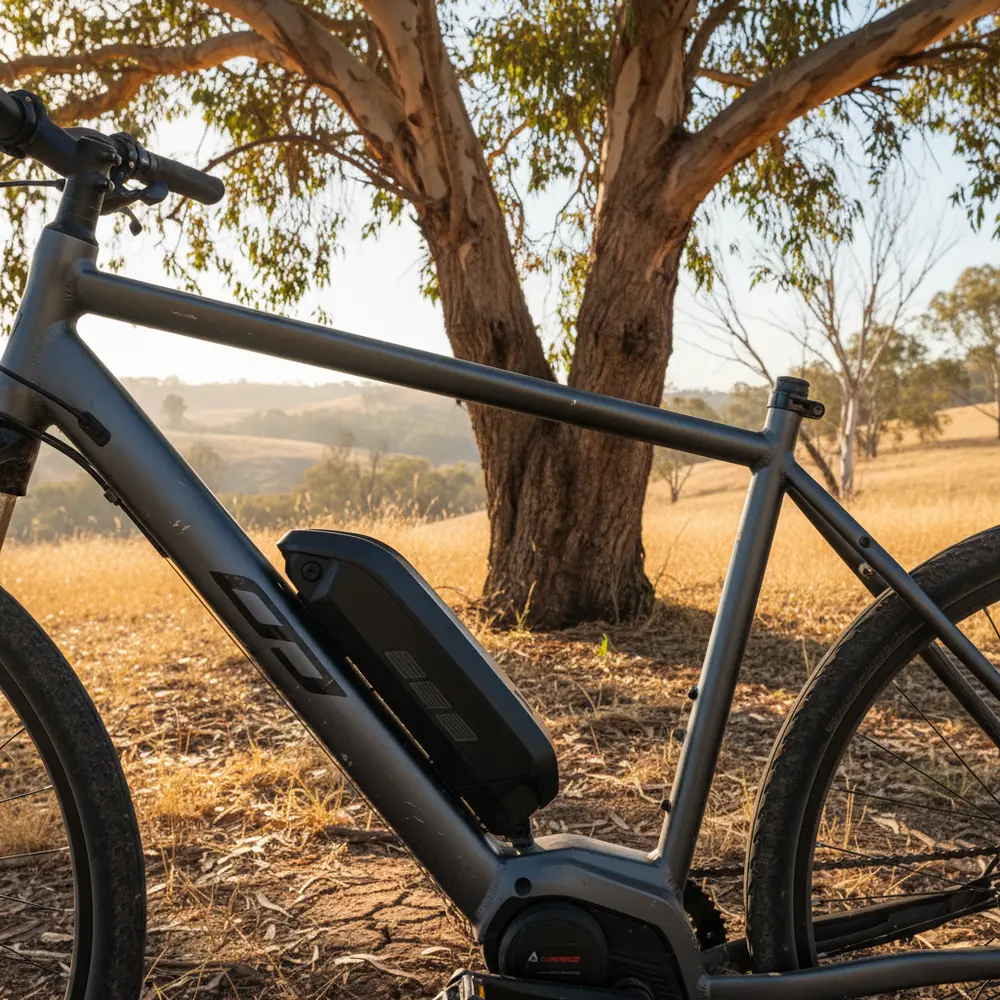
Your battery does have built-in protection. The battery management system, or BMS, is the electronics inside the battery pack that monitor temperature, voltage and charge levels. It will cut off charging or discharging in extreme conditions to prevent immediate failure. But the BMS is not a cure for heat degradation. It prevents catastrophic events, not the slow capacity fade that happens when your battery is repeatedly stored or charged in high temperatures.
At What Temperature Does Real Damage Start?
The degradation process is gradual rather than a hard cutoff, but the research is consistent that temperatures above 30°C during storage or charging accelerate wear. Most major e-bike manufacturers reflect this in their specifications. According to Bosch eBike battery storage guidelines, Bosch recommends storing batteries between 0°C and 20°C for long-term storage, and they specify that charging should not be performed outside a 0°C to 40°C range.
The takeaway for Australian riders is straightforward. On a 40°C summer day, ambient air temperature alone is already at the upper limit of safe charging conditions. Add in a hot garage, a south-facing wall or a car boot, and you are well beyond it.
| Situation | Approximate Temperature | Risk to Battery |
|---|---|---|
| Cool, shaded room indoors | 18 to 25°C | Low. Ideal for charging and storage. |
| Garage on a warm summer day | 30 to 45°C | Moderate to high. Avoid charging here in summer. |
| Parked car in summer sun | 60 to 80°C within minutes | Very high. Never store your battery here. |
| Direct outdoor sun on bike | Can exceed 50°C on dark surfaces | High. Remove battery or shade the bike. |
| Air-conditioned room | 20 to 24°C | Low. Best environment for charging in summer. |
The parked car figures above are not guesswork. RACQ research on car temperatures in Australian summer shows interior temperatures can reach 60°C or higher within 10 to 15 minutes on a 30°C day. Car boots can run even hotter. If your e-bike is racked on the car for a summer trip and the battery is left on, you are placing it into an environment that far exceeds safe storage conditions.
Riding Your E-Bike in Extreme Heat - What You Need to Know
Riding in the heat is not the same risk as storing in the heat. When you are moving, airflow helps cool the battery, and the BMS actively manages temperature during discharge. That said, there are a few things worth knowing before you head out on a 38°C day.
A lower assist level means the battery is working less hard and generating less heat internally. On very hot days, dropping from turbo or high to eco or medium is a reasonable habit. It extends your range and reduces the thermal load on the cells. It is also just a sensible way to manage effort in extreme heat for your own sake as the rider.
Signs Your Battery Is Overheating on a Ride
Most modern e-bike systems will flag a temperature issue on the display or app before anything goes wrong. Common indicators include a temperature warning icon, reduced power output or the system automatically stepping down assist. If your display shows a warning, stop in the shade and let the system cool down before continuing. Do not try to override it.
Physical signs to watch for include the battery casing feeling very hot to the touch, a noticeable drop in range compared to normal conditions, or unusual smells near the battery. If you notice anything unusual, stop riding and move the bike to shade. These situations are uncommon with properly functioning batteries, but they are worth knowing.
Charging Your E-Bike Battery in Summer
Charging is one of the highest-risk activities for a battery in hot weather, because you are pushing current through already warm cells. Two habits make a significant difference here: when you charge and where you charge.
Best Times and Places to Charge in Hot Weather
The best time to charge in summer is in the morning or evening when ambient temperatures are lower, or in an air-conditioned space during the day. Avoid plugging in immediately after a long summer ride. Let the battery rest for 30 to 60 minutes first to let the cells cool down. Charging a hot battery does accelerate wear, and it is an easy habit to break.
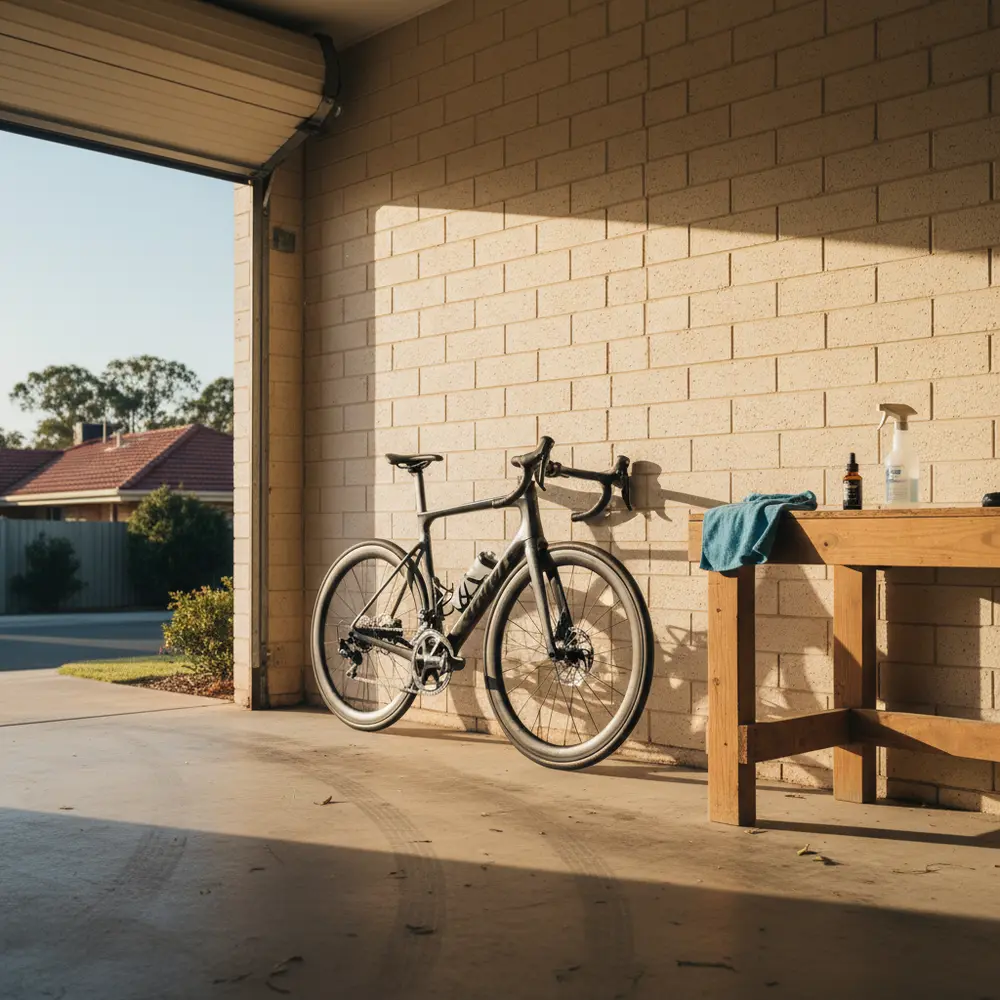
Where you charge matters just as much. A cool indoor room is ideal. A shed or garage that has been sitting in the afternoon sun is not. If your only option is a warm garage, charge in the morning before it heats up, or bring the battery inside. Most batteries detach from the frame easily, and bringing it indoors is a simple fix.
On fast charging: if your charger or system supports fast charging, be aware that fast charging generates more heat than standard charging. In summer, standard charging speed is the better choice for battery longevity. It takes longer, but the thermal cost of fast charging in already-hot conditions is not worth the time saving.
Storing Your E-Bike Battery During a Hot Australian Summer
Storage habits matter most for riders who are not on the bike every day. If your e-bike sits for a week or more at a time, where and how you store the battery has a direct impact on its long-term health.
Ideal Storage Conditions and Charge Level
The ideal storage environment is cool, dry and out of direct sunlight. A bedroom, study or air-conditioned laundry is far better than a garage or garden shed in summer. If you are storing the battery for an extended period, charge it to roughly 30 to 60% rather than leaving it fully charged or completely flat. This is the guidance from Bosch and reflects the general best practice for lithium-ion chemistry. A full charge held over a long period in heat stresses the cells more than a partial charge.
For riders who use their e-bike regularly through summer, the key habits are simpler: keep the bike in the shade when parked, bring the battery indoors on very hot days, and do not leave it in the car. The Shimano STEPS battery care guide reinforces this approach, recommending cool, dry storage and partial charge for periods away from the bike.
Common Mistakes to Avoid
These are the habits that most often damage e-bike batteries in Australian summer conditions.
- Leaving the battery in a parked car, even for a short stop on a hot day. Car interiors heat up very quickly.
- Charging immediately after a ride in hot conditions without letting the battery cool first.
- Storing a fully charged battery in a hot garage or shed for weeks at a time.
- Ignoring temperature warnings on the display and continuing to ride hard in extreme heat.
- Leaving the bike in direct sun for extended periods. Even if you are only stopped briefly, the battery surface temperature climbs fast.
- Using fast charging as the default in summer when standard charging is the lower-risk option.
Long-Term Battery Health - Habits That Pay Off Year Round
Battery capacity fade happens with every charge cycle, but heat dramatically accelerates that process. For experienced riders, the useful lens here is thinking about it across seasons. A battery that regularly experiences summer heat during storage or charging will show noticeable capacity loss within two to three years. One that is stored and charged carefully in cool conditions will retain more of its original capacity across the same period.
Most lithium-ion e-bike batteries are rated for somewhere between 500 and 1,000 full charge cycles before meaningful capacity loss. Heat does not just shorten lifespan in absolute terms. It reduces the effective capacity per cycle as internal resistance builds. This means you will start noticing shorter range before the battery actually fails, and that is the real day-to-day cost of poor heat management.
It is also worth knowing your rights. Under Australian Consumer Law, manufacturers cannot simply void a warranty by claiming heat misuse without supporting evidence. If you believe your battery has failed prematurely and the manufacturer is attributing it to heat damage, check the Australian Consumer Law warranty rights outlined by the ACCC. Products sold in Australia must meet acceptable quality standards, and using a bike in Australian summer conditions is entirely foreseeable use.
Summer Battery Checklists
Use these as a quick reference on riding days and during storage periods.
Before and after a ride in hot weather:
- Check the battery indicator before heading out. A well-charged battery handles heat better than one that is already low.
- Avoid parking the bike in full sun for extended stops. Find shade where you can.
- After your ride, let the battery cool for at least 30 to 60 minutes before charging.
- Check the casing. If it is hot to the touch, give it more time before plugging in.
- Look at the display for any temperature or error warnings and address them before your next ride.
For storage or days off the bike in summer:
- Store the battery indoors in a cool, dry room rather than in the garage or shed.
- If storing for more than a week, set the charge level to roughly 30 to 60%.
- Never leave the battery in a parked car, even for a short errand stop.
- Keep the battery out of direct sunlight at all times, whether on or off the bike.
- Check the charge level every few weeks if the bike is sitting unused. Do not let it fully discharge.
If You Are New to E-Bikes
If this is your first e-bike summer, here are the basics to start with.
- Bring your battery indoors on very hot days. This single habit makes a big difference.
- Charge in the morning or evening, not in the middle of a hot afternoon.
- Do not worry about every ride in summer. The BMS is there to protect the battery during normal use. These tips are about the storage and charging habits that add up over time.
- Read your manufacturer's manual for the specific temperature ranges that apply to your battery. Bosch and Shimano both publish clear guidance.
- If you have questions about your specific setup, your local bike shop is the best first stop.
If You Have Managed Battery Care Before
For riders who already follow basic battery hygiene, these are the details worth adding to your routine in summer.
- Consider dropping to standard charge speed in summer rather than fast charging, particularly when the battery is already warm from a ride.
- Think about where the bike lives between rides. A garage that hits 45°C by midday is doing cumulative damage even when you are not riding.
- Track your range over time. A noticeable drop in range compared to the same time last year can indicate capacity fade, often heat-accelerated.
- If you transport the bike by car regularly, remove the battery and bring it into air-conditioning during stops.
- For the off-season or extended breaks, store at 30 to 60% charge as per manufacturer guidance, not at 100%.
Frequently asked questions
Will one very hot day ruin my e-bike battery?
One event is unlikely to cause obvious damage, but heat degradation is cumulative. A battery left in a hot car once will not fail immediately, but repeated exposure across a summer season adds up. The habits matter most over the long run.
What is the best charge level to store my battery at in summer?
Most major manufacturers, including Bosch, recommend storing at around 30 to 60% charge for extended periods. Storing fully charged in heat places additional stress on the cells. Check your specific manufacturer's guidance as ranges can vary slightly between systems.
Can I charge my e-bike outside in summer?
It is best to avoid charging outdoors in direct sun or in a hot garage during summer. Charge in a cool, shaded indoor space. If your only option is outdoors, charge in the early morning before temperatures climb.
Does reducing assist level in extreme heat actually protect the battery?
It helps at the margins. Lower assist means the battery is working less hard and generating less internal heat during discharge. The motor also runs cooler. On very hot days it is a sensible habit, but the bigger risks are storage and charging conditions rather than the ride itself.
What are my rights if my e-bike battery fails and the manufacturer blames heat damage?
Under Australian Consumer Law, manufacturers must provide products of acceptable quality and cannot void your warranty without supporting evidence of misuse. Using an e-bike in Australian summer is entirely foreseeable use. Review the ACCC guidance and consider contacting a consumer advocate if you believe the failure was premature.
Wrapping Up
E-bike battery care in summer comes down to a few consistent habits, not complicated procedures. Here is the short version.
- Keep the battery cool during storage. Indoors and out of direct sun is the target.
- Charge at cooler times of day and always let a hot battery rest before plugging in.
- Never leave your battery in a parked car on a hot day.
- Store at 30 to 60% charge if the bike is sitting unused for a week or more.
- Check your manufacturer's specific guidance, and know your rights under Australian Consumer Law if something goes wrong.
For more practical e-bike and bike maintenance advice tailored to Australian riders, browse the Segment Club blog. If you are looking for the right gear to keep your bike in top shape over summer, check out the Segment Club shop. And if you have a specific question about your battery or setup, get in touch with us and we will do our best to point you in the right direction.
You can also connect with other Australian riders and find summer riding events through Bicycle Network Australia, which is a great resource for the local cycling community.
This is educational content, not financial advice.