Switching to clipless pedals is one of the biggest upgrades a new cyclist can make, and it is also one of the most misunderstood. Get the setup right from the start and you will ride more efficiently, more comfortably, and with far less chance of knee pain down the road.
By the end of this guide you will know which pedal system suits your riding, how to install your pedals and cleats correctly, and how to clip in and out without ending up on the ground at a red light. We will walk through every step in plain language, no bike fitting degree required.
Note for Australian cyclists:
- Most local bike shops (LBS) in Australia stock Shimano SPD and SPD-SL as their primary clipless systems. These are a safe starting point for most beginners.
- Bikes from brands like Giant, Trek, and Specialized sold through Australian retailers often come with basic platform pedals. Upgrading to clipless is a straightforward and worthwhile next step.
- SPD two-bolt MTB-style pedals are particularly popular with gravel and commuter riders in hilly Australian cities like Melbourne, Sydney, and Brisbane, because the recessed cleat lets you walk normally off the bike.
At a glance:
- Clipless pedals lock your shoe to the pedal via a cleat, improving power transfer and pedalling efficiency.
- SPD (two-bolt) is the most beginner-friendly system. SPD-SL and Look Keo suit road riders chasing performance.
- Cleat position (fore-aft and rotation) matters more than most beginners realise. Get it wrong and your knees will tell you about it.
- The left pedal is reverse-threaded. Always tighten it clockwise when viewed from the pedal side (anti-clockwise into the crank). This trips up almost everyone the first time.
Key takeaways:
- Start with your pedal tension set to its loosest setting and only increase it once clipping in and out feels natural.
- Practise clipping out while stationary before your first road ride. A soft patch of grass is ideal.
- Adequate float in your cleats reduces rotational stress on your knees. For most beginners, 4 to 6 degrees of float is a good starting point.
What Are Clipless Pedals and Why Are They Called That?
The name is a bit of a contradiction. Clipless pedals are the ones you actually clip into. The name comes from their predecessor, the old-school toe clip system, which used a metal cage and strap to secure the foot. When the spring-loaded cleat system replaced that cage, the new pedals were marketed as "clipless" because there was no toe clip involved. The name stuck.
Today, clipless pedals work by locking a metal or plastic cleat (bolted to the sole of your cycling shoe) into a spring-loaded mechanism on the pedal body. To release, you twist your heel outward and the spring releases the cleat. It takes about 10 minutes to learn and feels completely natural within a few rides.
A Quick History of the Clipless System
Look, a French ski binding company, introduced the first modern clipless road pedal system in the mid-1980s. Shimano followed shortly after with the SPD system, which became the dominant choice for mountain biking and commuting. Since then, dozens of variations have appeared, but the core mechanic has barely changed. Most systems you will encounter today are direct descendants of those original designs.
Clipless vs Flat Pedals: Which Should a Beginner Choose?
Flat pedals are simple, forgiving, and require no special shoes. If you are still building bike handling confidence or you ride mostly short, casual trips, there is nothing wrong with staying on flats for now. But if you are training, riding longer distances, or getting serious about your cycling, clipless pedals are worth learning.
Pros and Cons of Each System for New Riders
| Pedal Type | Pros | Cons |
|---|---|---|
| Flat Pedals | No special shoes needed. Easy to use. Good for beginners building confidence. | Less efficient power transfer. Foot can slip under load. |
| Clipless Pedals | More efficient pedalling. Foot stays secure. Better for longer rides and training. | Requires compatible shoes and cleats. Learning curve to clip out at stops. |
Most experienced riders will tell you to make the switch sooner rather than later. The learning curve is real but short, and the benefits compound over every kilometre you ride.
The Main Clipless Pedal Systems Explained
There are a handful of systems worth knowing about. You do not need to memorise every spec, just understand the practical differences before you buy. For a broader comparison of clipless pedal systems, road.cc has a solid buyers guide worth a read.
Road vs MTB vs Commuter: Which One Suits You?
| System | Bolt Pattern | Best For | Walkability | Beginner Friendly |
|---|---|---|---|---|
| Shimano SPD | 2-bolt | MTB, gravel, commuting | Good. Recessed cleat. | Yes. Easiest to learn. |
| Shimano SPD-SL | 3-bolt | Road cycling | Poor. Cleat protrudes. | Moderate. Steeper curve. |
| Look Keo | 3-bolt | Road cycling | Poor. Cleat protrudes. | Moderate. Similar to SPD-SL. |
| Speedplay | 4-bolt (adaptor) | Road cycling | Poor. | Lower. More maintenance needed. |
For most Australian beginners, especially those riding road, gravel, or commuting, Shimano SPD is the sensible starting point. It is widely available at your local bike shop, the shoes are walkable, and it is genuinely easy to clip in and out. Road-focused riders who want to prioritise efficiency can look at SPD-SL or Look Keo once they are comfortable with the basics. For full details on the Shimano SPD and SPD-SL pedal systems, the official Shimano Australia site has the tech specs and cleat compatibility information.
What You Need to Get Started: Pedals, Shoes, and Cleats
To run a clipless system you need three things: the pedals, compatible cycling shoes, and the correct cleats for your pedal system. Pedals and cleats are usually sold together, or the cleats are included with the pedals. Shoes are purchased separately.
How to Choose the Right Cycling Shoes for Your Pedal System
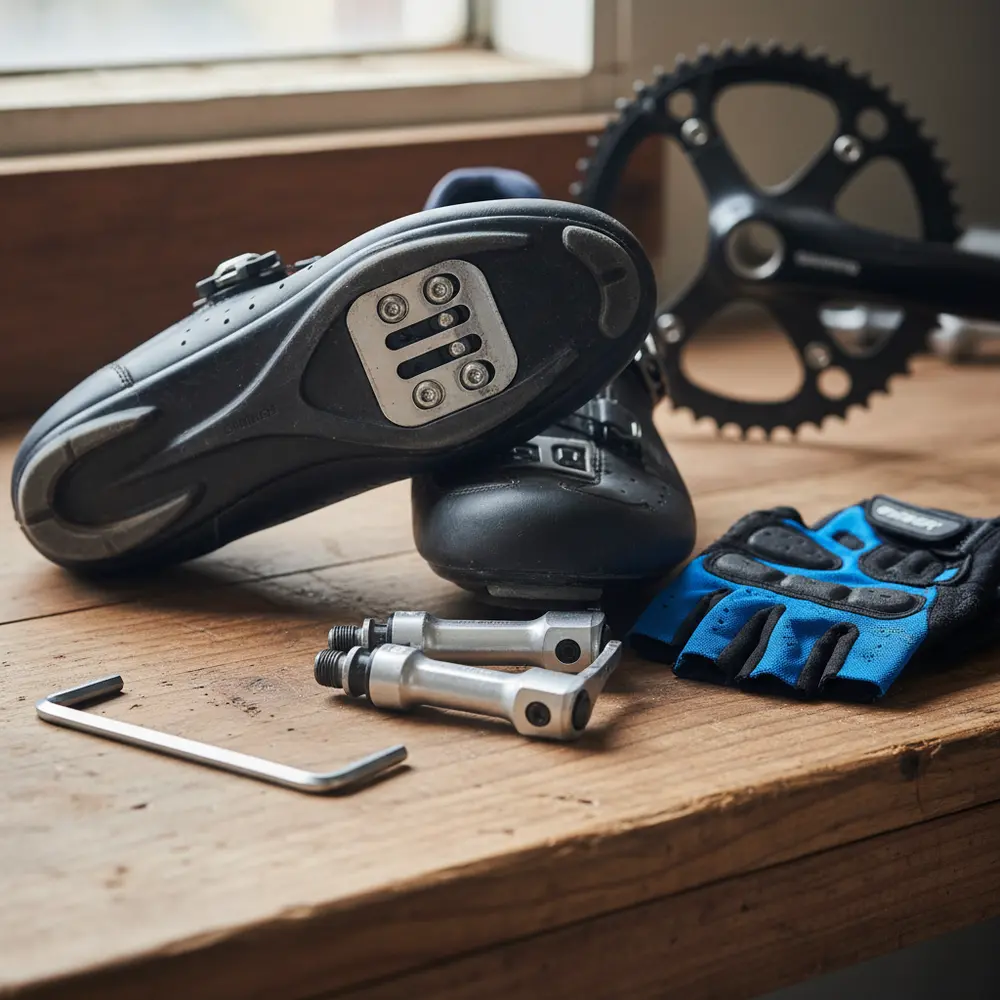
The key compatibility check is the bolt pattern on the shoe sole. Two-bolt shoes (MTB style) work with SPD pedals. Three-bolt shoes (road style) work with SPD-SL, Look, and most road systems. Some shoes have soles drilled for both patterns, which gives you flexibility.
When buying shoes, look for these features:
- A stiff sole for better power transfer. Carbon or fibreglass-reinforced soles are stiffer than nylon.
- A snug but not tight fit. Your toes should not be pressed against the front of the shoe.
- Velcro, BOA dial, or buckle closure rather than laces, for a secure and adjustable fit on the bike.
- Recessed cleat compatibility if you plan to walk in them regularly (MTB or gravel shoes).
For a practical overview of choosing clipless pedals and cycling shoes, the Wiggle Australia buying guide is a useful reference when you are in the decision-making phase.
Step-by-Step Clipless Pedal and Cleat Setup Guide
Follow these steps in order. Take your time with the cleat positioning. Getting it right the first time saves you a lot of fiddling later.
- Choose your system. SPD for gravel, MTB, or commuting. SPD-SL or Look Keo for road. If in doubt, start with SPD.
- Select compatible shoes. Match the bolt pattern on the shoe to your pedal system. Try them on in store if possible.
- Install the pedals onto the crank arms. The right pedal threads in clockwise (standard). The left pedal is reverse-threaded and tightens anti-clockwise (or clockwise when viewed from the pedal-facing side). Grease the threads lightly before installation. Tighten firmly with a pedal spanner or 8mm hex key. Check the manufacturer manual for the specified torque value for your pedals.
- Fit the cleats to your shoes. Start with the cleat centred side-to-side on the sole. Position the cleat so the widest part of your foot (the ball of your foot, or first metatarsal head) sits directly over the pedal axle when clipped in. Use the slot range on the cleat plate to adjust fore-aft position.
- Set the cleat angle (rotation). Point the cleat straight ahead as a starting position. If your feet naturally point outward or inward when you walk, match that angle with the cleat. This is where float comes in. See the next section for detail.
- Adjust pedal tension. Most clipless pedals have a tension adjustment screw (usually a small hex bolt at the back or front of the pedal body). Set it to the lowest (easiest) tension before your first ride. You can increase it once you are comfortable clipping in and out consistently.
- Practise clipping in and out while stationary. Hold onto a wall or fence, clip one foot in, then practise releasing it by twisting your heel outward. Repeat on both sides until it is instinctive.
Tip: Before your first road ride, take the bike to a patch of grass or a quiet carpark. Practise clipping out and putting your foot down repeatedly. The soft ground gives you a forgiving landing if you wobble. Almost every cyclist has a slow-speed topple when they first start. It is part of the process, so get it out of the way safely.
If you would like to see the process demonstrated visually, the GCN clipless pedal setup tutorial on YouTube walks through each step clearly and is a great companion to this guide.
How to Set Cleat Position Correctly (Float, Fore-Aft, and Angle)
Cleat position is the part most beginners rush or skip entirely. Do not. Incorrect cleat setup is one of the most common causes of cycling knee pain, according to Sports Medicine Australia. Getting it right from the start protects your joints over thousands of kilometres.
There are three things to get right:
- Fore-aft position: The ball of your foot (first metatarsal head, the widest bony point behind your big toe) should align directly over the pedal axle. This is the universally accepted starting point recommended by bike fitters. Slide the cleat forward or back in the slot to achieve this alignment.
- Rotational angle: The cleat angle should match your natural foot angle. Stand naturally and look at how your feet point. Match that angle. Forcing your feet into an unnatural position causes knee tracking problems over time.
- Float: Float is the amount of rotational movement your foot has before the cleat releases. Shimano SPD cleats come in single-release (SM-SH51, approximately 0 degrees float) and multi-release (SM-SH56, approximately 6 degrees float). For beginners, a cleat with more float (4 to 6 degrees) is recommended to reduce rotational stress on the knee. Most road systems including SPD-SL and Look Keo also offer float options across their cleat ranges.
For a more detailed look at how to set cleat position correctly, BikeFit.com is a solid specialist resource used by professional bike fitters worldwide.
How to Clip In and Clip Out Without Falling Over
Clipping in is straightforward once you know the motion. Place the front of the cleat into the front jaw of the pedal, then press the heel down firmly until you hear or feel a click. That click means you are locked in.
Clipping out is a heel-twist outward, away from the bike. It does not require a lot of force, especially with tension set low. The instinct for most beginners is to lift the foot straight up, which does not work. Twist outward. That is the motion to practise.
A few practical habits to build early:
- Unclip one foot well before you reach a stop. Do not wait until you are stationary.
- Default to unclipping your dominant foot first, then decide which side to put down based on the road surface or camber.
- At intersections, keep one foot clipped in for a smooth start, with the other foot on the ground ready.
- Look ahead, not down at your feet. The motion becomes muscle memory quickly.
Common Beginner Mistakes and How to Avoid Them
Here is where most people come unstuck:
- Setting tension too tight too soon. Start at the lowest setting. There is no advantage to high tension until you are completely confident clipping out under pressure.
- Installing the left pedal the wrong way. The left pedal has a reverse (left-hand) thread. Turning it clockwise tightens it from the crank side. Many beginners accidentally loosen it while riding. Remember: left pedal, anti-clockwise into the crank.
- Placing the cleat too far forward. A cleat positioned too far toward the toe puts unnecessary strain on your ankle and calf. Always start from the ball-of-foot landmark.
- Ignoring cleat angle. Forcing both feet dead straight when your natural gait angles outward is a recipe for knee pain. Match your natural stance.
- Not practising before a group ride. Your first clipless experience should not be in traffic or with a group waiting on you. Solo practice sessions first, always.
- Wearing out cleats past their useful life. Worn cleats clip in unreliably and can release unexpectedly. Check them regularly and replace when the contact edges show significant wear.
If You Are New to Clipless Pedals
- Start with Shimano SPD. It is the most forgiving system and is widely supported at Australian bike shops.
- Set pedal tension to minimum and leave it there for your first few rides.
- Practise on grass or in a quiet carpark before hitting the road or trail.
- Have a local bike shop check your cleat position after your first two or three rides if anything feels uncomfortable.
- Expect one or two slow-speed wobbles. It is normal. Everyone does it. The goal is to do it somewhere soft and empty, not at a busy intersection.
If You Have Ridden Flat Pedals for a Long Time
- Resist the urge to pull up hard on the pedal stroke immediately. Focus on a smooth, circular motion first while your body adjusts to being connected to the bike.
- Your instinct to dab a foot down quickly at stops will need re-training. Unclip early and deliberately.
- Check that your saddle height is appropriate for clipless pedals. The connection point between foot and pedal shifts slightly compared to flat pedals, which can affect your leg extension and comfort.
- If you have had any knee issues on flat pedals, flag this with a bike fitter before committing to a cleat position. Do not just copy someone else's setup.
- Give yourself at least four to six rides before drawing conclusions about comfort. Your body needs time to adapt to the new contact point.
Maintenance Tips: Keeping Your Pedals and Cleats in Good Shape
Clipless systems are low maintenance but not zero maintenance. A few simple habits will keep everything working reliably.
- Cleats: Inspect the contact surfaces regularly. Replace cleats when the edges show visible rounding or wear, or when clipping in becomes unreliable. How quickly they wear depends on how much you walk in them. MTB-style recessed cleats generally last longer because the rubber protects them from ground contact.
- Pedal bearings: Most entry and mid-level pedals use serviceable bearings. If you feel grinding or side-to-side play in the pedal body, it is time for a service. A good LBS can do this quickly.
- Thread check: Occasionally re-check that both pedals are tight, especially the left pedal. Vibration and the pedalling motion can work it loose over time if it was not properly torqued at installation.
- Spring tension mechanism: Keep the entry jaws of the pedal clean and free of mud or grit. A small spray of bike-specific lubricant on the spring mechanism helps it function consistently, particularly for SPD pedals used off-road.
For a broader overview of clipless pedals and Australian cycling accessories, Bicycles Network Australia has practical guides covering gear choices for local riders.
Frequently Asked Questions
Do clipless pedals really make you faster?
They can improve efficiency by keeping your foot in an optimal position through the full pedal stroke. The connection between shoe and pedal also reduces energy lost to foot movement on the pedal. The gains are more noticeable on longer rides than short ones, and they compound as your technique improves.
What happens if I cannot clip out in time at a stop?
You will fall sideways slowly. It is almost a rite of passage and it happens to nearly every cyclist making the switch. It does not usually hurt beyond a grazed knee or bruised ego. The best defence is to make unclipping a habit well before you come to a complete stop, and to practise the motion until it is instinctive.
Can I use SPD pedals with road cycling shoes?
SPD (two-bolt) pedals require a two-bolt cleat and a two-bolt compatible shoe sole. Most road shoes use a three-bolt pattern and will not accept SPD cleats directly. Some shoes are drilled for both patterns. Check the sole of the shoe before purchasing.
How tight should my cleats be?
Cleat bolts should be firmly tightened using the correct hex key size. Do not over-torque them as you can strip the threads in the shoe sole. Check your shoe and cleat manufacturer documentation for the recommended torque value. After your first few rides, re-check the bolts as they can settle and loosen slightly.
When should I get a professional bike fit?
If you experience any knee pain, hip discomfort, or foot numbness after switching to clipless pedals, a basic bike fit is worth the investment. A fitter can assess your cleat position, saddle height, and overall bike setup together. If you are riding regularly and planning to build up your kilometres, a fit early on will save you problems later. You can also get in touch with us if you have questions about finding the right setup or gear for your riding.
Quick Summary
- Shimano SPD is the most beginner-friendly system and is widely available across Australia.
- The left pedal is reverse-threaded. Tighten it anti-clockwise into the crank arm.
- Position your cleat so the ball of your foot aligns with the pedal axle, and match the cleat angle to your natural foot position.
- Start at minimum pedal tension and practise clipping out on grass or in a quiet carpark before your first road ride.
- Replace worn cleats promptly and keep your pedal mechanism clean for reliable performance.
If you are putting together your first proper cycling kit alongside your new pedals, our guide on essential cycling accessories for beginners covers the rest of the gear worth considering. And if you are still deciding on the right bike setup before committing to clipless, take a look at our beginner cycling guide for Australian riders for a solid starting point.
For ongoing tips, gear reviews, and route ideas suited to Australian conditions, explore the Segment Club blog and join a community of riders who take their cycling seriously without taking themselves too seriously.
This is educational content, not professional bike fitting advice. If you experience pain or discomfort when riding, consult a qualified bike fitter or sports medicine professional.