Getting your hydration setup right is one of the highest-return upgrades you can make as a cyclist, and in Australian summer conditions, it is not just about comfort. It is about finishing the ride safely. A basic cage and a soft bottle you bought at the servo three years ago might get you through a winter morning, but come January, that setup will let you down.
By the end of this article, you will know how to choose the right bottle cage for your bike, which bottle is worth upgrading, when to carry a hydration pack, and what to actually put in your bottles on a hot ride. No fluff, just the practical stuff that makes a real difference out on the road or trail.
Note for Australian riders:
- Many popular Australian routes have long gaps between cafes, servos, and water taps. Planning your refill points before you leave is not optional.
- Australian summer UV and ambient heat increase your sweat rate significantly compared to riding in mild conditions. What you drank on a cool autumn morning is not enough for a 35-degree summer day.
- Bushfire smoke, dry heat, and low humidity can mask how hard your body is working. You may feel okay right up until you do not.
At a glance:
- Choose a bottle cage based on retention, material, and mount position, not just weight or looks.
- Insulated bottles are worth it for rides over 90 minutes in serious heat.
- Use electrolytes on longer or hotter rides, plain water is fine for short efforts.
- Hydration packs are the right call for long MTB and gravel routes with no water access.
Key takeaways:
- Match your hydration volume to ride length and temperature, not habit.
- A secure cage that you can use with one hand confidently is more valuable than a lightweight cage you fumble with.
- Pre-hydrate before you roll out, because thirst is a lagging indicator of fluid need.
Why Hydration Setup Matters More in Australian Heat
How heat and humidity affect performance and sweat rate
Sweat rate goes up substantially when temperature and humidity rise. In cooler conditions, many cyclists manage fine on 500ml per hour or less. On a hot Australian summer day, that number can climb considerably depending on your size, effort level, and how acclimatised you are. Heat and humidity together make the situation worse, because humidity reduces how efficiently sweat evaporates and cools you down.
The practical result is that your fluid demand outpaces what a lot of standard setups can carry. Two 500ml bottles might cover a 60 to 90 minute winter ride comfortably. In 35-degree heat on a two-hour road ride, that same setup puts you in deficit territory before you are halfway home.
The real cost of under-hydrating on a summer ride
Research consistently supports the idea that even modest dehydration impairs endurance performance. According to athlete hydration recommendations from Sport Australia, fluid losses that reduce body weight by even a small percentage can begin to affect how hard you can work and how well you think. On a bike in Australian heat, that translates to legs that feel heavier than they should, decisions that get slower, and a much higher risk of overheating.
The fix is not complicated. You need to carry enough fluid, drink regularly before you feel thirsty, and have a plan for refills. Get those three things right and you will ride better and recover faster.
Bottle Cages - What to Look for and What to Ignore
Material breakdown - carbon, aluminium, and plastic cages
Cages come in three main materials and each has a genuine use case. Carbon fibre is the lightest option and looks great on a race build, but it tends to be less forgiving if you drop the bike or twist the cage trying to force a tight-fitting bottle. Aluminium sits in the middle: light, reasonably durable, and available at a sensible price point. Plastic or nylon cages are the heaviest option but also the most flexible and often the best at gripping non-standard bottle shapes.
For most intermediate riders doing club rides or long weekend efforts, aluminium or a quality nylon cage is the sweet spot. Save the carbon for your race wheels. You can read more about choosing a bottle cage across materials and mount types from Bicycling Magazine if you want to dig into the detail.
Retention strength vs. easy access - finding the right balance
A cage that holds your bottle so tightly you need two hands and a grunt to get it out is a problem on the bike. So is a cage that lets your bottle bounce out on a rough descent. The sweet spot is a cage that releases and accepts a bottle with a confident one-handed motion at speed, but does not rattle or eject on rough roads or MTB trails.
If you ride a lot of gravel or MTB, lean toward a tighter-fitting cage or look at cages specifically designed for off-road retention. On smooth tarmac, most standard cages will do the job fine. The bottle cage buying guide from Pushys Australia is worth a look for an Australian retail perspective on fit and retention options.
Frame mounts, down tube vs. seat tube placement, and adding extra cage mounts
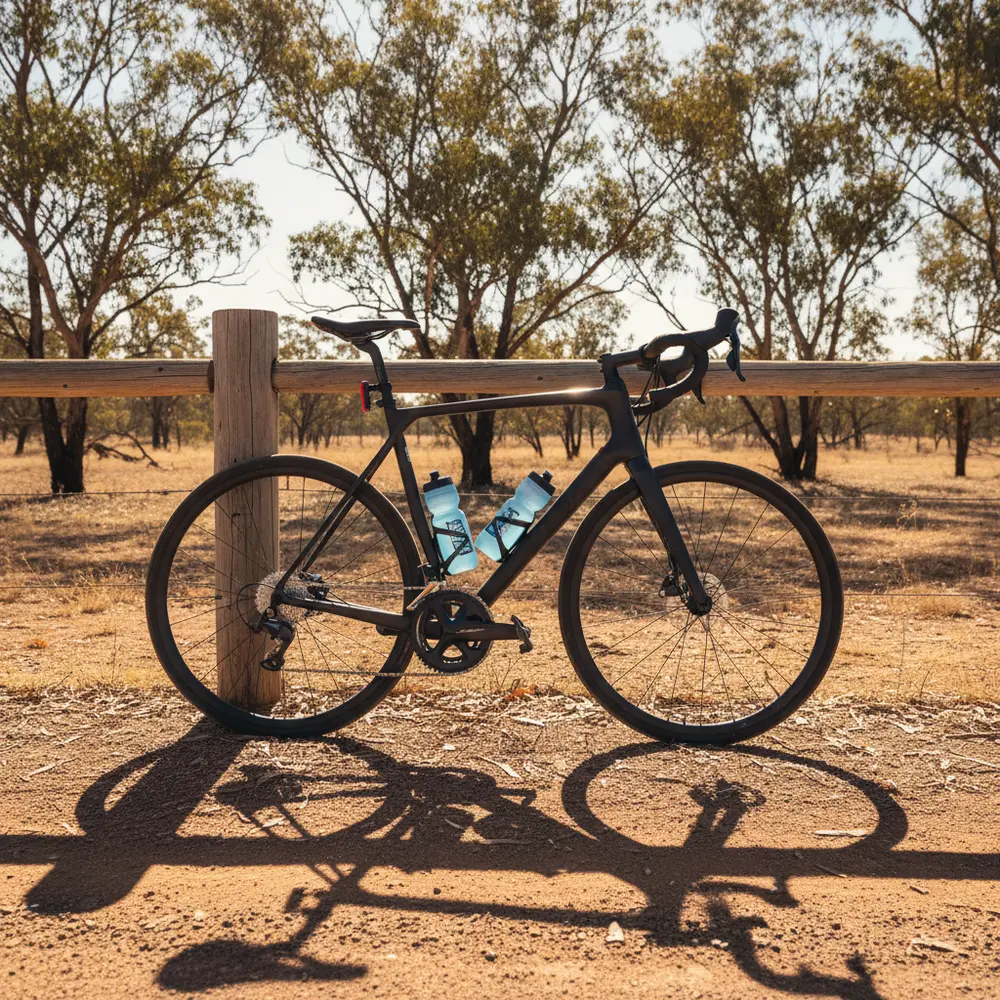
Most road and gravel bikes come with two braze-on cage mounts, one on the down tube and one on the seat tube. The down tube position is generally easier to access while riding. The seat tube bottle is harder to grab on some frames, especially compact geometries where the cage sits low and close to the crank.
If your bike has no braze-on mounts, strap-on adapters are a practical solution. They work well on most round and aero tube profiles and are reliable for day-to-day riding, though they add a small amount of weight and do need checking periodically. Some riders also add a third cage behind the saddle or on the top tube for longer events or bikepacking routes.
| Cage Material | Weight | Durability | Best For | Price Range |
|---|---|---|---|---|
| Carbon fibre | Lightest | Lower - can crack if stressed | Race builds, weight-conscious riders | Higher cost |
| Aluminium | Light | Good - resists most impacts | All-round road and gravel riding | Mid range |
| Plastic / nylon | Heavier | Very good - flexible and tough | MTB, rough roads, non-standard bottles | Budget friendly |
Choosing the Right Cycling Water Bottle
Standard vs. insulated bottles - when the upgrade is worth it
A standard soft cycling bottle is fine for rides under 60 to 75 minutes, or when temperatures are mild. Once you are pushing past 90 minutes in serious Australian heat, an insulated bottle makes a meaningful difference. The liquid inside stays noticeably cooler for longer, which matters both for palatability and for the slight core-cooling effect of drinking cooler fluid during exercise.
Insulated cycling bottles are heavier and a bit more expensive than standard options, and they are not always compatible with tight-fitting cages. Check the fit before you buy. For a practical comparison of insulated and standard options available in Australia, BikeExchange Australia has a solid cycling bottle buying guide worth reading.
Sizing - 500ml vs. 750ml and what suits your ride length
This is simple: carry as much volume as your frame allows without the bottle fouling on your knees or the front derailleur. On longer rides in the heat, two 750ml bottles gives you 1.5 litres on the frame, which covers most two-hour efforts if you pace your drinking well. If your frame only fits 500ml bottles cleanly, plan your refill stops accordingly.
Smaller riders on compact frames sometimes find 750ml bottles clean up the clearance they need. A side-entry cage can solve this, allowing the bottle to be inserted from the side rather than straight up, which is a genuine fix for tight frame geometries rather than just a novelty option.
Hydration Packs and Reservoirs - When a Bottle Just Is Not Enough
If you are riding MTB or gravel on routes with no water access, two frame-mounted bottles may simply not be enough volume to get you through. A hydration pack with a 1.5 to 3 litre reservoir is the practical answer for those rides. You can check the hydration pack vs water bottle comparison from Trails Plus Australia for an MTB-specific breakdown of when each option makes sense.
The trade-off with a pack in Australian conditions is that it sits against your back, adds heat, and increases sweating in that area. A pack with a well-ventilated back panel helps, but it is worth knowing the compromise exists. For road riding, a pack is generally unnecessary and the aerodynamic and thermal penalty is not worth it. For a long day out on the Otways, the Flinders Ranges, or any remote trail network, the extra capacity can make all the difference.
- Use a hydration pack when your route has no reliable refill points for more than two hours of riding.
- Prioritise packs with ventilated back panels to reduce heat build-up in summer.
- On road or easier gravel with regular stops, stick with frame-mounted bottles.
- Make sure the reservoir is clean and the bite valve is functioning before you head out.
What to Put in Your Bottles - Water, Electrolytes, and Carb Drinks
Electrolyte considerations for long rides in the heat
Plain water is perfectly adequate for rides under about 60 minutes, or for short efforts where you are not sweating heavily. Once you push past 60 to 90 minutes in the heat, you start losing sodium and other minerals through sweat at a rate that water alone does not replace. This is when an electrolyte drink or a dissolvable electrolyte tab in your bottle starts to make a genuine practical difference rather than just a marginal one.
The AIS electrolyte guidance is clear that sodium replacement becomes increasingly important during prolonged exercise in hot conditions, particularly for heavier sweaters. You do not need an expensive branded product. A basic electrolyte tab or a drink mix with a reasonable sodium content will do the job. Save carb-based drinks for rides where you also need to fuel, typically anything over two hours at decent intensity.
A simple rule of thumb for what to carry:
- Under 60 minutes: water only is fine.
- 60 to 90 minutes in heat: consider electrolytes in at least one bottle.
- Over 90 minutes: electrolytes in both bottles, carb drink if the effort is high.
- All day or multi-hour rides: plan for electrolytes, carbs, and solid food, and map your refill points.
Practical Hydration Upgrades Worth the Money
Not every upgrade makes a real difference. These ones do, in order of practical impact for Australian summer riding.
- Insulated bottle for hot rides: If you do not already own one, this is the first upgrade worth making. Noticeable improvement on rides over 90 minutes in summer heat.
- 750ml bottles if your frame fits them: More volume per cage means fewer refill stops or less chance of running short.
- A quality aluminium or nylon cage that fits your bottle securely: A loose cage that ejects your bottle on a descent is a hazard. Get the fit right.
- Electrolyte tabs or powder: Cheap, compact, and genuinely useful on hot longer rides. Keep a few in your kit bag.
- A strap-on cage mount if your bike lacks braze-ons: Opens up your hydration options without needing a new bike.
- A hydration pack for remote MTB or gravel: Worth the investment if you ride routes with limited water access regularly.
For more ideas on practical cycling accessories that are worth the spend, have a look at the accessories and modifications section on Segment Club.
Pre-Ride Hydration Checklist for Australian Summer
Run through this before you roll out on any hot day. It takes two minutes and it is worth it.
- Bottle cage secure: Give both cages a quick check. No wobble, no loose bolts.
- Bottle capacity vs. ride distance: Roughly how much fluid do you need? Do your bottles cover it, or do you need a refill plan?
- Electrolyte mix prepared: If the ride is over 60 to 90 minutes in heat, electrolytes are in at least one bottle.
- Insulated bottle for heat: If ambient temperature is likely to be high and you are out for more than 90 minutes, insulated bottle is in the cage.
- Refill points mapped: Know where your next water stop is and roughly when you will hit it.
- Pre-ride hydration done: Have you had 500ml to 750ml of water in the hour before heading out? Do not start a summer ride in deficit.
- Backup plan for remote routes: If you are heading somewhere isolated, do you have a pack or extra volume? Does someone know your route?
Common Mistakes and How to Fix Them
- Waiting until you are thirsty to drink: Thirst lags behind actual fluid need, especially in dry Australian heat. Drink on a schedule, not when prompted by thirst. Good advice on this is covered in the CyclingTips guide on how to stay hydrated cycling.
- Using small bottles because they are lighter: Saving 30 grams on bottle weight while under-hydrating is a poor trade. Prioritise volume in summer.
- Not checking cage retention before a rough ride: A bottle that ejects on a descent is a hazard. Check the fit before you head out on any off-road or fast route.
- Only carrying water on a long hot ride: After about 60 to 90 minutes of sweating heavily, plain water is not replacing everything you are losing. Add electrolytes.
- Ignoring pre-hydration: Starting a summer ride already slightly dehydrated puts you behind from kilometre one. Drink water in the hour before you leave.
- Using a cage that does not fit your bottle: Oversized bottles in standard cages wobble and bounce out. Check compatibility before you buy.
If You Are New to Upgrading Your Hydration Setup
- Start with one upgrade: a proper fitting aluminium cage and a 750ml soft bottle. Get the basics solid before spending on insulated or specialist options.
- Learn to grab your bottle confidently while riding before you try it at speed in traffic or on a descent.
- On your first hot summer ride, stop more often than you think you need to. You will learn your sweat rate faster that way.
- Plain water is fine to begin with. You do not need to buy electrolyte products until you are doing longer or harder rides regularly.
- Check out the beginner cycling tips on Segment Club for more foundational advice on getting your setup right.
If You Have Already Got the Basics Sorted
- Consider insulated bottles for your summer kit. If you have only ever used standard soft bottles, the difference in fluid temperature on a long hot ride is noticeable.
- Look at your cage positioning. If you struggle to pull the seat tube bottle cleanly, a side-entry cage in that position solves the problem.
- Experiment with electrolyte formulations on your longer rides to find what works for your stomach and your sweat rate.
- If you ride remote MTB or gravel regularly, invest in a quality hydration pack with good back ventilation. Treat it as a genuine part of your kit, not an afterthought.
- Map your regular routes for water availability and adjust your carry volume accordingly. It is a five-minute job that saves real problems on hot days.
Frequently asked questions
How much should I drink per hour when cycling in Australian summer heat?
Fluid needs vary by body size, effort level, and conditions, so there is no single number that applies to everyone. A general guideline for endurance athletes in heat, supported by Sport Australia hydration guidance, is to drink regularly throughout the ride rather than waiting until thirsty. A useful starting point is around 500ml to 750ml per hour in moderate heat, increasing in very hot or humid conditions. Weigh yourself before and after rides to get a sense of your personal sweat rate over time.
Is an insulated cycling bottle actually worth it?
Yes, for rides over 90 minutes in summer heat. Insulated bottles keep your fluid noticeably cooler than a standard soft bottle sitting in direct sun. Cooler fluid is more palatable and there is evidence that drinking cooler liquid during exercise has a modest benefit for core temperature management. The trade-off is slightly more weight and a higher price. For short rides or cool conditions, a standard bottle is fine.
Do I need electrolytes or is water enough?
For rides under about 60 minutes at moderate intensity, plain water is generally sufficient. For longer rides, particularly in heat where you are sweating heavily, electrolytes become genuinely useful. Sodium is the key mineral you lose through sweat, and replacing it helps your body absorb and retain fluid more effectively. The AIS electrolyte guidance outlines when supplementation shifts from optional to recommended.
Can I add a bottle cage to a bike that has no braze-on mounts?
Yes. Strap-on cage adapters bolt or clamp onto the frame tubes and work well for most round and aero profiles. They are a reliable solution for day-to-day riding and are widely available through Australian bike shops and online retailers. Check compatibility with your tube diameter before purchasing, and inspect the mount periodically to make sure it has not shifted or loosened.
When should I use a hydration pack instead of frame-mounted bottles?
A hydration pack makes sense when your route is long, remote, or technically demanding enough that you cannot safely or easily reach for a bottle. For MTB and gravel riding on trails with no water access for two or more hours, a pack is the practical choice. On road rides with regular stops or shorter distances, frame-mounted bottles are more comfortable and easier to use. In Australian heat, choose a pack with good back ventilation to reduce the heat build-up against your spine.
Wrapping up
Getting your hydration setup dialled in is one of the simplest ways to improve how you feel and perform on the bike. Here is the short version:
- Match your bottle volume to your ride length and the temperature, not just habit.
- A cage that fits your bottle securely and releases smoothly is worth more than a gram-saving upgrade you fumble with at speed.
- Insulated bottles earn their place on rides over 90 minutes in summer heat.
- Add electrolytes when rides push past 60 to 90 minutes in hot conditions.
- Plan your refill points before you leave, especially on remote or long routes where cafes and water taps are scarce.
If you have questions about your specific setup or want to talk through what upgrades make sense for your riding, get in touch with the Segment Club team and we are happy to help point you in the right direction. You can also browse our cycling accessories shop for gear that suits Australian conditions.
This is educational content, not financial advice.