
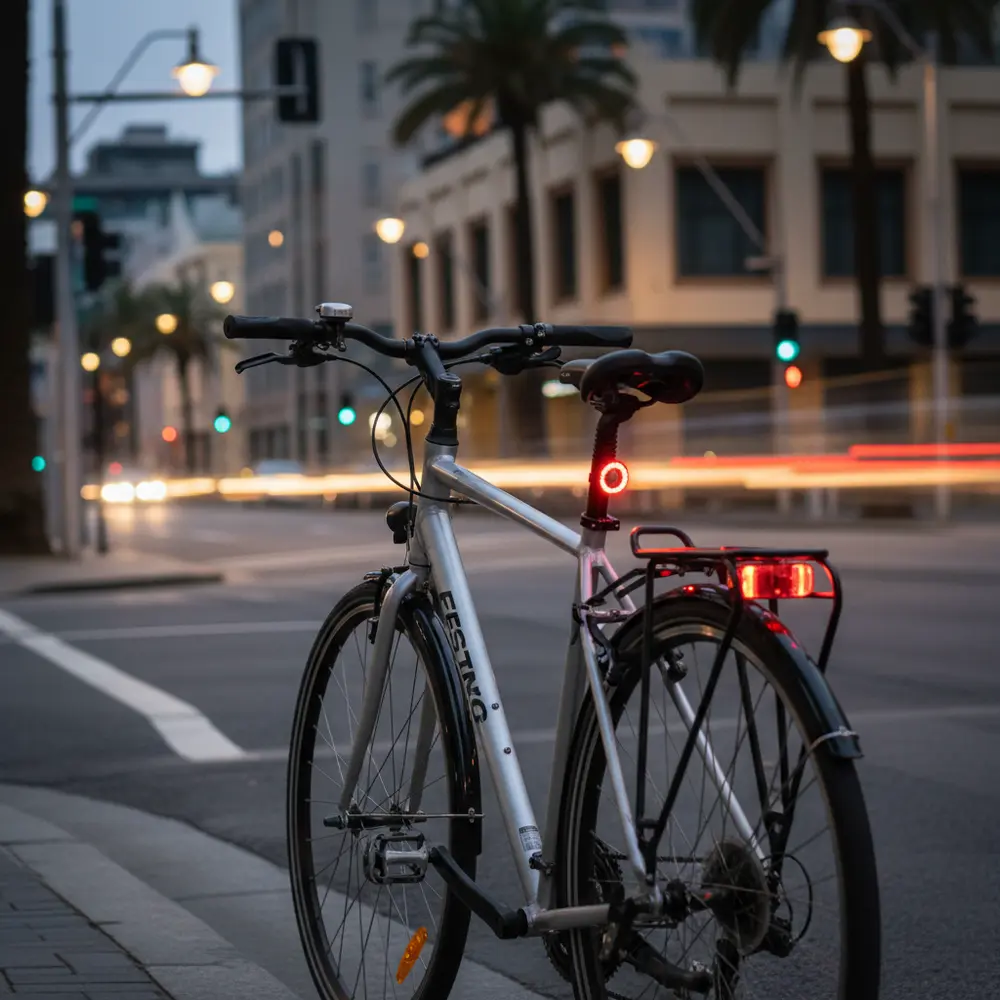
Riding at night or in poor visibility without the right lights is one of the quickest ways to collect a fine and, more seriously, end up in a collision you never saw coming. Australian road rules are clear on what every cyclist must carry after dark, and yet a surprising number of riders roll out under-equipped every single evening.
By the end of this article you will know exactly what the law requires in your state, how to choose lights that are genuinely useful rather than just technically compliant, and how to do a fast pre-ride check before you head out. No fluff, just the practical stuff.
Note for Australia:
- Australian Road Rule 259 sets the national baseline for bicycle lighting, but each state and territory can add its own requirements on top.
- Fine amounts for riding without lights vary by state and are updated periodically, so always check your state authority for the current figure.
- The rules apply at night and during hazardous weather conditions such as heavy rain, fog, and low-light tunnels, not only after sunset.
At a glance:
- A white front light visible from 200m is mandatory under ARR 259.
- A red rear light or red rear reflector visible from 200m is required in all states.
- Pedal reflectors or retro-reflective material on each foot are also required.
- Flashing lights are generally permitted but check your state rules for any restrictions.
Key takeaways:
- The national framework is consistent, but state enforcement and supplementary rules differ, so knowing your state matters.
- Being legal and being visible are not the same thing. A dim light that technically passes may still leave you dangerously hard to see.
- USB-rechargeable lights are the practical choice for most commuters, while battery-powered lights remain valuable for touring.
Why Bike Lighting Laws Actually Matter in Australia
Australia has a solid national framework for road rules, but cycling fatalities and serious injuries still occur at night at a disproportionate rate relative to overall riding hours. Poor visibility is a consistent factor in many of those crashes. The law exists for a reason, and it is worth treating it as a floor, not a ceiling.
A police officer issuing an on-the-spot fine for no lights is the least of your problems if a driver genuinely cannot see you. Beyond the legal requirement, the practical case for good lighting is straightforward. Cars travel fast, reaction times are finite, and a cyclist without lights at night is essentially invisible to a driver until it is too late.
If you are newer to commuting or have recently started riding after dark, this is one area where spending a bit more on your cycling accessories genuinely pays off. A quality front and rear light setup costs far less than a single emergency department visit.
What the Australian Road Rules Say About Bike Lights
The baseline is Australian Road Rule 259, which has been adopted by every state and territory. It sets out the minimum requirements for riding at night or in hazardous weather. All states work from this foundation, though some add supplementary requirements of their own.
Front White Light Requirements
You must have at least one white or clear light fitted to the front of your bicycle. Under ARR 259, that light must be visible from 200 metres. It can be a steady or flashing light, though some states have specific positions on flash-only setups, so it is worth confirming locally. The light must be positioned so it is not obscured by a bag, clothing, or any other attachment.
Rear Red Light Requirements
A red light must be fitted to the rear of the bike and must also be visible from 200 metres. In most states a rear red reflector can substitute for a powered rear light, though having both is strongly recommended. A reflector alone provides no active illumination and relies entirely on another road user's headlights to work. For any serious night riding, treat the powered rear light as non-negotiable.
Reflector Requirements: Front, Rear and Pedals
Under ARR 259, pedal reflectors or retro-reflective material on each foot or ankle are required. Many bikes come with pedal reflectors factory-fitted, but they are often removed when riders swap to aftermarket pedals. If you have swapped your pedals, check whether you still have compliant reflective coverage on your feet. A rear reflector is also required in most jurisdictions, either as a standalone item or in addition to a rear light.
How Each State and Territory Interprets the Rules
The table below gives a quick-reference summary. All states follow the ARR 259 baseline. The differences come down to supplementary rules, fine amounts, and specific guidance on flash modes. Always verify current fine amounts with your state authority, as these figures are updated from time to time.
| State / Territory | Follows ARR 259 | Flash light permitted | Rear reflector alone sufficient | Check for current fines |
|---|---|---|---|---|
| NSW | Yes | Generally yes | Technically yes, powered light strongly recommended | Transport for NSW |
| VIC | Yes | Generally yes | Technically yes, powered light strongly recommended | VicRoads |
| QLD | Yes | Generally yes | Technically yes, powered light strongly recommended | TMR Queensland |
| WA | Yes | Generally yes | Technically yes, powered light strongly recommended | Main Roads WA |
| SA | Yes | Generally yes | Technically yes, powered light strongly recommended | SA Government transport portal |
| TAS | Yes | Generally yes | Technically yes, powered light strongly recommended | Transport Tasmania |
| ACT | Yes | Generally yes | Technically yes, powered light strongly recommended | Access Canberra roads |
| NT | Yes | Generally yes | Technically yes, powered light strongly recommended | NT Government transport |
Key Differences Between States
The practical differences between states are less about what is required and more about how actively it is enforced and what the fine structure looks like. Victoria and NSW both have well-resourced enforcement presences in urban areas and active cycling communities that keep the conversation about compliance current. For a plain-English breakdown of how cycling laws compare across the country, the Bicycle Network cycling law guide is a solid starting point.
Western Australia is worth a separate mention for riders heading out on rural or remote roads. The distances between lit areas are much greater, and the case for high-output lights goes well beyond legal compliance. If you are touring or doing long solo rides in WA or the NT, treat lighting as a safety-critical item on the same level as water and navigation.
What Makes a Light Legally Compliant and Practically Useful
There is a difference between a light that satisfies the letter of the law and one that actually keeps you safe. A light visible from 200 metres in clear conditions on a dark road is the legal standard. But riding in an urban environment with competing light sources, or in rain, reduces effective visibility significantly.
Lumens, Flash Modes and Visibility Distance
Lumens measure the total light output of a light. For road riding in well-lit urban streets, a front light in the 200 to 400 lumen range is generally adequate for compliance and reasonable visibility. For unlit roads or paths, 400 to 800 lumens or more gives you meaningful distance to see hazards ahead. For a detailed breakdown of what lumen ratings mean in practice, this Australian bike lights buying guide covers the key differences well.
Flash modes are useful for being seen in daylight and in urban conditions, but a pure flash on the front can make it harder to illuminate the road surface ahead of you at night. Many riders run a steady front light for road illumination and a flashing rear light to grab driver attention. That combination works well for most commuting and recreational riding situations.
- Urban commuting: 200 to 400 lumen front, 30 to 100 lumen rear flash.
- Unlit roads or paths: 400 to 800 lumen front steady, 50 to 150 lumen rear steady or flash.
- Remote or touring: 800 lumen plus front with a backup, high-output steady rear.
USB-rechargeable lights have become the practical standard for most commuters and recreational riders. They are convenient, widely available, and increasingly affordable. Battery-powered lights using AA or AAA cells still have a real advantage for touring and remote riding where access to a power socket for days at a time is not reliable. Worth keeping a set in your touring kit for that reason alone.
Recommended Lights and Reflectors Worth Buying
Rather than a single brand recommendation, here are the categories and features to look for when shopping. Brands like Cateye, Lezyne, Exposure, Blackburn, Knog, and Bontrager all have solid offerings available through Australian retailers, so the field is competitive and well-stocked.
- Front commuter light: Minimum 200 lumens, USB-rechargeable, steady and flash modes, secure handlebar mount that does not wobble.
- Rear commuter light: Minimum 30 lumens, USB-rechargeable, compact, multiple flash modes, easy to remove and recharge.
- Helmet-mounted light: A secondary option that moves with your head. Useful for scanning junctions and signalling turns. Not a substitute for a handlebar-mounted front light.
- Reflectors: If your bike came with pedal reflectors and you have removed them, replace them or fit ankle reflective bands. Wheel reflectors and a rear amber or white reflector add passive visibility at no ongoing cost.
- Touring backup: A lightweight AA-battery rear light stored in your saddle bag or touring kit is good insurance. Batteries are available everywhere; power sockets are not.
For more detail on how to set up your bike for commuting, have a look at our guide on bike accessories and modifications for practical setup tips.
Fitting Your Lights Correctly for Maximum Compliance and Visibility
A light buried under a handlebar bag or aimed at the sky is neither legally compliant nor practically useful. Correct fitment takes about five minutes and makes a real difference to both compliance and how well other road users can see you.
- Mount your front light on the handlebar or fork, angled slightly downward so the beam hits the road 10 to 15 metres ahead of you, not straight into oncoming eyes.
- Mount your rear light on the seat post or seat stay, unobstructed by a saddle bag. If you run a large saddle bag, consider a seat stay mount or a rack-mounted light instead.
- Check that both lights are visible from the side as well as from directly in front or behind. Many modern lights have a wrap-around design that helps with side visibility at intersections.
- Tighten all mounts properly. A light that vibrates loose mid-ride and falls off is not doing its job.
- If you run a helmet light, position it level with your line of sight so it illuminates where you are looking without blinding oncoming riders on shared paths.
Common Mistakes
- Assuming a rear reflector alone is sufficient for all riding conditions. It is not active and relies entirely on another vehicle's headlights to work.
- Forgetting to charge lights before a ride. USB lights are only useful if they have charge in them. Build a charging habit into your end-of-ride routine.
- Mounting a front light aimed too high, which dazzles oncoming road users and reduces the beam's effectiveness on the road surface in front of you.
- Removing pedal reflectors when swapping to aftermarket pedals and not replacing them with ankle reflectors or reflective bands.
- Running a single dim rear light hidden behind a large saddle bag. Visibility is everything at the rear.
- Assuming a light that worked fine last month still has a good battery or charge level. Always check before you roll.
If You Are New to Night Riding
- Start with a quality USB-rechargeable front and rear light set before worrying about anything else. This covers your legal requirements and your practical safety needs.
- Check that your bike still has its original pedal reflectors fitted, or pick up a set of ankle reflective bands as a straightforward substitute.
- Give yourself a few night rides on familiar, well-lit routes before moving onto unlit paths or roads. Getting used to how your lights perform takes a bit of time.
- Learn what your lights' battery indicators mean. Most modern lights flash a warning when charge is low, so pay attention to that signal.
- Read the rules for your specific state using the official government source, not just a general article. Fine amounts and specific supplementary rules do vary.
If You Have Ridden at Night Before
- Review your current light output. If your setup is more than two or three years old, technology has moved on and a modest upgrade will likely give you noticeably better visibility.
- Consider adding a secondary rear light or a helmet-mounted light as a backup, particularly for longer rides or routes with mixed traffic.
- Check your reflector compliance if you have changed pedals or swapped components recently. It is easy to lose compliant reflector coverage without realising it.
- Think about your light positioning relative to any bags or accessories you have added since you last reviewed your setup.
- If you tour or ride in rural areas, keep a battery-powered backup in your kit. Running out of charge on an unlit rural road with no towns nearby is a genuinely bad situation.
Checklist: Are You Road Legal Tonight
Run through this before any night ride or ride in poor visibility conditions.
- Front white light fitted and working. Charged or fresh batteries. Not obscured by bags or clothing.
- Rear red light fitted and working. Charged or fresh batteries. Not hidden behind a saddle bag.
- Rear reflector present. Either factory-fitted or a separate item on the seat post or rack.
- Pedal or ankle reflectors in place. Check if you have swapped pedals recently.
- Lights visible from required distances. 200m front, 200m rear as the legal minimum.
- Lights charged or batteries fresh. Do not assume. Check the indicator or test it before you leave.
- Lights positioned correctly. Front angled down slightly, rear unobstructed and facing traffic.
Frequently Asked Questions
Does Australian Road Rule 259 apply in every state and territory?
Yes. ARR 259 has been adopted by all states and territories as the baseline requirement for bicycle lighting. However, individual states can and do add supplementary rules and their own fine structures on top of the national framework. Always check your state authority for anything beyond the ARR baseline.
Is a flashing light legal as the only front or rear light in Australia?
Flashing lights are generally permitted across Australian jurisdictions for both front and rear positions. However, some states may have specific guidance on this, and a purely flashing front light at night can reduce your ability to see the road surface ahead of you. Running a steady front light with a flashing rear light is a practical combination that works well for most riders.
Is a rear reflector enough on its own, or do I need a powered rear light?
A rear red reflector is technically sufficient under ARR 259 in most states to satisfy the rear requirement. However, a reflector is passive and only works when another vehicle's lights are shining on it. For any real night riding, a powered rear light is strongly recommended. Treating the reflector as a backup rather than the primary rear light is the sensible approach.
Do I need to have my lights on during the day in heavy rain or fog?
ARR 259 covers riding in hazardous weather conditions as well as at night. Heavy rain, fog, and low-light environments such as tunnels can all trigger the legal requirement to have lights on. Beyond the legal question, running a rear light in daytime rain is simply good practice and costs you nothing if you have a USB-rechargeable setup.
Are there any Australian Standards that bike lights must meet to be considered compliant?
ARR 259 is a functional standard, meaning the test is whether the light is visible from the required distance, not whether it holds a specific certification. There is no mandatory Australian Standards mark required for bike lights to be legally compliant. That said, reputable lights from established cycling brands will generally meet and exceed the visibility distance requirement without any issue.
Wrapping Up
- ARR 259 sets the national baseline: white front light, red rear light or reflector, and pedal or foot reflectors, all visible from 200m.
- State rules follow the same framework but enforcement, fines, and supplementary rules vary, so check your state authority directly.
- Being legally compliant is the starting point, not the goal. Aim for genuine visibility, not just the minimum.
- USB-rechargeable lights are the practical choice for most riders. Keep a battery backup if you tour or ride remotely.
- Run the pre-ride checklist before every night ride. It takes less than a minute and covers everything that matters.
If you have questions about setting up your bike for night riding or want to talk through what lighting setup suits your riding, get in touch with us and we are happy to help.
For more cycling tips, route ideas, and gear advice tailored to Australian riders, explore the rest of the Segment Club blog.
This is educational content, not legal advice. Road rules and fine amounts are subject to change. Always verify current requirements with your state or territory road authority before riding.